内存成本上涨

Search documents
中国手机厂商集体涨价!
国芯网· 2026-02-26 12:54
Core Viewpoint - The Chinese smartphone industry is expected to experience a comprehensive price increase in 2026, marking the first time all categories and brands will see a synchronized price hike, which is also the largest in five years [2][3]. Group 1: Price Increase Drivers - The primary driver of this industry-wide price increase is the rigid rise in memory costs and significant price volatility. The global memory chip prices have surged, with the procurement cost for smartphone storage chips increasing by over 80% compared to the same period last year [3]. - Major domestic brands such as OPPO, OnePlus, vivo, iQOO, Xiaomi, and Honor have already finalized their price increase plans, with some brands notifying offline distributors and online channels about the adjustments [3]. Group 2: Timing and Impact of Price Changes - March is identified as a critical month for the price increase, with older models seeing moderate price adjustments, while new models released after March are expected to have significantly higher price hikes, with minimum increases of no less than 1,000 yuan and flagship models potentially rising by 2,000 to 3,000 yuan [3]. - In contrast to the rising prices of domestic smartphones, the iPhone, positioned in the mid-to-high-end market, remains stable, leading some consumers to view it as a better value option amidst the price hikes of other brands [3].




2026年中国手机市场迎来历史性价格调整
Jing Ji Guan Cha Wang· 2026-02-26 06:06
Core Insights - The Chinese smartphone market will experience unprecedented price increases starting March 2026, marking the first time in history that all brands and models will raise prices simultaneously [1][5] - Counterpoint Research predicts that the average selling price (ASP) of smartphones in China will rise by 15%-25% compared to 2025, with flagship models potentially increasing by over 30% [2][4] - The primary driver of this price surge is the significant increase in memory costs due to supply chain pressures, particularly from the demand for AI servers [3][5] Price Increase Dynamics - Starting in March 2026, new smartphone models will see price increases of at least 1,000 yuan, while high-end flagship models may rise by 2,000-3,000 yuan [1][2] - The price adjustments will not be limited to new releases; existing models are also expected to undergo multiple price hikes throughout the year [1][6] - The average price increase for smartphones in China is projected to exceed the global average of 6.9% [2] Cost Pressures - The cost of memory chips has surged dramatically, with prices for 1TB flash memory rising from over 200 yuan in 2025 to nearly 600 yuan, and DRAM prices increasing by 80%-95% [4] - The smartphone storage chip procurement costs have risen by over 80% compared to the previous year, contributing to higher manufacturing costs [4][5] - The volatility in memory prices has led to a situation where price adjustments may occur multiple times within a month, further complicating the market dynamics [4] Market Implications - The anticipated price increases may alter consumer purchasing behavior, with mid-range devices seeing smaller price hikes compared to high-end models, potentially leading consumers to delay upgrades [6] - The pressure on low-end products may force manufacturers to reduce their product lines and shipment volumes [6] - The competitive landscape is further complicated by strategies such as Huawei's reverse price cuts, which may impact other flagship Android models [6]
多个手机品牌加速涨价,预计最大涨幅25%
Jing Ji Guan Cha Wang· 2026-02-26 06:01
Core Insights - The Chinese smartphone market is expected to undergo a historic price increase starting in March 2026, marking the first time in history that multiple price hikes will occur within a single year across all brands and models [1][2][4] Price Increase Overview - Starting in March 2026, the average price of new smartphones in China is projected to rise by 15% to 25% compared to 2025 models, with minimum price increases for new models expected to be over 1,000 yuan [1][2] - The price hikes will not only affect new models but also older models from major brands like OPPO, OnePlus, vivo, iQOO, Xiaomi, and Honor [1][2] - The flagship models are anticipated to see price increases of 30% or more, with price differences for high-storage versions potentially reaching 2,000 yuan [2][4] Factors Driving Price Increases - The primary driver of the price increases is the significant rise in memory chip costs due to supply shortages caused by increased demand from AI server production, which has diverted memory capacity away from smartphone manufacturing [4][5] - Recent data indicates that the prices of mobile storage chips have surged over 300% in the last three months, with specific components like 1TB flash memory doubling in cost from over 200 yuan to nearly 600 yuan [4][5] - The fluctuation in memory prices has become more frequent, with some instances of price adjustments occurring within a month, further increasing manufacturing costs for smartphones [5] Market Dynamics - The extended promotional periods and changes in market supply and demand are also influencing smartphone pricing, with some models experiencing price increases during promotional events [6] - The anticipated price hikes may alter consumer purchasing behavior, potentially leading to delays in upgrading for mid-range consumers, while low-end products may face significant cost pressures [6] - The competitive landscape is also affected, as strategies like Huawei's reverse price cuts on flagship models may create additional pressure on other Android brands [6]
2026年中国手机市场迎全面普涨
Xin Lang Ke Ji· 2026-02-26 01:30
Group 1 - The core viewpoint of the article is that the Chinese smartphone industry will experience a comprehensive price increase in 2026, marking the first time all brands and product categories will see synchronized price hikes [1][2] - Starting from March, the price increase will accelerate, with new models expected to rise by at least 1,000 yuan, while older models from major brands like OPPO, OnePlus, vivo, iQOO, Xiaomi, and Honor will also see price adjustments [1] - Industry analysis indicates that the average price of smartphones in China is projected to increase by 15%-25% compared to 2025, with flagship models potentially seeing price hikes exceeding 30% [1][2] Group 2 - The primary reason for the widespread price increase is the significant and unavoidable rise in memory costs, driven by a structural shortage in mobile memory due to the booming demand from AI servers [2] - Recent data shows that the prices of mobile storage chips have surged over 300% in the last three months, with the cost of 1TB flash memory rising from over 200 yuan in 2025 to nearly 600 yuan [2] - The volatility of memory prices has reached historical lows, with instances of price adjustments occurring twice within a month, leading to unprecedented multiple price increases within a single year for both new and existing models [2]
内存涨价非常显著,小米砸10亿补贴Turbo新机
Guan Cha Zhe Wang· 2026-02-01 00:11
Group 1 - REDMI launched two new models, Turbo5 and Turbo5Max, during a recent product launch event [1] - The company plans to invest 1 billion yuan to subsidize memory costs, particularly for the 512GB versions, to promote the "512GB popularization storm" [1] - Turbo5Max features the Dimensity 9500s processor and a 9000mAh battery, while Turbo5 is positioned as a more affordable performance device with a 7560mAh battery [1] Group 2 - The initial sales period for Turbo5Max and Turbo5 runs from January 29 to March 3, with both models seeing a price reduction of 300 yuan [3] - According to IDC, by 2025, Huawei is expected to lead the Chinese smartphone market with 46.7 million units sold, followed closely by Apple and Vivo [3] - Xiaomi and OPPO are projected to rank fourth and fifth in market share, with approximately 43.8 million and 43.4 million units sold, respectively [3]

Omdia:2025年全球智能手机出货量12. 5亿部 同比增长2%
智通财经网· 2026-01-15 11:27
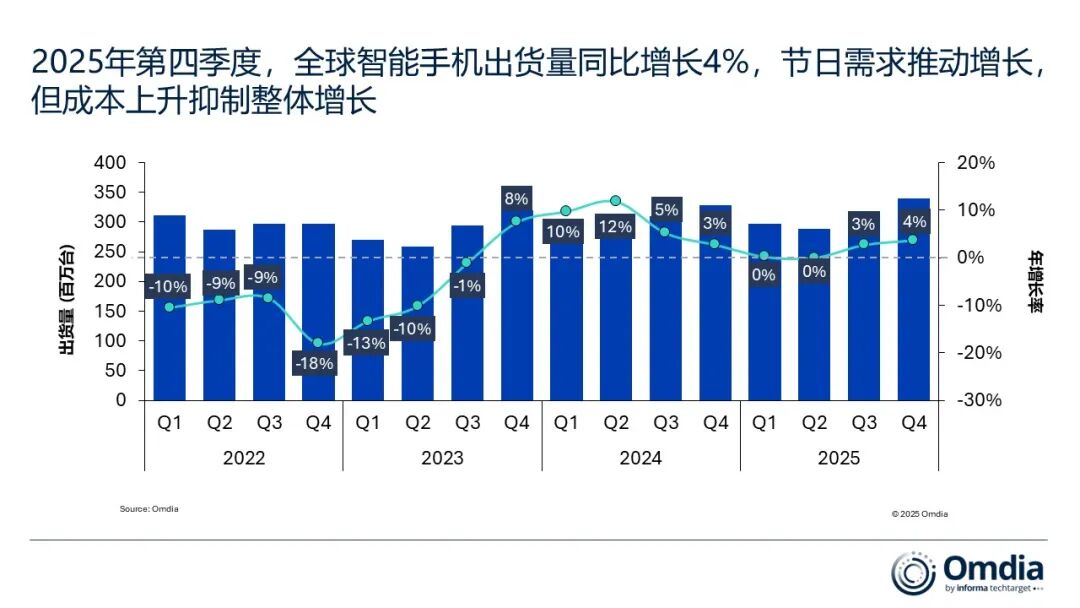
Core Insights - The global smartphone market is projected to grow by 4% year-on-year in Q4 2025, driven by seasonal demand recovery and improved inventory management, despite some manufacturers facing rising component costs [1][2] - Apple leads the market with a 25% share, benefiting from strong demand for the iPhone 17 series, achieving record quarterly shipments and maintaining its position as the largest smartphone manufacturer for three consecutive years [1][5] - Samsung ranks second with an 18% market share, primarily due to strong sales of models priced under $300, particularly the Galaxy A17 series [1] - Xiaomi holds the third position with an 11% market share, although it experienced a decline in key markets during Q4 [1][2] - Vivo achieved an 8% market share, bolstered by its leading position in the Indian market, while OPPO returned to growth, re-entering the global top five [1][2] Market Performance - In 2025, global smartphone shipments are expected to increase by 2% year-on-year, reaching 1.25 billion units, reflecting a steady market recovery, although performance varies across regions [2] - The first half of 2025 showed weak performance, while the second half benefited from strong demand in emerging markets and positive responses to flagship model launches [2] Cost Pressures and Strategies - DRAM supply constraints are significantly impacting the smartphone industry, with expectations that this will be a key factor influencing market trends in 2026 [5][7] - Rising semiconductor costs and a slowing replacement cycle are anticipated to affect shipment momentum, prompting manufacturers to optimize configurations and align new product launch strategies with component supply [7] - Manufacturers are increasingly focusing on price control, profitability, and operational efficiency in response to rising cost pressures, with trends indicating consolidation efforts, such as realme's integration into OPPO, to maintain competitiveness [7]
涨价了!小米手机,新品发布
Zheng Quan Shi Bao· 2025-12-25 15:37
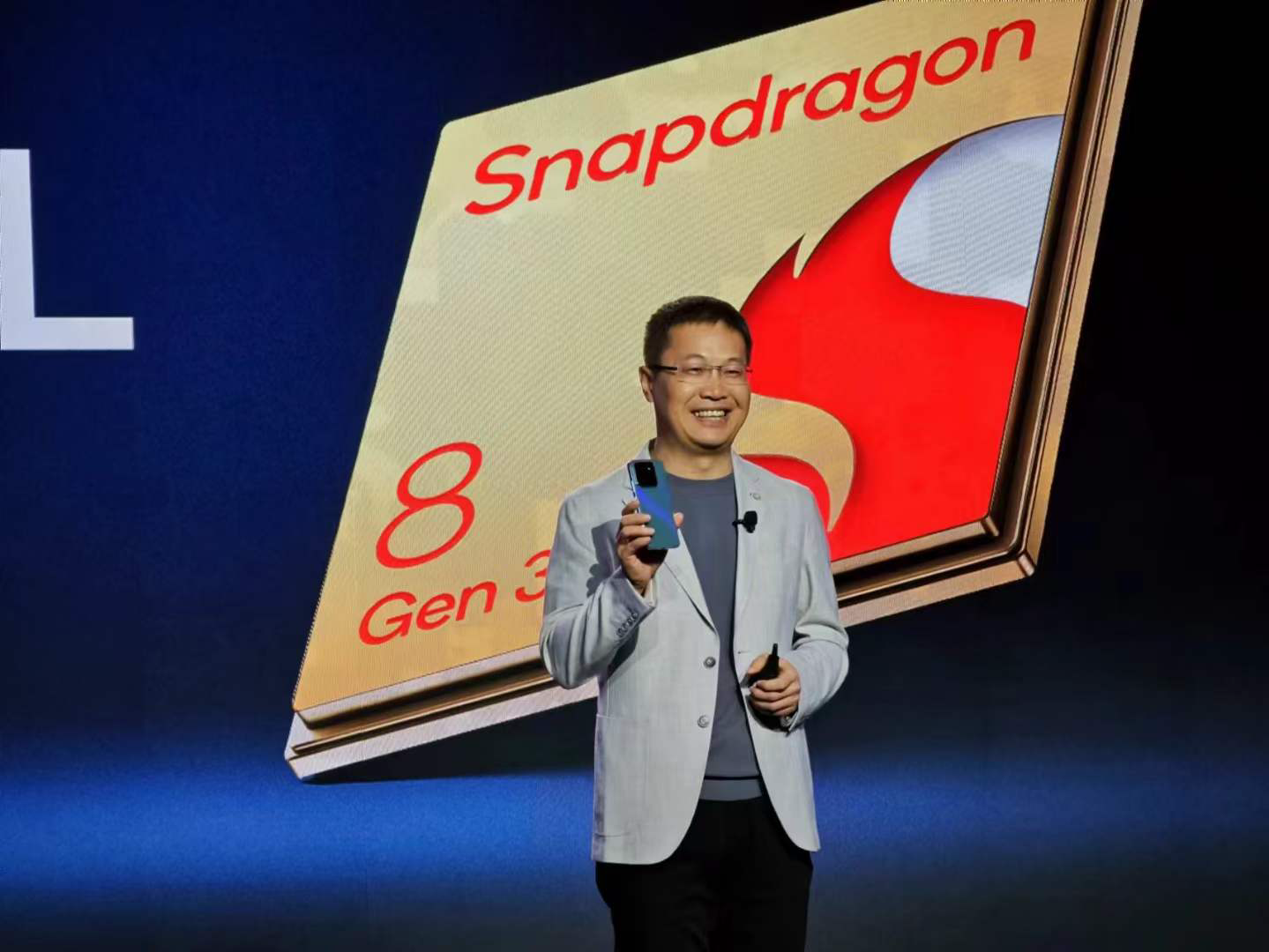
Group 1 - Xiaomi officially launched the Xiaomi 17 Ultra on December 25, with a starting price of 6,999 yuan, which is an increase of 500 yuan compared to the previous Ultra model [1] - The Xiaomi 17 Ultra is the first 2D flat-screen model in the Ultra series and is the thinnest Ultra to date, measuring only 8.29mm in thickness [1] - The device features a Leica 1-inch main camera, a 200-megapixel telephoto lens, a 6.9-inch ultra-narrow four-sided flat screen, and is powered by the Snapdragon 8 Gen 2 processor [1] Group 2 - The Xiaomi 17 Ultra is available in several configurations: 12GB+512GB priced at 6,999 yuan, 16GB+512GB at 7,499 yuan, and 16GB+1TB at 8,499 yuan, with pre-orders already open and official sales starting on December 27 [1] - Additionally, a Leica version of the Xiaomi 17 Ultra was introduced, inspired by classic Leica cameras, with prices set at 7,999 yuan for the 16GB+512GB version and 8,999 yuan for the 16GB+1TB version [2] - Xiaomi's president, Lu Weibing, indicated that rising memory costs, driven by increased demand for high-performance computing (HPC), have significantly impacted product pricing, predicting that memory costs will continue to rise through 2025 to 2027 [2] Group 3 - During the launch event, Xiaomi also unveiled other products including the Xiaomi Watch 5, Xiaomi Buds 6, and the Mijia Central Air Conditioner Pro [3]
小米17 Ultra将涨价
Feng Huang Wang· 2025-12-22 07:00
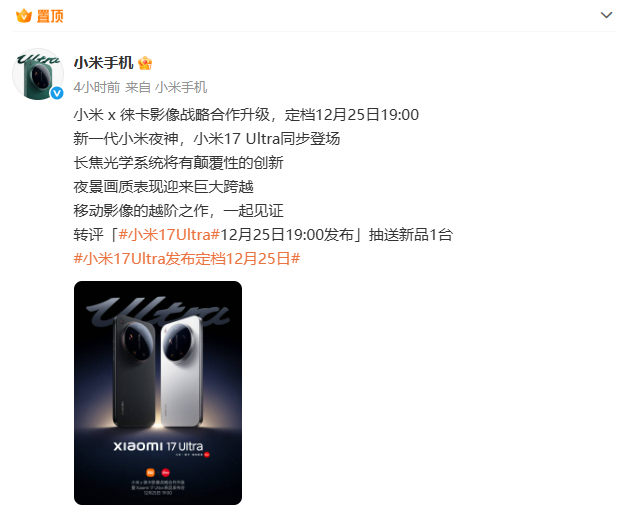
Group 1 - Xiaomi Group announced the launch event for the Xiaomi 17 Ultra is scheduled for December 25 at 19:00 [2] - The new flagship model, Xiaomi 17 Ultra, will see a price increase due to rising memory costs and other factors [6] - The collaboration with Leica has resulted in significant advancements in the imaging capabilities of the Xiaomi 17 Ultra, including a revolutionary long-focus optical system and improved night scene quality [5] Group 2 - Xiaomi Group's president, Lu Weibing, indicated that the price increase for the Xiaomi 17 Ultra will be substantial, influenced by the surge in memory costs over the past three years [6] - The company previously stated that the Xiaomi 15 Ultra would be the last model priced at 6499 yuan, but this was based on processor and camera costs without fully accounting for memory price increases [6] - Lu Weibing emphasized that while the price of the Xiaomi 17 Ultra will rise significantly, it will still be relatively lower compared to the increase in memory costs [6]
卢伟冰确认小米17 Ultra售价将上调 幅度较大
Ju Chao Zi Xun· 2025-12-21 02:20
Group 1 - The core viewpoint is that the AI industry has experienced explosive growth since the end of 2022, leading to significant increases in memory costs, which will impact smartphone prices in the coming years [2] - Xiaomi's 17 Ultra smartphone is expected to see a price increase due to rising memory costs, which are anticipated to be higher than increases in processor and camera costs [2] - The 17 Ultra will feature advanced camera technology, including a one-inch main camera and a 200-megapixel telephoto lens, with the latter's cost being approximately double that of the previous model [2] Group 2 - The Xiaomi 17 Ultra, codenamed "Nezha," will continue the design of the previous model and will be powered by Qualcomm's fifth-generation Snapdragon 8 chip, with the international version supporting satellite communication [3] - A new accessory for the Xiaomi 17 Ultra, a professional photography handle that can also function as a mobile power source, has passed certification and is expected to enhance the imaging capabilities of the smartphone [3]
卢伟冰称小米17Ultra将因内存成本上涨大幅涨价
Mei Ri Jing Ji Xin Wen· 2025-12-20 14:31
Core Viewpoint - The price of Xiaomi 17 Ultra is expected to increase significantly due to rising memory costs, which have been influenced by the explosive growth of AI and are projected to continue rising through 2027 [1] Group 1: Price Increase Factors - Lu Weibing indicated that the memory price surge is a major factor contributing to the increased cost of smartphones, including the Xiaomi 17 Ultra [1] - The previous model, Xiaomi 15 Ultra, was priced at 6499 yuan, but this pricing did not fully account for memory costs, which have now become a critical consideration [1] - The anticipated price increase for Xiaomi 17 Ultra is expected to be substantial, with Lu Weibing suggesting it will be "a bit more" than previous models, although still relatively low compared to the memory cost increase [1]