
化妆品原料创新

Search documents
最高3000万!美妆激励潮来了
Xin Lang Cai Jing· 2025-12-09 13:42
Core Insights - The Chinese beauty industry is entering a new phase of policy explosion, with over 102 new regulations released since 2025, covering key aspects such as raw material innovation, registration, quality supervision, and personalized services, indicating a strategic shift from a "cosmetic manufacturing country" to a "cosmetic powerhouse" [1][71][96] Industry Overview - The total transaction value of the Chinese cosmetics market is projected to reach 1,073.822 billion yuan in 2024, making it the largest consumer market globally [4][71] - As of October 2025, there are over 20,000 registered cosmetic companies and 2,291,000 registered ordinary cosmetics in China [4][71] Regional Policies - Major production areas like Guangdong, Shanghai, Hainan, and Zhejiang have introduced targeted policies that leverage local industrial advantages, focusing on compliance and industry empowerment [4][72] - Guangdong has implemented a "strict regulation + strong support" policy, enhancing production compliance and providing substantial financial incentives for innovation [26][91] - Shanghai emphasizes its role as a "R&D hub + international window," with policies aimed at brand cultivation and innovation support [93] Specific Initiatives - Guangdong's policies include a one-time funding of up to 1 million yuan for approved national key laboratories and 100,000 yuan for new raw material registrations [92] - Shanghai's measures offer up to 200,000 yuan for new raw materials and 3 million yuan for projects promoting "Shanghai-made brands" [93][81] - Hainan is focusing on developing local resources like pearls and coconuts, with a special support policy for the cosmetics industry, offering up to 30 million yuan in direct funding [94][87] Regulatory Reforms - The National Medical Products Administration (NMPA) has released 20 core new policies since 2025, focusing on deepening regulatory reforms and activating innovation [96][97] - Key reforms include the introduction of a risk monitoring and evaluation management method, which shifts regulatory focus from post-event handling to proactive prevention [34][98] - The NMPA aims to achieve an internationally advanced level of cosmetic quality and safety regulation by 2035, with 24 reform measures targeting raw material innovation and registration efficiency [96][98] Technical Standards - The China National Institute of Standardization has published at least 65 technical standards and guidelines for cosmetics this year, providing essential technical support for regulatory compliance [53][54] - These standards aim to fill critical gaps in the regulatory framework, ensuring quality control and safety in the cosmetics market [53][54]

政策多维赋能化妆品产业高质量发展
Zheng Quan Ri Bao· 2025-11-19 16:13
Core Viewpoint - The National Medical Products Administration (NMPA) has issued opinions to deepen cosmetic regulation reform and promote high-quality industry development, emphasizing innovation support and streamlined registration channels for new cosmetic products [1][2]. Group 1: Regulatory Changes and Industry Support - The NMPA's opinions include six targeted measures to enhance innovation support, facilitate new product launches in China, and promote the development of the silver economy in cosmetics [1]. - The opinions aim to create a systematic path for the healthy development of the cosmetics industry, addressing consumer demands for health and personalized beauty [1][3]. Group 2: Market Growth and Challenges - China's cosmetics market is projected to reach a total transaction value of 1,073.82 billion yuan in 2024, with a year-on-year growth of 2.8%, and domestic brands holding a market share of 55.2% [2]. - Despite rapid growth, challenges such as insufficient innovation capabilities and lagging brand development persist within the industry [2]. Group 3: Innovation and Transformation - The industry is forming a comprehensive support system for the cosmetics sector, focusing on innovation and consumer demand, which will enhance regulatory frameworks and promote sustainable development [3]. - Companies are actively seeking transformation and new growth opportunities, with raw material innovation becoming a key focus area [3][4]. Group 4: Digitalization and New Business Models - Digital technology is driving quality improvement and efficiency, exemplified by the strategic partnership between Proya Cosmetics and Ant Group to enhance consumer experience through AI and digital solutions [4]. - The integration of beauty and tourism is being explored, as seen with the launch of "Natural Hall Future Beauty City," which combines beauty science, product display, and immediate consumption [4]. Group 5: Recommendations for Industry Players - Companies are encouraged to pursue multiple avenues for upgrading, including green packaging, strengthening brand culture, and expanding international market presence to seize development opportunities [4].
超万亿化妆品市场 国货品牌占比超一半!
Xin Hua She· 2025-11-19 09:55
Core Insights - The National Medical Products Administration has released opinions to deepen cosmetic regulation reform and promote high-quality industry development, emphasizing increased support for the industry and fostering competitive domestic brands [1][5][6] - The domestic cosmetics market is projected to exceed 1 trillion yuan in transaction volume by 2024, with domestic brands capturing 55.2% market share [1] - The rise of domestic cosmetics is attributed to the integration of traditional Chinese culture and innovative product development, appealing to consumers' cultural values [2][3] Industry Trends - The "Double 11" shopping festival showcased strong performance for domestic cosmetics, with 5 out of the top 10 beauty brands on Douyin being Chinese [2] - Consumers are increasingly seeking products that offer cultural value and emotional resonance beyond basic functionality [2] Innovation and Technology - As of mid-2023, 80 new cosmetic raw materials have been registered, with a year-on-year growth of approximately 80%, indicating strong momentum in local raw material development [3] - Chinese companies dominate the global hyaluronic acid market, accounting for 80% of total sales, with innovative production methods enhancing product efficacy [3] Policy Support - The recent policy opinions aim to stimulate innovation, reduce corporate burdens, and optimize the market environment through scientific regulation [6][7] - Local governments are implementing supportive measures, such as financial incentives for key laboratories and initiatives to promote "Shanghai manufacturing" [7] Future Outlook - The continuous improvement of regulatory frameworks and local policies is expected to support the transition from a "cosmetic manufacturing powerhouse" to a "cosmetic strong nation" [7] - The industry is encouraged to leverage cultural elements and scientific research to enhance competitiveness and expand globally [4][8]
全球首创!北京尚捷优蓝“安色®”高分子着色剂获国家药监局批准作为化妆品着色剂使用
Cai Fu Zai Xian· 2025-11-04 09:26
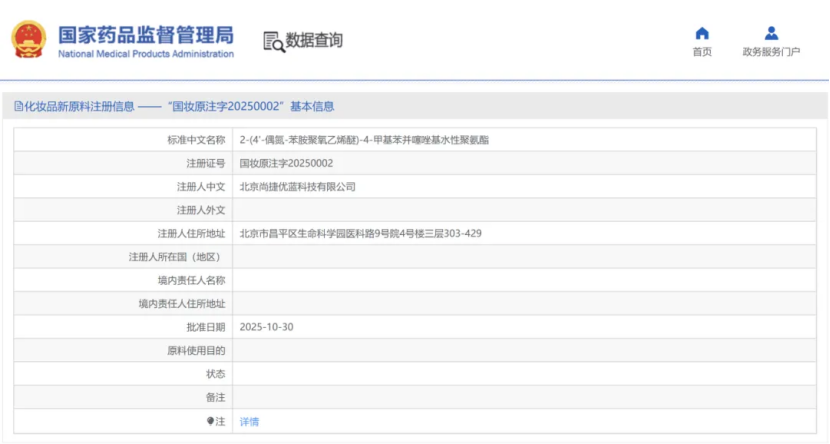
Core Viewpoint - The approval of "Anse® Luoshen Zhu" as the world's first high molecular coloring agent for cosmetics marks a significant breakthrough in China's cosmetic raw material sector, transitioning from a follower to a leader in coloring technology [1][10]. Group 1: Product Approval - "Anse® Luoshen Zhu" is the first domestically developed cosmetic raw material approved by the National Medical Products Administration (NMPA) since the implementation of the new regulations in 2021 [1]. - The product received its registration number "Guo Zhuang Yuan Zhu Zi 20250002" and was officially approved on October 30, 2025 [2]. Group 2: Technological Innovation - The product utilizes a fourth-generation water-based polyurethane synthesis technology, embedding color groups in a stable structure that exceeds skin permeability thresholds, thus addressing safety concerns associated with traditional small molecular coloring agents [3]. - This innovation establishes a new technical pathway for "non-percutaneous coloring," significantly enhancing safety in cosmetic applications [3]. Group 3: Safety and Performance Standards - "Anse® Luoshen Zhu" is characterized by high molecular weight, ensuring that coloring agents do not penetrate the skin barrier, effectively eliminating transdermal absorption risks [4]. - The product exhibits excellent performance in terms of migration resistance, solvent resistance, and thermal stability, maintaining color stability across various formulations [4]. - The manufacturing process is environmentally friendly, free from organic solvents and toxic heavy metals, aligning with sustainable development principles [4]. Group 4: Regulatory Support - The successful registration of "Anse® Luoshen Zhu" reflects the NMPA's commitment to supporting innovation in new raw materials through scientific regulation and precise evaluation [6]. - The regulatory framework has facilitated the approval process for high-tech raw materials, demonstrating a pragmatic approach to innovation [6]. Group 5: Future Development - The approval of "Anse® Luoshen Zhu" lays a solid foundation for the development of subsequent products in the "Anse®" series, with plans for further research and registration of additional colorants [8]. - The company aims to meet the diverse safety coloring needs of the cosmetics industry by introducing more reliable high molecular coloring agents in the future [8].
国家药监局:两款化妆品新原料注册获批
Yang Shi Xin Wen· 2025-10-31 08:29
Core Insights - Two new cosmetic raw materials have been approved by the National Medical Products Administration (NMPA), marking significant advancements in China's cosmetic industry [1] Group 1: New Raw Materials - The first new raw material, 2-(4'-Azo-benzene polyoxyethylene ether)-4-methyl benzothiazole-based waterborne polyurethane, is the world's first polymer coloring agent registered for use in cosmetics, developed independently in China [1] - This new polymer coloring agent can be used in leave-on and rinse-off cosmetics, excluding products with potential inhalation exposure risks [1] - The second new raw material, dimethoxy toluene propyl hydroquinone, is registered as a whitening agent and can be used in creams, lotions, gels, masks, and other skincare products, also excluding those with potential inhalation exposure risks [1] Group 2: Industry Impact - The approval of these two raw materials represents a historic leap for China in the field of cosmetic coloring technology, transitioning from a "follower" to a "leader" [1] - Since the implementation of the "Regulations on the Registration and Filing of New Cosmetic Raw Materials" in 2021, this is the second registered new raw material approved, and the first domestically developed one [1] - Following the release of the "Several Provisions to Support Innovation in Cosmetic Raw Materials" by the NMPA in January, 125 new raw materials have completed registration and filing, reflecting a year-on-year increase of 101.64%, which significantly promotes high-quality innovation in the cosmetic industry [1]
好医生集团携“生命肽”亮相四川省化妆品高质量产品发展大会
Jing Ji Wang· 2025-10-28 08:53
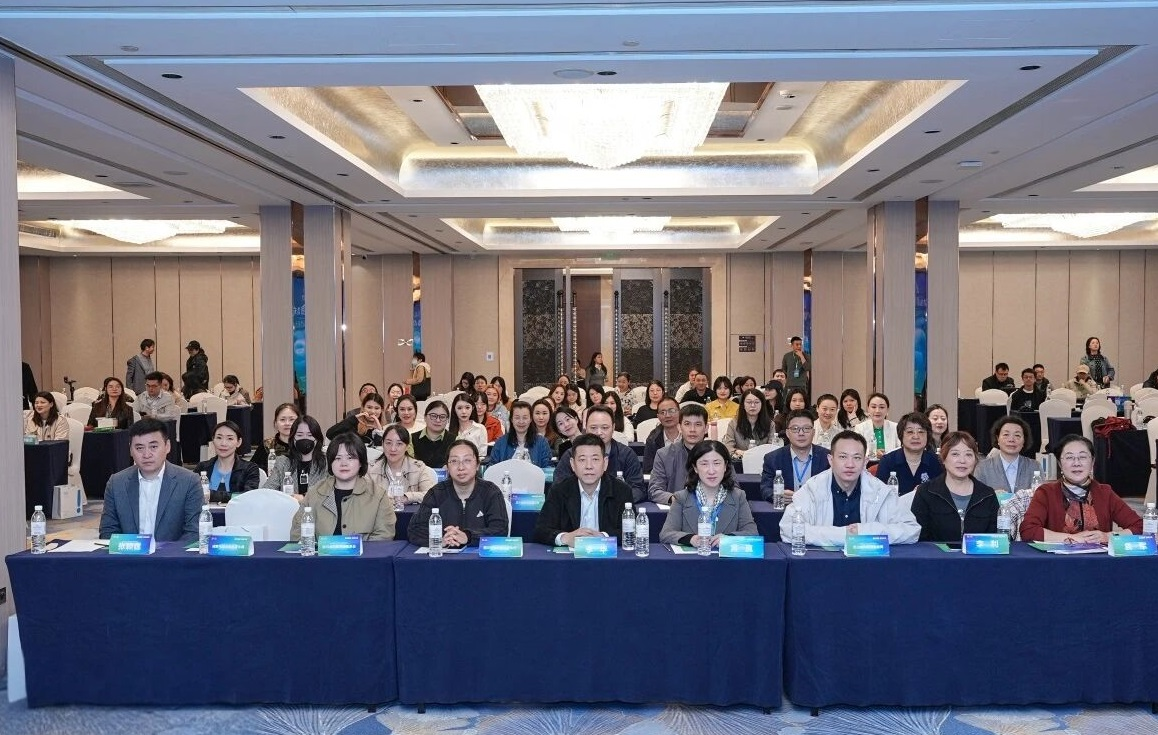
Core Insights - The Sichuan Province Cosmetics High-Quality Industry Development Conference was held in Chengdu, focusing on the theme "Shuzhuang Zhiyun · Intelligent Manufacturing Future" to explore high-quality development paths for the cosmetics industry in Sichuan [1] - Good Doctor Group participated as a brand representative, showcasing its strength in beauty raw materials and receiving high recognition for its technical research achievements [1] Group 1: Product Development - Good Doctor Group's research manager, Pu Qianqian, presented on "A Life Peptide Derived from the American Cockroach," detailing the development process of the hexapeptide-117 ingredient from three dimensions: mechanism, efficacy data, and toxicological safety [3] - The research adhered to a "Four Questions" philosophy, focusing on efficacy, the active components, the mechanism of action, and the process of efficacy [5] - Hexapeptide-117 was developed using a combination of molecular biology and clinical validation, integrating traditional medicine with modern scientific interpretation [5] Group 2: Efficacy and Testing - In vitro testing on a 3D epidermal skin model showed that hexapeptide-117 significantly increased the levels of filaggrin (FLG) and loricrin (LOR), which are crucial for skin barrier function [6] - The ingredient provides a gentle and effective soothing solution for sensitive skin experiencing redness and discomfort due to external stimuli [6] - Human efficacy tests indicated that subjects with sensitive skin using a serum containing 0.1% hexapeptide-117 for 28 days experienced better results compared to the control group [6] Group 3: Innovation and Market Impact - Hexapeptide-117 represents a new cosmetic raw material that combines natural wisdom with modern technology, marking an innovative achievement in the skincare industry [6] - The successful registration of this new ingredient in August signifies the emergence of a safer and more effective skincare component [5][6] - This development opens new avenues for innovation in the cosmetics raw material sector, enhancing consumer choices for skin health [6]
拜尔斯道夫集团祛斑美白专利成分提安明多®中文商标正式发布|最前线
3 6 Ke· 2025-10-21 11:36
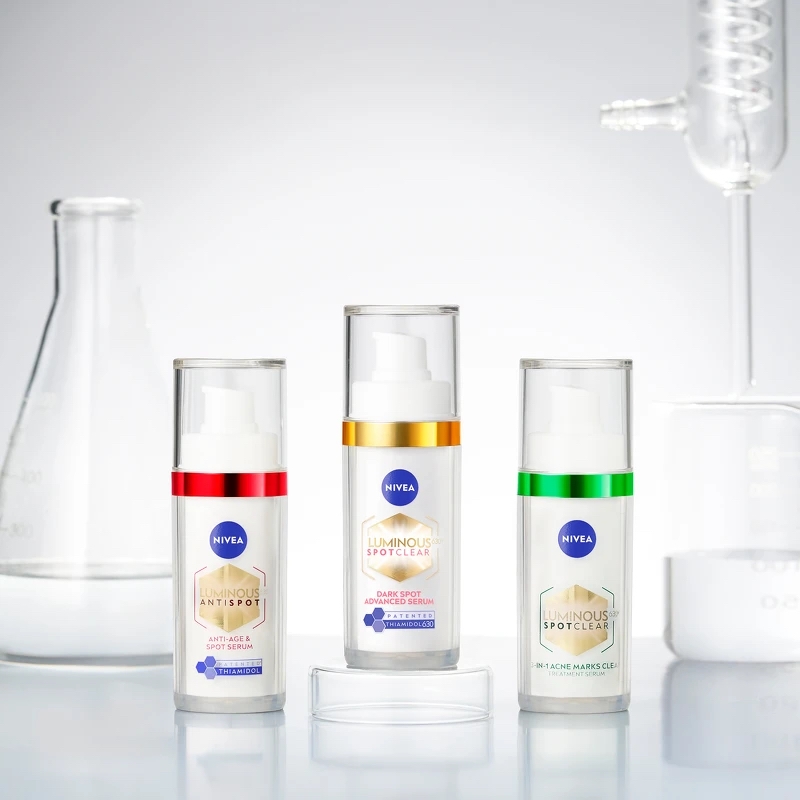
Core Insights - Bayer's new patented ingredient, Tiannmingduo®630, is the first inhibitor based on human tyrosinase screening, aimed at suppressing melanin production from the source [1][3] - The introduction of the Chinese trademark signifies the ingredient's localization for Chinese consumers and strengthens intellectual property protection [3] - Tiannmingduo®630 is a result of over 20 years of research and development, reflecting the strategy of "driving global R&D with Chinese demand" [3] Product Launch and Market Strategy - Bayer has launched 12 products containing Tiannmingduo®630, covering various skincare segments including mass market, dermatological, high-end skincare, and professional medical aesthetics [1] - The ingredient received approval as the first new whitening ingredient under the Cosmetic Supervision and Administration Regulations, indicating a significant regulatory milestone [4] - The second-generation light-activated essence featuring Tiannmingduo®630 was globally launched in Shanghai, marking a transition from cross-border to local sales [4] Research and Development - The development of Tiannmingduo®630 involved overcoming challenges in expressing recombinant human tyrosinase over 15 years, screening from over 50,000 molecules [3] - The ingredient has completed a full set of toxicological safety assessments and has been published in multiple SCI papers [3] Regulatory and Industry Support - The ingredient's market entry was facilitated by supportive policies, including the establishment of a synchronized application mechanism for new raw materials and related products [4] - Bayer emphasizes data-driven claims in the competitive beauty market and intends to combat false advertising related to unverified ingredients [4]
万亿美妆市场洗牌加速:靠营销的短命品牌退场,研发型公司逆势突围
第一财经· 2025-10-11 12:10
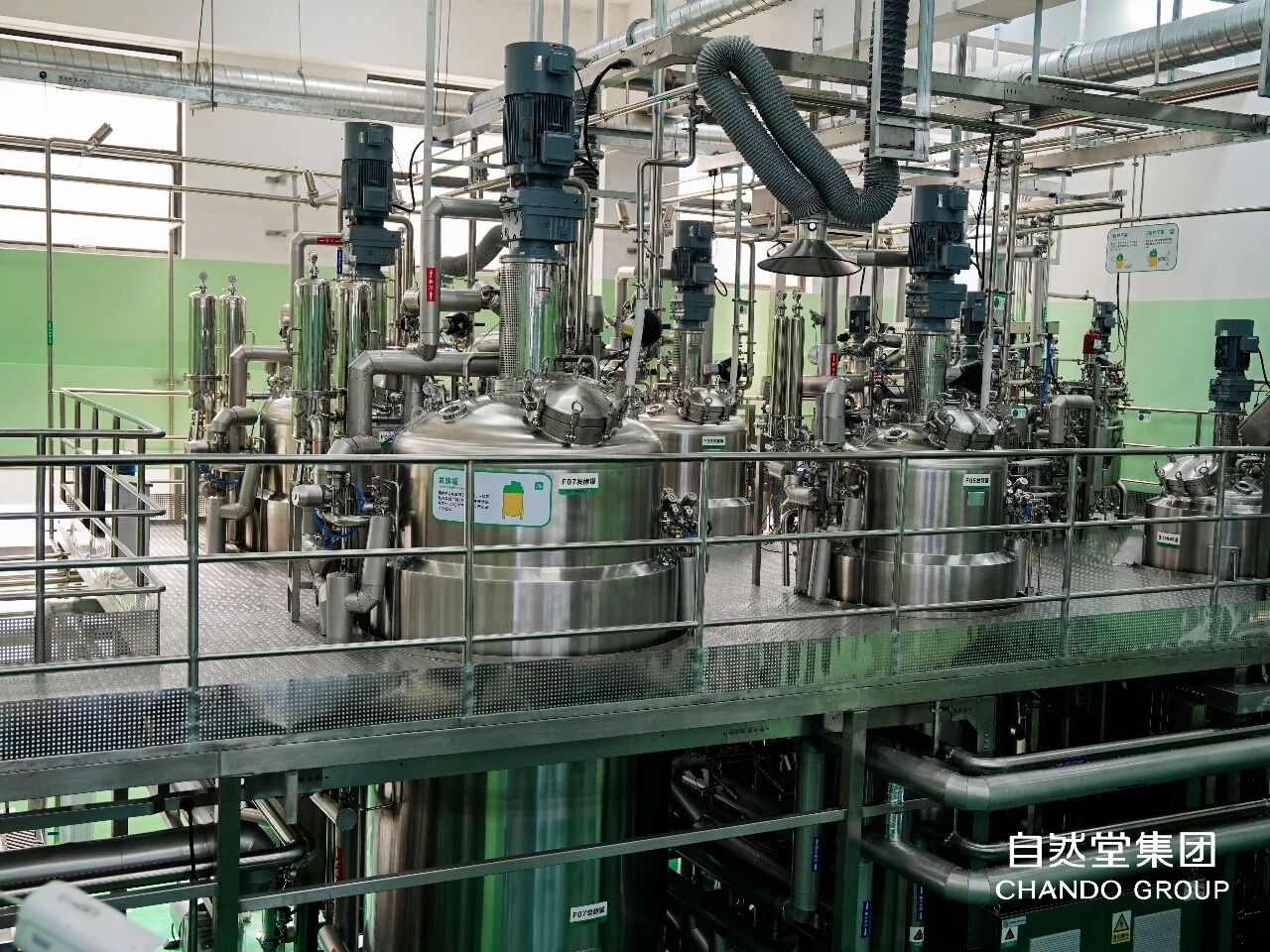
Core Viewpoint - The Chinese beauty and cosmetics industry has transitioned from "incremental competition" to "stock game," shifting from channel-driven to brand-driven strategies, with significant advancements in raw material innovation, efficacy verification, and technology transformation [3]. Group 1: Market Overview - The market size of China's cosmetics industry has exceeded 1 trillion yuan for two consecutive years since 2023, making it the largest cosmetics consumption market globally [3]. - In 2024, the total transaction volume of China's cosmetics market is projected to reach 1,073.82 billion yuan, reflecting a year-on-year growth of 2.8% [6]. Group 2: Industry Challenges - The core driving force of the cosmetics market is the raw materials, with domestic companies primarily focused on mid-to-low-end markets due to insufficient R&D investment and outdated production processes [6][9]. - High-end raw materials are still heavily reliant on imports, highlighting the need for domestic companies to enhance their R&D capabilities [6]. Group 3: Technological Advancements - Many domestic beauty companies are investing in R&D to develop new raw materials, with examples including the establishment of an intelligent bio-fermentation raw material factory by the natural brand Chando [8]. - Companies like Huaxi Biological have achieved breakthroughs in synthetic biology technology, allowing for precise control over hyaluronic acid molecular weight [9]. Group 4: Government Support - The Chinese government is encouraging innovation in upstream raw material development, implementing policies such as "immediate reporting and review" for new cosmetic raw materials [10]. - In September, Shanghai introduced measures to promote high-quality development in the cosmetics industry, offering substantial subsidies for new raw material development [10]. Group 5: Collaboration and Innovation - The industry is focusing on systematic and foundational innovation, with companies like Yunnan Betaini emphasizing the integration of medical research and technological innovation to build strong brand barriers [12]. - Collaborative projects, such as the establishment of a joint laboratory for artemisinin and traditional Chinese medicinal plants by Shanghai Jahwa and the Chinese Academy of Medical Sciences, aim to enhance the application of artemisinin in skincare [17].
万亿美妆市场洗牌加速:靠营销的短命品牌退场,研发型公司逆势突围
Di Yi Cai Jing· 2025-10-11 07:01
Core Insights - The Chinese fragrance and cosmetics industry is transitioning from "incremental competition" to "stock game" dynamics, with a shift from channel-driven to brand-driven competition [1] - The market size of China's cosmetics industry has exceeded 1 trillion yuan for two consecutive years, making it the largest cosmetics consumer market globally [1] - Companies are focusing on technological innovation, brand value reconstruction, and collaborative networks to enhance their competitiveness in the global value chain [1] Industry Trends - The Chinese cosmetics market is projected to reach a total transaction value of 1,073.82 billion yuan in 2024, reflecting a year-on-year growth of 2.8% [3] - The core driving force of the cosmetics market is the innovation in raw materials, with domestic companies primarily concentrated in the mid-to-low-end sectors [3] - Many local beauty companies are investing in R&D to develop proprietary raw materials, moving away from reliance on imports [5][6] Technological Advancements - Companies like Huaxi Biological Technology are emphasizing the importance of core technology and R&D capabilities to survive in a competitive market [2] - Natural堂 has developed over 20 proprietary raw materials, showcasing a shift from dependence on imports to self-sufficiency in high-quality ingredients [6] - The Chinese government is implementing policies to support innovation in cosmetic raw materials, including expedited review processes for new ingredients [7] Collaborative Efforts - The establishment of partnerships between research institutions and cosmetic companies aims to bridge the gap between laboratory innovations and market applications [9][12] - The launch of the "Beautiful Health Medical Research and Enterprise Transformation Center" in Nanjing signifies a commitment to enhancing collaboration in the industry [9] - Shanghai Jahwa's collaboration with the Chinese Academy of Traditional Chinese Medicine highlights the potential of traditional ingredients like artemisinin in skincare applications [11]


东方“鳄鱼油”化妆品新原料成功备案 海南化妆品原料创新迈出关键一步
Hai Nan Ri Bao· 2025-09-23 01:17
Core Insights - The Hainan cosmetics industry has achieved a significant breakthrough with the successful filing of "crocodile oil" as a new cosmetic raw material by Hainan Crocodile Treasure Industry Technology Co., Ltd. This marks the first successful filing of a new cosmetic raw material in the province, indicating a key step in the innovation of cosmetic ingredients in Hainan [1][2] Group 1 - Hainan Crocodile Treasure Industry Technology Co., Ltd. is a leading enterprise in the crocodile industry in Dongfang City, integrating breeding, research, deep processing, and sales [1] - The company anticipates a total industrial chain output value exceeding 150 million yuan in 2024, with its product range including beauty and daily chemical products, leather goods, and nutritional supplements sold nationwide [1] - The crocodile oil is derived from the local crocodile breeding industry and has been confirmed to contain various active ingredients, showing good potential for applications in skin moisturization and repair [1] Group 2 - The Hainan Provincial Drug Administration provided active guidance during the new raw material filing process, organizing a professional technical team for one-on-one support and tracking the filing progress [2] - The successful filing of crocodile oil is a concrete result of Hainan's efforts to leverage local resource characteristics to promote industrial transformation and upgrading [2] - This development is expected to inject new momentum into the high-quality development of Hainan's cosmetics industry [2]