
国家水网

Search documents
我国建成全球规模最大水利基础设施体系
Ren Min Ri Bao· 2026-02-28 00:29
本报北京2月27日电 (记者王浩、邓剑洋)今年以来,水利部指导督促各地抢抓河湖枯水期、施工影响小 的窗口期,不断推动国家水网联网、补网、强链。 习近平总书记强调,"推进中国式现代化,要把水资源问题考虑进去""加快推进水利基础设施现代化"。 我国建成全球规模最大水利基础设施体系 国家水网覆盖率超八成,农村自来水普及率达96% 惠及人口最多,全国农村自来水普及率达到96%。全面推行城乡供水一体化、集中供水规模化、小型供 水规范化、县域统管专业化"3+1"标准化建设和管护模式,规模化供水工程覆盖农村人口比例、县域统 管比例分别达71%和72%,更多偏远地区喝上了"放心水"。报装、报修、缴费等服务"网上办""码上 办",从源头到水龙头的水质保障体系逐步完善。 水安全是涉及国家长治久安的大事。世界上规模最大的水利基础设施体系,为畅通国内大循环、构建新 发展格局发挥了重要作用。 国家水网优化水资源配置,有力保障工农业用水。据初步测算,2025年我国万元国内生产总值用水量、 万元工业增加值用水量相较"十三五"末分别下降20%和25%。在我国经济总量连跨大台阶、粮食连年丰 收的情况下,全国年用水量控制在6100亿立方米以内。 ...
我国水利基础设施功能最全惠及人口最多
Xin Lang Cai Jing· 2026-02-27 23:36
本报北京2月27日电 (记者王浩、邓剑洋)今年以来,水利部指导督促各地抢抓河湖枯水期、施工影响 小的窗口期,不断推动国家水网联网、补网、强链。 转自:人民日报 习近平总书记强调,"推进中国式现代化,要把水资源问题考虑进去""加快推进水利基础设施现代化"。 全国"一盘棋",锚定推动水利高质量发展、保障我国水安全目标,"十四五"时期完成水利建设投资5.68 万亿元,2022年以来连续4年完成年投资超过1万亿元。截至目前,我国建成世界上规模最大、功能最 全、惠及人口最多的水利基础设施体系。 规模最大,国家水网覆盖范围占国土面积比例达80.3%。"十四五"时期,181项重大水利工程开工建设, 省、市、县级水网与国家水网有序衔接,水网"最后一公里"不断打通。 水安全是涉及国家长治久安的大事。世界上规模最大的水利基础设施体系,为畅通国内大循环、构建新 发展格局发挥了重要作用。 国家水网优化水资源配置,有力保障工农业用水。据初步测算,2025年我国万元国内生产总值用水量、 万元工业增加值用水量相较"十三五"末分别下降20%和25%。在我国经济总量连跨大台阶、粮食连年丰 收的情况下,全国年用水量控制在6100亿立方米以内。 ...
我国建成全球规模最大水利基础设施体系 国家水网覆盖率超八成,农村自来水普及率达96%
Ren Min Ri Bao· 2026-02-27 23:15
本报北京2月27日电 (记者王浩、邓剑洋)今年以来,水利部指导督促各地抢抓河湖枯水期、施工影响 小的窗口期,不断推动国家水网联网、补网、强链。 惠及人口最多,全国农村自来水普及率达到96%。全面推行城乡供水一体化、集中供水规模化、小型供 水规范化、县域统管专业化"3+1"标准化建设和管护模式,规模化供水工程覆盖农村人口比例、县域统 管比例分别达71%和72%,更多偏远地区喝上了"放心水"。报装、报修、缴费等服务"网上办""码上 办",从源头到水龙头的水质保障体系逐步完善。 水安全是涉及国家长治久安的大事。世界上规模最大的水利基础设施体系,为畅通国内大循环、构建新 发展格局发挥了重要作用。 国家水网优化水资源配置,有力保障工农业用水。据初步测算,2025年我国万元国内生产总值用水量、 万元工业增加值用水量相较"十三五"末分别下降20%和25%。在我国经济总量连跨大台阶、粮食连年丰 收的情况下,全国年用水量控制在6100亿立方米以内。 "十五五"规划建议提出,"加快建设现代化水网"。水利部锚定增强洪涝灾害防御、水资源统筹调配、城 乡供水保障能力目标,不断完善国家水网主骨架和大动脉,着力推动水利高质量发展、保障我国 ...
提供更加有力的水安全保障
Xin Lang Cai Jing· 2026-02-25 22:05
水旱灾害防御能力显著地开 一一"wa : 来源只直换失占国内生产总值的比例由"十三五"的0-28岁 表村自来水 comments of the 17998 座. Entered and 3741 条 器及車 。 96% 农村俱水晶城 规模化供水工程 直直农村人口比例 统增比例 n Anaka Android Camada 3741条 Manax Park 26833 型(次), Rinara 7854度(次), 概念191万亩 W 72% 71% 水资源优化配置能力显著提升 。 国家水网 唐昌奉 "十四五" 期间 联增 2025年 量优雅的机 80.3% : 5300万面 实成水利建设检查 1.28万亿元 t 用水北海道路工程南面周发展定盘准进,东、中线一期工程度重大。 上一篇次主演临波士国商贸易发展定盘推进,东、中国一期工程师出席本版 850亿,仅行为米 连续 4 年超万亿元 壓增水利工程 供水脂力 348亿 立方米 实施各类水利项目 47563个 理河干流浮山以下段行情区调整和建设。 四川头济感等重大工程开工建设27项 2025年 水资源节约集约利用能力显著提升 ▼ 万元国内生产总值用水量 中国水权交易所 ...

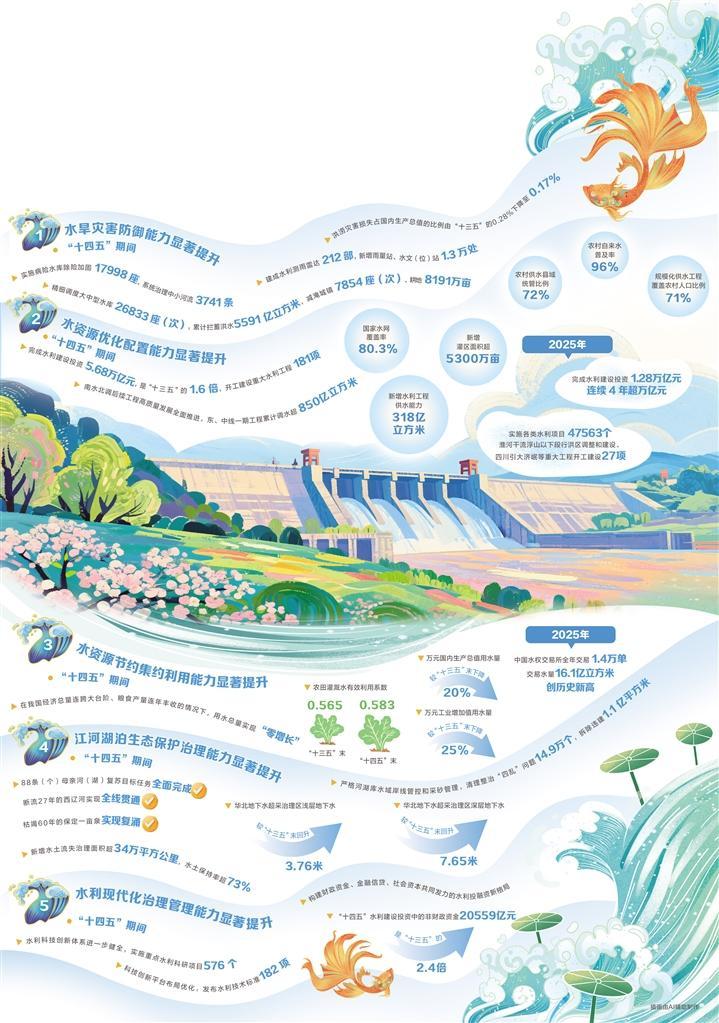
中国完成水利建设投资1.28万亿 国家水网覆盖超八成国土面积
Chang Jiang Shang Bao· 2026-01-11 23:29
Core Insights - The Ministry of Water Resources of China announced plans for significant water infrastructure projects, including the initiation of 27 major water projects by 2025 and the completion of 9,420 rural water supply projects, enhancing water security for 134 million rural residents [1][3] Investment and Financing - During the 14th Five-Year Plan period, total investment in water infrastructure is projected to reach 5.68 trillion yuan, with annual investments exceeding 1 trillion yuan for four consecutive years since 2022 [2][4] - In 2025, the investment in water construction is expected to be 1.28 trillion yuan, creating 3.15 million jobs and contributing to economic stability and employment [3][4] - The attraction of social capital for water projects reached 548.5 billion yuan during the 14th Five-Year Plan, marking an 86.4% increase compared to the previous plan, with 147.6 billion yuan expected in 2025 alone, setting a historical record [4] Major Projects and Achievements - A total of 181 major water projects are set to commence during the 14th Five-Year Plan, with 94 projects already completed and operational [2] - Key projects include the Yellow River Guxian, the South-to-North Water Diversion Project, and the second phase of the Huai River to the sea waterway, among others [2][3] - The national water network currently covers 80.3% of the country's land area, providing essential water security for major strategic implementations and economic zones [2]
南水北调调水超845亿立方米
Xin Lang Cai Jing· 2025-12-21 21:43
Core Insights - The South-to-North Water Diversion Project's East and Middle Line Phase I has celebrated its 11th anniversary, having delivered over 84.5 billion cubic meters of water to northern regions [1] Group 1: Project Impact - The project has benefited approximately 195 million people along its route, significantly improving living standards and supporting local industry development [1] - In Tianjin, the project has enhanced drinking water quality for over 2 million people by replacing underground water sources with high-quality external water [1] - In Shandong, the East Line project has facilitated a shift from drought-resistant cotton to high-yield food crops [1] Group 2: Economic and Environmental Benefits - In Henan, the availability of higher quality water has led to the production of better-quality millet vinegar, boosting related industries [1] - The project has enabled over 5 million people in the Hebei Heilanggang River basin to stop using brackish water for drinking [1] - The China South-to-North Water Diversion Group is accelerating the construction of key national water network projects to enhance water resource allocation and ensure drinking water safety [1]
引汉济渭二期工程北干线全线贯通
Ren Min Ri Bao· 2025-12-19 22:10
Core Viewpoint - The completion of the second phase of the Yinhang-Jiwei project marks a significant advancement in addressing water resource shortages in the Weibei "dry belt" region, enhancing water supply for both residential and industrial needs in key areas of Shaanxi province [2] Group 1 - The Yinhang-Jiwei project is a crucial component of the national water network [2] - The northern trunk line of the second phase spans 89.54 kilometers [2] - The project aims to better meet the water demand for daily life and industrial use in Xi'an, Xianyang, Weinan, and Yangling [2]
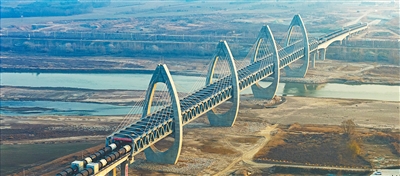
今日贯通
中国能源报· 2025-12-19 08:42
Core Viewpoint - The completion of the northern trunk line of the Yinhang-Jiwei Phase II project is a significant milestone in optimizing water resource allocation in Shaanxi Province and addressing water scarcity issues in the Weibei region [3][5]. Group 1 - The Yinhang-Jiwei project is a crucial part of the national water network, serving as a strategic water resource project for Shaanxi [3]. - The northern trunk line, which spans 89.54 kilometers, has been fully connected, marking a key engineering achievement [1][3]. - The project aims to alleviate the water shortage in the Weibei "dry belt" and is essential for the region's water resource management [3]. Group 2 - Once completed, the project will enable an annual water transfer of 1.5 billion cubic meters, benefiting 1,411 million people across major cities like Xi'an, Xianyang, Weinan, and Yangling, as well as 11 smaller cities [5]. - The initiative is expected to significantly improve the over-extraction of groundwater in the Guanzhong area and support ecological water needs [5]. - Through water rights exchange, the project will provide water allocation indicators for Shaanxi's northern region, supporting a provincial GDP of 1.1 trillion yuan and promoting ecological improvement and high-quality development in the Yellow River basin [5].
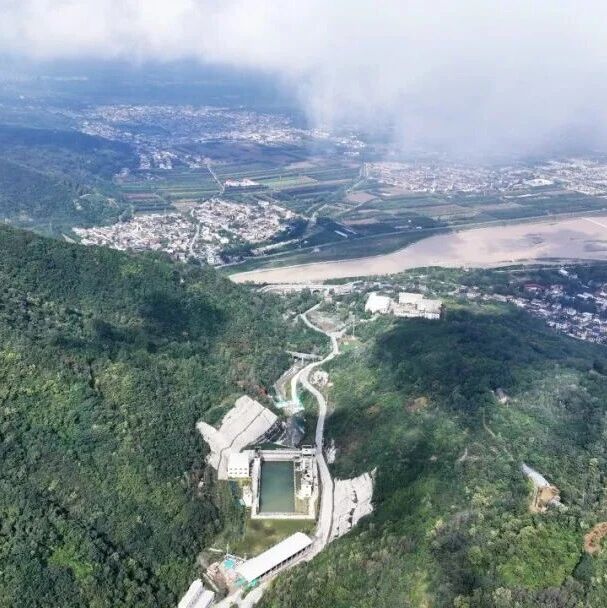
现代化水网如何越织越密
Ren Min Ri Bao· 2025-12-09 09:16
Core Viewpoint - The construction of a modern water network is essential for addressing water resource management, ecological balance, and disaster prevention in China, as highlighted in the "14th Five-Year Plan" and ongoing projects [1][2]. Group 1: Modern Water Network Construction - The modern water network aims to enhance flood disaster prevention, water resource allocation, and urban-rural water supply capabilities, with significant projects already completed during the "14th Five-Year" period [1]. - A total of 35 out of 40 key water transport channels outlined in the National Water Network Construction Plan have been built or are under construction, contributing to a more balanced water resource distribution across regions [1]. Group 2: Investment and Financing Reforms - The water sector is exploring integrated construction and management models, utilizing public-private partnerships (PPP) to attract social capital for water network projects [3]. - The Dashi Gorge Water Conservancy Project in Xinjiang serves as a model for a multi-channel financing system, addressing slow investment recovery in major water projects [3]. Group 3: Digital Empowerment - The water sector is advancing digital technologies, including digital twin models for water networks, to enhance monitoring and operational efficiency [4]. - Initiatives include the establishment of a National Water Network Dispatch Center and a Big Data Center to support the integration of physical and digital water networks [4]. Group 4: Public Benefits - The focus is on improving water resource infrastructure in key urban areas, energy bases, and agricultural regions to ensure water security and high-quality public services [5]. - Efforts are being made to extend water network coverage to smaller rivers and rural areas, enhancing accessibility and service quality for local communities [5].
新华网:2025年度水利科学技术研究五大前沿热点词发布
Shui Li Bu Wang Zhan· 2025-11-28 10:21
Core Insights - The National Science and Technology Terminology Approval Committee held its 2025 annual work meeting, announcing 68 frontier research hot terms across 11 disciplines, including five key terms related to water conservancy technology [1][3] Water Conservancy Technology Hot Terms - "National Water Network" refers to a comprehensive water conservancy engineering system that integrates water resource optimization, flood prevention, and ecological protection, utilizing natural rivers and lakes as a foundation [2] - "Smart Dam" represents the integration of new information technologies with traditional dam engineering, focusing on IoT, big data, AI, and digital twin technologies for enhanced management throughout the dam's lifecycle [2] - "Digital Twin Water Conservancy System" involves the digital mapping and intelligent simulation of physical water conservancy elements, enabling real-time interaction and optimization [2] - "Drought-Flood Transition" describes the extreme weather phenomenon where a region experiences severe drought followed by sudden heavy rainfall, necessitating urgent flood prevention measures [2] - "Happy Rivers and Lakes" emphasizes maintaining ecological stability and promoting high-quality development in river and lake systems, ensuring safety and satisfaction for local communities [2] Institutional Framework - The National Science and Technology Terminology Approval Committee, authorized by the State Council, is responsible for the authoritative approval and publication of scientific terminology, with a dedicated committee for water conservancy terminology [3] - Starting in 2024, the committee will regularly collect and publish annual frontier research hot terms to enhance the development of scientific disciplines and showcase advancements in science and technology [3]
