欧亚经济联盟

Search documents
共同擘画中俄关系新蓝图
Jing Ji Ri Bao· 2026-02-06 20:26
双方应持续深化各领域务实合作。中俄各自发展振兴动力充沛,应在巩固商品贸易、基础设施对接等传 统合作的同时,进一步发挥两国资源禀赋与产业体系互补优势,积极拓展电商、服务贸易、本币结算等 合作;尤其要以共建"一带一路"与欧亚经济联盟对接为平台,共同探索人工智能、北极航道开发等新领 域合作。今年是中国"十五五"开局之年,中方将更加积极主动扩大高水平对外开放,同包括俄罗斯在内 的世界各国共享发展新机遇。 作为负责任大国和联合国安理会常任理事国,中俄合作还应展现更多大国担当。中俄两国有义务推动国 际社会坚守公平正义,坚定捍卫二战胜利成果,坚决维护以联合国为核心的国际体系和国际法基本准 则,携手维护全球战略稳定。两国还应进一步加强在上海合作组织、金砖国家等多边平台的密切协作, 着力提升全球南方国家在全球治理中的代表性和话语权,向着构建新型国际关系和人类命运共同体的目 标不断迈进。 今年是中俄战略协作伙伴关系建立30周年、《中俄睦邻友好合作条约》签署25周年和"中俄教育年"启动 之年。站在新起点上,中方愿与俄方一道落实两国元首重要共识,加强战略沟通,深化务实合作,推动 中俄关系在新的一年开创新局。这种从历史到未来的世代友好 ...
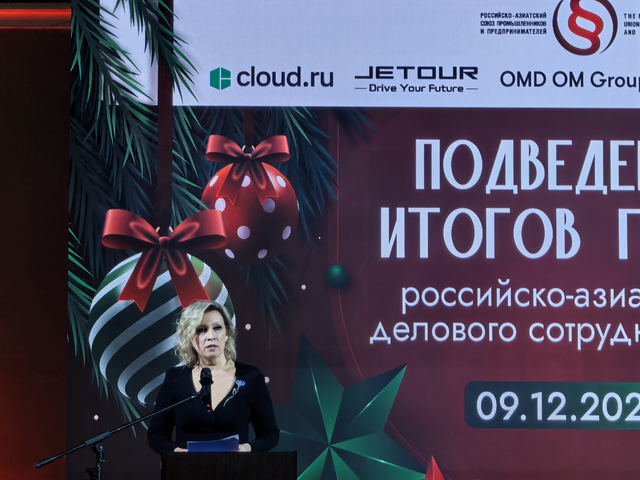
燕斐受邀出席 “俄亚商业合作年度总结晚宴”
Xin Lang Cai Jing· 2025-12-22 09:05
Core Insights - The annual summary dinner of the Russia-Asia Industrialists and Entrepreneurs Union was successfully held in Moscow, highlighting the substantial progress in economic integration between Russia, China, and other Asian countries [1] - The event gathered over 300 guests, including diplomats, government officials, and business leaders from various Asian countries, to summarize cooperation experiences and plan future developments [1] - The chairman of the Union emphasized the importance of mutual benefit and win-win cooperation between Russia and China, particularly in the context of the Belt and Road Initiative and the Eurasian Economic Union [1] Group 1 - The event served as an effective platform for transforming political consensus into actual business projects and real investments [3] - The Beijing office of the Russia-Asia Industrialists and Entrepreneurs Union reported on its progress in promoting cooperation between the governments and enterprises of China and Russia [5] - Various diplomats and business representatives delivered speeches, including notable figures from China, the Philippines, and Sri Lanka, emphasizing the significance of the event [7] Group 2 - The "Golden Dragon Award" was presented during the event to recognize outstanding contributors in key areas, with awards given to individuals and organizations for their contributions to Russia-Asia business cooperation [7] - Experts engaged in fruitful discussions on cooperation prospects in economics, finance, investment, and culture, indicating a commitment to continue international exchanges and expand cooperation networks [9] - Prior to the event, constructive talks were held with Moscow's Department of Foreign Economic and International Relations, focusing on practical cooperation in digital economy, technological innovation, and education [11]

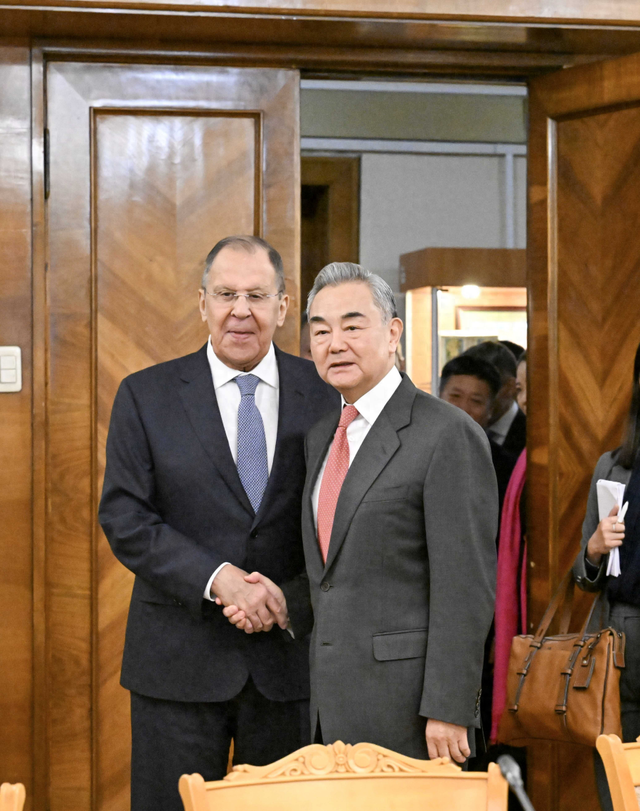
大外交丨王毅访俄、中俄对表,对日本发出“共同反对信号”
Xin Lang Cai Jing· 2025-12-04 11:16
Core Viewpoint - The meeting between Chinese Foreign Minister Wang Yi and Russian Foreign Minister Sergey Lavrov highlights the strengthening of Sino-Russian relations amidst a turbulent international environment, emphasizing high-level cooperation and strategic trust between the two nations [2][3]. Group 1: Strategic Cooperation - Wang Yi and Lavrov discussed significant issues related to strategic security interests, achieving new consensus and enhancing strategic mutual trust [3]. - The two countries have established a comprehensive cooperation mechanism covering various fields, including energy, investment, and strategic security, which has deepened political mutual trust [4]. Group 2: Economic Relations - The bilateral trade volume between China and Russia is projected to reach $244.82 billion in 2024, reflecting a year-on-year increase of 1.9% [4]. - Both countries are actively working on aligning the Belt and Road Initiative with the Eurasian Economic Union, expanding their economic cooperation [4]. Group 3: Regional Security Concerns - The discussions included a strong consensus on issues related to Japan, with both nations committed to resisting any attempts to revise the historical outcomes of World War II and countering militaristic tendencies [5][7]. - Wang Yi emphasized the need for continued coordination to deter Japan's right-wing provocations that threaten regional peace and stability [5][7]. Group 4: Ukraine Crisis - The meeting also addressed the ongoing Ukraine crisis, with both sides exchanging views on the situation and expressing support for peaceful resolutions [8][10]. - China aims to play a constructive role in political solutions to the crisis, leveraging its relationships with both Russia and the West to facilitate dialogue [10].
【环球财经】俄暂时允许从哈吉两国公路进口未标签商品
Xin Hua Cai Jing· 2025-10-25 01:39
Core Points - Russian President Putin signed a decree allowing goods from Kyrgyzstan and Kazakhstan to enter Russia via road transport without the need for Eurasian Economic Union labels until December 10, 2025 [1] - Russian entities importing goods from Kazakhstan and Kyrgyzstan will not need to provide proof of the goods' origin from the Eurasian Economic Union, nor will they need to mark or provide related information [1] - The decree emphasizes that such imports will not be considered a violation of Russian customs regulations under the specified conditions [1] Industry Impact - The new regulation aims to alleviate the backlog of trucks at the Russia-Kazakhstan border, which had reportedly stranded thousands of vehicles due to increased customs controls [1]
俄总理:俄商品出口正更多面向欧亚经济联盟、独联体、金砖国家、上合组织等市场
Xin Hua Cai Jing· 2025-10-22 00:22
Core Viewpoint - Russian Prime Minister Mishustin emphasized that despite external pressures from unfriendly countries, Russian manufactured goods still have a market, and Russia is open to honest dialogue and mutually beneficial trade [1] Group 1: Export Performance - According to the Russian Ministry of Economic Development, Russia's export volume exceeded $25.5 billion in the first half of 2025 [1] - Non-energy product exports accounted for over 12% of Russia's GDP in the first half of this year [1] - By the end of 2024, the share of exports to the Eurasian Economic Union, CIS, BRICS, and SCO countries is expected to exceed 85% of Russia's total export volume [1] Group 2: Market Diversification - Russian goods are increasingly being exported to more promising markets, including Asia, Africa, and Latin America [1] - The cooperation with Asian, African, and Latin American countries has been steadily increasing over the past four years [1] - The products exported to unfriendly countries include energy, fertilizers, nuclear fuel, metals, fish, and seafood [1]
【环球财经】吉总理:努力将欧亚经济联盟建设成多极世界重要一极
Xin Hua She· 2025-08-15 13:49
Core Viewpoint - The Eurasian Economic Union (EAEU) has become an important economic development center in the global economic landscape over the past decade, with significant growth in various sectors and trade agreements [1]. Economic Growth - The total economic output of the EAEU has increased by 18% over the past ten years, exceeding $2.5 trillion [1]. - Industrial production within the EAEU has grown by nearly 30%, while agricultural production has increased by 25% [1]. - Intra-union trade has more than doubled, with Kyrgyzstan's trade with EAEU countries also experiencing a twofold increase [1]. International Cooperation - The EAEU has signed multiple trade agreements to expand partnerships with significant integration organizations across Eurasia and beyond [1]. - The EAEU aims to establish itself as a harmonious development pole in a multipolar world by 2030 [1]. Integration Efforts - Russian Prime Minister Mishustin emphasized the need for continued efforts to strengthen integration mechanisms, which align with the interests of all EAEU member states [1]. - There is a call to eliminate restrictions on the free movement of goods, services, and capital, as well as to improve the business environment [1]. Member States - The EAEU was officially launched on January 1, 2015, and its member countries include Russia, Kazakhstan, Belarus, Kyrgyzstan, and Armenia [1].
吉总理:努力将欧亚经济联盟建设成多极世界重要一极
Xin Hua She· 2025-08-15 13:27
Core Insights - The Eurasian Economic Union (EAEU) has become an important economic development center in the global economic landscape over the past decade [1] - The EAEU aims to establish itself as a harmonious development pole in a multipolar world by 2030 [1] Economic Growth - The total economic output of the EAEU has increased by 18% over the past ten years, exceeding $2.5 trillion [1] - Industrial production within the EAEU has grown by nearly 30%, while agricultural production has increased by 25% [1] - Intra-EAEU trade has more than doubled, with Kyrgyzstan's trade with EAEU countries also experiencing a twofold increase [1] International Cooperation - The EAEU has signed multiple trade agreements to expand partnerships with significant integration organizations across Eurasia and other regions [1] - There is a call for continued efforts to eliminate restrictions on the free movement of goods, services, and capital, as well as to improve the business environment [1]
俄外交部:俄方愿进一步推动欧亚经济联盟与共建“一带一路”对接合作
Xin Hua She· 2025-08-13 12:48
Core Viewpoint - Russia is willing to further promote cooperation between the Eurasian Economic Union (EAEU) and the Belt and Road Initiative (BRI) proposed by China, aiming to deepen collaboration and achieve new heights in their partnership [1]. Group 1: Cooperation Framework - Russia, as a member of the EAEU, is working with other member countries to deepen cooperation with China under the framework of the EAEU and BRI [1]. - The alignment of the EAEU with the BRI is seen as a crucial part of the comprehensive strategic partnership between Russia and China [1]. Group 2: Strategic Importance - The Russian side regularly participates in forums related to the BRI organized by China, viewing the initiative as compatible with Russia's vision for integration on the Eurasian continent [1]. - Strengthening the alignment of ideas between Russia and China is believed to facilitate connectivity and promote the development of a "Greater Eurasian Partnership" [1].
拉夫罗夫:普京9月访华具有非常重要的意义
Guan Cha Zhe Wang· 2025-07-29 08:14
Group 1 - The core viewpoint of the articles emphasizes the importance of President Putin's upcoming visit to China for maintaining historical memory, particularly in the context of commemorating the 80th anniversary of the victory in the Chinese People's Anti-Japanese War [1] - Russian Foreign Minister Lavrov highlighted the deep, broad, and strategic nature of the relationship between Russia and China, indicating a strong mutual trust [1] - The visit is seen as a continuation of a tradition where leaders of neighboring countries attend significant events for each other, reflecting the high level of the comprehensive strategic partnership between China and Russia [1][2] Group 2 - The current global changes and the new phase of high-quality development of the Belt and Road Initiative were mentioned, with an emphasis on deepening practical cooperation across various fields between China and Russia [2] - The commitment to principles of peace, cooperation, and mutual benefit in the context of the Belt and Road Initiative and the Eurasian Economic Union was reiterated, aiming to enhance bilateral development and modernization [2]
俄罗斯国库告急!普京急需中国拉一把,但得先明白一个道理
Sou Hu Cai Jing· 2025-06-22 02:43
Group 1 - The core viewpoint of the articles highlights the strengthening of energy cooperation between China and Russia, driven by strategic leadership from both nations, resulting in mutual benefits for their peoples [1][3]. - The stability of China-Russia energy cooperation is increasingly important amid current international energy market volatility, with new cooperative projects underway that expand beyond simple trade to encompass the entire energy industry chain [3][8]. - A historic agreement has been confirmed, where China proposed to increase annual oil supply from Russia by 2.5 million tons, with the commitment from Russia to ensure this supply through the Kazakhstan pipeline network, potentially extending the supply period to 2034 [3][6]. Group 2 - Despite the potential benefits of the Kazakhstan pipeline, China has expressed concerns regarding the feasibility of this route due to high costs and logistical challenges, indicating that while the Kazakhstan option is not entirely dismissed, it requires further evaluation [4][6]. - Russia's urgent need for financial support from China is underscored by the economic pressures it faces due to the ongoing Ukraine conflict and declining energy export revenues, which have strained its national treasury [6][8]. - The shift in Russia's energy strategy towards Asia, particularly China, is a response to Western sanctions and the need to secure a long-term energy partnership, emphasizing the strategic value of land-based pipeline transportation for energy security [8].