毒丸计划

Search documents
辛克莱恶意收购斯克里普斯,谈判破裂股价上涨
Jing Ji Guan Cha Wang· 2026-02-11 13:17
Group 1 - Sinclair Broadcast Group's acquisition of E.W. Scripps has shifted from friendly negotiations to a hostile takeover as of February 10, 2026 [1] - Sinclair has increased its stake in Scripps to 9.9% through open market purchases and proposed a buyout at $7 per share, totaling over $580 million [2] - Early discussions between the two companies focused on control distribution post-merger and the formation of an independent board, but governance structure disagreements and cultural differences led to the Scripps family's withdrawal [3] Group 2 - The U.S. broadcasting industry is facing challenges from "cord-cutting," prompting operators to seek mergers to reduce costs and enhance bargaining power with pay-TV providers [4] - Sinclair initiated a strategic review of its broadcasting business in August 2025, exploring potential mergers with peers, while reporting a 5% year-over-year decline in total revenue to $784 million in Q2, with a 6% drop in advertising revenue [5] - As of February 10, 2026, Sinclair's stock closed at $15.24, up 4.24% for a total market capitalization of approximately $1.062 billion [6]
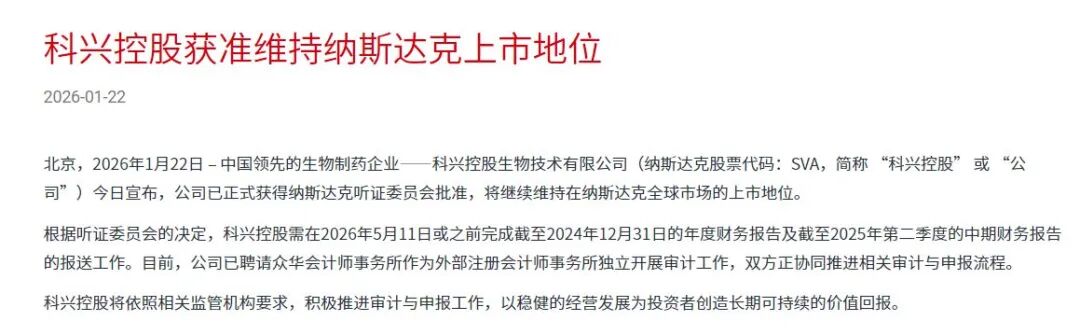
昔日“疫苗之王”科兴控股大消息:美股上市地位保住了!年收入曾超千亿元 陷10年内斗困局 停牌超6年 曾宣布分红530亿元
Mei Ri Jing Ji Xin Wen· 2026-01-23 16:53
Core Viewpoint - The recent decision by the Nasdaq Hearing Committee allows SVA (Sinovac Biotech Ltd.) to maintain its listing status on the Nasdaq Global Market, contingent upon the timely submission of financial reports by May 11, 2026 [1][4]. Financial Reporting Requirements - Sinovac must complete the submission of its annual financial report for the fiscal year ending December 31, 2024, and the interim financial report for the second quarter of 2025 by May 11, 2026 [5][6]. - The company has engaged Zhonghua Certified Public Accountants to conduct independent audits and is working collaboratively to meet these reporting requirements [1][6]. Historical Context and Challenges - The delisting crisis began over two months ago when Sinovac received a delisting notice from Nasdaq due to its failure to submit the 20-F annual report by the extended deadline of November 11, 2025 [5][6]. - The company attributed the delay to the resignation of its previous independent auditor [5]. Financial Performance - Sinovac's revenue and profit have significantly declined since the peak of the COVID-19 vaccine demand, with revenues dropping by 92.30% in 2022 and 69.97% in 2023, and net profits decreasing by 98.66% and 187.75% respectively [7]. - In 2021, the company reported a record revenue of 135.49 billion yuan, a 3694.36% increase year-on-year, and a net profit of 59.21 billion yuan, a 7571.97% increase [7]. Product Pipeline and Market Opportunities - Sinovac has a diverse product pipeline beyond COVID-19 vaccines, including vaccines for hepatitis A, influenza, varicella, and inactivated polio vaccine [7]. - Recent approvals for new products, such as the 23-valent pneumococcal polysaccharide vaccine, and successful bids for international contracts, such as the exclusive influenza vaccine order in Chile, indicate potential growth in international markets [7]. Governance Issues - Sinovac has faced ongoing internal governance challenges, stemming from a power struggle between co-founders since 2016, which has led to significant operational disruptions [8][9]. - The company has been under scrutiny for governance failures, resulting in its stock being suspended by Nasdaq in 2019 [10].

YZi Labs 与 CEA Industries 因 BNB 金库战略与公司治理爆发公开分歧
Xin Lang Cai Jing· 2026-01-05 14:26
Core Viewpoint - YZi Labs accuses CEA Industries' board of implementing a poison pill strategy and amending bylaws to entrench board power and weaken shareholder rights, while demanding fair nomination and election processes for the 2025 shareholder meeting [1] Group 1 - YZi Labs claims that CEA Industries' defensive measures are aimed at solidifying board control and diminishing shareholder influence [1] - YZi denies the assertion that the company "never considered alternative tokens," stating that management had evaluated other assets [1] - CEA Industries responds by asserting that its board governance is compliant and welcomes shareholder communication, emphasizing its commitment to a BNB-centric DAT strategy [1] Group 2 - CEA Industries currently holds approximately 516,000 BNB [1]
科兴生物再触退市红线,治理困局拖累美股上市地位
Hua Xia Shi Bao· 2025-11-22 14:31
Core Viewpoint - The company, Sinovac Biotech, is facing a delisting crisis from NASDAQ due to its failure to submit the 2024 annual report on time, which has raised concerns about its future as a publicly traded entity [2][3]. Group 1: Delisting Crisis - Sinovac received a delisting notice from NASDAQ on November 12, 2025, after failing to submit its annual report by the deadline [2]. - The company has been suspended from trading since 2019 due to governance issues and is now facing a second delisting threat [2][3]. - Sinovac has hired a new auditing firm, UHY LLP, and plans to apply for a hearing to delay the delisting process, asserting that its core business remains unaffected [2][3]. Group 2: Governance Issues - The company has a history of governance problems, stemming from a power struggle between its founders, Yin Weidong and Pan Aihua, which has led to significant internal conflicts [3][4]. - The governance issues peaked in 2018, resulting in chaotic management practices, including attempts to dilute each other's shares [4][5]. Group 3: Financial Performance - Sinovac experienced a significant financial boost during the COVID-19 pandemic, reporting a net profit of $8.46 billion in 2021 [5]. - However, the company has faced declining revenues from its COVID-19 vaccine, leading to a reported net loss of $258 million in 2023 [7][8]. - The company has a substantial cash reserve of $10.3 billion, which has become a focal point in the ongoing power struggle among shareholders [6][7]. Group 4: Dividend Controversy - Sinovac announced a controversial dividend plan totaling $7.448 billion, which raised concerns given its current market capitalization of only $389 million [6][7]. - The dividend plan is seen as a way to compensate shareholders for the lack of liquidity due to the stock suspension [7]. Group 5: Ongoing Internal Conflicts - The company is currently experiencing intense boardroom battles, with a recent special shareholder meeting resulting in the removal of the existing board and the return of founder Yin Weidong [8][9]. - The legitimacy of the special meeting has been challenged by the current chairman, Li Jiaqiang, citing a court injunction [9].

内斗不止,分红530亿:科兴生物遭纳斯达克驱逐退市
Guan Cha Zhe Wang· 2025-11-21 08:57
Core Viewpoint - Sinovac Biotech, once a leading player in the vaccine industry, is facing a severe delisting crisis due to a prolonged internal power struggle rather than market competition or business decline [1] Group 1: Company Background - Sinovac Biotech was founded in 2001 by Yin Weidong and Pan Aihua, combining technical expertise and capital investment [2] - The company expanded its product line from hepatitis A vaccine to various vaccines, including those for influenza and SARS [2][3] - Sinovac successfully went public on NASDAQ, but internal conflicts began to emerge as the company grew [3] Group 2: Internal Conflicts - Fundamental disagreements arose between the founders regarding the ownership and control of the company, leading to factionalism among shareholders [3] - The conflict escalated in 2018, resulting in physical altercations at the company’s facilities and significant financial losses, including the destruction of 6 million vaccine doses [3] - NASDAQ suspended trading of Sinovac shares in 2019 due to the company's failure to provide required information, leading to a stagnant stock price of $6.47 and a market cap of approximately 28 billion RMB [3] Group 3: Financial Performance and Dividends - The COVID-19 pandemic provided a temporary revival for Sinovac, with the company earning a net profit of $8.46 billion (approximately 600 billion RMB) in 2021 from its vaccine [4] - Despite the financial success, internal disputes meant that not all founders benefited equally, with Pan Aihua receiving no dividends and facing legal issues [4] - A controversial "liquidation-style dividend" proposal was introduced, offering up to $124 per share, totaling around 74.4 billion USD (approximately 530 billion RMB), which was overwhelmingly supported by shareholders [6] Group 4: Current Situation and Future Outlook - The company is currently in a precarious position, having failed to publish its annual report on time, leading to NASDAQ's decision to delist it on November 21 [6][7] - Sinovac has appealed the delisting decision, but the situation appears more dire than previous instances [6][7] - The internal power struggle has left the company in a state of decline, with no clear winners among the founders or shareholders [7]
科兴生物法律战复盘:两轮双头董事会七年之争
经济观察报· 2025-08-26 11:56
Core Viewpoint - The article discusses the ongoing governance disputes at Sinovac Biotech, highlighting the complexities of shareholder dynamics and legal challenges surrounding board elections and corporate governance [2][7][12]. Group 1: Company Background - Sinovac Biotech, a prominent player in the vaccine industry, has generated over 130 billion yuan in revenue and more than 96 billion yuan in net profit from 2021 to 2022 [4]. - The company is registered in Antigua and Barbuda, a known tax haven, which complicates legal oversight and shareholder rights [5]. Group 2: Governance Disputes - The governance struggle began in 2016 when Sinovac planned to go private, leading to a power struggle between two factions: one led by the founder, Yin Moudong, and the other by investor Li Moxiang [7]. - In 2018, Li's faction gained a majority stake and attempted to replace the board, leading to a protracted legal battle over the legitimacy of board elections and the implementation of a "poison pill" strategy [7][9]. Group 3: Recent Developments - On July 9, 2025, a special shareholder meeting resulted in the removal of Li Moxiang and the election of a new board, with Yin Moudong returning as CEO [12]. - Li Moxiang's faction contested the legality of the new board, claiming that the meeting was improperly conducted, leading to a second round of governance disputes [12][13]. Group 4: Legal and Procedural Issues - The article emphasizes the importance of proper procedures in shareholder meetings, noting that any changes to the agenda or voting rights must be communicated in advance to protect shareholder interests [13][14]. - The legitimacy of the voting rights of two investors, Shangchen Capital and Weiwang Capital, was challenged, with a temporary injunction preventing them from voting during the special meeting [16][17]. Group 5: Implications for Future Governance - The ongoing disputes highlight the need for clarity in corporate governance practices, especially in jurisdictions with complex legal frameworks like Antigua and Barbuda [5][18]. - The article suggests that the resolution of these disputes will have significant implications for shareholder rights and corporate governance standards in China [16][19].

科兴生物法律战复盘:两轮双头董事会七年之争
Jing Ji Guan Cha Wang· 2025-08-22 16:46
Core Viewpoint - The recent events surrounding Sinovac Biotech, including a significant dividend payout of 39.5 billion RMB and board disputes, have drawn attention to corporate governance issues and potential legal implications in similar scenarios in China [2][3]. Group 1: Corporate Governance and Board Disputes - Sinovac Biotech's governance struggles date back to 2016, involving a contentious privatization attempt and competing factions among shareholders [5][6]. - The company has faced a prolonged legal battle regarding the legitimacy of its board, culminating in a ruling by the UK Privy Council that recognized a new board proposed by a major shareholder [5][6][12]. - The recent special shareholder meeting resulted in the removal of existing directors and the election of a new board, highlighting ongoing governance conflicts [8][9]. Group 2: Financial Performance and Dividend Distribution - Sinovac Biotech reported revenues exceeding 130 billion RMB and net profits over 96 billion RMB from 2021 to 2022, indicating strong financial performance [3]. - The company initiated a substantial dividend distribution, with the first round amounting to 39.5 billion RMB, and plans for further distributions totaling over 500 billion RMB [3][6]. Group 3: Legal and Regulatory Context - Sinovac is registered in Antigua and Barbuda, a jurisdiction known for its favorable tax conditions, which raises questions about the legal framework governing its operations [4]. - The ongoing legal disputes and governance issues reflect broader challenges in corporate governance practices, particularly in jurisdictions with less transparent legal systems [4][12].

“疫苗之王”内斗9年,分红538亿
21世纪经济报道· 2025-07-17 00:07
Core Viewpoint - The ongoing internal conflicts at Sinovac Biotech, highlighted by legal disputes and significant dividend announcements, reflect deeper governance issues and shareholder rights concerns within the company [1][3][4]. Group 1: Internal Conflicts and Legal Disputes - Sinovac Biotech has been embroiled in internal disputes for nearly a decade, with multiple lawsuits filed by various capital firms, including Weiwang Capital and Shangcheng Capital [1][6]. - The recent special shareholder meeting on July 9, 2025, resulted in the approval of proposals to remove current directors and elect a new board nominated by Sequoia Capital, indicating a shift in control [1][15]. Group 2: Dividend Announcements - Sinovac announced a massive dividend payout potentially reaching $7.5 billion (approximately 53.8 billion RMB), which constitutes about 73% of its cash reserves, aimed at appeasing shareholders amid governance concerns [3][16]. - The first phase of the dividend, set at $55 per share, was scheduled for distribution prior to the special shareholder meeting, raising questions about the motivations behind such a large payout [3][17]. Group 3: Governance and Shareholder Rights - The company faces significant governance challenges, with calls for correcting past mistakes related to shareholder rights and board composition [4][18]. - The ongoing disputes over board elections and the legitimacy of the "poison pill" strategy highlight the complexities of shareholder rights and management control within Sinovac [11][12][14]. Group 4: Future Directions - The management aims to restore credibility in the capital markets and ensure fair treatment of shareholders, with plans for a secondary listing on the Hong Kong Stock Exchange to enhance liquidity and address the prolonged trading suspension [17][18]. - The new board, if elected, is expected to consist of members with experience in managing NASDAQ biotech companies and familiarity with international compliance [18].

科兴生物内斗漩涡:九年纷争何时落幕?又将走向何方?
2 1 Shi Ji Jing Ji Bao Dao· 2025-07-16 13:09
Core Viewpoint - The ongoing internal conflicts at Sinovac Biotech have led to multiple legal disputes among shareholders, with significant developments regarding board governance and shareholder rights [2][3][4]. Group 1: Shareholder Disputes and Governance Issues - The internal strife at Sinovac Biotech has been marked by legal actions initiated by Weiwang Capital and other shareholders, leading to a series of court cases [2]. - On July 9, 2025, a special shareholder meeting resulted in the removal of current directors and the election of ten new board candidates nominated by Sequoia Capital, indicating a shift in governance [2][10]. - The ongoing governance issues are primarily attributed to structural problems and shareholder rights, necessitating a correction of past mistakes [3][12]. Group 2: Financial Developments and Dividends - A significant cash dividend of $55 per share was announced, amounting to approximately $3.95 billion (around 28 billion RMB), aimed at compensating minority shareholders and addressing governance concerns [11][12]. - The distribution of dividends has been interpreted as a strategy to gain shareholder support ahead of the special meeting, amidst criticisms regarding the legitimacy of the current board [12][11]. Group 3: Historical Context and Shareholder Dynamics - The conflict traces back to a privatization attempt in 2016, involving competing buyer groups, which has led to ongoing disputes over control and governance [5][6]. - Strong New Capital's involvement has raised questions about its intentions, with claims that its investments were aimed at supporting the vaccine industry rather than seeking control [7][12]. - The "poison pill" strategy initiated by Sinovac Biotech's management has been criticized for potentially undermining shareholder rights while consolidating management control [7][8]. Group 4: Future Outlook and Strategic Goals - The current management aims to restore credibility in the capital markets and ensure fair treatment of shareholders, with plans for a secondary listing on the Hong Kong Stock Exchange to enhance liquidity [12][13]. - The board's future composition will depend on the ability to attract members with experience in managing NASDAQ biotech companies and formulating global strategies [13].
分红280亿背后 谁的科兴
Jing Ji Guan Cha Wang· 2025-07-12 07:44
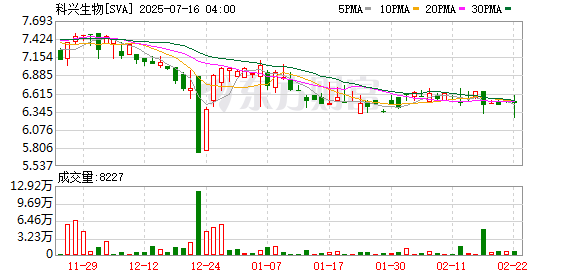
Core Viewpoint - The article discusses the significant cash dividend of 28 billion RMB (approximately 4.5 billion USD) announced by Sinovac Biotech, which comes after a prolonged six-year suspension of trading due to internal governance disputes and control struggles within the company [2][3][4]. Company Overview - Sinovac Biotech, a leading vaccine manufacturer, has faced a seven-year power struggle involving key figures such as Yin Weidong, Li Jiaqiang, and Pan Aihua [4][19]. - The company reported revenues exceeding 130 billion RMB (approximately 20 billion USD) and net profits over 96 billion RMB (approximately 15 billion USD) from 2021 to 2022 [4]. Dividend Details - The announced dividend of 55 USD per share translates to a total payout of approximately 39.5 billion USD (280 billion RMB) based on 71.86 million total shares [6]. - The dividend yields an astonishing 850% based on the stock price at the time of suspension [4]. Shareholder Distribution - Major shareholders receiving significant dividends include: - 1Globe Capital and related parties: approximately 6.88 billion USD (49.3 billion RMB) - Sequoia Capital: approximately 5.93 billion USD (42.5 billion RMB) - Yin Weidong: approximately 3.5 billion USD (25 billion RMB) - Dinghui Investment: approximately 3.3 billion USD (23.6 billion RMB) [7]. Governance Disputes - As of the dividend announcement, Sinovac Biotech is facing dual claims of authority from two boards and chairpersons, complicating the governance situation [4][5]. - The company must submit a compliance rectification plan to NASDAQ by July 15 to avoid potential delisting [5]. Legal and Operational Context - The dividend was proposed by a small shareholder, Hengrun Investment, which highlighted that over 10 billion USD in cash remained on the company's books after the dividend [10]. - The ongoing legal disputes regarding the legitimacy of the boards have led to a complex situation where two boards claim legitimacy, with the recent special shareholders' meeting resulting in a new board led by Yan Yan [13][14][18]. Historical Context - The power struggle dates back to 2016, with multiple board changes and legal battles over the company's governance structure, culminating in a ruling in early 2025 that recognized a new board led by Li Jiaqiang [19][20].