科普
Search documents
逛馆感受海南“陆海空”科技魅力
Hai Nan Ri Bao· 2025-12-24 02:32
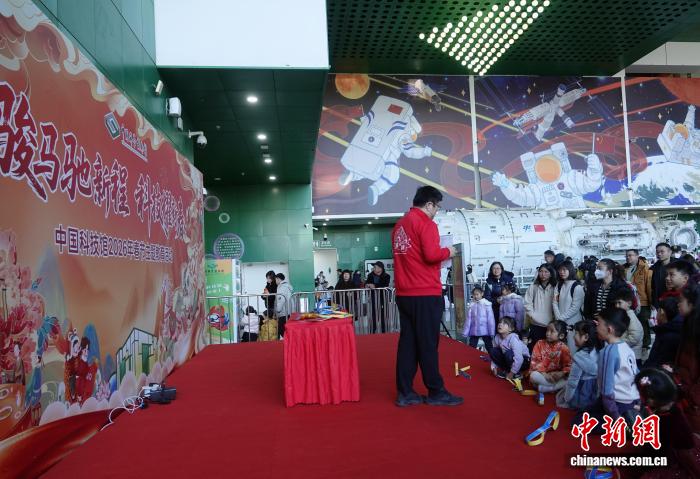
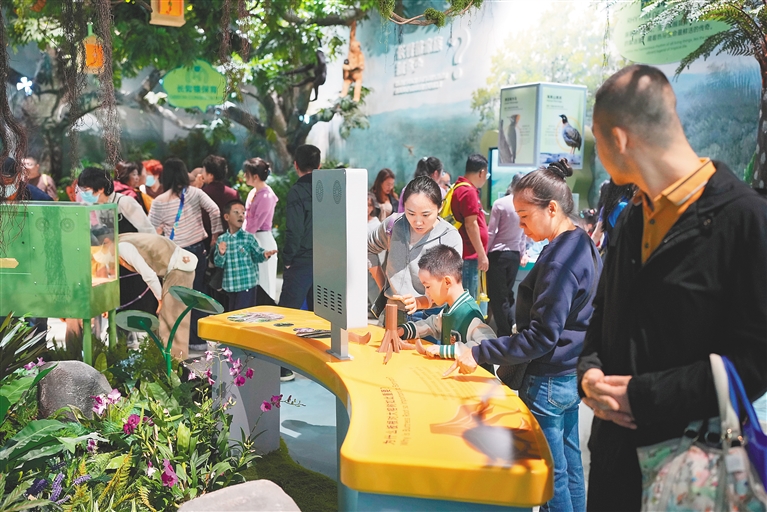
12月21日,海南科技馆场馆内外人头攒动。该馆设置"好奇天地""热土探寻""深海探秘""深空探梦"四大 主题常设展厅,是我省重要的科普设施,12月18日开馆以来,吸引了众多亲子家庭和科技爱好者前来参观。 海南日报全媒体记者 张茂 摄 ...
【决胜“十四五”】让科普滋润每一颗求知的心灵
Xin Lang Cai Jing· 2025-12-20 20:03
(来源:光明日报) 转自:光明日报 "十四五"期间,国务院印发《全民科学素质行动规划纲要(2021—2035年)》,以提高全民科学素 质服务高质量发展为目标,面向2035年全民科学素质提升进行前瞻性擘画。2024年修订的《中华人民共 和国科学技术普及法》,更是对适应新时代科普事业发展、推进科技强国建设起到依法保障和促进作 用。对此,九三学社中央副主席、中国工程院院士丛斌说:"科普是国家治理现代化、国民素质提升和 创新型国家建设的基石。科普工作上升为国家法律制度,让科普工作在国家创新版图中赢得了与其战略 价值相匹配的崇高地位和深远影响!" 更加完善的科普政策法规体系,推动科普滋润着每一颗求知的心灵—— 高校、科研院所和企业开放重点实验室。仅2023年,科研机构和大学就向社会开放8391个实验室, 接待访问1964.17万人次。能够在真实场景中了解科学知识,令很多人印象深刻。 【决胜"十四五"】 在呼和浩特的学校,小学生们亲手触摸模拟月壤等"太空好物",忍不住发出阵阵惊叹;在广州的社 区里,老人们初次与AI助手对话,脸上绽开会心的笑容;在合肥的操场上,中学生们兴奋地发射自制 的"水火箭",气氛异常热烈;在上海科技 ...
【中国新闻网】2025年中国科学院科普讲解大赛在穗举办
Zhong Guo Xin Wen Wang· 2025-12-01 03:29
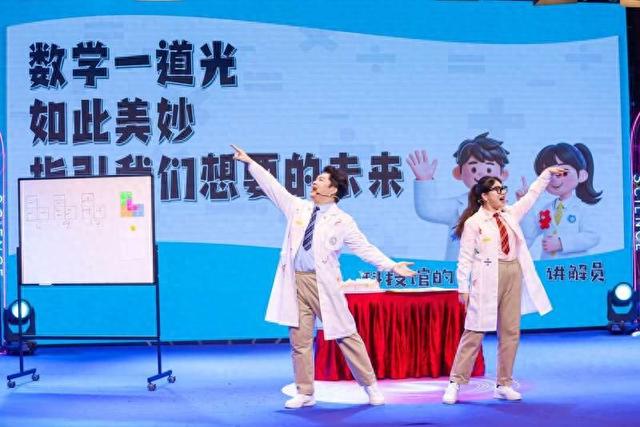
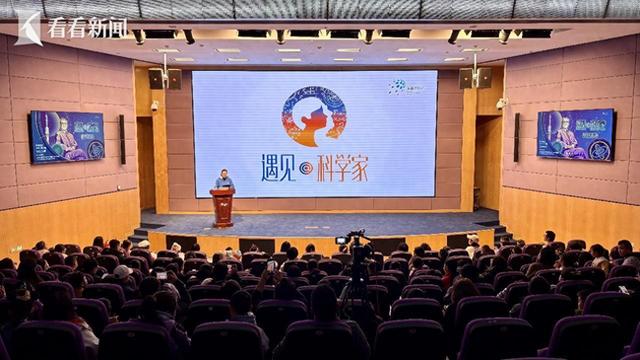
比赛中,选手们以生动有趣的表达、形象贴切的类比、互动性强的演示,将深奥的科学原理化为生 动的故事,将晦涩的专业术语变得亲切可感。 为期三天的"2025年中国科学院科普讲解大赛"29日在广州落幕。此次比赛由中国科学院学部工作局 主办、中国科学院广州分院承办,共吸引来自中国科学院46家院属单位的84名选手参与。 中国科学院科普讲解大赛是孵化优秀科普内容、发现科普人才的有效途径。今届大赛聚焦前沿科技 领域,参赛主题涵盖国之重器飞行升力如何产生、黑土保卫战、空间无人驾驶是怎样炼成的、耕海牧鱼 新模式、狙击深海"冰血栓"、基因测序与精准医学等多个前沿科学方向。 中国科学院学部工作局三级职员周德进表示,该局持续打造"科学与中国""公众科学日""科学 节""科学公开课""格致论道讲坛"等一系列高质量科普品牌,推动高端的科学资源与教育、人才的融合 发展。 比赛现场。中国科学院广州分院 供图 经过激烈角逐,20家单位的30名选手脱颖而出晋级决赛。7位专家组成高水平评委团,从内容陈 述、语言表达、整体形象维度对决赛选手表现进行综合评分。 经过比拼,最终评选出中国科学院力学研究所马晓天、上海硅酸盐研究所丁娆、武汉植物园李喜钰 等1 ...
“中国科学院老科学家科普演讲海南行”活动启动
Hai Nan Ri Bao· 2025-11-18 01:00
Core Viewpoint - The event "Chinese Academy of Sciences Old Scientists Science Popularization Tour in Hainan" aims to inspire and cultivate youth interest in science, enhancing their scientific literacy and laying a foundation for future talent development [1] Group 1: Event Details - The event is themed "Light of Science Popularization, Illuminate the Scientific Dreams of Children in Remote Areas" and officially started on November 17, 2023 [1] - The activities will last until November 21, 2023, involving multiple science popularization lectures across various cities and counties in Hainan [1] - The participating cities include Changjiang, Dongfang, Ledong, Wuzhishan, Baisha, Lingshui, Baoting, Qiongzhong, and Wenchang [1] Group 2: Organizers and Participants - The Chinese Academy of Sciences Old Scientists Science Popularization Team was established in 1997, primarily consisting of retired researchers from the Chinese Academy of Sciences [1] - The team also includes professors and senior experts from universities, the military, and various national ministries, along with enthusiastic young and middle-aged scholars [1] - The current team for the Hainan event comprises 16 old scientists, including Liu Dingsheng, Shi Lei, Fang Nianqiao, Guo Chuanjie, and Ji Peiwen [1] Group 3: Objectives - The initiative is organized by several local authorities, including the Hainan Provincial Committee for the Care of the Next Generation, the Provincial Propaganda Department, the Provincial Education Department, and the Hainan Provincial Association for Science and Technology [1] - The primary goal is to further stimulate and nurture the interest of young people in science, thereby improving their scientific cultural quality [1]
成都排名全国第二!2025中国科幻城市指数发布
Mei Ri Jing Ji Xin Wen· 2025-10-24 13:37
Core Insights - The Chengdu Chinese Science Fiction Literature Competition has produced a report indicating a closed-loop industrialization model focusing on "content-technology-scenario-consumption" for the 2025 Chengdu Chinese Science Fiction Literature Competition [1] - Chengdu ranks second in the 2025 China Science Fiction City Index, maintaining its position in the top tier of cities for science fiction development [3][6] - The Chengdu Science Fiction Industry Report indicates that the total revenue of Chengdu's science fiction industry will reach 25.577 billion in 2024, showing a growth of 8.71% despite a slight overall decline in the national science fiction industry [12][14] Science Fiction City Index - The 2025 China Science Fiction City Index Report evaluates cities based on four dimensions: "basic environment and development support," "science fiction industry and consumption vitality," "cultural dissemination and public participation," and "science fiction integration and urban construction," comprising 18 specific indicators [3] - Among cities with a GDP of over 1 trillion, the top ten in the science fiction index are Beijing, Chengdu, Shanghai, Shenzhen, Hangzhou, Nanjing, Chongqing, Guangzhou, Wuhan, and Qingdao [3] Chengdu's Competitive Advantages - Chengdu has established a robust cultural foundation and strong IP appeal, ranking first nationally in the "cultural dissemination and public participation" dimension [6] - The city has developed a modern science fiction industry system centered on content innovation, supported by technology and characterized by industrial clustering [12][13] Revenue and Growth - The Chengdu Science Fiction Industry Report highlights that the revenue from the science fiction tourism sector is projected to reach 1.66 billion in 2024, reflecting a year-on-year growth of 21.9% [13] - The science fiction gaming sector in Chengdu is expected to generate 22.755 billion in revenue in 2024, accounting for over 30% of the national market share [14] Policy and Support - Chengdu has released the first city-level science fiction development plan in the country and established a fund exceeding 3 billion to support the industry's growth [12] - The integration of cultural creativity and technological innovation has created a multi-dimensional industrial landscape, driving the transformation of content and technology into consumable experiences [13]
星火成炬 点亮科学之光
Zheng Zhou Ri Bao· 2025-10-11 00:52
Core Points - The article emphasizes the importance of science popularization alongside technological innovation, as highlighted by President Xi Jinping's remarks [1] - The newly revised "Law of the People's Republic of China on Popularization of Science and Technology" has been implemented, marking the first nationwide Science Popularization Month in September [1] - The transition from "National Science Popularization Day" to "National Science Popularization Month" signifies a broader and more inclusive approach to public science activities [1] Summary by Sections National Science Popularization Month - The first National Science Popularization Month was launched in September, allowing for a more extensive range of activities compared to the previous single-day event [1] - As of October 10, 5580 science popularization activities were conducted in Zhengzhou, leading the province in activity numbers [1] Local Initiatives in Zhengzhou - Zhengzhou's science popularization efforts include a variety of themed activities aimed at enhancing public scientific literacy and supporting technological innovation [3] - Different districts in Zhengzhou have tailored their activities to local characteristics, such as "precise science popularization" in Jinshui District and "cultural science + public service" in Guancheng District [3][4] Community Engagement - The activities have reached over 316,000 people in various districts, with significant participation from schools and local communities [4][9] - Innovative formats like "science markets" and "subway check-ins" have been introduced to integrate science into daily life [8] Educational Focus - The focus on youth is evident, with numerous activities designed to inspire students' interest in science and technology, including hands-on experiences and lectures from experts [10][13] - The establishment of a "30-minute science circle" aims to enhance resource sharing among educational institutions and science venues [13] Collaboration and Resource Sharing - The collaboration between local science associations and educational institutions has led to a rich array of activities, including workshops and interactive exhibits [6][14] - The integration of cutting-edge technology in educational settings has been emphasized, with events showcasing AI and aerospace topics [5][6] Overall Impact - The initiatives have fostered a culture of scientific curiosity and engagement among the public, making science accessible and relatable [14] - The activities not only serve to educate but also to inspire a new generation of scientists and innovators [10][14]
世界文学之都·南京童书嘉年华即将启幕
Nan Jing Ri Bao· 2025-09-30 02:26
Group 1 - The event "Children's Book Carnival" will be held in Nanjing from October 3 to 5, focusing on the theme "Reading Cultivates New People, Reading Accompanies Growth" [1] - The carnival is organized by Nanjing Publishing Media Group, Nanjing Association for Science and Technology, and Nanjing Publishing Industry Association, with support from various institutions including Jiangsu Bank [1] - The event aims to create a positive reading atmosphere to enhance the cultural quality and technological innovation capabilities of Nanjing's youth [1] Group 2 - The carnival will feature a variety of children's literature, science popularization books, and educational materials, providing a "one-stop" reading experience for children [1] - A cultural product exhibition area will showcase innovative and culturally rich products, blending traditional cultural elements with modern design [1] - The interactive experience area will include VR/AR experiences, science experiments, and puzzle games to engage children [2] Group 3 - The cultural activity area will host reading sharing sessions with children's literature authors and science lectures on topics like paleontology and plant-animal protection [2] - Participants in the "reading check-in" activity can receive books and stationery as rewards [2] - The event will offer multiple discounts and benefits for attendees, including book coupons and discounted cultural products [2]
院士谈科普
He Nan Ri Bao· 2025-09-29 23:18
Core Insights - The article emphasizes the importance of scientific innovation and popularization as essential components for achieving innovative development. It highlights a letter from President Xi Jinping, which encourages scientists to engage in science popularization efforts [1] Group 1: Importance of Science Popularization - Science popularization is viewed as a crucial foundational work for innovative development, as stated by President Xi Jinping [1] - Academicians play a key role in promoting high-level scientific self-reliance and are vital in conducting high-quality science popularization [1] Group 2: Personal Experiences in Science Popularization - Academician Kang Xiangtao shares his experience in agricultural science popularization, emphasizing that it is not merely about knowledge transfer but about practical application and community engagement [3][4] - The development of user-friendly technical manuals has significantly helped farmers improve their practices, demonstrating the effectiveness of well-crafted science popularization materials [4] Group 3: Engaging the Younger Generation - Academician Fan Huitao discusses the importance of instilling scientific thinking in children, highlighting that science popularization should adapt to modern information access methods [5][6] - Engaging with students of different ages requires tailored approaches to spark their interest in science [6][7] Group 4: Bridging Science and Society - Academician Wang Jiayao emphasizes that science popularization serves as a bridge between the scientific community and society, advocating for the use of accessible language to communicate scientific concepts [7][8] - The role of scientists in popularization is framed as a responsibility rather than an additional burden, highlighting the need for effective communication strategies [8][9] Group 5: Practical Applications in Agriculture - Academician Zhang Xinyou illustrates the importance of understanding farmers' needs and using relatable language to promote agricultural innovations effectively [10][11] - The success of agricultural science popularization is attributed to hands-on demonstrations and creating relatable experiences for farmers [10][11] Group 6: Collaborative Efforts in Science Popularization - Academician Chang Junbiao discusses the collaborative nature of science popularization, emphasizing that it should be a collective effort involving researchers and the public [12][13] - The establishment of a science popularization hall in a laboratory serves as a platform for engaging with the community and fostering interest in scientific research [12][13]
全民共享的科学盛宴
Ren Min Ri Bao Hai Wai Ban· 2025-09-29 22:57
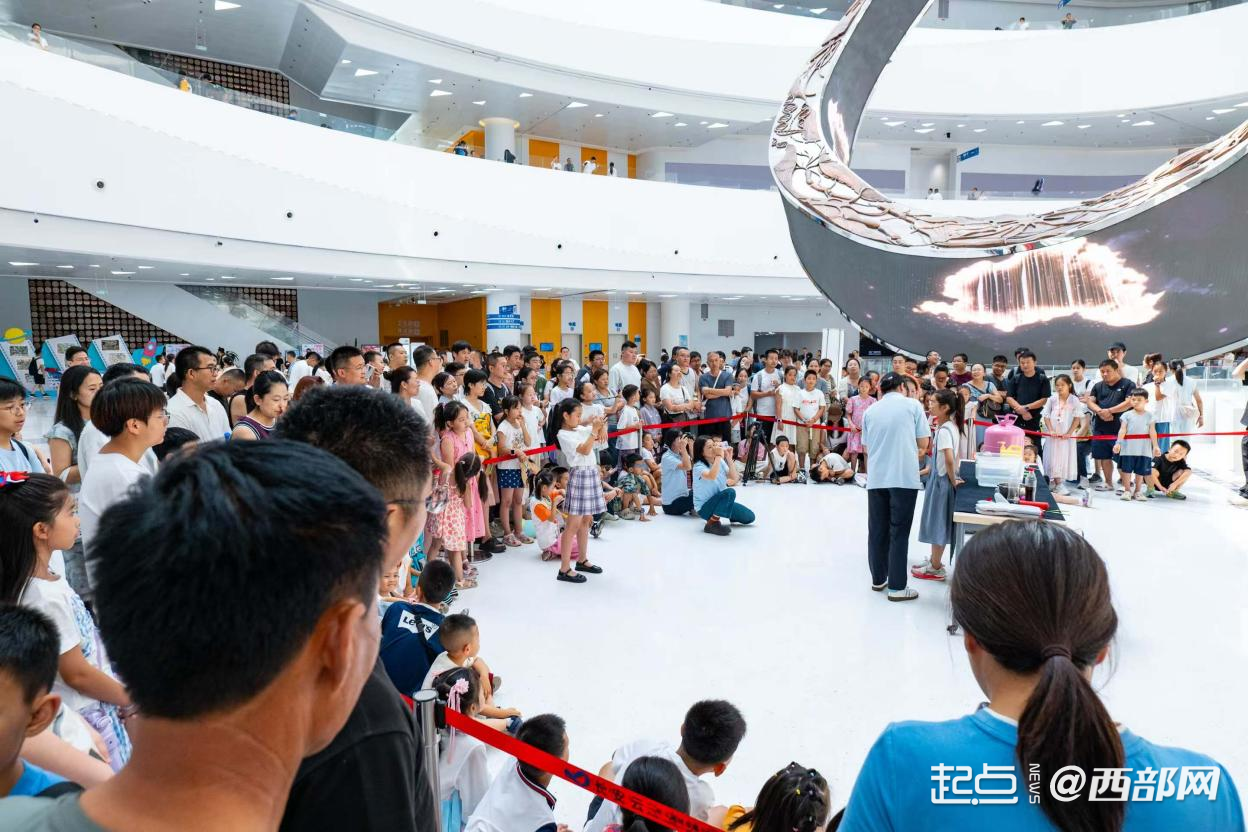
Core Points - The first National Science Popularization Month has successfully engaged the public with numerous activities across the country, promoting scientific knowledge and innovation [2][8] - The event showcased various scientific achievements and innovations, including a desktop 4D printer and wearable electronic fabrics, highlighting the integration of technology and education [3][4] - The China Association for Science and Technology (CAST) reported a significant increase in public participation in science activities, with a focus on expanding the reach and impact of science education [8][9] Group 1: Science Popularization Activities - The National Science Popularization Month featured over 100,000 activities nationwide, encouraging participation from all age groups [2] - Events included interactive exhibits at the China Science and Technology Museum, where children could engage with scientific concepts through hands-on experiences [3][5] - The "Science Night" event combined science and art, offering immersive experiences that sparked interest in scientific exploration [4] Group 2: Technological Innovations - The introduction of a desktop 4D printer at the China Science and Technology Museum allowed visitors to see the transformation of materials into soft robots, demonstrating advanced manufacturing techniques [3] - Wearable electronic fabrics showcased the potential for smart clothing, capable of lighting up and performing various functions, marking a significant advancement in textile technology [4] Group 3: Educational Initiatives - Educational programs during the Science Popularization Month included activities like designing parachutes for Mars landings, blending exploration with practical learning [7] - The Beijing Science Center organized a series of events, including a science carnival and collaborative performances between scientists and artists, to enhance public engagement with science [8] Group 4: Achievements in Science Education - The proportion of Chinese citizens with scientific literacy reached 15.37% in 2024, surpassing the 2025 target, indicating a growing public understanding of science [8] - CAST plans to expand science museum coverage to rural areas and enhance the quality of original science resources, aiming to make scientific knowledge more accessible [9]