
美国关税政策调整

Search documents
美国法院要求美海关部门“退还”非法关税
第一财经· 2026-03-05 01:16
Core Viewpoint - The U.S. International Trade Court has issued a directive preventing the Customs and Border Protection from imposing tariffs based on the International Emergency Economic Powers Act, indicating a need to refund previously collected tariffs under this act [1]. Group 1 - The U.S. International Trade Court's directive requires the Customs and Border Protection to refund tariffs that were previously collected under the International Emergency Economic Powers Act [1]. - The Supreme Court's ruling on February 20 confirmed that the International Emergency Economic Powers Act does not grant the president the authority to impose large-scale tariffs [1].


【招银研究|海外宏观】美国关税有望边际下行——美国IEEPA关税判决点评(2026年2月)
招商银行研究· 2026-02-27 08:52
Core Viewpoint - The U.S. Supreme Court ruled that tariffs imposed by Trump under the International Emergency Economic Powers Act (IEEPA) are unconstitutional, leading to a structural shift in U.S. tariff policy [1]. Group 1: Taxation Methods - The ruling will drive a structural shift in U.S. tariff policy, moving from comprehensive taxation to more targeted measures. The IEEPA allowed the president to impose tariffs without limits during a national emergency, but all IEEPA tariffs will become invalid following the Supreme Court's decision [4]. - As a transitional measure, the Trump administration has initiated a 10% tariff on global imports under Section 122 of the Trade Act of 1974, with plans to raise it to the maximum limit of 15% for a period of 150 days [7]. - The U.S. Trade Representative indicated that future tariff policies will focus on continuity and maintaining previously negotiated tariff levels with various countries, with tariffs on China expected to remain in the 35-50% range [7]. Group 2: Short-term Implications - In the short term, U.S. tariff rates may see a significant reduction. Before the ruling, the overall nominal tariff rate was approximately 16%, which could decrease by 2.3 percentage points after the transition to Section 122. Tariffs on China may drop by 5 percentage points from around 40% [8]. - The elimination of IEEPA tariffs will align U.S. tariffs on certain goods with global levels, benefiting products like steel, aluminum derivatives, copper, wood derivatives, and pharmaceuticals [8]. Group 3: Mid-term Constraints - In the mid-term, while the Trump administration aims to maintain pre-ruling tariff rates, there are dual constraints that may prevent a complete replacement of IEEPA tariffs [9]. - Administrative costs are a constraint, as investigations under Sections 232 and 301 require significant time, making it difficult to establish a comprehensive tariff system within 150 days [10]. - Inflation constraints are also present, as the upcoming midterm elections will focus on living costs, and raising tariffs could exacerbate inflationary pressures [10]. Group 4: Forward Outlook - Overall, the ruling suggests a shift in U.S. tariff policy from comprehensive taxation to more precise targeting. Under the constraints of administrative costs and inflation, the overall U.S. tariff rate may trend downward [11]. - There is potential for further easing of tariffs on China, especially with anticipated high-level meetings between U.S. and Chinese leaders throughout the year. However, there remains a risk of structural increases in tariffs on key Chinese industries under Sections 232 or 301 [11].
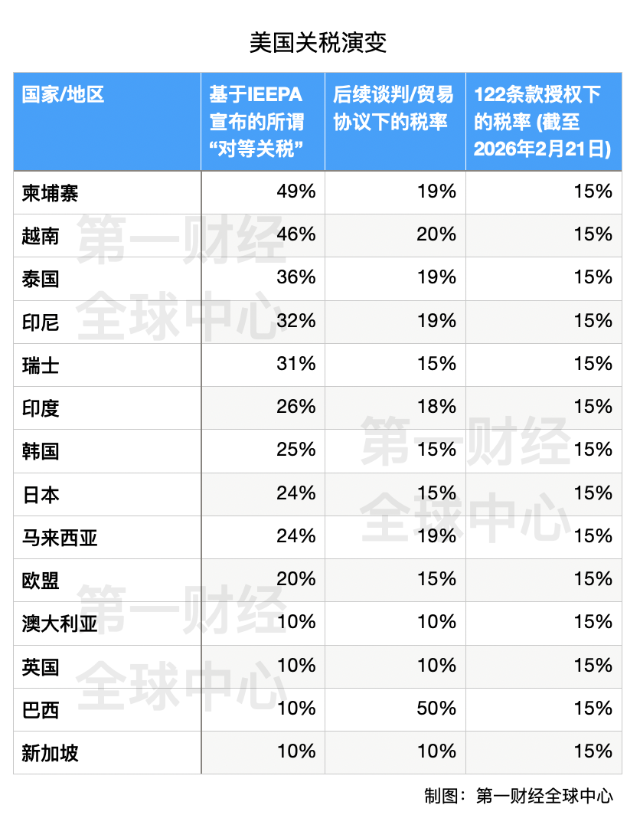
有的15%,有的更多?美国贸易代表这话啥意思
Di Yi Cai Jing· 2026-02-26 09:23
Group 1 - The U.S. government is preparing to increase temporary tariffs from 10% to 15% or higher on certain countries and regions, with a focus on maintaining pressure while not affecting existing trade agreements [2][3] - The Oxford Economics Institute's simulations suggest that even with a 15% global tariff, the macroeconomic impact would be minimal, but industry-level effects could be significant [3][7] - If the global tariff rate is set at 15%, it would be lower than the previous "countervailing duties" faced by certain Asian economies, which were between 19% and 20% [4][6] Group 2 - The U.S. Trade Representative indicated that the core of the new tariff plan will involve investigations under Section 301 to address unfair trade practices, particularly targeting countries that discriminate against U.S. technology companies [8][9] - The potential increase in tariffs could lead to fluctuations in actual tariff rates in the second half of the year, as the U.S. may switch between different legal provisions for imposing tariffs [7][9] - The U.S. is expected to rely more on tariffs imposed under Section 301, which allows for investigations into foreign trade practices that harm U.S. interests, as a primary source of tariff revenue [7][8]
【环球财经】瑞士邮政宣布暂停向美寄送包裹
Xin Hua She· 2025-08-26 05:35
Core Viewpoint - Swiss Post announced the suspension of postal goods to the United States starting August 26, due to new U.S. tariff regulations affecting all postal companies globally [1] Summary by Relevant Sections Service Suspension - Swiss Post will not accept postal goods destined for the U.S., except for expedited letters and express items, effective August 26 [1] - This decision follows the U.S. announcement that, starting August 29, it will no longer provide tax exemptions for imported packages valued at $800 or less, requiring all goods to be shipped with duties paid [1] Impact on Global Postal Services - The new U.S. tariff regulations differ from those of the Universal Postal Union, impacting postal operators worldwide [1] - Other countries' postal services, including those in the UK, France, Germany, Italy, Austria, Belgium, and several Nordic countries, have also suspended parcel services to the U.S. due to these tariff changes [1] Future Plans - Swiss Post is exploring solutions to resume services as soon as possible, particularly for personal gifts valued under $100 [1]
印度、法国、意大利、瑞典、挪威、比利时、西班牙等多国宣布:暂停向美国寄送包裹
Xin Jing Bao· 2025-08-23 14:55
Group 1 - The U.S. government has signed an executive order to suspend tax exemptions on imported packages valued at $800 or less starting from August 29 [1] - Multiple countries have announced temporary suspensions on sending packages to the U.S., including India, Italy, France, Sweden, and Norway [2][3] - Belgium's postal service has stated that the suspension currently affects packages containing goods but does not impact letters [3] Group 2 - Spain's postal service will stop accepting low-value packages (valued at $800 or less) to the U.S. and Puerto Rico starting August 25, while allowing non-commercial letters and gifts valued under $100 [3]
多国邮政暂停向美国寄送包裹
财联社· 2025-08-23 14:13
Group 1 - The core viewpoint is that multiple European postal companies are suspending parcel shipments to the United States due to new U.S. tariff policies [1][3][5] - Italian postal company announced the suspension of parcel shipments to the U.S. starting August 23, while still accepting non-goods mail [1] - French postal group will suspend parcel shipments to the U.S. from August 25, except for private gift parcels valued under 100 euros [1] Group 2 - Several European postal services, including those from Germany, Belgium, Spain, and Austria, have announced similar suspensions of parcel shipments to the U.S. [2] - Swedish and Norwegian postal companies have also halted shipments, citing the need for clarification on the new U.S. customs policies [3] - Belgium's postal group specified that the suspension currently affects parcels containing goods but does not impact letters [4]

紧急暂停!多国邮政官宣了
中国基金报· 2025-08-23 13:40
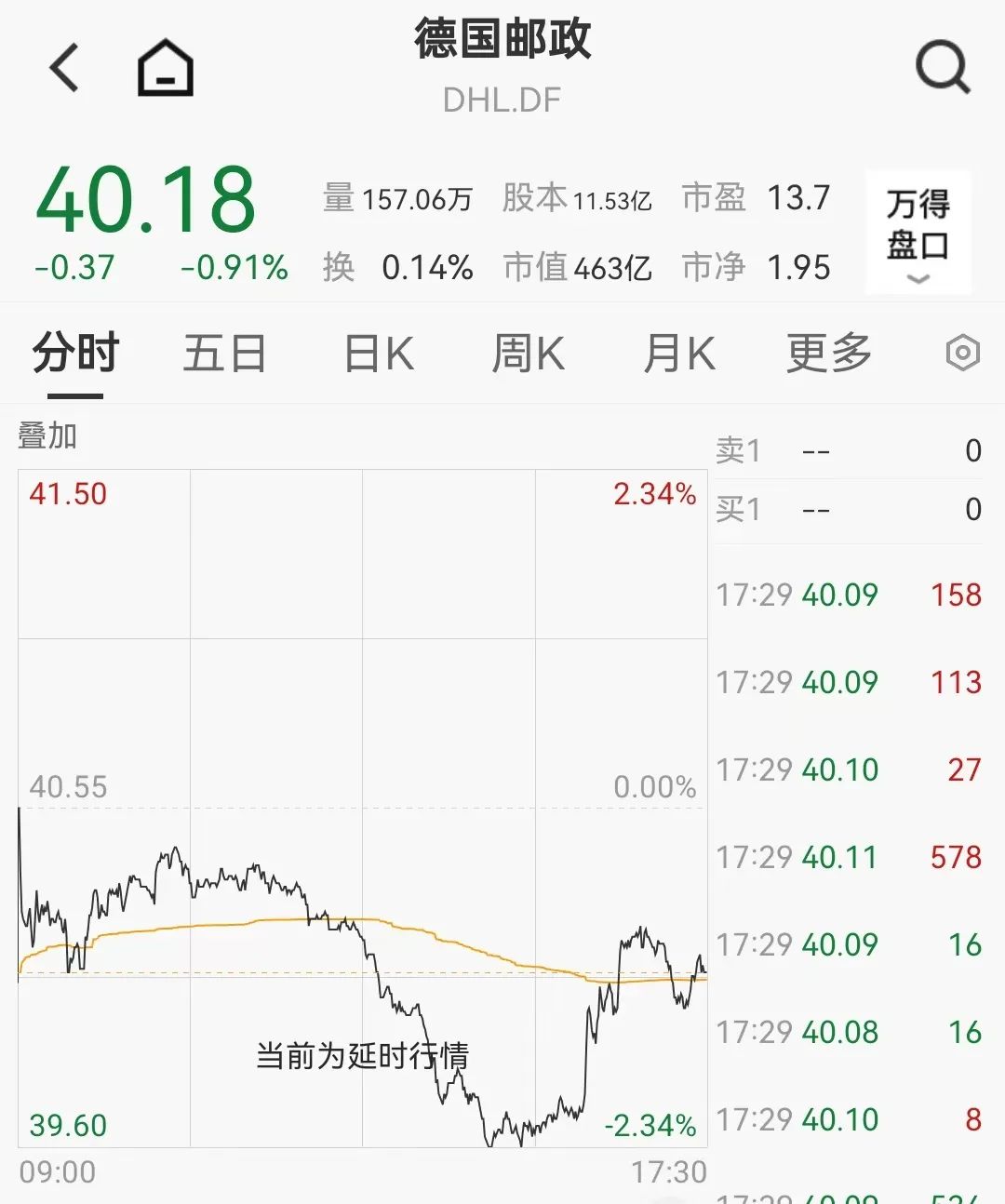
Core Viewpoint - Multiple countries have suspended parcel shipments to the United States due to new U.S. customs policies, which are expected to create significant disruptions in international shipping [2][12]. Group 1: Countries Affected - France's postal service announced a suspension of parcel shipments to the U.S. starting August 25, except for private gifts valued under 100 euros [2]. - Nearly 20 countries, including Germany, Spain, Sweden, Norway, South Korea, and Japan, have also announced similar suspensions [2]. - In Asia, South Korea's postal service will stop accepting air parcels and some express services to the U.S., while Singapore Post will only allow non-declarable documents to be sent [4]. - Japan Post has also announced a suspension of services, pending further information [5]. - In Europe, the UK Royal Mail plans to pause shipments for one to two days to transition to a new system for collecting new tariffs [6]. Group 2: Policy Details and Implications - The new U.S. customs policy, effective August 29, will end the tax exemption for parcels valued at $800 or less, leading to increased costs for international shippers [2][14]. - DHL has joined the suspension of shipments due to unclear procedures regarding tariff collection and data submission requirements [12]. - The U.S. Customs and Border Protection (CBP) has outlined that imported goods will be subject to tariffs based on their country of origin, with a 15% tariff for packages from the EU [14]. - Carriers must provide detailed information about the parcels, including quantity, origin, and value, and must pay tariffs through a specific system [15]. Group 3: Market Reactions - Following the announcement of the new policies, DHL's stock price fell by over 2.4% [12]. - Conversely, shares of UPS and FedEx saw increases of 3.1% and 5.11%, respectively, as they are certified to collect and remit tariffs on behalf of international postal carriers [16][18].



紧急暂停!多国邮政官宣了
Zhong Guo Ji Jin Bao· 2025-08-23 13:23
Core Viewpoint - Multiple countries have suspended parcel shipments to the United States due to new U.S. customs policies, which are set to take effect on August 29, impacting international postal services significantly [1][11]. Group 1: Countries Affected - France's postal service announced a suspension of parcel shipments to the U.S. starting August 25, with exceptions for private gifts valued under 100 euros [1]. - Nearly 20 countries, including Germany, Spain, Sweden, Norway, South Korea, and Japan, have also announced similar suspensions [1]. - In Asia, South Korea's postal service will stop accepting air parcels and some express services to the U.S., while Singapore Post will restrict shipments starting August 25, 2025 [3]. Group 2: Impact on Postal Services - The UK Royal Mail plans to suspend shipments to the U.S. for one to two days to transition to a new system for collecting new tariffs [4]. - Germany's postal service has announced a halt to shipments to the U.S. [5]. - Czech and Austrian postal services have also suspended parcel deliveries to the U.S. [6][7]. Group 3: Uncertainty in Policy Implementation - The specifics of the new tariff and data reporting requirements remain unclear, leading to confusion among international carriers [11]. - DHL has joined the suspension of shipments due to unresolved key procedures regarding tariff collection and data submission [12]. - The U.S. Customs and Border Protection has outlined new tariff calculations, including a 15% tariff on packages from the EU and fixed fees ranging from $80 to $200 for international postal shipments [14]. Group 4: Market Reactions - Following the announcement of the new policies, DHL's stock price fell by over 2.4% [12]. - Conversely, shares of UPS and FedEx saw increases of 3.1% and 5.11%, respectively, as they are certified to collect and remit tariffs on behalf of international postal carriers [14][16].
特朗普政府:扩大对钢铁和铝进口征收50%关税的范围,8月18日生效
Mei Ri Jing Ji Xin Wen· 2025-08-16 12:25
Group 1 - The Trump administration has expanded the scope of tariffs on steel and aluminum imports to include hundreds of derivative products, with a 50% tariff rate effective from August 18 [1] - The U.S. Department of Commerce announced that 407 product codes have been added to the tariff list due to their steel and aluminum content [1] - The average trade-weighted tariff rate for the U.S. has risen significantly to 20.11% as of August 7, compared to 2.44% at the beginning of the year [3] Group 2 - The simple average tariff rate for all U.S. goods has increased from 2.08% at the start of the year to 17.39% as of August 7 [4] - The affected global trade volume has surged from $288.46 billion at the beginning of the year to $2.747 trillion currently [4] - The average effective tariff rate has reached 18.6%, the highest level since 1933, according to a report from Yale University's budget laboratory [4] Group 3 - Experts from Japan have criticized the U.S. government's approach to tariff negotiations as a serious infringement on the interests of trade partners and a significant threat to global economic development [6] - The Swiss Federal Council has not considered retaliatory measures against the U.S. tariff increases, citing potential additional costs to the Swiss economy [6] - Mexico and Canada are discussing collaborative strategies to respond to U.S. tariff policies and enhance bilateral cooperation [6]
美国平均关税税率显著飙升
Xin Hua She· 2025-08-09 09:35
Core Insights - The trade-weighted average tariff rate imposed by the United States on all products has surged to 20.11% as of August 7, significantly higher than the 2.44% at the beginning of the year [1] - The simple average tariff rate on all goods has increased from 2.08% at the start of the year to 17.39% as of August 7 [1] - The global trade volume affected by these tariffs has escalated from $288.46 billion at the beginning of the year to $2.747 trillion currently [1] - The average effective tariff rate in the U.S. has reached 18.6%, marking the highest level since 1933, according to a report from Yale University's budget laboratory [1] - The U.S. government announced the applicable tariff rates for 69 trading partners on July 31, with new rates taking effect from August 7 [1]