补充营养援助计划

Search documents
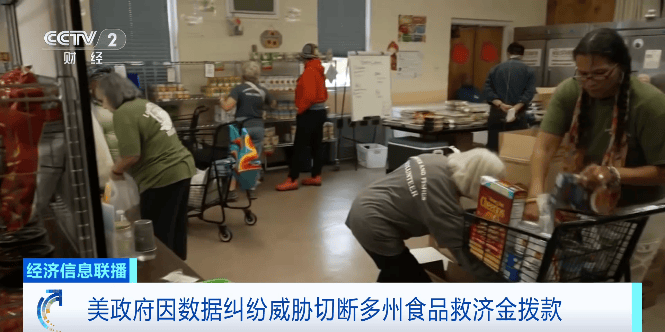
美国政府因数据纠纷威胁切断多州食品救济金拨款
Sou Hu Cai Jing· 2025-12-03 15:46
Core Viewpoint - The U.S. Department of Agriculture (USDA) will stop federal funding for the Supplemental Nutrition Assistance Program (SNAP) in Democratic-led states that fail to provide beneficiary data by the deadline of December 8, 2023, as this data is crucial to combat fraud in the program [1][3]. Group 1: USDA Actions and Requirements - USDA Secretary Brooke Rollins announced that funding will be halted for states that do not comply with the request for beneficiary information, which is essential for eliminating fraud in the program [3]. - The USDA sent a letter to states last week, emphasizing the importance of submitting the required data by the final deadline of December 8 [3]. Group 2: Impact on Beneficiaries and Legal Challenges - SNAP is a vital part of the U.S. social safety net, serving approximately 42 million people, which is about one-eighth of the U.S. population, with most beneficiaries living below the poverty line [5]. - Over 20 Democratic-led states and the District of Columbia have filed lawsuits against the USDA, claiming that the data request violates beneficiaries' privacy rights [5]. - A federal judge in San Francisco issued a temporary injunction in October, preventing the USDA from cutting off funding due to states' failure to submit data [5]. Group 3: Reactions from State Officials - Officials from Democratic-led states, including Minnesota, have criticized the USDA's threat to cut funding, especially in light of the federal court's ruling against such actions [7].

【环球财经】美政府因数据纠纷威胁切断多州食品救济金拨款
Xin Hua She· 2025-12-03 05:41
Core Viewpoint - The U.S. Department of Agriculture (USDA) will stop federal funding to states governed by Democrats if they fail to provide beneficiary data for the Supplemental Nutrition Assistance Program (SNAP), which is crucial for combating fraud [1][2]. Group 1: USDA Actions - USDA Secretary Brooke Rollins announced that funding will cease from next week for states that do not comply with data requests regarding SNAP beneficiaries [1]. - Rollins emphasized that without data, there will be no funding, highlighting the importance of sharing information to prevent illegal use of food assistance [1]. Group 2: Political Reactions - Officials from Democratic-led states, including California, New York, and Minnesota, have expressed concerns over this decision, questioning the motives behind the USDA's actions [1]. - New York Governor Kathy Hochul criticized the Trump administration's stance, suggesting it would lead to increased hunger among vulnerable populations [1]. Group 3: Legal Context - Since May, the USDA has required states to provide detailed information about SNAP recipients to combat fraud, but many Democratic-led states oppose this, citing privacy concerns [2]. - Over 20 Democratic-led states and Washington D.C. have filed lawsuits against the USDA, claiming the data request is illegal [2]. - A federal judge temporarily blocked the USDA from withholding funds due to states' non-compliance with data submission [2].
美政府因数据纠纷威胁切断多州食品救济金拨款
Xin Hua She· 2025-12-03 02:57
Core Viewpoint - The U.S. Department of Agriculture, led by Secretary Brooke Rollins, announced that federal funding for the Supplemental Nutrition Assistance Program (SNAP) will be halted for states governed by the Democratic Party if they fail to provide beneficiary data starting next week [1] Group 1 - The announcement indicates a potential shift in federal funding policies related to SNAP, which could impact food assistance for low-income individuals [1] - The requirement for states to provide beneficiary data highlights the federal government's increasing demand for accountability and transparency in the distribution of aid [1]
美参院通过临时拨款法案 他们谈妥了什么、离结束“停摆”有多远?
Xin Hua She· 2025-11-11 11:25
Core Points - The U.S. Senate passed a temporary funding bill on November 10, which is a crucial step towards reopening the federal government after the longest shutdown in U.S. history [1][2] - The bill will provide funding for most federal agencies until January 30, 2026, and includes full-year funding for specific departments and programs [4] - The bill also ensures that federal employees will receive back pay for the duration of the shutdown and prevents mass layoffs during this period [4] Group 1 - The Senate voted 60 in favor and 40 against the funding bill, breaking the deadlock through negotiations led by three former governors [2] - The bill was supported by five centrist Democratic senators, alongside three Democrats who had been supporting the government reopening since October 1 [2] - The Senate Majority Leader, John Thune, promised a vote on extending enhanced subsidies for the Affordable Care Act by the second week of December [4] Group 2 - The bill will next be sent to the House of Representatives for a vote, with House Speaker Mike Johnson urging members to return to Washington [5] - There is significant opposition among House Democrats regarding the temporary funding bill, with concerns about its implications for healthcare benefits [7] - Even if the bill is signed into law, it only addresses three of the twelve annual appropriations needed, indicating potential future funding crises [7]
联邦政府“停摆”第41天 美参议院正式通过临时拨款法案
Xin Hua She· 2025-11-11 06:01
Core Points - The U.S. Senate passed a temporary funding bill on November 10, ending a record 41-day government shutdown that began on October 1 [1] - The bill was approved with a vote of 60 in favor and 40 against, indicating bipartisan support from several Democratic senators [1] - The bill will fund most federal agencies at current levels until January 30, 2026, and provides full-year funding for the Department of Agriculture, Department of Veterans Affairs, military construction projects, and congressional operations [1] - The Supplemental Nutrition Assistance Program (SNAP) will receive full-year funding, addressing concerns over temporary shortages for low-income groups [1] - As part of the agreement to end the shutdown, Senate Majority Leader John Thune promised a vote on extending enhanced subsidies under the Affordable Care Act by the second week of December [1] Budgetary Context - The passed bill only includes three of the twelve annual appropriations, leaving nine budgets still undecided [2] - Ongoing negotiations between the two parties will continue during the temporary funding period, indicating a potential risk of another government shutdown in over two months [2]
美国参议院两党达成临时拨款协议 政府停摆危机有望终结
Xin Hua Cai Jing· 2025-11-10 00:56
Core Points - The U.S. Senate has reached a preliminary agreement on a temporary funding bill to extend federal government operations until January 30, 2026, marking the end of a record-long partial government shutdown [1][2] - The temporary funding proposal includes three key provisions: the reversal of the Trump administration's decision to lay off federal employees, ensuring continued funding for the Supplemental Nutrition Assistance Program (SNAP) through the 2026 fiscal year, and full annual funding for military construction, the Department of Veterans Affairs, legislative bodies, and the Department of Agriculture [1] - Although the Democrats aimed to include an extension of premium subsidies from the Affordable Care Act in the funding agreement, this temporary proposal does not include that provision, but guarantees Democrats the right to a separate vote on the issue in December [1] Legislative Process - The Senate will first conduct a procedural vote on the temporary funding measure already passed by the House of Representatives, requiring at least eight Democratic votes to advance the bill [2] - After the Senate approves the revised bill, it will return to the House for a final vote before being sent to the President for signature into law [2] - President Trump indicated that the government shutdown is nearing an end [2]
美国政府指示各州收回已发放的食品援助金
Guo Ji Jin Rong Bao· 2025-11-10 00:49
Core Points - The Trump administration has instructed states not to issue full Supplemental Nutrition Assistance Program (SNAP) benefits for November following a Supreme Court ruling that temporarily halted lower court orders for full benefit distribution [1][3] - The USDA has issued a memo indicating that during the government shutdown, states are only to distribute 65% of SNAP benefits and must retract any full payments already made [3] - This marks the first time in 60 years that SNAP benefits have been suspended, affecting approximately 42 million people, or one-eighth of the U.S. population, with monthly expenditures exceeding $8 billion [3] Group 1 - The Supreme Court's emergency order led to a modification of the Trump administration's previous guidance on SNAP benefits [1] - The USDA's memo threatens states with actions such as the cancellation of federal funds for administrative costs if they do not comply with the new directives [3] - The suspension of SNAP benefits is unprecedented, even during previous government shutdowns, highlighting the severity of the current situation [3]

周末突发,美国传出大消息
Zheng Quan Shi Bao· 2025-11-09 08:15
Core Points - The U.S. government shutdown has entered its 39th day, with bipartisan negotiations in the Senate showing positive signs for a potential resolution [1][3] - Senate Republican leader John Thune expressed optimism about reaching an agreement to temporarily restart the government and introduce three long-term funding bills [3][4] - A rare Senate meeting is scheduled to continue negotiations, with discussions also focusing on a short-term funding bill to extend current temporary funding until the end of January [3][4] Impact on Transportation - The shutdown has caused significant disruptions in air travel, with the FAA reducing domestic flights at 40 major airports, leading to over 1,000 flight cancellations and more than 4,800 delays on a single day [6] - Major airports in New York experienced severe delays due to staff shortages, with Newark Liberty International Airport seeing average delays of over 327 minutes for incoming flights [6] Social Welfare Effects - The Supplemental Nutrition Assistance Program (SNAP) has halted benefits since November 1, affecting 42 million people, marking the first time in 60 years that benefits have been suspended during a government shutdown [7] - A court ruling mandated the government to pay November SNAP benefits, but a Supreme Court decision temporarily blocked this, impacting millions relying on this assistance [7] Economic Outlook - The ongoing shutdown is expected to slow GDP growth in the fourth quarter, with consumer confidence dropping to its lowest level since June 2022 [8] - Economic advisors have indicated that the shutdown's impact on the economy may exceed initial expectations, particularly affecting the tourism and leisure sectors [8]
周末突发!美国,传出大消息!
券商中国· 2025-11-09 06:21
Core Viewpoint - The article discusses the ongoing U.S. government shutdown, which has lasted for 39 days, and highlights the efforts of bipartisan negotiations in the Senate to reach an agreement to reopen the government and address funding issues [1][4]. Group 1: Negotiation Progress - Bipartisan negotiations in the Senate have shown positive signals, with Republican leader John Thune expressing optimism about reaching an agreement to temporarily reopen the government and introduce three long-term funding bills [2][3]. - The Senate plans to hold a rare meeting on Sunday to continue discussions, although no formal agreement or complete funding bill text has been released as of Saturday [2][3]. Group 2: Impact of the Shutdown - The shutdown has led to significant disruptions, including severe flight delays and cancellations due to a shortage of air traffic controllers, with over 1,000 flights canceled and more than 4,800 delayed on a single day [5]. - The Supplemental Nutrition Assistance Program (SNAP), which supports 42 million Americans, has halted benefits for the first time in its 60-year history, exacerbating difficulties for low-income families [6]. - The ongoing shutdown is expected to slow down the U.S. GDP growth in the fourth quarter, with consumer confidence dropping to its lowest level since June 2022, indicating growing concerns about the economic impact of the shutdown [6][7].

政府“停摆”39天 美国民众焦头烂额
Yang Shi Xin Wen· 2025-11-09 02:49
Core Points - The U.S. federal government shutdown has entered its 39th day, marking the longest shutdown in U.S. history, causing widespread difficulties for millions of Americans and raising concerns about a potential economic recession [1] Group 1: Impact on Aviation Industry - Major airports in the New York area are experiencing significant flight delays due to staff shortages, with Newark Liberty International Airport reporting an average delay of over 327 minutes for incoming flights and approximately 150 minutes for outgoing flights as of 8 PM on the 8th [7] - Chicago, Las Vegas, and Austin airports have also been temporarily grounded due to similar staffing issues, indicating a broader impact on the aviation sector [7] - Former FAA official Philip Mann warned that if the shutdown continues, the disruptions in flight schedules will only worsen, highlighting the potential long-term effects on the aviation industry [7] Group 2: Impact on Government Employees and Social Services - Federal government employees are facing severe financial difficulties due to the shutdown, with many relying on social assistance for basic living expenses [8] - The Supplemental Nutrition Assistance Program (SNAP), which supports 42 million Americans, is set to suspend benefits starting November 1, marking the first time in 60 years that such benefits will not be issued during a government shutdown [11] - The program's monthly expenditure exceeds $8 billion, and the suspension of benefits is expected to exacerbate the hardships faced by low-income families [11] Group 3: Economic Outlook - The University of Michigan's preliminary consumer confidence index for November dropped to 50.3, the lowest since June 2022, reflecting growing concerns about the economic impact of the ongoing government shutdown [12] - White House economic advisor Hassett stated that the shutdown's effects on the economy are more severe than anticipated, predicting a slowdown in GDP growth for the fourth quarter, particularly affecting the travel and leisure sectors [12] Group 4: Legislative Negotiations - Negotiations in the Senate to end the government shutdown are ongoing but have made limited progress, with Republican leaders seeking to reach an agreement with Democrats on a comprehensive funding package [13] - The political landscape suggests that both parties are using the shutdown as a tool to undermine each other, complicating efforts to reach a compromise and increasing the likelihood of prolonged disruptions [13]