《平价医疗法案》

Search documents
美国国会参议院否决共和党医改提案
Yang Shi Xin Wen· 2025-12-11 18:25
Core Points - The U.S. Senate failed to advance a Republican-backed proposal to establish health savings accounts for Americans benefiting from the Affordable Care Act (ACA) subsidies, which are set to expire at the end of the year [1] - The proposal required 60 votes to pass but was ultimately rejected with a vote of 51 to 48 [1] - The Senate is now set to consider a Democratic proposal to extend the ACA for three years, which analysts predict will also fail [1]
美政府拟推出新医保方案
Guo Ji Jin Rong Bao· 2025-11-24 15:26
Core Points - The Trump administration plans to announce a new healthcare policy framework that includes extending subsidies for the Affordable Care Act (ACA) for two more years and implementing new eligibility restrictions [1][3] - The proposed policy will set a new income cap for subsidy eligibility, limiting it to individuals earning no more than 700% of the federal poverty line, and will require monthly premium payments from low-income enrollees to combat fraud [1][3] - The plan is seen as the first substantial healthcare initiative from the Trump administration since the government shutdown, with key Republican leaders expected to receive a briefing on it [3] Summary by Sections Subsidy Extension and Eligibility - The new framework proposes extending ACA subsidies for two years and introducing a new income limit for eligibility, which will be set at 700% of the federal poverty line [1] - Previously, subsidies were available for individuals earning between 100% and 400% of the federal poverty line, but the Biden administration's American Rescue Plan removed income caps [1] Premium Payments and Fraud Prevention - The plan mandates that all enrollees, including low-income individuals, must pay a portion of their premiums to reduce fraudulent activities by insurance agents who previously enrolled individuals without their consent [1][2] - This requirement aims to mitigate the exploitation of the ACA by ensuring that low-income individuals contribute to their insurance costs [1] Political Context and Implications - The proposal comes amid significant political division in Congress regarding the continuation of ACA subsidies, with potential implications for the upcoming midterm elections [3][4] - The KFF predicts that if subsidies expire, premiums could double next year, and the CBO estimates that over 2 million people may lose their health insurance [3]
40天混乱造成巨大损失,民主党妥协效果仍难预料,美参院为结束政府停摆深夜投票
Huan Qiu Shi Bao· 2025-11-10 23:00
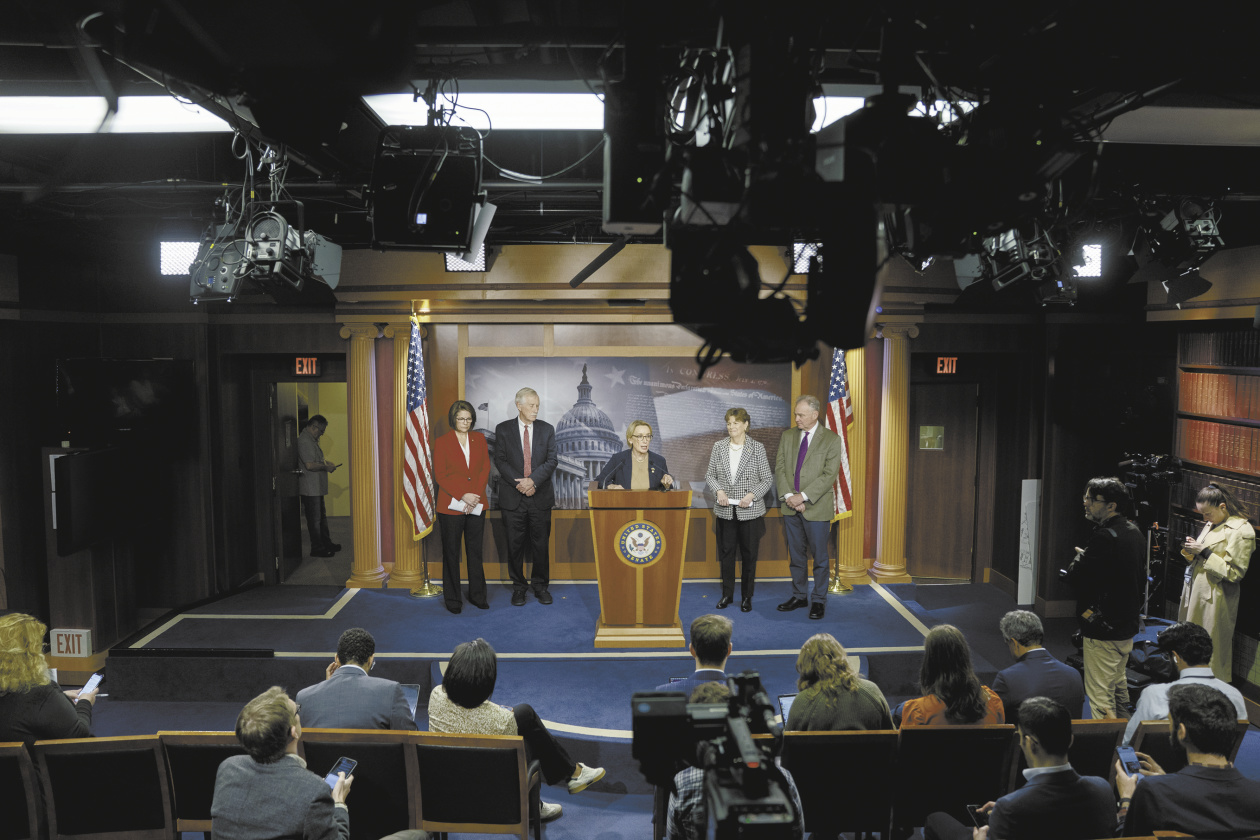
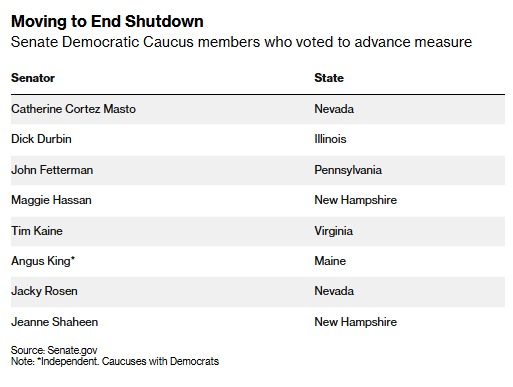
Core Points - The U.S. Senate took a significant step towards ending the longest government shutdown in history by advancing a temporary funding bill with bipartisan support, marking a rare collaboration between Democrats and Republicans [1][3] - The government shutdown has caused an estimated economic loss of approximately $15 billion per week, contributing to a decline in consumer confidence to its lowest level in three years [1][8] - The funding bill does not include extensions for the Affordable Care Act subsidies, leading to internal divisions within the Democratic Party and dissatisfaction among some members [1][4][5] Legislative Developments - The Senate voted 60-40 to break the filibuster on the funding bill, with support from seven Democratic senators and one independent senator, while only one Republican senator voted against it [3] - The proposed funding will provide financial support for most federal agencies until January 30, and it will also prevent layoffs of federal employees during the shutdown [3][4] - The bill still requires approval from the House of Representatives and the President to fully end the government shutdown [3] Economic Impact - The ongoing government shutdown has severely affected various sectors, including the airline industry, with over 2,700 flights canceled and more than 10,000 delayed, impacting over 4 million passengers since the shutdown began [7][8] - Economic experts warn that continued shutdown could lead to a significant reduction in GDP growth, with potential negative growth in the fourth quarter if travel disruptions continue during the Thanksgiving holiday [8] Internal Party Dynamics - There is significant discontent among Democrats regarding the compromise reached, with some viewing it as a capitulation to Republican demands, particularly concerning healthcare issues [5][6] - Prominent Democratic figures have expressed their frustration, indicating that the party's internal divisions may deepen as a result of this compromise [5][6] - The situation highlights the ongoing struggle between the party's progressive and moderate factions, which may affect future legislative negotiations [6]

史上最长停摆现转机!美参议院达成临时协议 政府重启进入倒计时
智通财经网· 2025-11-10 12:55
Core Points - The U.S. Senate passed a procedural motion to end the longest government shutdown in history with a vote of 60 to 40, paving the way for a temporary funding agreement [1] - The agreement includes full funding for the Department of Agriculture, the Department of Veterans Affairs, and Congress until the end of the fiscal year, while other federal agencies will receive funding to operate until January 30, 2026 [1] - The agreement aims to restore pay for furloughed federal employees and resume federal funding for state and local governments [1] Group 1 - The Senate requires unanimous consent from all members to expedite the process, and any opposition could delay the vote by several days [1] - House Speaker Mike Johnson has informed members to prepare for a vote within 36 hours [1] - President Trump expressed optimism about nearing an end to the shutdown [1] Group 2 - Some Democratic senators supported the agreement due to provisions preventing federal layoffs until January 30 [2] - The House's voting outcome remains uncertain, as Democratic leaders oppose any agreement lacking an extension of the Affordable Care Act subsidies [2][3] - The current agreement does not meet the core demands of Democratic leaders, who seek to extend expiring ACA subsidies and repeal cuts to Medicaid [3] Group 3 - The ongoing government shutdown has lasted for 40 days, marking a record in U.S. history, with previous attempts to leverage shutdowns for policy gains failing [3][4] - The Democratic Party has rejected a no-strings-attached temporary spending bill that could have kept the government running until November 21 [4] - The White House has pressured Congress, threatening mass layoffs and withholding pay for over 600,000 furloughed federal workers [4] Group 4 - The likelihood of reaching an agreement on extending ACA subsidies before the December deadline remains unclear, with House Republicans opposing the extension [5] - The political standoff has resulted in an estimated economic loss of approximately $15 billion per week, with a projected 1.5 percentage point decline in GDP growth rate due to the shutdown [5] - The funding bill includes provisions favored by Democrats, such as rejecting cuts to international food aid and increasing security funding for Congress [5]
美国史上最长停摆迎终结曙光 参议院推进临时拨款法案
Jin Shi Shu Ju· 2025-11-10 08:45
Group 1 - The U.S. Senate has taken a crucial step towards ending a record-long government shutdown, with moderate Democrats breaking party leadership's blockade to support a deal [1] - The Senate passed a procedural motion to advance the bill with a vote of 60 to 40, but the final vote timing remains uncertain [1] - The agreement framework includes full-year budgets for the Department of Agriculture, the Department of Veterans Affairs, and Congress itself, while funding for other government departments will be maintained until January 30 [1][2] Group 2 - The bill will retroactively pay salaries to furloughed government employees, restore federal funding to state and local governments, and rehire federal employees laid off during the shutdown [1] - The outcome of the government shutdown remains uncertain, as any senator can delay proceedings, and the House of Representatives must also approve the bill [1][2] - House Speaker Mike Johnson indicated that he would notify members two days in advance for a vote, while Trump expressed optimism about the shutdown nearing an end [1] Group 3 - The ongoing shutdown has caused an estimated economic loss of about $15 billion per week, with the Congressional Budget Office estimating a 1.5 percentage point reduction in annualized GDP growth rate by mid-November [5] - Consumer confidence has dropped to a three-year low due to anxiety over the shutdown, inflation, and rising unemployment [5] - The bill, if passed, would limit the sale of intoxicating cannabis products, potentially benefiting the beer industry, while the cannabis industry claims this regulation could jeopardize 325,000 jobs [5]
美国参议院两党达成临时拨款协议 政府停摆危机有望终结
Xin Hua Cai Jing· 2025-11-10 00:56
Core Points - The U.S. Senate has reached a preliminary agreement on a temporary funding bill to extend federal government operations until January 30, 2026, marking the end of a record-long partial government shutdown [1][2] - The temporary funding proposal includes three key provisions: the reversal of the Trump administration's decision to lay off federal employees, ensuring continued funding for the Supplemental Nutrition Assistance Program (SNAP) through the 2026 fiscal year, and full annual funding for military construction, the Department of Veterans Affairs, legislative bodies, and the Department of Agriculture [1] - Although the Democrats aimed to include an extension of premium subsidies from the Affordable Care Act in the funding agreement, this temporary proposal does not include that provision, but guarantees Democrats the right to a separate vote on the issue in December [1] Legislative Process - The Senate will first conduct a procedural vote on the temporary funding measure already passed by the House of Representatives, requiring at least eight Democratic votes to advance the bill [2] - After the Senate approves the revised bill, it will return to the House for a final vote before being sent to the President for signature into law [2] - President Trump indicated that the government shutdown is nearing an end [2]
耗不起、飞不动、谈不拢!美政府“停摆”时间追平纪录
Yang Shi Wang· 2025-11-05 00:56
Group 1 - The U.S. federal government shutdown has reached its 35th day, matching the record set during Trump's first term [1] - The Supplemental Nutrition Assistance Program (SNAP) has suspended benefits due to funding exhaustion, affecting 42 million Americans, with monthly expenditures exceeding $8 billion [3] - This is the first time in 60 years that SNAP has halted benefit disbursement [3] Group 2 - The shutdown has exacerbated air traffic controller shortages, leading to over 3.2 million travelers experiencing flight delays or cancellations [7] - The U.S. Transportation Secretary has indicated that if the shutdown compromises aviation safety, the government may close the airspace [9] - The ongoing political stalemate between the Republican and Democratic parties over healthcare spending is a primary cause of the shutdown [11] Group 3 - If the Affordable Care Act's subsidy issues are not resolved, insurance premiums could rise significantly, with an average increase of up to 114% for the 2026 plan year [11] - Experts note that both parties are using the shutdown as a political tool, which is severely impacting the interests of the American public [11]

美国政府“停摆”第二个月乱象频出 黑人女子“灵魂发问”
Xin Hua She· 2025-11-03 08:39
Core Points - The U.S. federal government shutdown has entered its second month with no clear resolution in sight [1] - A federal food assistance program affecting millions of Americans is facing funding issues, leading to concerns about food security [1] - The Affordable Care Act's insurance premiums are expected to rise significantly, exacerbating healthcare access issues [1] - The government shutdown has turned critical issues like food and healthcare into political bargaining chips [1] - A Texas resident expressed frustration over the government's actions, criticizing the administration for cutting food assistance while spending on renovations [1]
【环球财经】美国:“停摆”危机逼近“临界点” 吃饭和看病问题沦为党争筹码
Xin Hua She· 2025-11-02 22:37
Group 1 - The U.S. federal government shutdown has entered its second month, approaching the record for the longest shutdown in U.S. history, with no resolution in sight as both parties remain entrenched in their positions [1][6] - The Supplemental Nutrition Assistance Program (SNAP) is facing a funding crisis, potentially affecting around 42 million people, which is about one-eighth of the U.S. population, with the program's funding expected to run out by November 1 [4][6] - A federal judge has ordered the government to utilize emergency funds to continue SNAP operations, emphasizing the need to ensure food security for citizens during the shutdown [2][4] Group 2 - The annual enrollment for the Affordable Care Act (ACA) health insurance began on November 1, with approximately 24 million participants, of which 22 million are eligible for enhanced subsidies [6][7] - If the enhanced subsidies are not extended, participants could face an average premium increase of up to 114%, leading to a significant healthcare crisis [6][7] - The ongoing political stalemate over healthcare benefits is preventing the passage of a temporary funding bill, with both parties using the shutdown to advance their political agendas [6][7]