
风险化解

Search documents
韩文秀:坚持稳中求进、提质增效 努力实现“十五五”良好开局
Xin Lang Cai Jing· 2026-02-16 03:25
Group 1 - The core message emphasizes the importance of achieving a good start for the "15th Five-Year Plan" by adhering to the principles of stability and progress while enhancing quality and efficiency in economic work [2][20] - The 2025 Central Economic Work Conference is highlighted as a significant meeting post the 20th Party Congress, where key economic strategies for 2026 were outlined [2][20] - The overall economic performance in 2025 is described as better than expected, with notable progress in modern industrial system construction and risk mitigation in key sectors like real estate [21][22] Group 2 - The article identifies persistent challenges in China's economic development, including insufficient consumer and investment growth, and difficulties faced by enterprises [24][5] - It notes that the global economic landscape is undergoing significant changes, with geopolitical tensions and economic uncertainties impacting trade and investment [22][23] - The World Trade Organization forecasts a decline in global goods trade growth from 2.4% in 2025 to 0.5% in 2026, indicating potential external pressures on China's economy [23] Group 3 - The article outlines five essential principles for economic work, including the need to fully tap economic potential and the importance of combining policy support with reform innovation [28][29] - It stresses the necessity of balancing market freedom with effective government regulation to foster a healthy economic environment [30] - The focus on investing in both physical assets and human capital is emphasized as crucial for sustainable economic growth [31] Group 4 - The need for expanding domestic demand and enhancing the domestic circulation of the economy is highlighted, with consumer spending contributing over 52% to economic growth in 2025 [34] - The integration of technological and industrial innovation is deemed vital for fostering new productive forces, with a strong emphasis on artificial intelligence [35] - The commitment to deepening reforms and expanding openness is reiterated, aiming to stimulate high-quality development and improve the business environment [38] Group 5 - The article discusses the importance of improving and safeguarding people's livelihoods, with a focus on employment stability and enhancing educational resources [17][39] - It outlines strategies for addressing risks in key sectors, particularly in real estate and local government debt management, to maintain economic stability [39][18] - The emphasis on ensuring safety in production and disaster prevention is noted as a critical aspect of economic governance [17][39]

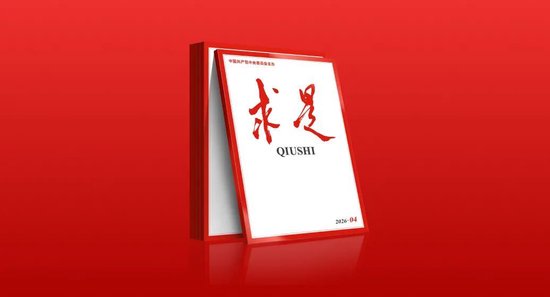
《求是》杂志发表习近平总书记重要文章《当前经济工作的重点任务》
第一财经· 2026-02-15 07:19
Core Viewpoint - The article emphasizes the importance of focusing on key tasks for economic work in 2026, highlighting the need for a strong domestic market and innovation-driven growth while addressing various sectors and challenges in the economy [1][2][3][4][5][6]. Group 1: Economic Strategy - The article stresses the need to prioritize domestic demand and build a robust domestic market, promoting consumption and investment through various measures [1] - It calls for the implementation of special actions to boost consumption and plans to increase the income of urban and rural residents [1] - The article highlights the importance of stabilizing investment and enhancing the role of policy financial tools to stimulate private investment [1] Group 2: Innovation and Reform - The article advocates for innovation-driven growth, emphasizing the role of technology in upgrading industries and fostering new productive forces [2] - It suggests the establishment of international technology innovation centers in key regions to enhance global competitiveness [2] - The need for comprehensive reforms to improve market ecology and support the development of the private economy is also highlighted [2] Group 3: International Cooperation - The article discusses the importance of maintaining an open economy and promoting cooperation across multiple fields to enhance domestic and international circulation [3] - It emphasizes the need for systematic reforms to facilitate foreign investment and support local production [3] - The promotion of high-quality development of the Belt and Road Initiative is also mentioned [3] Group 4: Sustainable Development - The article underscores the commitment to green transformation, focusing on carbon reduction, pollution control, and the expansion of green energy applications [4] - It highlights the importance of comprehensive environmental governance and the construction of a new energy system [4] Group 5: Social Welfare - The article stresses the importance of prioritizing people's livelihoods, focusing on employment stability and support for vulnerable groups [5] - It calls for improvements in education resources and healthcare systems to enhance social welfare [5] Group 6: Risk Management - The article emphasizes the need to manage risks in key areas, particularly in the real estate market, advocating for targeted policies to stabilize the market [6] - It discusses the importance of addressing local government debt risks and optimizing debt restructuring methods [6]

“2025年度十大宏观经济学家”名单揭晓
Xin Lang Cai Jing· 2026-02-12 15:26
资料图。本文来源:新浪金融研究院 "2025年度十大宏观经济学家"名单揭晓 2025年,中国经济承压前行、向新向优,财政更加积极、货币适度宽松,宏观政策协同提效、精准发力,推动经济运行稳中有进、高质量发展取得新成 效。立足变局交织与转型攻坚的关键阶段,宏观经济学家们紧扣时代脉搏,以全局视野、专业研判与扎实立论洞察发展大势;他们聚焦新质生产力、内需 提振、风险化解与长期增长建言献策,在变局中厘清发展逻辑,于前行中领航宏观方向。 新浪财经携手首席经济学家论坛、新经济学家智库,评选出"2025年度十大宏观经济学家"。 来源:经济学家圈 黄益平,北京大学国家发展研究院院长 李迅雷,中泰国际首席经济学家 连平,广开首席产业研究院院长兼首席经济学家、中国首席经济学家论坛理事长 陆挺,野村中国首席经济学家 彭文生,中金公司首席经济学家、研究部负责人、中金研究院院长 伍戈,长江证券首席经济学家、总裁助理 邢自强,摩根士丹利中国首席经济学家 本次评选由评委会综合"专业性、影响力、创新性、前瞻性、活跃度"五大维度,经评审团投票,并参考作品前瞻性、出产率等数据,综合评选出最终获奖 结果。 "2025年度十大宏观经济学家"名单(按照 ...

社科院世界经济与政治研究所副所长张斌荣膺“2025年度十大宏观经济学家”
Xin Lang Cai Jing· 2026-02-11 05:53
Core Viewpoint - The selection of the "Top Ten Macroeconomists of 2025" highlights the importance of macroeconomic policies in navigating China's economic challenges, emphasizing proactive fiscal measures and moderate monetary easing to achieve stable and high-quality development [1][2]. Group 1: Selection Process - The evaluation was conducted by a committee that considered five dimensions: professionalism, influence, innovation, foresight, and activity level, culminating in a voting process by the review panel [2]. - The final results were based on the foresight and output rates of the economists' works [2]. Group 2: Key Insights from Zhang Bin - Zhang Bin, the Deputy Director of the Institute of World Economics and Politics at the Chinese Academy of Social Sciences, was awarded the title of "Top Macroeconomist of 2025" [2]. - He proposed that the most effective way to boost consumption is through rapid investment expansion in the short term [2]. - Zhang emphasized the need to comprehensively address local government debt and develop strategies to mitigate hidden debts [2]. - He also discussed the importance of prioritizing actions to stimulate consumption, suggesting a need to clarify the urgency of various measures [2].
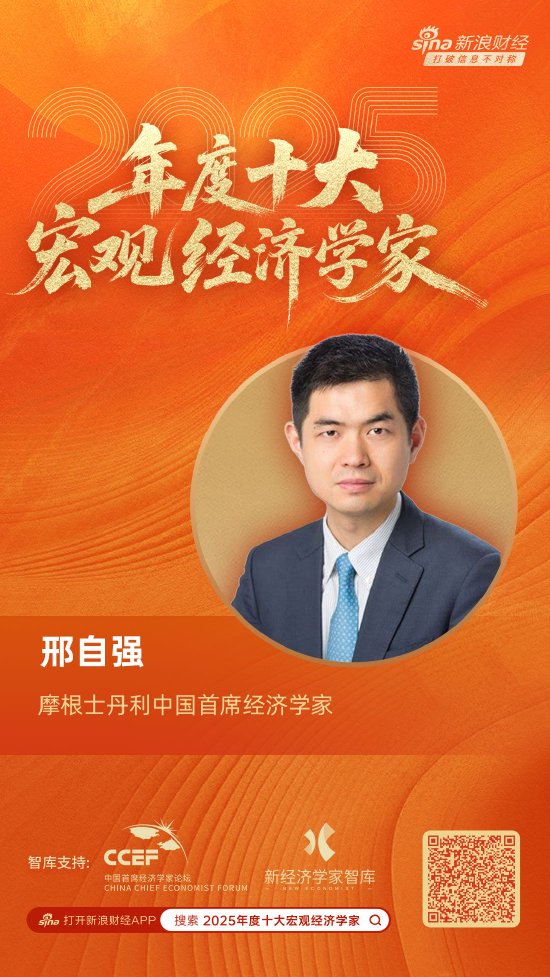
摩根士丹利中国首席经济学家邢自强荣膺“2025年度十大宏观经济学家”
Xin Lang Cai Jing· 2026-02-11 05:42
重磅!"2025年度十大宏观经济学家"名单揭晓 2025年,中国经济承压前行、向新向优,财政更加积极、货币适度宽松,宏观政策协同提效、精准发 力,推动经济运行稳中有进、高质量发展取得新成效。立足变局交织与转型攻坚的关键阶段,宏观经济 学家们紧扣时代脉搏,以全局视野、专业研判与扎实立论洞察发展大势;他们聚焦新质生产力、内需提 振、风险化解与长期增长建言献策,在变局中厘清发展逻辑,于前行中领航宏观方向。 新浪财经携手首席经济学家论坛、新经济学家智库,评选出"2025年度十大宏观经济学家"。 本次评选由评委会综合"专业性、影响力、创新性、前瞻性、活跃度"五大维度,经评审团投票,并参考 作品前瞻性、出产率等数据,综合评选出最终获奖结果。 责任编辑:张文 重磅!"2025年度十大宏观经济学家"名单揭晓 2025年,中国经济承压前行、向新向优,财政更加积极、货币适度宽松,宏观政策协同提效、精准发 力,推动经济运行稳中有进、高质量发展取得新成效。立足变局交织与转型攻坚的关键阶段,宏观经济 学家们紧扣时代脉搏,以全局视野、专业研判与扎实立论洞察发展大势;他们聚焦新质生产力、内需提 振、风险化解与长期增长建言献策,在变局中厘清 ...
长江证券首席经济学家伍戈荣膺“2025年度十大宏观经济学家”
Xin Lang Cai Jing· 2026-02-11 05:30
Group 1 - The core viewpoint of the article highlights the announcement of the "Top Ten Macroeconomists of 2025," emphasizing the challenges and transformations in the Chinese economy, with a focus on proactive fiscal policies and moderately loose monetary policies to achieve high-quality development [1][2][3] - The evaluation of the economists was based on five dimensions: professionalism, influence, innovation, foresight, and activity level, with results determined through a voting process by a review panel [3] - The macroeconomists are expected to provide insights on new productive forces, boosting domestic demand, risk mitigation, and long-term growth strategies, clarifying development logic amid changing circumstances [1][2] Group 2 - Wu Ge, Chief Economist and Assistant President of Changjiang Securities, was awarded the title of "Top Ten Macroeconomists of 2025," with notable viewpoints on economic expectations and macroeconomic understanding [4] - Wu Ge's perspectives include analyzing the economic outlook for the new year, discussing the economic closure, and addressing the concept of "anti-involution" from multiple dimensions [4]

野村中国首席经济学家陆挺荣膺“2025年度十大宏观经济学家”
Xin Lang Cai Jing· 2026-02-11 05:19
Core Viewpoint - The "Top Ten Macroeconomists of 2025" list has been announced, highlighting the need for proactive fiscal policies and moderate monetary easing to support China's economy amid challenges, aiming for high-quality development and effective macroeconomic coordination [1][2]. Group 1: Economic Context - China's economy is under pressure but is moving towards improvement and quality enhancement, with a more proactive fiscal stance and moderately loose monetary policy [1][2]. - Macroeconomic policies are being coordinated to enhance efficiency and precision, contributing to stable economic performance and new achievements in high-quality development [1][2]. Group 2: Focus Areas of Macroeconomists - Macroeconomists are focusing on new productive forces, boosting domestic demand, risk mitigation, and long-term growth strategies [1][2]. - They aim to clarify development logic amid changing circumstances and guide macroeconomic direction [1][2]. Group 3: Selection Process - The selection of the "Top Ten Macroeconomists" was conducted by a panel that evaluated candidates based on five dimensions: professionalism, influence, innovation, foresight, and activity level, with results determined through voting and consideration of the candidates' output and foresight [3]. Group 4: Notable Economist Insights - Lu Ting, Chief Economist at Nomura China, emphasizes that high-quality development requires boosting consumption and cleaning up existing debt [4]. - He advocates for a multi-faceted approach to enhance China's asset securitization rate, highlighting the importance of RMB internationalization and corporate globalization [4]. - Lu also discusses the need for long-term enhancement of consumer spending power and addresses China's pricing challenges and potential policy solutions [4].
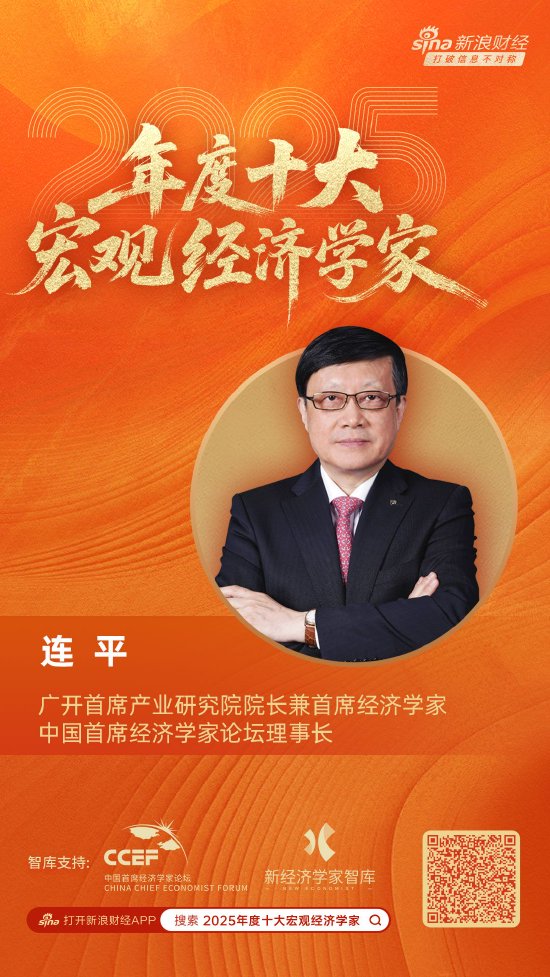
广开首席产业研究院院长兼首席经济学家连平荣膺“2025年度十大宏观经济学家”
Xin Lang Cai Jing· 2026-02-11 05:13
重磅!"2025年度十大宏观经济学家"名单揭晓 2025年,中国经济承压前行、向新向优,财政更加积极、货币适度宽松,宏观政策协同提效、精准发 力,推动经济运行稳中有进、高质量发展取得新成效。立足变局交织与转型攻坚的关键阶段,宏观经济 学家们紧扣时代脉搏,以全局视野、专业研判与扎实立论洞察发展大势;他们聚焦新质生产力、内需提 振、风险化解与长期增长建言献策,在变局中厘清发展逻辑,于前行中领航宏观方向。 新浪财经携手首席经济学家论坛、新经济学家智库,评选出"2025年度十大宏观经济学家"。 本次评选由评委会综合"专业性、影响力、创新性、前瞻性、活跃度"五大维度,经评审团投票,并参考 作品前瞻性、出产率等数据,综合评选出最终获奖结果。 广开首席产业研究院院长兼首席经济学家、中国首席经济学家论坛理事长连平荣膺"2025年度十大宏观 经济学家"! 精彩观点回顾: 连平:"十五五"时期应实施人民币升值战略 连平:"十五五"中国房地产市场将怎么走? 连平:"十五五"财政政策将怎样积极有为 连平:明年加力刺激内需至关重要 连平:民营经济高质量发展将带来哪些机遇?如何加快推动? 连平:下半年宏观经济运行八大展望 连平:扩大内需 ...
中泰国际首席经济学家李迅雷荣膺“2025年度十大宏观经济学家”
Xin Lang Cai Jing· 2026-02-11 03:55
重磅!"2025年度十大宏观经济学家"名单揭晓 2025年,中国经济承压前行、向新向优,财政更加积极、货币适度宽松,宏观政策协同提效、精准发 力,推动经济运行稳中有进、高质量发展取得新成效。立足变局交织与转型攻坚的关键阶段,宏观经济 学家们紧扣时代脉搏,以全局视野、专业研判与扎实立论洞察发展大势;他们聚焦新质生产力、内需提 振、风险化解与长期增长建言献策,在变局中厘清发展逻辑,于前行中领航宏观方向。 新浪财经携手首席经济学家论坛、新经济学家智库,评选出"2025年度十大宏观经济学家"。 本次评选由评委会综合"专业性、影响力、创新性、前瞻性、活跃度"五大维度,经评审团投票,并参考 作品前瞻性、出产率等数据,综合评选出最终获奖结果。 中泰国际首席经济学家李迅雷荣膺"2025年度十大宏观经济学家"! 李迅雷:如何让物价合理回升——难点在哪里 李迅雷:中央经济工作会议将如何优化"存量"与"增量" 李迅雷:对当前经济热点的一点思考 李迅雷:失温时为何会感受到"热" 李迅雷:以旧换新换什么乘数效应更大 李迅雷:如何确定促投资和促消费的政策定位 责任编辑:张文 重磅!"2025年度十大宏观经济学家"名单揭晓 精彩观点回顾: ...
北京大学国家发展研究院院长黄益平荣膺“2025年度十大宏观经济学家”
Xin Lang Cai Jing· 2026-02-11 03:50
黄益平:如何破解新旧动能转换的结构性难题? 黄益平:未来十年,中国经济的挑战不在于增速,而在于效率 重磅!"2025年度十大宏观经济学家"名单揭晓 2025年,中国经济承压前行、向新向优,财政更加积极、货币适度宽松,宏观政策协同提效、精准发 力,推动经济运行稳中有进、高质量发展取得新成效。立足变局交织与转型攻坚的关键阶段,宏观经济 学家们紧扣时代脉搏,以全局视野、专业研判与扎实立论洞察发展大势;他们聚焦新质生产力、内需提 振、风险化解与长期增长建言献策,在变局中厘清发展逻辑,于前行中领航宏观方向。 新浪财经携手首席经济学家论坛、新经济学家智库,评选出"2025年度十大宏观经济学家"。 本次评选由评委会综合"专业性、影响力、创新性、前瞻性、活跃度"五大维度,经评审团投票,并参考 作品前瞻性、出产率等数据,综合评选出最终获奖结果。 北京大学国家发展研究院院长黄益平荣膺"2025年度十大宏观经济学家"! 精彩观点回顾: 北京大学国家发展研究院院长黄益平荣膺"2025年度十大宏观经济学家"! 精彩观点回顾: 黄益平:如何破解新旧动能转换的结构性难题? 黄益平:如何以品质竞争打破低价内卷 黄益平:AI正在重新定义金融市 ...