风险化解

Search documents
万科企业2025年实现营业收入约2334.33亿元 按期保质交付房屋11.7 万套
Zhi Tong Cai Jing· 2026-03-31 18:59
Core Insights - The company reported a significant net loss of approximately 88.56 billion yuan for the year 2025, with total revenue around 233.43 billion yuan, primarily driven by challenges in the real estate development sector [3] Group 1: Financial Performance - The main reasons for the loss include a notable decline in the settlement scale of real estate development projects, resulting in low gross profit margins [1] - Revenue from real estate development and related asset management accounted for 81.7% of total revenue, amounting to 190.65 billion yuan, while property services contributed 15.2% with 35.52 billion yuan [3] - The company faced increased business risk exposure, leading to additional provisions for credit impairment and asset impairment [1] Group 2: Operational Developments - The company successfully delivered 117,000 housing units in 2025, with 17,000 units delivered 30 days ahead of schedule, establishing a positive reputation and enhancing sales velocity [1] - The company activated resources worth 33.85 billion yuan and completed 31 major asset transactions totaling 11.3 billion yuan, focusing on risk mitigation and financial optimization [2] - The company achieved a cumulative contract value of 134.06 billion yuan in development business, with 18 new projects launched and an investment realization rate of 84% [2]

万科A(000002.SZ)2025年度营收2334.33亿元,按期保质交付房屋11.7万套
智通财经网· 2026-03-31 13:12
Core Viewpoint - Vanke A (000002.SZ) reported a significant net loss of 88.56 billion yuan for the year 2025, despite achieving a revenue of 233.43 billion yuan. The company aims to focus on three key areas: ensuring timely delivery of homes, optimizing its asset-liability structure to mitigate risks, and enhancing operational capabilities to restore development resilience [1][2]. Group 1: Home Delivery - The company prioritized home delivery as a fundamental task, successfully delivering 117,000 homes in 2025, with 17,000 units delivered 30 days ahead of schedule [1]. - A total of 73 batches achieved "zero waiting" for delivery and immediate certification, with 37 projects recognized as benchmarks for high-quality delivery [1]. - The implementation of the "Xing Delivery" model in 21 projects created a positive reputation effect, leading to a virtuous cycle of sales acceleration [1]. Group 2: Asset-Liability Structure and Risk Mitigation - Vanke A focused on revitalizing existing resources and conducting bulk asset transactions, successfully activating a total of 33.85 billion yuan in asset value [1]. - The company completed 31 bulk asset transactions with a total transaction value of 11.3 billion yuan, while also progressing in the exit and delivery of its ice and snow business [1]. - Efforts to secure support from financial institutions included refinancing and extension measures to optimize financing and implement risk mitigation strategies [1]. Group 3: Operational Capability Enhancement - The company achieved a cumulative contract value of 134.06 billion yuan in its development business, with 18 new projects launched and an investment realization rate of 84% [2]. - Over 300 butterfly city efficiency improvement projects were completed in property services, alongside the expansion of 52 energy management service projects [2]. - Commercial projects such as Shanghai Qianwan Impression City MEGA opened successfully, establishing urban-level benchmarks, while long-term rental apartments, high-standard warehouses, and cold chain storage maintained industry leadership [2].
万科企业(02202)2025年实现营业收入约2334.33亿元 按期保质交付房屋11.7 万套
智通财经网· 2026-03-31 12:56
Core Viewpoint - Vanke Enterprises reported a significant net loss of approximately 88.56 billion yuan for 2025, primarily due to declining revenue from real estate development and increased impairment provisions [1] Group 1: Financial Performance - The total operating revenue for 2025 was about 233.43 billion yuan, with real estate development and related asset management contributing 190.65 billion yuan, accounting for 81.7% of total revenue [1] - The company experienced a substantial decrease in gross profit from real estate development due to high land acquisition costs and lower-than-expected sales and gross margins [1] - The company recorded a credit impairment and asset impairment due to increased business risk exposure [1] Group 2: Operational Achievements - In 2025, the company delivered 117,000 housing units on time, with 17,000 units delivered 30 days ahead of schedule, achieving "zero waiting" for 73 batches of deliveries [2] - The company successfully revitalized assets worth 33.85 billion yuan and completed 31 major asset transactions totaling 11.3 billion yuan [2] - The company enhanced its operational capabilities, achieving a cumulative contract value of 134.06 billion yuan in development business and successfully launching 18 new projects [3] Group 3: Strategic Initiatives - The company is actively engaging with financial institutions and local governments to secure support for refinancing and risk mitigation efforts [2] - Various business segments, including long-term rentals and high-standard warehouses, maintained industry leadership, contributing to the company's stable development [3]
湘财证券晨会纪要-20260313
Xiangcai Securities· 2026-03-12 23:50
Group 1: Banking Industry Overview - The recent economic theme meeting during the "Two Sessions" highlighted the continuous reduction of risks in key areas, with a focus on maintaining a favorable liquidity environment for banks through an accommodative monetary policy [2][3] - The central bank will utilize various monetary policy tools, including reserve requirement ratio cuts and interest rate reductions, to keep the comprehensive financing costs low, ensuring banks transparently display loan costs to enterprises [2][3] - Structural monetary policy tools, amounting to approximately 5.5 trillion yuan, will focus on supporting domestic demand, technological innovation, and small and micro enterprises [3][4] Group 2: Credit Policy and Risk Management - The credit structure is being optimized, with significant growth in loans to technology, green, inclusive, elderly care, and digital sectors, all exceeding the average growth rate of total loans [3][4] - There has been a notable reduction in the number and scale of financing platform debts, with over a 70% decrease compared to early 2023, indicating effective risk mitigation efforts [4] - The current credit policy emphasizes balancing risk and return, with a focus on supporting key sectors while managing credit risks to avoid blind expansion [4] Group 3: Investment Recommendations - In the context of a weak economic recovery, banks are shifting focus from aggressive credit expansion to a balanced approach to risk and return, which is expected to alleviate margin pressure and improve asset quality [5] - High dividend yield banks are seen as having significant allocation value, with potential for valuation recovery in a balanced market environment [5] - Recommendations include state-owned large and medium-sized banks, as well as regionally strong banks such as Industrial and Commercial Bank of China, Bank of China, and others [5]
2026 年“两会”银行信息关注点:资本补充、信贷撬动与风险化解
GUOTAI HAITONG SECURITIES· 2026-03-06 02:35
Investment Rating - The report assigns an "Overweight" rating for the banking sector, indicating an expected performance that exceeds the Shanghai and Shenzhen 300 Index by more than 15% [5][10]. Core Insights - The monetary policy environment for 2026 is expected to remain moderate, with new policy financial tools and structural financial instruments anticipated to further stimulate social financing demand. The capital injection into state-owned banks will enhance their ability to support the real economy [2][5]. - The 2026 government work report plans to issue 4.4 trillion yuan in local government special bonds, maintaining the same level as 2025, focusing on major project construction, replacing hidden debts, and settling government arrears [3]. - The report highlights a proactive fiscal policy, with the issuance of new policy financial instruments expected to reach 800 billion yuan, up from 500 billion yuan in 2025, which will drive total project investment by approximately 7 trillion yuan [5]. - The second round of capital injection for state-owned banks is imminent, with a planned issuance of special government bonds amounting to 300 billion yuan to support capital replenishment. This is expected to increase the core Tier 1 capital adequacy ratio of two major banks by 0.6 percentage points [5]. Summary by Sections Monetary Policy - The report anticipates 1-2 instances of reserve requirement ratio (RRR) cuts or interest rate reductions within the year, with a projected decrease of up to 20 basis points [5]. Fiscal Policy - The report emphasizes the establishment of a 100 billion yuan fund to promote domestic demand through various financial support mechanisms, including loan interest subsidies and risk compensation [5]. Risk Management - Key risk areas identified include real estate, local government debt, and small financial institutions. The report suggests that measures such as the "white list" system for real estate will help mitigate debt default risks [5].
韩文秀:坚持稳中求进、提质增效 努力实现“十五五”良好开局
Xin Lang Cai Jing· 2026-02-16 03:25
Group 1 - The core message emphasizes the importance of achieving a good start for the "15th Five-Year Plan" by adhering to the principles of stability and progress while enhancing quality and efficiency in economic work [2][20] - The 2025 Central Economic Work Conference is highlighted as a significant meeting post the 20th Party Congress, where key economic strategies for 2026 were outlined [2][20] - The overall economic performance in 2025 is described as better than expected, with notable progress in modern industrial system construction and risk mitigation in key sectors like real estate [21][22] Group 2 - The article identifies persistent challenges in China's economic development, including insufficient consumer and investment growth, and difficulties faced by enterprises [24][5] - It notes that the global economic landscape is undergoing significant changes, with geopolitical tensions and economic uncertainties impacting trade and investment [22][23] - The World Trade Organization forecasts a decline in global goods trade growth from 2.4% in 2025 to 0.5% in 2026, indicating potential external pressures on China's economy [23] Group 3 - The article outlines five essential principles for economic work, including the need to fully tap economic potential and the importance of combining policy support with reform innovation [28][29] - It stresses the necessity of balancing market freedom with effective government regulation to foster a healthy economic environment [30] - The focus on investing in both physical assets and human capital is emphasized as crucial for sustainable economic growth [31] Group 4 - The need for expanding domestic demand and enhancing the domestic circulation of the economy is highlighted, with consumer spending contributing over 52% to economic growth in 2025 [34] - The integration of technological and industrial innovation is deemed vital for fostering new productive forces, with a strong emphasis on artificial intelligence [35] - The commitment to deepening reforms and expanding openness is reiterated, aiming to stimulate high-quality development and improve the business environment [38] Group 5 - The article discusses the importance of improving and safeguarding people's livelihoods, with a focus on employment stability and enhancing educational resources [17][39] - It outlines strategies for addressing risks in key sectors, particularly in real estate and local government debt management, to maintain economic stability [39][18] - The emphasis on ensuring safety in production and disaster prevention is noted as a critical aspect of economic governance [17][39]

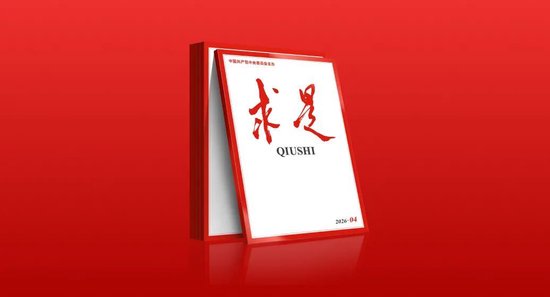
《求是》杂志发表习近平总书记重要文章《当前经济工作的重点任务》
第一财经· 2026-02-15 07:19
Core Viewpoint - The article emphasizes the importance of focusing on key tasks for economic work in 2026, highlighting the need for a strong domestic market and innovation-driven growth while addressing various sectors and challenges in the economy [1][2][3][4][5][6]. Group 1: Economic Strategy - The article stresses the need to prioritize domestic demand and build a robust domestic market, promoting consumption and investment through various measures [1] - It calls for the implementation of special actions to boost consumption and plans to increase the income of urban and rural residents [1] - The article highlights the importance of stabilizing investment and enhancing the role of policy financial tools to stimulate private investment [1] Group 2: Innovation and Reform - The article advocates for innovation-driven growth, emphasizing the role of technology in upgrading industries and fostering new productive forces [2] - It suggests the establishment of international technology innovation centers in key regions to enhance global competitiveness [2] - The need for comprehensive reforms to improve market ecology and support the development of the private economy is also highlighted [2] Group 3: International Cooperation - The article discusses the importance of maintaining an open economy and promoting cooperation across multiple fields to enhance domestic and international circulation [3] - It emphasizes the need for systematic reforms to facilitate foreign investment and support local production [3] - The promotion of high-quality development of the Belt and Road Initiative is also mentioned [3] Group 4: Sustainable Development - The article underscores the commitment to green transformation, focusing on carbon reduction, pollution control, and the expansion of green energy applications [4] - It highlights the importance of comprehensive environmental governance and the construction of a new energy system [4] Group 5: Social Welfare - The article stresses the importance of prioritizing people's livelihoods, focusing on employment stability and support for vulnerable groups [5] - It calls for improvements in education resources and healthcare systems to enhance social welfare [5] Group 6: Risk Management - The article emphasizes the need to manage risks in key areas, particularly in the real estate market, advocating for targeted policies to stabilize the market [6] - It discusses the importance of addressing local government debt risks and optimizing debt restructuring methods [6]

“2025年度十大宏观经济学家”名单揭晓
Xin Lang Cai Jing· 2026-02-12 15:26
Core Viewpoint - The 2025 list of "Top Ten Macroeconomists" in China has been announced, highlighting the importance of macroeconomic policies in navigating economic challenges and promoting high-quality development [2] Summary by Categories Economic Environment - China's economy is under pressure but is progressing towards improvement and quality enhancement, with more proactive fiscal policies and moderately loose monetary policies [2] - Macroeconomic policies are being coordinated to enhance efficiency and precision, aiming for stable economic operation and new achievements in high-quality development [2] Macroeconomic Insights - Macroeconomists are focusing on new productive forces, boosting domestic demand, risk mitigation, and long-term growth strategies [2] - The evaluation of economists is based on five dimensions: professionalism, influence, innovation, foresight, and activity level [2] Award Recipients - The list of the "Top Ten Macroeconomists" includes: - Fan Gang, former president of the Comprehensive Development Research Institute - Guan Tao, Global Chief Economist at Bank of China Securities - Huang Yiping, Dean of the National School of Development at Peking University - Li Xunlei, Chief Economist at Zhongtai International - Lian Ping, Chief Economist at Guangfa Securities and Chairman of the China Chief Economist Forum - Lu Ting, Chief Economist at Nomura China - Peng Wensheng, Chief Economist and Head of Research at CICC - Wu Ge, Chief Economist and Assistant President at Changjiang Securities - Xing Ziqiang, Chief Economist at Morgan Stanley China - Zhang Bin, Deputy Director of the World Economy and Politics Research Institute at the Chinese Academy of Social Sciences [2]

社科院世界经济与政治研究所副所长张斌荣膺“2025年度十大宏观经济学家”
Xin Lang Cai Jing· 2026-02-11 05:53
Core Viewpoint - The selection of the "Top Ten Macroeconomists of 2025" highlights the importance of macroeconomic policies in navigating China's economic challenges, emphasizing proactive fiscal measures and moderate monetary easing to achieve stable and high-quality development [1][2]. Group 1: Selection Process - The evaluation was conducted by a committee that considered five dimensions: professionalism, influence, innovation, foresight, and activity level, culminating in a voting process by the review panel [2]. - The final results were based on the foresight and output rates of the economists' works [2]. Group 2: Key Insights from Zhang Bin - Zhang Bin, the Deputy Director of the Institute of World Economics and Politics at the Chinese Academy of Social Sciences, was awarded the title of "Top Macroeconomist of 2025" [2]. - He proposed that the most effective way to boost consumption is through rapid investment expansion in the short term [2]. - Zhang emphasized the need to comprehensively address local government debt and develop strategies to mitigate hidden debts [2]. - He also discussed the importance of prioritizing actions to stimulate consumption, suggesting a need to clarify the urgency of various measures [2].
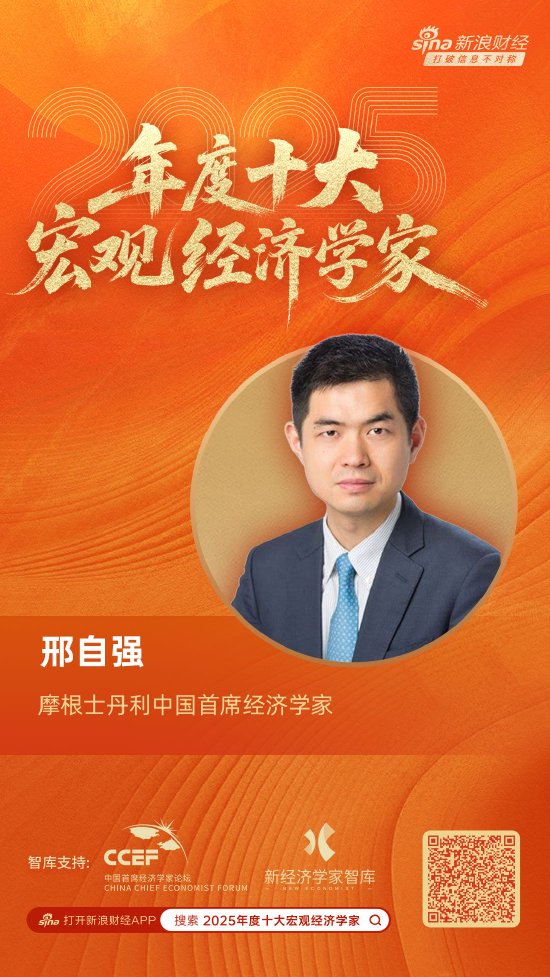
摩根士丹利中国首席经济学家邢自强荣膺“2025年度十大宏观经济学家”
Xin Lang Cai Jing· 2026-02-11 05:42
Core Insights - The "Top Ten Macroeconomists of 2025" list has been announced, highlighting the importance of macroeconomic policies in navigating China's economic challenges and promoting high-quality development [1][4] - The evaluation of the economists was based on five dimensions: professionalism, influence, innovation, foresight, and activity level, with the final results determined by a voting panel [1][4] - Xing Ziqiang, Chief Economist at Morgan Stanley China, was awarded the title of "Top Ten Macroeconomists of 2025" [1][4] Group 1 - Current market dynamics are driven by three main forces, emphasizing the need for a solid institutional foundation [3][6] - Recommendations for the real estate market include inventory reduction, support for key players, and mortgage subsidies [4][7] - China's exports are expected to remain a crucial pillar for economic enhancement in the coming years [4][7] Group 2 - A shift from investment in physical assets to investment in human capital is necessary to continuously stimulate the consumer market [4][7]