
301关税

Search documents
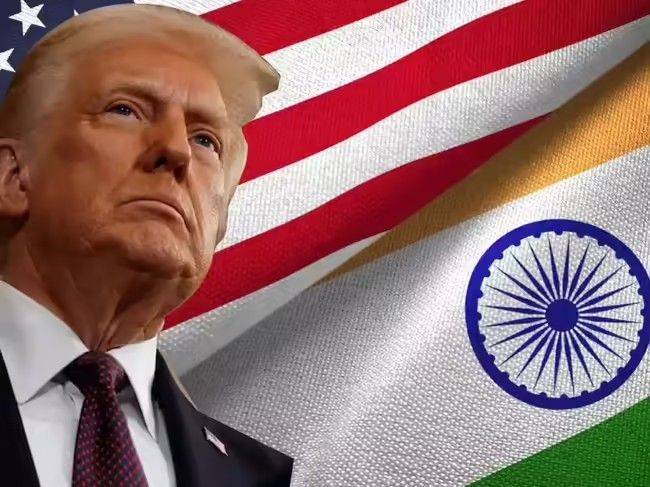
印度举起反旗,输了官司的特朗普遭遇第一棒
Sou Hu Cai Jing· 2026-02-26 05:25
Group 1 - The core issue revolves around India's response to the U.S. Supreme Court ruling that deemed reciprocal tariffs invalid, leading to the cancellation of a planned trade negotiation between India and the U.S. [1] - The agreement reached on February 3 required India to halt oil purchases from Russia and commit to buying $500 billion worth of U.S. goods over five years, which India viewed as an unequal treaty [3] - India's trade with the U.S. is significant, with the U.S. accounting for 18% of India's exports and 6.22% of its imports, indicating the importance of this relationship [5] Group 2 - The fluctuating tariff policies under Trump's administration have created uncertainty for Indian businesses, with tariffs rising from 10% to as high as 50% due to geopolitical tensions [5] - Trump's approach to trade has been characterized by emotional political maneuvers rather than precise economic strategies, leading to instability in trade negotiations [5][7] - The U.S. has signed framework agreements with nearly 20 trade partners, utilizing a strategy of increasing tariffs to pressure countries into making investments in the U.S. [7][9] Group 3 - Following the Supreme Court ruling, Trump raised tariffs to 15% and initiated investigations into more industries for potential tariffs, causing confusion among countries with existing agreements [11] - Countries like Canada and France have publicly criticized the legality of Trump's tariff actions, while the EU has prepared a list of retaliatory tariffs worth over €90 billion [11] - Despite global discontent with Trump's tariff policies, no country has taken significant action against them, with India notably adopting a cautious and strategic approach [13]

国家创业投资引导基金正式启动
第一财经· 2025-12-26 01:10
Group 1 - The National Venture Capital Guidance Fund has officially launched, with three regional funds established: Beijing-Tianjin-Hebei Venture Capital Guidance Fund, Yangtze River Delta Venture Capital Guidance Fund, and Guangdong-Hong Kong-Macau Greater Bay Area Venture Capital Guidance Fund [1]

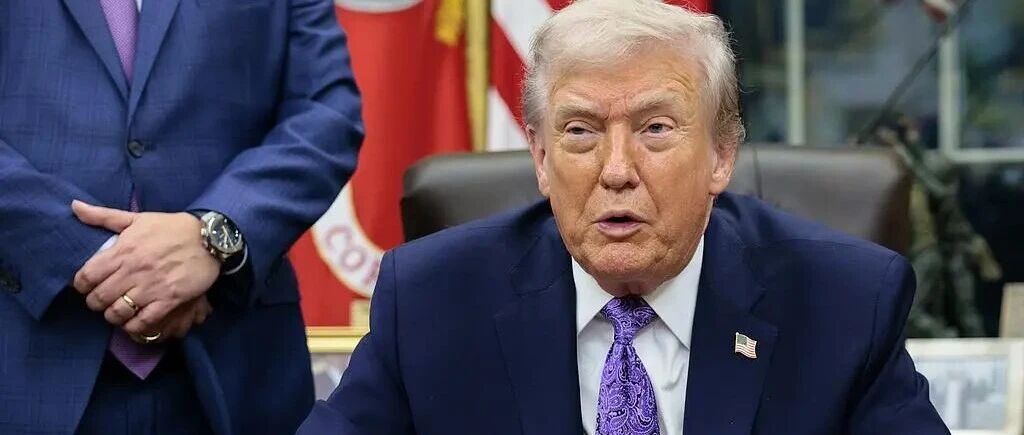
特朗普:美军发动打击
第一财经· 2025-12-26 00:27
Group 1 - The article discusses a military strike ordered by U.S. President Trump against ISIS-related targets in northwest Nigeria, emphasizing the operation's strength and lethality [3] - Trump highlighted that the ISIS group has been attacking local civilians, resulting in significant casualties [3] - The military action was executed by U.S. forces, which carried out multiple precision strikes on the targeted locations [3] Group 2 - The article also mentions various current events, including the Chinese Ministry of Commerce's response to the U.S. imposing additional 301 tariffs on semiconductors, and a conversation between Zelensky and a U.S. envoy regarding peace negotiations for the Russia-Ukraine conflict [4]
商务部密集回应!涉及301关税、TikTok将成立新合资公司
21世纪经济报道· 2025-12-25 13:26
Group 1 - The Chinese government firmly opposes the U.S. imposing 301 tariffs on Chinese semiconductor products, stating that such unilateral tariffs violate WTO rules and disrupt global supply chains, ultimately harming U.S. businesses and consumers [5][4] - The U.S. Trade Representative's office announced that tariffs on certain Chinese semiconductor products will initially be set at 0% and will increase after 18 months, specifically in June 2027 [5] - The Chinese government has expressed its willingness to engage in equal dialogue with the U.S. to resolve concerns while urging the U.S. to correct its actions and provide a fair business environment for Chinese companies operating in the U.S. [8][6] Group 2 - TikTok has signed agreements with three investors to establish a new joint venture in the U.S. to ensure its continued operations in the country [7] - The Chinese government emphasizes the importance of a fair, open, and transparent business environment for Chinese enterprises in the U.S., aligning with the consensus reached during discussions between the two countries' economic teams [8][6] Group 3 - The Chinese government opposes the U.S. practice of unilateral sanctions and "long-arm jurisdiction," particularly regarding the interception of Venezuelan oil tankers, which could disrupt international energy markets and pose security risks [10]
商务部回应美拟对华半导体产品加征关税等经贸热点
Xin Hua She· 2025-12-25 12:45
Core Viewpoint - The Chinese government has expressed strong opposition to the recent announcement by the United States to impose additional 301 tariffs on certain semiconductor products from China, emphasizing that it does not agree with the conclusions of the U.S. 301 investigation and has formally lodged a complaint through the China-U.S. trade negotiation mechanism [1] Group 1 - The Chinese Ministry of Commerce has taken note of the U.S. decision to impose tariffs and has responded through official channels [1] - The Chinese side firmly opposes the U.S. decision to impose 301 tariffs on semiconductor products [1] - The Chinese government has stated that it does not recognize the conclusions drawn from the U.S. 301 investigation [1]
美拟对中国半导体加征关税,商务部答南都:已提出严正交涉
Nan Fang Du Shi Bao· 2025-12-25 09:30
Core Viewpoint - The U.S. plans to impose additional tariffs on certain Chinese semiconductor products, with the current rate at 0% and a potential increase after 18 months, which China strongly opposes [1]. Group 1: U.S. Tariff Announcement - On December 23, the U.S. Trade Representative's Office announced the results of a 301 investigation into China's semiconductor policies, leading to the decision to impose tariffs [1]. - The tariffs will initially be set at 0% and are scheduled to increase in June 2027 [1]. Group 2: China's Response - China has expressed strong opposition to the U.S. tariffs, stating that they violate World Trade Organization rules and disrupt global supply chains [1]. - The Chinese government has initiated formal negotiations with the U.S. through trade consultation mechanisms to address these concerns [1]. - China emphasizes a willingness to resolve issues through dialogue based on mutual respect and cooperation, but warns of necessary measures if U.S. actions continue to harm Chinese interests [1]. Group 3: Understanding 301 Tariffs - The 301 tariffs are a significant part of the U.S. tariff system, including General 301, Special 301, and Super 301 categories [2]. - General 301 allows the U.S. Trade Representative to investigate and implement retaliatory measures against countries deemed to violate trade agreements or engage in unfair trade practices [2]. - The application of General 301 is broad, primarily targeting specific trade issues and serving as a common punitive tool in U.S. foreign trade [2].
美对华半导体产品加征301关税,商务部回应
券商中国· 2025-12-25 09:25
Group 1 - The core viewpoint of the article is that China firmly opposes the U.S. decision to impose 301 tariffs on certain Chinese semiconductor products, asserting that it violates WTO rules and disrupts global supply chains [1] - The Chinese Ministry of Commerce has expressed that the unilateral tariffs by the U.S. are detrimental to both American businesses and consumers, urging the U.S. to correct its actions and remove the tariffs [1] - China is willing to engage in dialogue with the U.S. based on mutual respect and cooperation, but will take necessary measures to protect its own interests if the U.S. continues to harm China's rights [1]

商务部:坚决反对美对华半导体产品加征301关税,已提出严正交涉
21世纪经济报道· 2025-12-25 07:34
Core Viewpoint - The Chinese government firmly opposes the U.S. decision to impose Section 301 tariffs on certain Chinese semiconductor products, asserting that it violates WTO rules and disrupts global supply chains, ultimately harming U.S. businesses and consumers [1]. Group 1: U.S. Tariff Announcement - The U.S. Trade Representative's office announced on December 23 that it would impose Section 301 tariffs on certain Chinese semiconductor products, with an initial rate of 0% that will increase after 18 months, specifically in June 2027 [1]. - The Chinese Ministry of Commerce has expressed strong disapproval of the U.S. findings from the Section 301 investigation, emphasizing that it does not recognize the conclusions drawn by the U.S. [1]. Group 2: China's Response - The Chinese government has initiated formal negotiations with the U.S. through the China-U.S. economic and trade consultation mechanism to address these concerns [1]. - China urges the U.S. to correct its actions and remove the tariffs, advocating for resolution through equal dialogue based on mutual respect and cooperation [1]. - Should the U.S. continue to harm China's interests, the Chinese government is prepared to take necessary measures to protect its rights [1].
商务部:坚决反对美对华半导体产品加征301关税 已提出严正交涉
Xin Hua She· 2025-12-25 07:11
Group 1 - The Ministry of Commerce firmly opposes the U.S. imposition of Section 301 tariffs on Chinese semiconductor products and has initiated serious negotiations [1] - The Chinese government views the tariffs as detrimental to the semiconductor industry and overall trade relations [1] - The response from the Ministry indicates a strong stance against protectionist measures that could impact the global semiconductor supply chain [1]
一名广东贸易商的这三个月
Jing Ji Guan Cha Bao· 2025-06-21 09:12
Core Insights - The company is actively preparing for the mid-year sales event in the U.S. and exploring the Mexican market for expansion opportunities [1] - The company primarily engages in the trade of consumer electronics, connecting U.S. retailers with Chinese manufacturers [1] - The company has been closely monitoring changes in tariffs and shipping costs, making strategic decisions based on these factors [1][2] Shipping Costs - As of June 13, shipping rates from Shanghai to the U.S. West and East Coast ports were $4,120/FEU and $6,745/FEU, reflecting decreases of 26.5% and 2.8% respectively [2] - The company anticipates shipping costs may drop below $3,000/FEU, but if they rise to $6,000, profit margins could be significantly impacted [2] Tariff Outlook - The company predicts that after the 90-day "window period," tariffs may stabilize around 40%-50%, potentially erasing profits if retail prices remain unchanged [2] - The company is cautious about the foreign trade environment and believes that ongoing policy changes require careful observation [2] Business Strategy - The company has decided to maintain current operations and not expand investments until the market situation stabilizes [4] - The company has a seven-month inventory turnover and plans to deplete this stock before making further production decisions based on policy changes [4] - If tariffs exceed expectations, the company may consider exiting the U.S. market, which is currently its largest, while the European market is significantly smaller [4] Market Conditions - The company has incurred losses due to increased costs from air freight, which added $200,000 to expenses [3] - The company is exploring e-commerce in Mexico with an initial investment of 100,000 yuan to test market viability [2][4] - Concerns about the stability of the Mexican market remain a significant consideration for the company's expansion plans [2]