中美经贸磋商

Search documents
国新证券每日晨报-20260320
Guoxin Securities Co., Ltd· 2026-03-20 03:35
Domestic Market Overview - The domestic market experienced a downward trend, with the Shanghai Composite Index closing at 4006.55 points, down 1.39%, and the Shenzhen Component Index at 13901.57 points, down 2.02% [5][10] - A total of 28 out of 30 sectors in the CITIC index declined, with non-ferrous metals, steel, and building materials showing the largest drops. Only coal and oil & petrochemicals saw gains [10][11] - The total trading volume of the A-share market was 21,273 billion, continuing to decrease from the previous day [5][10] Overseas Market Overview - The three major U.S. stock indices experienced slight declines, with the Dow Jones down 0.44%, S&P 500 down 0.27%, and Nasdaq down 0.28%. Notably, Tesla fell over 3% [2][5] - The Nasdaq China Golden Dragon Index dropped by 1%, with Alibaba falling over 7% and Canadian Solar down nearly 27% [2][5] Key Drivers - The central bank emphasized the continuation of a moderately loose monetary policy, utilizing various tools to maintain liquidity and stabilize financial markets [11][13] - On the same day, 505 stocks in the A-share market rose, while 4,955 fell, indicating a market with excessive short-term fear, presenting medium to long-term investment opportunities [11][12] Economic Data - In the first two months of the year, the national general public budget revenue reached 44,154 billion, reflecting a year-on-year growth of 0.7% [14][15] - Tax revenue was 36,393 billion, with a slight increase of 0.1%, while non-tax revenue grew by 3.4% to 7,761 billion [14][15]
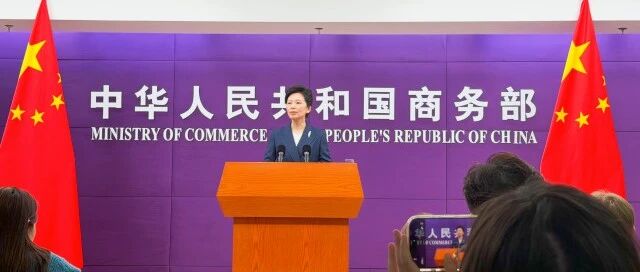
商务部:继续发挥好中美经贸磋商机制作用,加强对话沟通妥善管控分歧
第一财经· 2026-03-19 09:29
Group 1 - The core viewpoint of the article emphasizes the ongoing constructive dialogue between China and the U.S. regarding trade, highlighting new consensus reached during recent negotiations in Paris [3][4]. - The Chinese side, represented by Vice Premier He Lifeng, and the U.S. side, represented by Treasury Secretary Janet Yellen and Trade Representative Katherine Tai, engaged in discussions focused on tariff arrangements and promoting bilateral trade and investment [3][4]. - Both parties agreed to explore the establishment of a cooperation mechanism to enhance bilateral trade and investment, aiming to manage differences and expand practical cooperation [3][4]. Group 2 - The upcoming World Trade Organization (WTO) Ministerial Conference (MC14) will take place in Yaoundé, Cameroon, from March 26 to 29, with Chinese Commerce Minister Wang Wentao leading the delegation [4]. - The conference is significant as it addresses challenges to the multilateral trading system, including unilateralism and protectionism, and aims to discuss major issues such as WTO reform and food security [4][5]. - China has committed to not seeking new special and differential treatment in current and future WTO negotiations and has submitted a position paper on WTO reform [4][5]. Group 3 - During MC14, China plans to host a high-level conference focused on supporting Africa's industrialization process through Chinese investment, with participation from WTO Director-General and African ministers [5]. - The conference aims to explore economic development through trade and investment, emphasizing the importance of cooperation among developing countries [5].

瑞达期货螺纹钢产业链日报-20260319
Rui Da Qi Huo· 2026-03-19 09:08
Report Summary 1. Report Industry Investment Rating No relevant information provided. 2. Core Viewpoints - On Thursday, the RB2605 contract saw a reduction in positions and consolidation. The macro - situation involves China's full - scale second - round pilot of extending the land contract for another 30 years in entire provinces, with key requirements including maintaining the collective ownership system, household - based contracting, the dominant position of farmers, and rural social stability [2]. - In terms of supply and demand, the weekly output of rebar continued to increase, and the capacity utilization rate rose to 44.57%. Downstream demand continued to improve, with the apparent demand exceeding 2.05 million tons, and inventory changed from increasing to decreasing. Overall, the supply and demand of rebar both increased, the inventory inflection point appeared, and the bottom support moved up. However, the international situation is volatile, with many uncertainties, and the wide - range fluctuations of international oil prices affect market sentiment [2]. - Technically, the 1 - hour MACD indicator of the RB2605 contract shows that DIFF and DEA are pulling back from high levels, and it is testing the support at the 0 - axis in the short - term. It is expected to fluctuate in the range of 3150 - 3110 in the short - term, and risk control should be noted [2]. 3. Summary by Relevant Catalogs 3.1 Futures Market - The closing price of the RB main contract was 3,135.00 yuan/ton, a decrease of 5 yuan; the position volume was down 65,665 hands. The net position of the top 20 in the RB contract was - 25,055 hands, an increase of 11,908 hands. The RB5 - 10 contract spread was down 3 yuan/ton, and the HC2605 - RB2605 contract spread was down 3 yuan/ton. The RB warehouse receipt at the Shanghai Futures Exchange was 58,176 tons, a decrease of 573 tons [2]. 3.2 Spot Market - The price of HRB400E 20MM in Hangzhou (theoretical weight) was 3,280.00 yuan/ton, a decrease of 10 yuan; the price of HRB400E 20MM in Hangzhou (actual weight) was 3,364 yuan, a decrease of 10 yuan. The price of HRB400E 20MM in Guangzhou (theoretical weight) was 3,420.00 yuan/ton, unchanged; the price of HRB400E 20MM in Tianjin (theoretical weight) was 3,200.00 yuan/ton, unchanged. The basis of the RB main contract was 145.00 yuan/ton, a decrease of 5 yuan, and the spot price difference between hot - rolled coil and rebar in Hangzhou was 20.00 yuan/ton, unchanged [2]. 3.3 Upstream Situation - The price of 60.8% PB iron ore fines at Qingdao Port was 792.00 yuan/wet ton, a decrease of 7.00 yuan. The price of first - grade metallurgical coke at Tianjin Port (FOB) was 1,490.00 yuan/ton, unchanged. The price of 6 - 8mm scrap steel in Tangshan (tax - excluded) was 2,190.00 yuan/ton, unchanged, and the price of Q235 billet in Hebei was 2,980.00 yuan/ton, unchanged [2]. - The inventory of iron ore at 45 ports was 17,191.80 million tons, an increase of 69.08 million tons. The inventory of coke at sample coking plants was 56.10 million tons, a decrease of 6.93 million tons. The inventory of coke at sample steel mills was 687.62 million tons, an increase of 16.09 million tons. The inventory of billets in Tangshan was 249.53 million tons, an increase of 9.02 million tons [2]. - The blast furnace operating rate of 247 steel mills was 78.36%, an increase of 0.67 percentage points, and the blast furnace capacity utilization rate was 82.90%, a decrease of 2.40 percentage points [2]. 3.4 Industry Situation - The weekly output of rebar at sample steel mills was 203.33 million tons, an increase of 8.03 million tons; the capacity utilization rate of rebar at sample steel mills was 44.57%, an increase of 1.75 percentage points. The inventory of rebar at sample steel mills was 236.20 million tons, a decrease of 3.42 million tons; the social inventory of rebar in 35 cities was 653.21 million tons, a decrease of 1.34 million tons [2]. - The operating rate of independent electric arc furnace steel mills was 59.38%, an increase of 23.96 percentage points. The monthly output of domestic crude steel was 6,818 million tons, a decrease of 169 million tons. The monthly output of Chinese steel bars was 1,375 million tons, an increase of 19 million tons. The net export volume of steel was 747.00 million tons, an increase of 18.00 million tons [2]. 3.5 Downstream Situation - The national real - estate climate index was 91.45, a decrease of 0.44. The cumulative year - on - year growth rate of fixed - asset investment was - 3.80%, a decrease of 5.60 percentage points. The cumulative year - on - year growth rate of real - estate development investment was - 17.20%, a decrease of 6.10 percentage points. The cumulative year - on - year growth rate of infrastructure construction investment was - 2.20%, a decrease of 2.20 percentage points [2]. - The cumulative value of housing construction area was 659,890 million square meters, a decrease of 124,518 million square meters. The cumulative value of new housing construction area was 58,770 million square meters, a decrease of 53,686 million square meters. The inventory of commercial housing for sale was 40,236.00 million square meters, an increase of 3,516.00 million square meters [2]. 3.6 Industry News - On March 19, Mysteel information showed that the actual output of rebar this period was 203.33 million tons, a week - on - week increase of 8.03 million tons; the mill inventory was 236.2 million tons, a week - on - week decrease of 3.42 million tons; the social inventory was 653.21 million tons, a week - on - week decrease of 1.34 million tons; the total inventory was 889.41 million tons, a week - on - week decrease of 4.76 million tons; the apparent demand was 208.09 million tons, a week - on - week increase of 31.28 million tons [2]. - At the regular press conference of the Ministry of Commerce on March 19, the spokesperson said that China and the US had in - depth and constructive exchanges and consultations on economic and trade issues, reached some new consensuses, and would continue the consultations [2].
商务部:继续发挥好中美经贸磋商机制作用 加强对话沟通
证券时报· 2026-03-19 07:54
Group 1 - The core viewpoint of the article emphasizes the constructive dialogue and consensus reached between China and the United States regarding trade and economic issues, guided by the important consensus of the two countries' leaders [1] - Both parties have agreed to continue utilizing the China-US economic and trade consultation mechanism to enhance dialogue and communication, manage differences appropriately, and expand practical cooperation [1] - The discussions focused on tariff arrangements, promoting bilateral trade and investment, and maintaining existing consultation agreements, indicating a commitment to stabilize and improve bilateral economic relations [1]

商务部回应中美经贸磋商相关问题
21世纪经济报道· 2026-03-19 07:52
Core Viewpoint - The article highlights the constructive dialogue and consensus reached between China and the United States regarding trade and economic cooperation, emphasizing the importance of ongoing negotiations to manage differences and enhance bilateral relations [1]. Group 1: Trade Negotiations - The Ministry of Commerce held a routine press conference addressing the recent China-U.S. economic and trade consultations [1]. - Both parties engaged in candid, in-depth discussions on tariff arrangements, promoting bilateral trade and investment, and maintaining existing consensus [1]. - New agreements were formed during these discussions, indicating a positive step forward in the negotiations [1]. Group 2: Future Cooperation - There is a mutual agreement to continue utilizing the China-U.S. economic and trade consultation mechanism to strengthen dialogue and communication [1]. - The focus will be on properly managing differences and expanding practical cooperation to ensure the stability and positive development of bilateral economic relations [1].

20260314棉系周报:内外因素共同作用,郑棉短期迎震荡调整-20260316
Zhong Hui Qi Huo· 2026-03-16 06:34
Report Industry Investment Rating No relevant content provided. Core Viewpoints of the Report - The Zhengzhou cotton market is expected to experience short - term wide - range oscillations due to the combined influence of internal and external factors, with the market still slightly favoring a bullish trend, but waiting for the implementation of supply - side realities and further industrial policy guidance [3]. - The USDA's March supply - demand balance sheet is overall slightly bearish, with global production increasing, consumption decreasing, and the global inventory - to - consumption ratio rising [4]. Summary by Directory 1. Macro - China's CPI in February increased by 1.3% year - on - year, the highest in the past three years, and the core CPI increased by 1.8% year - on - year. The national PPI decreased by 0.9% year - on - year, with the decline narrowing for three consecutive months [3]. - The US will launch two new trade investigations on the "excess industrial capacity" of 16 major trading partners including China, which may lead to new tariffs. China opposes such political manipulation, and the EU will respond firmly if the US violates trade agreements [3]. 2. Supply International - In the US, the new cotton inspection is basically completed, the CCC inventory has significantly decreased, and the non - commercial positions in CFTC have reduced short positions. In Brazil, the new - season cotton planting is basically completed, and mainstream institutions predict a year - on - year decrease in production, with a 10% decrease being more in line with market expectations. In Australia, the 2025/26 annual planting area and output are estimated [3]. Domestic - As of the end of March, attention should be paid to the impact of the new round of target price subsidy policy on new - season production capacity. If the subsidy remains at the current level, it may be difficult for production to decline significantly in the 26/27 season, which may limit the subsequent upward potential. The BCO and USDA have estimated the 26/27 production at 724 and 725 million tons respectively. The import volume in the first quarter may limit inventory reduction. There are rumors that the National Development and Reform Commission will issue an additional 300,000 tons of sliding - scale duty - added trade quotas, which may relieve short - term supply - demand pressure but is unlikely to change the long - term supply - demand outlook [3]. 3. Inventory - Nationally, the commercial inventory removal has accelerated slightly this week but is still lower than the peak - season performance of the same period, and the year - on - year pressure has increased slightly. Terminal clothing inventory is generally at a low level and continued to decline from January to February. The yarn and cloth inventories of sample enterprises decreased in February, but the yarn inventory removal was relatively weak. Overall, the recent inventory performance is relatively neutral, and with the high internal - external price difference, the import of cotton is expected to increase, and inventory reduction is unlikely to exceed expectations in the short term without significant demand growth [3]. 4. Demand International - In the US, retail sales increased by 6% from January to February, with clothing sales leading the growth at 11.05%. However, clothing imports in January decreased significantly by 17% year - on - year, which may have improved inventory removal in January compared to December. The US consumer confidence increased slightly from January to February but is still lower than the same period last year. The EU's consumer confidence index rebounded slightly in January but stagnated in February. In December, the total amount of clothing imports increased month - on - month, but China's share decreased. In Southeast Asia, Vietnam's textile and clothing exports continued to decline seasonally in February but were still the second - highest in the past five years [3]. Domestic - The resumption of work in downstream enterprises has slowed down significantly, and the operating rates of downstream yarn, cloth, and printing and dyeing enterprises have basically returned to the same - period level. In terms of profit, the downstream yarn price has increased slightly recently, and the profit of enterprises has rebounded from the bottom in the past week but is still in a loss state. The high - cost - performance foreign cotton may squeeze the domestic cotton market. The overseas inventory - replenishment narrative has not yet materialized, facing uncertainties due to trade policies and slow inventory removal, but the marginal negative impact is limited [3]. 5. USDA Global Supply - Demand Balance Sheet (March) - Globally, production increased by 246,000 tons to 26.34 million tons (mainly due to the increase in production in Brazil and China), consumption decreased by 139,000 tons to 17.216 million tons (mainly due to the decrease in production in countries such as Bangladesh, Turkey, and Vietnam), and the global inventory - to - consumption ratio increased by 1.15% to 64.4%. - In the US, there were no adjustments for the 2025/26 season. - In China, the 2025/26 production increased by 109,000 tons to 7.728 million tons, consumption increased by 109,000 tons to 8.599 million tons, and the monthly inventory - to - consumption ratio decreased by 1.18% to 92.05% [4]. 6. Domestic Supply - Sales have slightly accelerated, and the BCO has further lowered the production forecast. As of this week, the national new cotton inspection volume has exceeded 7.53 million tons, and the sales progress has reached 71.9%, an increase of 2.4% from last week. The 2026 Xinjiang cotton sowing will start in late March, with plans to reduce the planting area in some areas, but implementation faces challenges. The BCO has slightly lowered the new - season planting area and total production, with the national total production decreasing by 40,000 tons to 7.24 million tons [22][25]. - After the Spring Festival, inventory removal has slowed down, and the inventory pressure between Xinjiang and the inland has continued to diverge. As of March 13, the national commercial inventory decreased by 72,700 tons to 5.1351 million tons, higher than the same period by 391,500 tons; Xinjiang's commercial inventory decreased by 85,400 tons to 4.0151 million tons, higher than the same period by 26,600 tons; the commercial inventory in major inland provinces increased by 7,200 tons to 636,200 tons, higher than the same period by 285,100 tons. The average cotton inventory usage days of Chinese enterprises in February increased by 1.5 days to 40.8 days, higher than the same period by 2.6 days, and still at the highest level in the past five years [26][27]. - The pressure on grey cloth in February continued to weaken, and attention should be paid to terminal acceptance. In February, the national grey cloth inventory decreased by 2.7 days to 31.8 days, lower than the same period by 8 days, at the lowest level in the past five years; the national yarn inventory decreased by 0.31 days to 21.45 days, lower than the same period by 0.87 days, at a neutral level in the past five years. The industrial chain pressure is gradually easing, and there is still some inventory - replenishment expectation, but the actual inventory - replenishment intensity of the terminal needs further observation [28]. - Warehouse receipt registration has slowed down, and the total amount is relatively neutral. - The internal - external price difference has widened, and import pressure still exists. China's cotton imports in December were 180,000 tons, a month - on - month increase of 60,000 tons and a year - on - year increase of 40,000 tons. The cumulative imports from January to December were 1.07 million tons, a year - on - year decrease of 59.1%. China's cotton yarn imports in December were 170,000 tons, a month - on - month increase of 20,000 tons and a year - on - year increase of 20,000 tons. The cumulative imports from January to December were 1.3255 million tons, a year - on - year decrease of 12.8% [33][35]. 7. Domestic Demand - The resumption of work in downstream enterprises has slowed down, and the profits of spinning enterprises have been repaired. As of March, the spinning mill operating rate increased by 2.8% to 76%, lower than the same period by 0.5%; the weaving mill operating rate increased by 7.4% to 42.8%, lower than the same period by 1.3%; the printing and dyeing mill operating rate increased by 7.69% to 50.15%, lower than the same period by 12.73%, and the gap has further narrowed compared to last week. Overall, downstream enterprises have basically returned to the same - period operating level, providing rigid support for peak - season demand. In terms of spinning profit, the national comprehensive profit has been repaired due to the slight increase in yarn price, but the latest profits of spinning enterprises in Xinjiang and other regions are still significantly below the break - even point [36][37]. - The turnover in the Light Textile City has continued to rebound and recover. The 5 - day moving average of cotton cloth turnover in the Light Textile City increased by 80,000 meters to 332,000 meters, higher than the same period by 88,000 meters [38][40]. - In December, the year - on - year growth rate of retail sales of textile and clothing in the above - quota category slowed down significantly. The total retail sales of textile and clothing in the above - quota category in December were 166.1 billion yuan, a year - on - year increase of 0.6%; the total retail sales from January to December were 1,521.5 billion yuan, a year - on - year increase of 3.2%. The year - on - year growth rate in December was significantly lower than that in November, dragging down the overall performance in 2025 [41][42]. - From January to February, there was a high - speed growth of 17.6%, and the export volume reached a record high for the same period. The cumulative textile and clothing exports from January to February were 50.45 billion US dollars, a year - on - year increase of 17.6%, including 25.57 billion US dollars for textiles, a year - on - year increase of 20.5%, and 24.87 billion US dollars for clothing, a year - on - year increase of 14.8% [43][45]. 8. Foreign Demand - In the US, clothing imports in January decreased year - on - year, and China's share remained stable. - In the US, the year - on - year growth of clothing retail sales in December continued to slow down, and inventory removal in the month slowed down year - on - year. - In the EU, clothing imports in December became stronger, but China's share continued to decline. - In December, Turkey's exports weakened, and Vietnam's data in February continued to decline but was relatively strong year - on - year [46][49][51][53].
豆粕:关注中美经贸磋商,或偏强震荡;豆一:关注市场整体情绪波动,或稳中偏强
Guo Tai Jun An Qi Huo· 2026-03-15 11:53
Report Industry Investment Rating No relevant information provided. Core Viewpoints of the Report - In the next week (March 16 - 20, 2026), the prices of Dalian soybean meal and soybean futures are expected to fluctuate strongly. For soybean meal, after the recent rapid price increase, attention should be paid to the adjustment pressure. If the geopolitical concerns in the Middle East persist, it may fluctuate strongly. For soybeans, attention should be paid to the overall market sentiment [8]. Summary According to the Relevant Catalog 1. Price Performance of US Soybean Futures - From March 9 - 13, 2026, the prices of US soybean futures fluctuated. As of the week of March 13, the weekly increase of the main 05 contract of US soybeans was 1.83%, and the weekly increase of the main 05 contract of US soybean meal was 1.51% [1]. 2. Price Performance of Domestic Soybean Meal and Soybean Futures - From March 9 - 13, 2026, the prices of domestic soybean meal and soybean futures were strong, both reaching stage highs. The weekly increase of the main m2605 contract of soybean meal was 7.31%, and the weekly increase of the main a2605 contract of soybeans was 6.69% [2]. 3. Fundamental Situation of the International Soybean Market - **US soybean net sales**: The net sales of US soybeans increased month - on - month, which was in line with expectations and had a neutral impact. In the week of March 5, 2026, the export shipment of US soybeans in the 2025/26 season was about 1 million tons, with a month - on - month decrease of about 11% and a year - on - year increase of about 15%. The cumulative export shipment was about 27.15 million tons, with a year - on - year decrease of about 29%. The weekly net sales of the current year (2025/26) were about 460,000 tons, and the next market year (2026/27) was about 9,500 tons, with a total of about 469,500 tons [2]. - **Brazilian soybean import cost**: The import cost of Brazilian soybeans increased week - on - week, which had a positive impact. As of the week of March 13, 2026, the average CNF premium of Brazilian soybeans for May 2026 increased slightly week - on - week, the average import cost increased week - on - week, and the average crushing profit on the disk increased slightly week - on - week [2]. - **Brazilian soybean harvest progress**: The harvest progress of Brazilian soybeans was still slower than the same period last year, which had a positive impact. As of the week of March 5, 2026, the harvest progress of Brazilian soybeans in the 2025/26 season was 51%, compared with 61% in the same period last year [2]. - **USDA supply - demand report**: The March USDA supply - demand report was slightly positive. It slightly lowered the global soybean ending inventory in 2025/26, slightly increased the consumption of US soybeans without adjusting the ending inventory, and slightly lowered the inventory - to - consumption ratio of US soybeans [2]. - **Weather forecast in South American soybean - producing areas**: In the next two weeks (March 13 - 27, 2026), the precipitation in Brazilian soybean - producing areas was uneven, and the temperature in most producing areas was high. The soybean - producing areas in Argentina will have more precipitation on March 17 or 18, and less precipitation at other times, with the temperature first high and then low. The weather impact in South American producing areas is slightly positive [5]. 4. Domestic Soybean Meal Spot Situation - **Trading volume**: The trading volume of soybean meal increased week - on - week. As of the week of March 13, 2026, the average daily trading volume of soybean meal in mainstream oil mills in China was about 170,000 tons [6]. - **Pick - up volume**: The pick - up volume of soybean meal increased week - on - week. As of the week of March 13, 2026, the average daily pick - up volume of soybean meal in major oil mills was about 177,000 tons [6]. - **Basis**: The basis of soybean meal increased slightly week - on - week. As of the week of March 13, 2026, the average weekly basis of soybean meal (Zhangjiagang) was about 228 yuan/ton [6]. - **Inventory**: The inventory of soybean meal increased week - on - week and year - on - year. As of the week of March 6, 2026, the inventory of soybean meal in mainstream oil mills in China was about 720,000 tons, with a week - on - week increase of about 10% and a year - on - year increase of about 32% [6]. - **Soybean crushing volume**: The soybean crushing volume increased week - on - week and is expected to increase next week. As of the week of March 13, 2026, the weekly soybean crushing volume was about 1.97 million tons, and the next week (March 14 - 20, 2026) is expected to be about 2.05 million tons [6]. 5. Domestic Soybean Spot Situation - **Soybean price**: The soybean price was stable with a slight upward trend. The purchase price of clean soybeans in some parts of Northeast China increased by 160 yuan/ton compared with the previous week, the purchase price in some parts of Inner China increased by 20 - 60 yuan/ton, and the sales price of edible soybeans in the sales area increased by 180 yuan/ton [7]. - **Spot sentiment in the Northeast production area**: The spot sentiment in the Northeast production area was good, as the strong futures price boosted the confidence of farmers and traders [7]. - **Price adjustment in the sales area**: The sales area followed the price adjustment in the production area, but the increase was smaller than that in the production area [7].
商务部新闻发言人就中美经贸磋商有关问题答记者问
证券时报· 2026-03-13 05:48
Group 1 - The core viewpoint of the article is that China and the United States have agreed to hold the sixth round of economic and trade consultations, led by Chinese Vice Premier He Lifeng from March 14 to 17 in France [2][3] - The discussions will be guided by the important consensus reached during the meetings between the two countries' leaders and previous communications [2]

商务部新闻发言人就中美经贸磋商有关问题答记者问
财联社· 2026-03-13 05:33
Group 1 - The Chinese side has announced that the sixth round of China-U.S. economic and trade consultations will take place from March 14 to 17, led by Vice Premier He Lifeng [2] - The discussions will be guided by the important consensus reached during the meetings and calls between the leaders of both countries [2]

金十数据全球财经早餐 | 2026年2月27日
Jin Shi Shu Ju· 2026-02-26 23:06
Group 1 - Iran's foreign minister stated that negotiations with the U.S. have made good progress, with some areas nearing consensus, and technical talks are scheduled for March 2 [3][14] - The U.S. 30-year mortgage rate has fallen below 6% for the first time since 2022, indicating a potential easing in the housing market [3][14] - India has relaxed the investment scope for active equity funds, allowing more funds to be allocated to gold and silver [3][14] Group 2 - The U.S. stock market showed mixed results, with the Dow Jones Industrial Average slightly up, while the S&P 500 and Nasdaq Composite fell by 0.54% and 1.18% respectively, following Nvidia's earnings report which did not boost investor sentiment [5] - European stock indices mostly rose, with Germany's DAX30 up by 0.45%, the UK's FTSE 100 up by 0.37%, and France's CAC40 up by 0.72% [5] - The Hang Seng Index in Hong Kong fell by 1.44%, with the technology sector declining nearly 3%, while the electricity and environmental sectors showed gains [6] Group 3 - The A-share market saw the Shanghai Composite Index down by 0.01% and the Shenzhen Component Index up by 0.19%, with a trading volume exceeding 25 trillion yuan [7] - The strength in the computing infrastructure sector led gains, while sectors like film and retail faced declines [7]