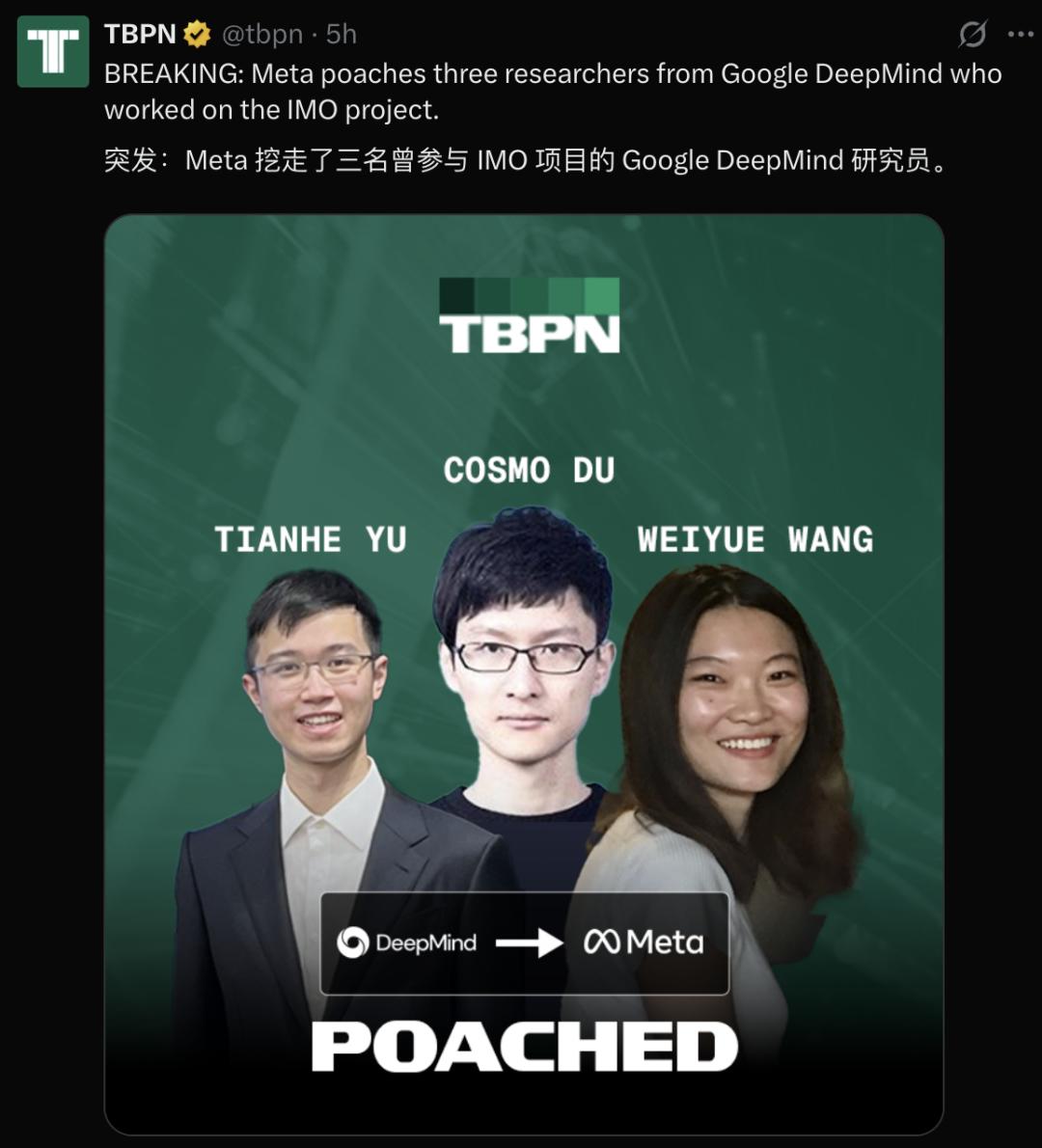
AI人才竞争

Search documents
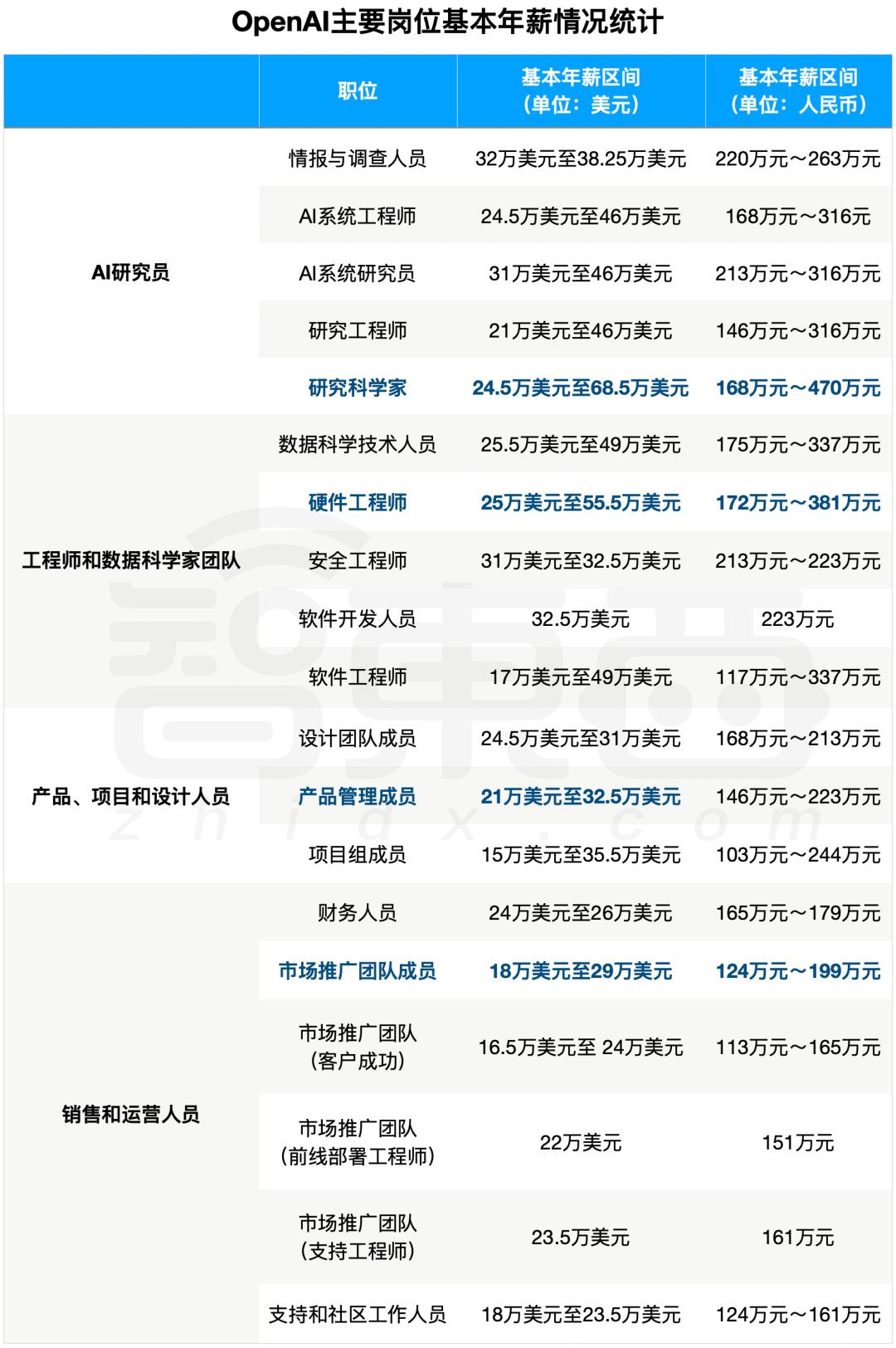
人在OpenAI,刚拿下研究工程师岗位,一年底薪470万
3 6 Ke· 2026-02-26 11:45
Core Insights - OpenAI is aggressively recruiting top talent with competitive salaries, aiming to maintain its leadership in the AI sector amid increasing competition [1][4][20] - The company plans to introduce over 60 overseas employees between October and December 2025, with salaries for research scientists reaching up to $685,000 (approximately 4.7 million RMB) [1][5] - OpenAI's internal structure is evolving, with a focus on profitability and commercialization under the leadership of CEO Fidji Simo, who has been given significant authority by co-founder Sam Altman [4][20] Salary Overview - Research scientists at OpenAI can earn between $245,000 and $685,000 (approximately 1.68 million to 4.7 million RMB) [1][5] - Non-technical product management roles have salaries ranging from $210,000 to $325,000 (approximately 1.46 million to 2.23 million RMB) [1][6] - The highest salaries in the engineering and data science teams are for hardware engineers, with earnings between $250,000 and $555,000 (approximately 1.72 million to 3.81 million RMB) [5][6] Organizational Changes - Sam Altman has delegated significant responsibilities to Fidji Simo, who oversees 13 direct reports, including key product and financial roles [4][10] - The organizational chart reveals a shift in focus from technical development to commercialization and profitability, indicating a strategic pivot for OpenAI [4][20] - OpenAI's leadership structure now emphasizes a clear division of commercial responsibilities, reflecting a broader industry trend towards profitability [20]

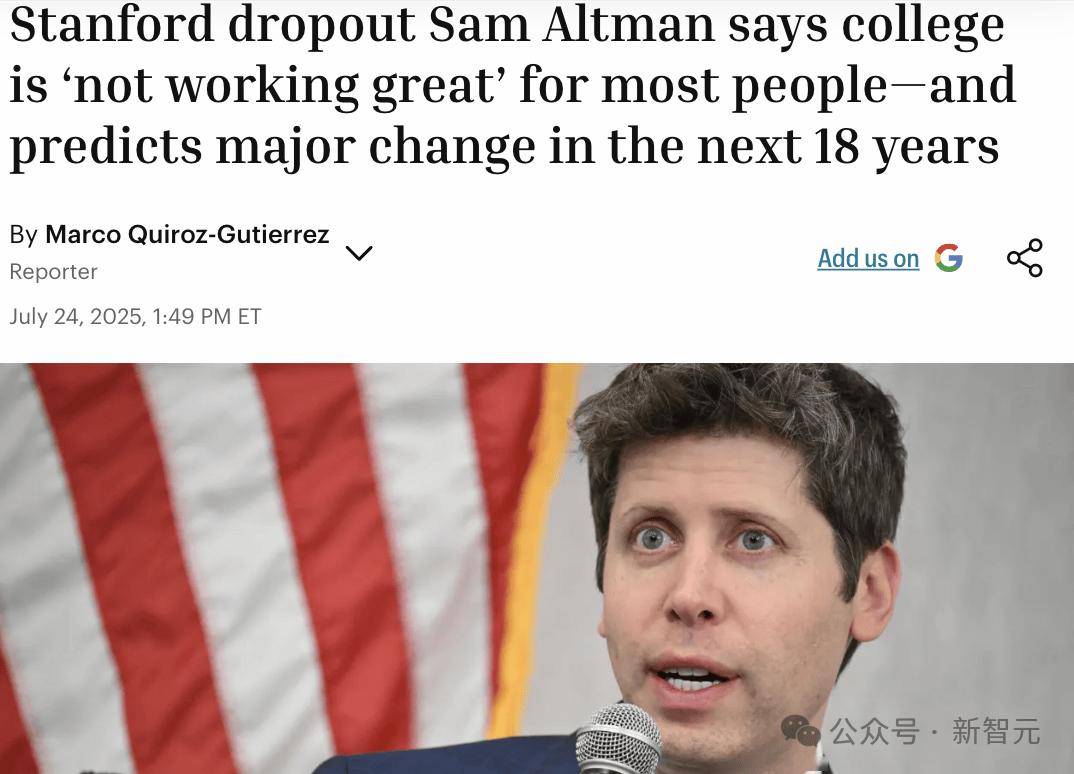
大学无用?奥特曼辍学当了CEO,但名校生撑起了整个OpenAI
Sou Hu Cai Jing· 2026-01-26 10:50
Core Insights - The article highlights the importance of educational background in the AI industry, countering the narrative that degrees are irrelevant by showcasing the concentration of talent from prestigious universities at OpenAI [1][4][7] - OpenAI's employee distribution reveals that top universities like Stanford, UC Berkeley, and MIT contribute significantly to its workforce, indicating a strong correlation between educational pedigree and career opportunities in AI [7][9] - The competition for AI talent has escalated, with companies offering unprecedented salaries and benefits to attract top researchers, emphasizing that talent is the true competitive advantage in the AI sector [18][21][24] Educational Background - OpenAI employs 230 individuals from Stanford, 151 from UC Berkeley, and 100 from MIT, with these three institutions accounting for over 13% of the total workforce [7] - The presence of international institutions like the University of Waterloo, Tsinghua University, and Peking University in the top 20 further illustrates the global nature of AI talent [7][12] - The article suggests that while the educational background is significant, practical experience and project outcomes are ultimately more valuable in the AI field [14] Talent Competition - The AI talent war has entered a new phase, with companies like Google DeepMind reportedly offering compensation packages up to $20 million, including substantial signing bonuses [21][24] - The demand for AI talent has led to explosive salary growth for entry-level positions, making it competitive with senior roles in other industries [22] - OpenAI's resident researcher program offers competitive salaries and opportunities for formal positions, reflecting the industry's shift towards securing top talent through attractive compensation and resources [25] Industry Dynamics - The article emphasizes that the AI industry's evolution is driven by the aggregation of top talent, which creates a feedback loop that enhances innovation and application of research [26] - The narrative suggests that the competition for AI talent transcends salary, focusing on infrastructure, resource access, and visionary goals as key factors in attracting talent [24] - The findings from OpenAI's employee alma mater rankings reinforce the notion that the company's true strength lies in its ability to attract and retain top-tier AI talent rather than just its technological capabilities [24]
AI巨头们开抢实习生,月薪12.8万
36氪· 2026-01-05 09:19
Group 1 - The competition for AI talent has intensified, now extending to internships, with major companies offering salaries comparable to full-time positions [3][4] - Companies like OpenAI, Anthropic, Meta, and Google DeepMind are now offering internships with salaries reaching up to $18,300 per month, indicating a shift from traditional low-paying intern roles [5][19] - Anthropic's fellowship program aims to accelerate AI safety research, with over 80% of past participants publishing papers, highlighting the focus on impactful research [8][10] Group 2 - OpenAI's residency program allows participants to work on cutting-edge AI projects for six months, with a monthly salary of $18,300 and potential for full-time employment afterward [14][19] - Google offers a rolling application process for research roles with salaries ranging from $113,000 to $150,000 annually, emphasizing the importance of early applications [24][25] - Meta provides various research internships with salaries between $7,650 and $12,000 per month, focusing on advanced topics like neural rendering and natural language processing [26][30] Group 3 - Aspiring AI professionals are encouraged to specialize in areas like large models or AI safety, producing tangible results such as open-source projects or research papers to enhance their competitiveness [31][32] - The high salaries offered by these programs come with the expectation of strong capabilities and the ability to handle high-pressure work environments [33]



元禾原点合伙人郑丁:构建“资本市场-科技公司-人才”良性三角,推动科技金融深度融合
Xin Lang Cai Jing· 2025-12-21 02:13
Core Viewpoint - The event "2026 Annual Conference of Caijing: Predictions and Strategies" emphasizes the theme of "China's Resilience in Changing Circumstances," highlighting the importance of integrating finance, technology, and industry for sustainable development in China [1] Group 1: Early-Stage Venture Capital - Early-stage venture capital, while considered marginal in the financial system, plays a crucial role as a "catalyst" in supporting technological innovation and its transformation into practical applications [1][6] - The primary market is showing signs of recovery after a period of adjustment, driven by strong policy support, the demonstration effect of leading tech companies like DeepSeek, and changes in the international capital environment [3][9] - The characteristics of technology startups include long R&D cycles, high capital requirements, and extended commercialization periods, necessitating a long-term vision and patience from investors [3][10] Group 2: Policy and Market Dynamics - Recent regulatory adjustments, such as the introduction of a third set of listing standards on the ChiNext board, aim to encourage more unprofitable but technically strong companies to enter the capital market [3][9] - The current capital market's focus on short-term financial performance may hinder the growth of promising frontier tech companies, especially those on the verge of breakthroughs [3][9] - The disparity in IPO standards between domestic and international markets, where over 50% of IPOs in the U.S. are from loss-making companies, highlights the need for a more flexible approach in China [9] Group 3: Talent Competition - The competition for talent has become a core issue in global tech competition, with a well-functioning interaction mechanism between tech companies, high-end talent, and capital markets being essential for optimizing talent incentives [4][10] - The increasing difficulty in attracting top tech talent in China is exacerbated by high compensation packages offered by leading U.S. tech companies, which can exceed those of NBA stars [10] - Building a virtuous cycle among capital markets, tech companies, and talent is crucial for gaining an advantage in the global competition for AI talent, especially given that 60% of global AI talent has received higher education in China [10]

OpenAI神秘狠人,花名Bob
量子位· 2025-09-21 13:29
Core Viewpoint - The article discusses the significance of a mysterious individual known as "Bob" at OpenAI, who is responsible for a crucial CUDA kernel that is essential for high-performance AI training and inference. Bob's unique skills make him a highly sought-after talent in the tech industry, particularly in Silicon Valley, where competition for such expertise is intense [1][2][6][14]. Group 1: Bob's Role and Skills - Bob is recognized for his exceptional ability to write high-performance CUDA kernels, which are executed on tens of thousands of GPUs daily, potentially trillions of times [3][4]. - The reliance on Bob is so significant that former employees express admiration for his capabilities, with one noting that he can resolve issues in minutes that others struggle with for a week [7][8]. - Internally, OpenAI has a "Bob magic" emoji on Slack, symbolizing the reverence for his skills [9]. Group 2: Industry Implications - The article hints at Meta's interest in Bob, with rumors suggesting that Mark Zuckerberg is eager to learn more about him, indicating the competitive landscape for top talent in AI [10][12]. - The importance of CUDA kernels in AI companies is emphasized, as they are considered core assets, making individuals like Bob highly valuable and secretive [14]. - The article also mentions Scott Gray, a senior technical member at OpenAI, as a potential candidate for being "Bob," given his extensive background in GPU kernel optimization and significant contributions to machine learning research [15][17][22]. Group 3: Talent Competition in Silicon Valley - The competition for AI talent in Silicon Valley is described as fierce, with companies vying for skilled individuals who can contribute to foundational technologies like CUDA kernels [26][28]. - The article notes that OpenAI has already lost several key researchers to Meta, highlighting the ongoing talent war in the industry [29].

马斯克怒告华人工程师!套现$700万窃取机密投奔"死对头"!
Sou Hu Cai Jing· 2025-09-01 01:45
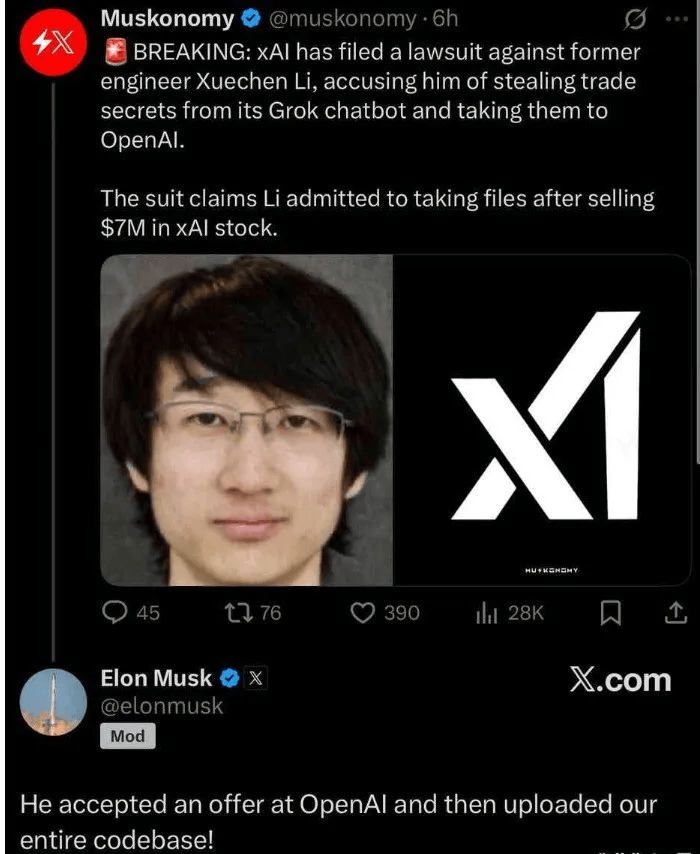
Core Points - xAI, a company owned by Elon Musk, has filed a lawsuit against former employee Xuechen Li for allegedly stealing core trade secrets before joining OpenAI, claiming that these secrets include "more advanced AI technology than ChatGPT" which could save competitors billions in research costs and years of development time [1][12] Group 1: Lawsuit Details - The lawsuit states that Xuechen Li sold $7 million worth of xAI stock and suspicious activities were detected in his account on the same day the cash was received, including the copying and transferring of key documents [3] - During an internal meeting on August 14, Li admitted to taking data but attempted to cover his tracks by deleting browsing history and logs, indicating a systematic transfer rather than a one-time incident [3][10] - xAI is seeking a court order to prevent Li from working at OpenAI and is demanding compensation for the alleged theft of trade secrets [13] Group 2: Background on Xuechen Li - Xuechen Li, a Chinese national with a PhD from Stanford, joined xAI in early 2024 and was one of about 20 engineers working on the Grok model, giving him access to significant core materials [7] - Prior to his resignation on July 28, Li had already accepted a position at OpenAI, which he was set to start on August 19, and he signed documents promising to return company assets and maintain confidentiality [10] Group 3: Industry Context - This lawsuit highlights the intense competition for AI talent among major companies like Meta, Microsoft, Google, and OpenAI, with some contracts reportedly reaching nine figures [14] - The case reflects the ongoing rivalry between Musk's xAI and OpenAI, with Musk previously suing OpenAI for deviating from its original mission to benefit humanity [16] - The situation underscores the broader implications of trade secret theft in the tech industry, particularly in the context of U.S.-China relations and competition in advanced technologies [31]

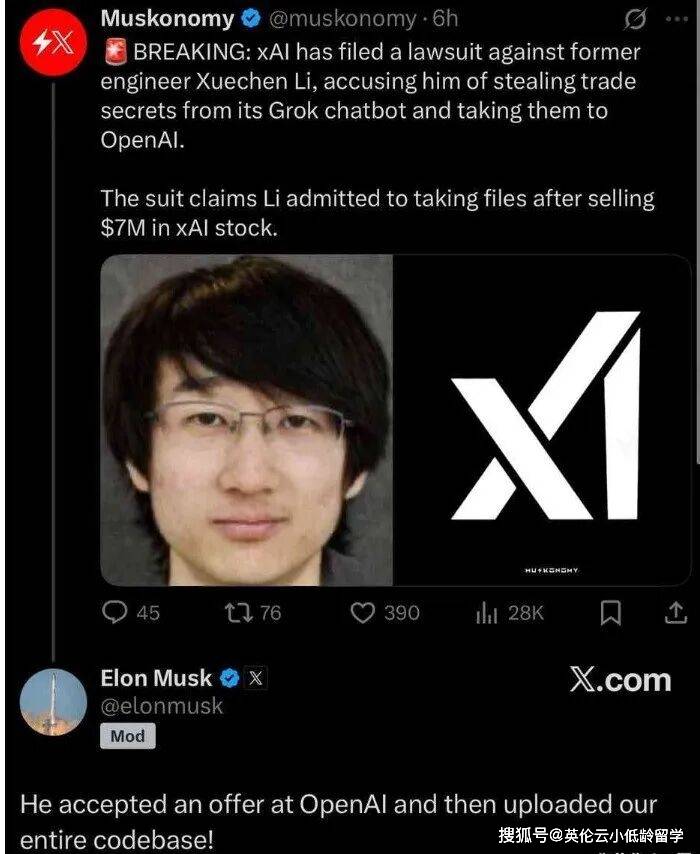
马斯克把一个华人工程师告了!入职一年多套现700万美金,反手带走代码投奔对手
Sou Hu Cai Jing· 2025-08-31 12:37
Core Viewpoint - The lawsuit filed by xAI against former engineer Xuechen Li highlights the intense competition for AI talent and the risks of intellectual property theft in the rapidly evolving AI industry [2][11]. Company Summary - xAI, founded by Elon Musk, is suing Xuechen Li for allegedly stealing core trade secrets related to the Grok chatbot and transferring them to competitor OpenAI [2][6]. - Li, a Stanford PhD and one of the early engineers at xAI, had extensive access to the company's proprietary algorithms and data [2][3]. - Following his acceptance of an offer from OpenAI, Li reportedly sold approximately $7 million worth of xAI stock and transferred sensitive files from the internal system [3][6]. - xAI's lawsuit seeks to prevent Li from working at OpenAI and demands compensation for the alleged theft of trade secrets [6][8]. Industry Context - The lawsuit underscores the fierce competition for AI talent, particularly following the rise of ChatGPT, which has led to significant investments in AI development across the industry [11]. - The case reflects a broader trend in the tech sector, where similar lawsuits over intellectual property theft and talent poaching have become common, as seen in recent cases involving Tesla and Apple [9][11]. - The outcome of this lawsuit could set a precedent for how AI companies approach hiring and talent retention in the future, potentially leading to more cautious recruitment practices [11].
三大期指齐跌,芯片股多数上涨;Meta冻结AI岗位招聘;强生公司将在美投资20亿美元以应对药品关税【美股盘前】
Mei Ri Jing Ji Xin Wen· 2025-08-21 13:47
Group 1 - Major stock indices futures are experiencing declines, with Dow futures down 0.23%, S&P 500 futures down 0.09%, and Nasdaq futures down 0.02% [1] - Chinese concept stocks are mostly rising, with notable increases such as Xiaopeng Motors up 1.08%, NIO up 2.95%, Boss Zhipin up 3.26%, and Miniso up 5.56% [2] - Target's CEO Brian Cornell will step down on February 1, after 11 years of leadership, due to poor sales performance, with COO Michael Fiddelke set to take over [2][3] Group 2 - OpenAI's CFO Sarah Friar stated that the company is still facing a shortage of computing power, leading to increased demand for GPUs, resulting in a rise in chip stocks like Nvidia up 0.4%, AMD up 0.72%, and TSMC up 0.32% [2] - Meta has paused hiring in its AI department after recruiting over 50 researchers and engineers, raising concerns about the impact on shareholder capital returns due to rising stock compensation [3] - Novo Nordisk has implemented a hiring freeze for non-critical positions globally and is considering layoffs to save costs [3] Group 3 - Delta Airlines confirmed that a Boeing 737 aircraft experienced wing damage during a flight, with no injuries reported among the 62 passengers and 6 crew members [3] - Johnson & Johnson announced a $2 billion investment in North Carolina to build a new factory, aimed at expanding its production capabilities in the U.S. to avoid potential drug import tariffs [4]



为防对家挖角,消息称OpenAI将在2年内为员工提供150万美元奖金
Sou Hu Cai Jing· 2025-08-07 11:50
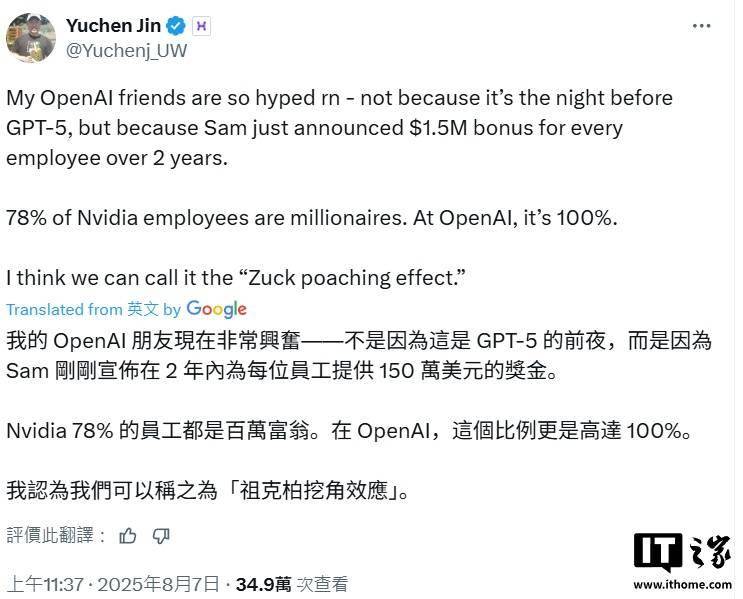
Core Insights - OpenAI CEO Sam Altman announced a bonus of $1.5 million (approximately 10.78 million RMB) for each employee over the next two years [1][3] - The bonus distribution includes all OpenAI employees, including new hires [3] - Hyperbolic AI CEO Yuchen Jin referred to this bonus as the "Zuckerberg poaching effect," highlighting the competitive landscape for AI talent in Silicon Valley [2] Group 1 - OpenAI's bonus initiative aims to retain talent amidst increasing competition from companies like Meta [5] - The proportion of millionaires at OpenAI has reached 100%, contrasting with Nvidia, where 78% of employees are millionaires [2] - Meta has been aggressively recruiting AI talent, offering salaries up to $20 million (approximately 144 million RMB) to attract employees from OpenAI and other firms [5]
小扎刚刚又「偷家」了,但有人拒绝 10 亿刀挖角,硅谷 AI 大战乱成一锅粥
3 6 Ke· 2025-07-23 07:14
Core Insights - The article discusses the intense competition in the AI industry, particularly focusing on Meta's aggressive recruitment strategy led by Mark Zuckerberg, who is offering substantial financial incentives to attract top talent from competitors like OpenAI [1][3][9] - The narrative highlights a specific incident involving the AI startup Windsurf, where its CEO announced a sudden shift to Google, leading to a dramatic reaction from employees who were expecting a different outcome [4][5][7] - The article portrays the ongoing battle between loyalty and financial incentives in the tech industry, emphasizing the emotional turmoil experienced by employees caught in this conflict [10][12][16] Group 1: Recruitment Strategies - Zuckerberg is personally targeting over 10 core researchers from OpenAI with offers that include $300 million over four years, with $100 million upfront in the first year [9] - OpenAI's CEO, Sam Altman, has characterized this recruitment effort as a "war of values," indicating a divide between those motivated by money and those committed to their current organization [9][12] - The recruitment tactics employed by Meta are described as aggressive and strategic, aiming to destabilize competitors by poaching their top talent [7][9] Group 2: Employee Responses - Windsurf's CEO, Varun Mohan, shocked employees by announcing his departure to Google, which led to a wave of despair among the staff who were anticipating a celebratory acquisition by OpenAI [4][5][7] - Some employees at OpenAI chose to remain loyal despite lucrative offers, while others, like Daniel Gross, opted to leave for better financial opportunities, illustrating the split in employee loyalty [12][16] - The emotional impact of these decisions is highlighted, with employees expressing feelings of betrayal and loss as they navigate the shifting landscape of the AI industry [10][16] Group 3: Market Dynamics - The article suggests that the AI industry is experiencing a "war" for talent, with companies like Meta and OpenAI vying for the best minds in the field [1][3][17] - The financial stakes are incredibly high, with offers reaching up to $1 billion, indicating the immense value placed on AI talent in the current market [3][9] - The narrative concludes by suggesting that while some immediate outcomes have been resolved, the broader competition and conflict within the industry are far from over [17]