可持续金融

Search documents
陈信健:可持续金融发展是一场关乎未来的长征,需要全社会通力合作、共谱新篇章
Zhong Jin Zai Xian· 2025-10-16 10:50
Core Viewpoint - The sustainable finance sector should focus on supporting low-carbon transitions, creating a strong collective force across society to address climate challenges [1][2]. Group 1: Company Initiatives - Industrial Bank has been exploring sustainable finance for over 20 years, developing a path that integrates profit with social responsibility [1]. - The bank's green financing balance is nearly 2.5 trillion yuan, with green loan balance exceeding 1 trillion yuan and a non-performing loan rate of only 0.57% [1]. - The establishment of a strategic and ESG committee at the board level has strengthened the bank's relationships with stakeholders and laid a solid foundation for sustainable development [2]. Group 2: Industry Recommendations - The industrial sector should prioritize low-carbon transitions, emphasizing ESG system construction and the application of new technologies [2]. - The financial sector needs to innovate and provide diversified financial services, particularly in green investment and asset management, to better support carbon reduction efforts [3]. - The carbon market should be more open and inclusive, enhancing resource allocation efficiency and liquidity for better support of green transitions [3]. - Regulatory bodies are encouraged to introduce more incentives for carbon reduction, including increasing funding support for green financing and adjusting risk weights for green loans [3]. Group 3: Event Overview - The 2025 Sustainable Global Leaders Conference, co-hosted by the World Green Design Organization and Sina Group, aims to gather global wisdom to explore new paths for sustainable development and inject "Chinese momentum" into global governance [4].

筑稳可持续发展 深耕人才培育——中金所“投教为民”助力金融生态环境建设
Xin Lang Qi Huo· 2025-10-16 09:14
Group 1 - The 2025 Sustainable Global Leaders Conference took place from October 16 to 18 in Shanghai, attracting significant attendance and interest in financial futures education [1][3] - The China Financial Futures Exchange (CFFEX) has been recognized as "excellent" in the national investor education base assessment for six consecutive years from 2019 to 2024, emphasizing its commitment to investor education [3][4] - CFFEX has developed over 500 original investor education products, focusing on key dates such as "International Consumer Rights Day" and "World Investor Week," utilizing a multimedia center model [3][4] Group 2 - In 2023, CFFEX collaborated with 15 local securities regulatory bureaus to host 16 investor education events, enhancing its social impact and promoting comprehensive registration systems [4][5] - CFFEX has established financial futures learning zones in 43 investor education bases nationwide, providing convenient access to financial futures knowledge [4] - Future plans include expanding the learning zones to more regions in collaboration with various institutions, aiming to enhance the influence of financial futures education [5]


全文丨中债金融估值中心总经理牛玉锐:全面拓展可持续金融,重点推进五大工作
Xin Lang Zheng Quan· 2025-10-16 07:49
Core Points - The 2025 Sustainable Global Leaders Conference is scheduled to take place from October 16 to 18 in Shanghai, focusing on sustainable finance and investment opportunities [1] Group 1: Sustainable Finance Initiatives - The company is committed to expanding sustainable finance services, focusing on five key areas: developing a comprehensive ESG evaluation system, enhancing technology capabilities, innovating carbon accounting and disclosure tools, improving the green index system, and providing climate risk solutions [3][5] - The company has established a comprehensive ESG evaluation system covering nearly 10,000 enterprises and listed companies, recently expanding to include all Hong Kong-listed companies [5][6] - The company has created the world's first green low-carbon transition bond database, covering domestic green bonds and offshore RMB bonds, providing precise data support for green finance development [6][7] Group 2: Green Index and Internationalization - Since the launch of the first green bond index in 2016, the company has developed a green and sustainable development index system, which serves as a benchmark for fixed-income asset management products focused on green themes [6][8] - The company has listed its green indices on international exchanges such as the Luxembourg Stock Exchange, Macau Stock Exchange, and Singapore Exchange, enhancing the international visibility of China's green bond market [6][8] Group 3: Climate Risk Solutions - The company has developed a pressure testing tool to support various climate scenarios, quantifying changes in operational costs and providing systematic tools for identifying and managing physical climate risks [8]
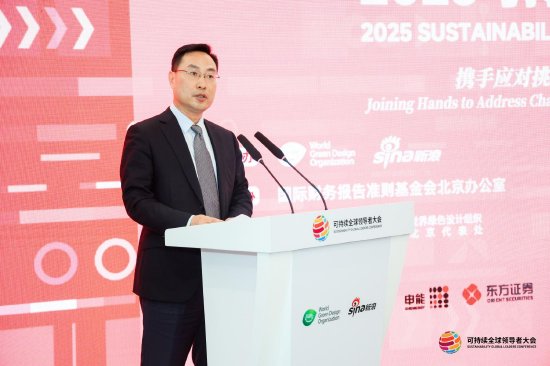
中债金融估值中心总经理牛玉锐:完善指数体系布局,推动绿色指数应用与国际化
Xin Lang Zheng Quan· 2025-10-16 07:37
Core Viewpoint - The 2025 Sustainable Global Leaders Conference is being held in Shanghai from October 16 to 18, focusing on sustainable finance and green industry development [1] Group 1: Sustainable Finance Initiatives - The company is implementing a comprehensive ESG evaluation system that covers all aspects of sustainable finance [3] - It is enhancing technology capabilities to create a sustainable theme database [3] - The company is innovating carbon accounting and disclosure tools to support the implementation of sustainable disclosure standards [3] Group 2: Green Index Development - The company has established a green and sustainable development index system, including green ESG and low-carbon series indices, to facilitate green low-carbon investments [3] - Since the launch of the first green bond index in 2016, the company has been promoting the application and internationalization of green indices [3] - The green indices have been listed on exchanges such as Luxembourg, Macau, and Singapore, enhancing the international visibility of China's green bond market [3]
金鹏辉:可持续金融为上海国际金融中心勾勒新前景
Xin Lang Cai Jing· 2025-10-16 06:53
Core Viewpoint - The 2025 Sustainable Global Leaders Conference highlights the importance of sustainable finance as a manifestation of sustainable development principles, covering areas such as green finance, transition finance, and biodiversity finance [1][3]. Group 1: Challenges in Sustainable Finance - Sustainable finance faces significant challenges compared to traditional finance, including a lack of market mechanisms and information asymmetry [3][6]. - Companies undergoing green transitions may experience short-term operational difficulties due to high technology upgrade costs, leading to conflicts of interest that hinder effective market incentives [6][7]. - The absence of clear quantitative indicators and evaluation methods for most ESG factors contributes to insufficient information disclosure by financial institutions and companies, exacerbating issues of information asymmetry [6][7]. Group 2: Achievements in Sustainable Finance - China has established a diversified development framework for sustainable finance, with a focus on green finance, supported by transition finance and biodiversity finance [6][7]. - The Shanghai Stock Exchange, Shenzhen Stock Exchange, and Beijing Stock Exchange have released guidelines for sustainable development reporting, with some A-share companies required to disclose ESG reports starting in 2026, covering 450 companies that represent 51% of total market capitalization [7][8]. Group 3: Future Opportunities in Sustainable Finance - Sustainable finance is expected to present significant growth opportunities and become a major driving force for the transformation of the global financial system, particularly for Shanghai as an international financial center [3][6]. - Key areas for Shanghai to focus on include enhancing the internationalization of green finance, supporting the development of carbon trading markets, strengthening the implementation of transition finance, and promoting the deep integration of technology and green finance [8][9][10].
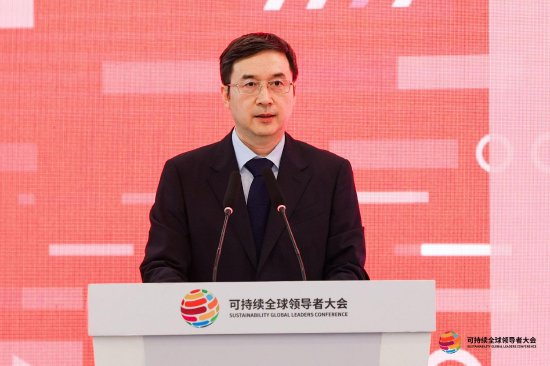
金鹏辉:可持续金融蕴藏着巨大增长机遇 有望成为全球金融体系转型推动力
Xin Lang Cai Jing· 2025-10-16 06:45
Core Insights - The 2025 Sustainable Global Leaders Conference is scheduled to take place from October 16 to 18 in Shanghai, focusing on sustainable finance and its challenges [1][3] - Jin Penghui, Director of the Shanghai Headquarters of the People's Bank of China, highlighted the significant progress in sustainable finance globally, emphasizing its public product attributes and the challenges of market mechanism deficiencies and information asymmetry [1][3] Group 1: Sustainable Finance Development - China, as the world's second-largest economy, is actively promoting the development of sustainable finance, establishing a diversified development pattern with green finance as the main focus, supported by transition finance and biodiversity finance [3] - The Shanghai Stock Exchange, Shenzhen Stock Exchange, and Beijing Stock Exchange have issued guidelines for listed companies on sustainable development reporting, with 450 listed companies expected to disclose ESG reports starting in 2026, representing 51% of total market capitalization [3] Group 2: Future Opportunities - Jin Penghui believes that sustainable finance holds significant growth opportunities and is likely to drive the transformation of the global financial system [3] - Recommendations for Shanghai include enhancing the internationalization of green finance, supporting the development of carbon trading markets, strengthening the implementation of transition finance practices, and promoting the integration of technology with green finance [3]
共创数智化绿色低碳新纪元,这场国际会议在广州举行
Sou Hu Cai Jing· 2025-10-12 07:16
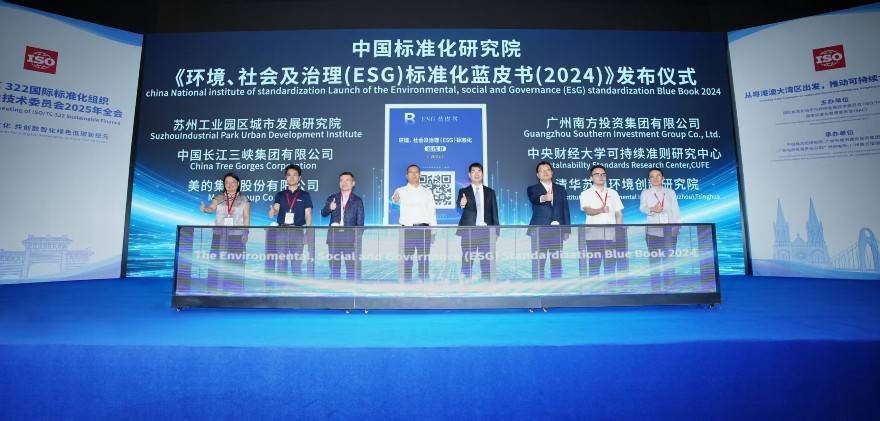
Core Insights - The ISO/TC 322 meeting focused on creating a new era of digital and low-carbon sustainability through international standardization [1][3] - The release of the "ESG Standardization Blue Book (2024)" aims to provide a strategic framework for China's ESG practices and innovations [1][3] Group 1: Event Overview - The meeting took place on October 10 at the Yuexiu International Conference Center in Guangzhou, gathering representatives from various countries, experts, and leading enterprises [1] - The theme of the conference was "Collaborating on International Standardization to Create a New Era of Digital and Low-Carbon Sustainability" [1] Group 2: Key Discussions - Keynote speeches were delivered by representatives from organizations such as the International Organization for Standardization (ISO), China Standardization Association, and Tencent, discussing sustainable finance standards and global cooperation [3] - A roundtable forum focused on green finance standard construction and the transformation of financial institutions, providing forward-looking ideas for core development directions [3] Group 3: Future Directions - The conference aims to inject green momentum into Guangzhou's "12218" modern industrial system, supporting its transition to a stronger, more optimized, and higher-level global city [3] - Guangzhou plans to enhance international collaboration by leading the development of ISO international standards for carbon markets, contributing to sustainable development and carbon neutrality goals [3]
迪拜金管局与香港金管局合办第二届气候金融会议 加强可持续金融领域创新、气候韧性和跨境合作
智通财经网· 2025-10-09 08:51
Core Viewpoint - The Dubai Financial Services Authority and the Hong Kong Monetary Authority will co-host the second Joint Climate Finance Conference on November 26 in Dubai, focusing on "Changing the Future: Green Finance for Sustainable Development" [1] Group 1: Conference Objectives - The conference aims to enhance climate finance cooperation between the Middle East and Asia, showcasing the commitment of Dubai and Hong Kong as leading global financial centers [1] - The event will emphasize innovation, climate resilience, and cross-border collaboration to shape the future of global finance [1] Group 2: Key Participants and Discussions - Notable discussions will include a fireside chat between the presidents of the Dubai and Hong Kong monetary authorities, focusing on leveraging technological innovation and establishing policy frameworks to maximize climate finance potential [1] - The conference will feature discussions on green opportunities in the Asia-Middle East corridor and the role of tokenization technology in driving global transformation [1] Group 3: Research and Findings - The conference will delve into the joint research outcomes regarding the role of sustainable debt instruments in expanding climate financing in emerging markets [1]
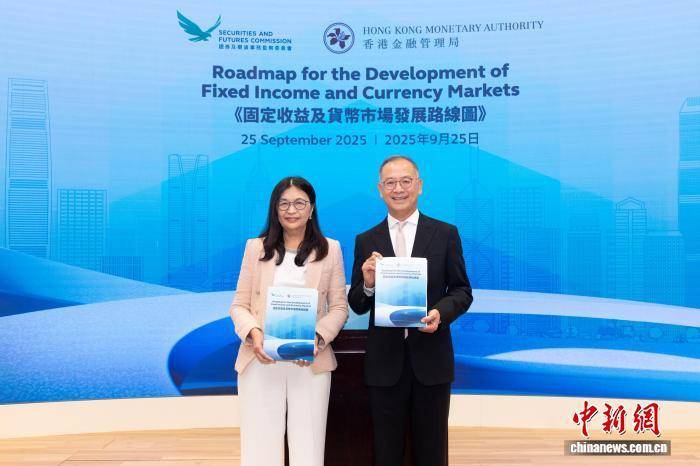
香港发布固定收益及货币市场路线图 打造全球固定收益及货币中心
Sou Hu Cai Jing· 2025-09-25 16:56
Core Viewpoint - The Hong Kong Securities and Futures Commission (SFC) and the Hong Kong Monetary Authority (HKMA) have jointly released a "Roadmap for the Development of Fixed Income and Money Markets," aiming to position Hong Kong as a global hub for fixed income and currency markets [1][3]. Group 1: Strategic Pillars - The roadmap focuses on four strategic pillars: promoting issuance, increasing liquidity, expanding offshore RMB business, and new generation infrastructure [1]. - It proposes ten measures, including leading market development through government bond issuance, expanding the investor base, implementing an over-the-counter fixed income and currency derivatives system, and realizing use cases for tokenized fixed income and currency products [1][3]. Group 2: Industry Reactions - The roadmap has garnered significant attention and discussion within the Hong Kong industry, with the Hong Kong Bankers Association Chairperson highlighting the government's commitment to developing Hong Kong as a global hub for fixed income and currency products, which presents greater opportunities for financial development [3]. - HSBC's co-CEO for Asia and the Middle East emphasized Hong Kong's unique position to connect mainland Chinese investors with international issuers, allowing for diversified asset allocation through lower RMB interest rates [4]. - Legislative Council member from the financial services sector expressed optimism that the roadmap's implementation will create a richer and more efficient investment environment, contributing to the high-quality development of Hong Kong's fixed income and currency markets [4].
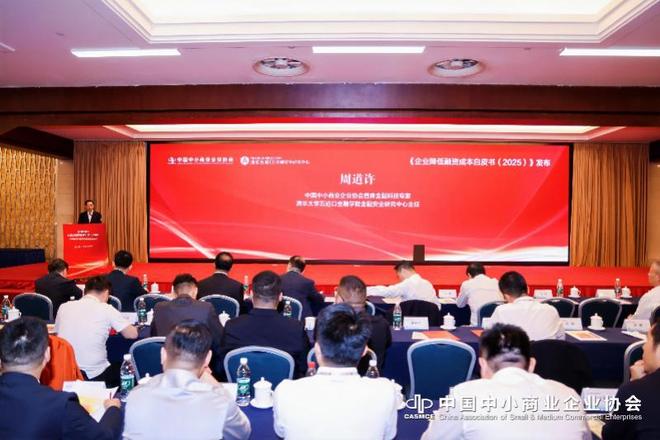
专家:中小企业融资是全球性难题,要严守反洗钱等合规底线
Nan Fang Du Shi Bao· 2025-09-25 10:18
Core Insights - The 20th China Small and Medium Enterprises (SME) Annual Conference is set to address the financing challenges faced by SMEs, emphasizing the need for a transformation in the financing ecosystem through "financial technology, industrial finance, and sustainable finance" [1][4] Financing Strategies - The white paper suggests a dual strategy of "internal exploration and external support" for SMEs to reduce financing costs [2] - The first step involves optimizing credit assets by enhancing financial internal controls and building a robust financial management system to ensure transparency and credibility in financial data [2] - The second step focuses on leveraging government and market tools to lower financing thresholds, including utilizing policy-based finance and exploring innovative financing models such as supply chain finance and intellectual property pledge financing [2] Compliance Importance - Compliance is highlighted as a critical factor for SMEs to mitigate hidden financing risks and stabilize financing channels, necessitating adherence to relevant laws and regulations [3] - SMEs are advised to ensure informed consent in big data credit assessments and comply with foreign direct investment (FDI) registration and profit remittance declarations for cross-border financing [3] Upcoming Events - The 20th China SME Annual Conference will take place from December 20 to 22 in Beijing, focusing on solving problems, promoting development, and strengthening confidence among SMEs [3][4] - The conference aims to create a collaborative platform to support SMEs in seizing opportunities and overcoming challenges during the critical period of the 14th Five-Year Plan [4]