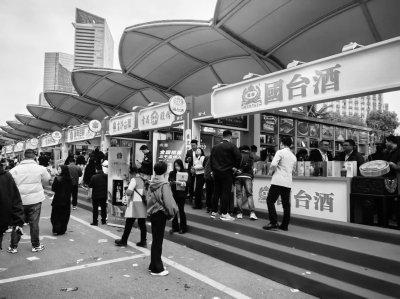
酒旅融合

Search documents
舍得酒业去库存效果显著 今年一季度净利润超去年全年
Zheng Quan Ri Bao Zhi Sheng· 2025-04-25 12:41
Core Viewpoint - Shede Liquor's Q1 2025 report shows significant improvement in key performance indicators, attributed to rational deceleration and effective inventory reduction strategies implemented last year [1][2]. Financial Performance - In Q1 2025, Shede Liquor achieved revenue of 1.576 billion yuan and net profit of 346.1 million yuan, surpassing the entire net profit of 345.8 million yuan for 2024 [2]. - The company's net cash flow from operating activities increased by 106.76% year-on-year, indicating a notable improvement in financial health [2]. - Operating costs decreased by 11.25% year-on-year, while management expenses fell by 25.24%, reflecting enhanced operational efficiency [2]. Inventory and Sales Strategy - The company successfully executed a strategy of "stabilizing prices, controlling inventory, and enhancing sales," leading to a return of inventory levels to a reasonable range [2]. - E-commerce channel sales grew to 205 million yuan, a year-on-year increase of 36.71%, demonstrating the effectiveness of dual-channel optimization [2]. Brand and Marketing Initiatives - Shede Liquor is focusing on enhancing brand influence through various marketing strategies, including participation in cultural events and sponsorship of programs to increase brand exposure [3]. - The company reported that offline activities during the 2025 Spring Festival reached 850,000 people, with over 800 million online exposures, effectively driving brand sales growth [3]. Strategic Development - The company is advancing its liquor-tourism integration projects, which were initiated in March 2025, aiming to create a culturally rich and internationally recognized liquor town [4]. - This strategic layout is expected to enhance brand strength, modernize the regional liquor industry, and promote collaborative development of industry, culture, and urban areas [4]. Long-term Outlook - The "old liquor strategy" remains robust, with high certainty of performance improvement in 2025 due to ongoing inventory reduction and strategic initiatives [5]. - The dual-driven model of "upgrading consumer experience and innovative scene marketing" is anticipated to enhance product structure towards higher-end and value-oriented offerings [5].

年轻化+现代潮,酒旅融合串联多元消费场景,市场趋势向好
Sou Hu Cai Jing· 2025-04-21 17:56
年轻化消费浪潮下,酒饮与旅游场景深度融合,催生多元体验经济。以90后、Z世代为核心群体,通过沉浸式微醺旅游、酒吧+艺术展跨界联名等模式,将 品酒体验嵌入文化、社交、娱乐场景,打造"酒旅融合"新生态。行业数据显示,创新消费场景带动夜间经济、周末周边游等细分市场增长,一线城市微醺主 题门店年增长率超40%。政策端推动文旅融合与消费升级,叠加社交媒体传播效应,酒旅融合市场正迎来结构性增长机遇。 随着Z世代消费能力崛起,传统酒饮消费场景正经历颠覆性变革。年轻群体"既要微醺也要诗与远方"的新需求,催生出"酒旅融合"的创新业态。这种模式通 过将品酒体验深度嵌入文旅场景,构建起"沉浸式消费+文化共鸣+社交传播"的三维价值链。 在宁夏贺兰山东麓,志辉源石酒庄将废弃矿区改造成国家AAAA级景区,游客可参与葡萄采摘、自酿体验,还能在砾石与藤蔓交织的景观中品鉴获奖佳酿。 这种"生态修复+文化赋能"的模式,使酒庄年接待游客突破30万人次,带动周边村民人均增收超万元,验证了酒旅融合的商业潜力。 消费场景的创新更呈现裂变态势。城市微醺派对将酒吧与艺术展跨界混搭,洛阳古城推出"银票拍卖+投壶体验"古风游园,桂林山水间响起壮族山歌对唱 —— ...


春糖观察:白酒流通之变
Zhong Guo Jing Ying Bao· 2025-03-24 08:15
Core Insights - The article discusses the transformation of the liquor distribution channel, particularly in the Chinese baijiu industry, highlighting innovative models and strategies adopted by various companies to adapt to market changes [3][4][5]. Group 1: Channel Transformation - Guangxi Danquan Liquor Industry has introduced the "189 model," opening 189 exclusive stores operated jointly by manufacturers and partners [3]. - Major liquor companies are pushing for direct consumer engagement, with a focus on online sales and innovative marketing strategies [4][5]. - The trend of online sales is accelerating, with projections indicating that online liquor sales could reach approximately 200 billion yuan in 2024, growing to 500 billion yuan in three years, representing over 50% of the total industry sales [5]. Group 2: Manufacturer-Distributor Relationships - Traditional distribution channels and dealer models are under pressure, leading to a reconfiguration of relationships between manufacturers and distributors [6][8]. - Companies like Wuliangye are restructuring their sales systems to enhance direct control over terminal sales, moving towards a vertical management model [8]. - The concept of a "community of fate" between manufacturers and distributors is gaining traction, emphasizing collaboration and shared benefits [7][9]. Group 3: Lifestyle Marketing - The industry is shifting from "selling liquor" to "selling lifestyle," with a focus on creating refined and experiential marketing strategies [11][12]. - Companies are integrating cultural and tourism elements into their offerings, exemplified by projects like the collaboration between Shede Liquor and tourism companies [12]. - The need for diverse sales channels and enhanced consumer experiences is emphasized, with companies encouraged to innovate in their marketing approaches to resonate with modern consumers [13].