AI芯片

Search documents
ETF盘中资讯|沪指3700点最强助攻?为什么是寒武纪?自主可控强势进攻!电子ETF(515260)盘中涨逾2.2%上探阶段新高!
Sou Hu Cai Jing· 2025-08-14 07:22
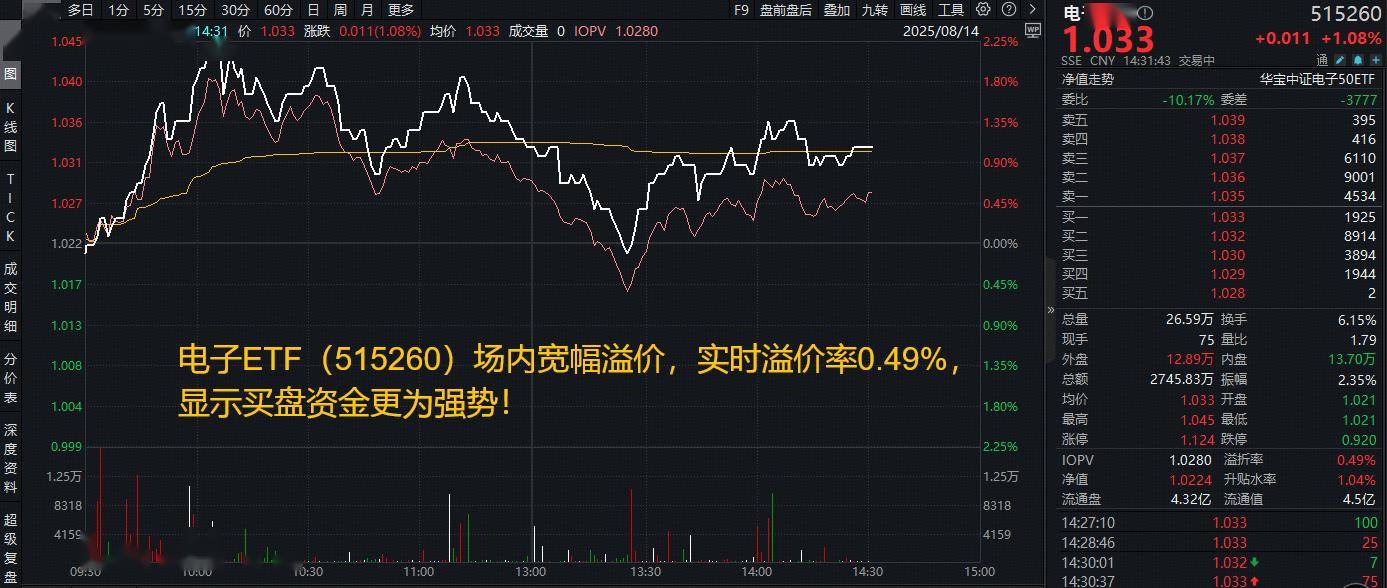
Group 1 - The core viewpoint of the news highlights the strong performance of domestic semiconductor companies, with Cambrian Technology's stock price surging over 12% to approach 1000 yuan, resulting in a market capitalization nearing 400 billion yuan [1] - Major funds have seen significant net inflows, with Haiguang Information and Zhongke Shuguang each receiving over 2 billion yuan, placing them among the top three in A-share capital absorption [1] - The electronic ETF (515260), focusing on "semiconductors + consumer electronics + PCB," has shown a price increase of over 2.2% during trading, currently up 1.08%, indicating a strong buying momentum [1] Group 2 - The U.S. government has taken action to restrict the flow of chips to China, with the Department of Commerce, Department of Homeland Security, and FBI collaborating to install tracking devices in servers from brands like Dell and AMD, aimed at monitoring chip transfers to China [3] - This situation underscores the complexities of technology security and regulation within the global supply chain, as highlighted by previous concerns raised by China's cybersecurity authority regarding vulnerabilities in Nvidia's chips [3] - The push for domestic computing chips is accelerating due to regional political factors, with recent advancements in AI models like OpenAI's GPT-5 and the anticipated release of the domestic DeepSeek-R2 model expected to drive demand for AI chips [3] Group 3 - The electronic ETF (515260) and its linked funds passively track the electronic 50 index, heavily investing in the semiconductor and consumer electronics sectors, while also covering areas like AI chips, automotive electronics, 5G, cloud computing, and printed circuit boards (PCB) [4] - The ETF provides a one-click investment opportunity in key A-share electronic assets, including companies like Luxshare Precision, SMIC, Haiguang Information, and Cambrian Technology [4]


创业板指突破2500点整数关口
Di Yi Cai Jing· 2025-08-14 03:25
Group 1 - The ChiNext Index has surpassed the 2500-point threshold, increasing by 0.15% [1] - AI chips and Chiplet concepts are among the leading sectors in terms of growth [1] - Sectors that experienced significant gains include those that had涨停 (limit-up) yesterday [1]

深证成指突破11600点整数关口
Di Yi Cai Jing· 2025-08-14 03:25
Group 1 - The Shenzhen Component Index has surpassed the 11,600-point mark, increasing by 0.42% [1] - Sectors such as AI chips, digital sentinels, and Chiplet concepts have shown significant gains [1]
上证指数突破3700点整数关口
第一财经· 2025-08-14 02:02
Core Viewpoint - The Shanghai Composite Index broke through the 3700-point mark, increasing by 0.46% on the morning of August 14 [1]. Industry Summary - AI chips and Chiplet concepts are among the sectors with the highest gains [2].

汇安基金单柏霖:算力基础设施扩展,有望带动光模块和PCB需求跃升
Xin Lang Cai Jing· 2025-08-14 01:24
Core Insights - The recent surge in the Shanghai Composite Index coincides with the active performance of the optical module and PCB sectors, indicating a recovery signal in the semiconductor computing power and AI chip industries [1] - The demand for semiconductor computing power is expected to experience explosive growth, driven by the acceleration of AI chip localization in China, transitioning the semiconductor industry from "catching up" to "running alongside" [1][2] - By 2025, China's general computing power is projected to grow by 20%, while intelligent computing power is expected to increase by 43%, making China the second-largest market globally, following the United States [1] Semiconductor Industry Outlook - AI training and inference are increasingly demanding in terms of computing power, with global AI computing power demand expected to grow over tenfold by 2030 [2] - Despite a 9.8% year-on-year decline in semiconductor industry investment in the first half of 2025, this reflects a cyclical adjustment rather than a downturn, with policy support and AI infrastructure expansion driving growth [2] - The upcoming release of the DeepSeek-R2 model, designed for low-cost and high-performance, is anticipated to stimulate computing power demand and benefit upstream sectors like chip design and wafer foundry [2] AI Chip Market Growth - The Chinese AI chip market is expected to exceed 200 billion yuan by 2025, with a year-on-year growth of over 50% [2] - The localization rate of AI chips in China is projected to rise from below 20% to over 40%, despite ongoing US-China trade tensions [2] - The success of open-source AI models is expected to expand market size and drive the commercial transformation of edge AI applications [2] Investment Focus - The expansion of computing power infrastructure is likely to boost demand for optical modules and PCBs, which are essential for AI servers and data centers [3] - The current shift in AI computing from training to inference is expected to amplify economic growth in these sectors [3] - The Huian Growth Preferred Mixed Fund, managed by the company, is focusing on AI sectors, strategically investing in computing power, algorithms, and application assets [3] New Fund Launch - The Huian Growth Navigation Mixed Fund, led by the same manager, is set to launch from September 1 to September 19, with a broader investment scope that includes both A-shares and Hong Kong stocks [4] - This new fund aims to mitigate systemic risks from a single market and capture investment opportunities across the growth sector [4]
世芯:5纳米进度不如预期
Jing Ji Ri Bao· 2025-08-13 23:45
Core Viewpoint - The company reported a significant decline in profits, reaching a five-quarter low, and expressed concerns about the demand for AI accelerator projects from North American IDM clients, leading to a forecast of relatively flat revenue performance for the remainder of the year [1][2] Financial Performance - The company announced a net profit of 1.323 billion TWD for Q2, marking a 9.5% decrease quarter-over-quarter and a 16.5% decrease year-over-year, with earnings per share at 16.4 TWD [1] - For the first half of the year, consolidated revenue was 19.626 billion TWD, down 18.4% year-over-year, with a net profit of 2.787 billion TWD, a slight decrease of 1% year-over-year, and earnings per share at 34.49 TWD [1] Future Outlook - The company anticipates starting revenue from 2nm process projects and expects significant growth from 3nm process AI chips, which are projected to begin mass production in Q1 of next year [1][2] - Despite the current challenges, multiple 3nm process projects are expected to launch in the second half of the year, along with the initiation of 2nm process projects [2]
梁军首次发声:公开与寒武纪的纠纷细节,再创业要做颠覆性产品
雷峰网· 2025-08-13 11:27
Core Viewpoint - The article discusses the complex background of Liang Jun, the former CTO of Cambricon, and his disputes with the company, highlighting his new venture, Fangqing Technology, which aims to innovate in AI chip architecture [2][3][5]. Group 1: Background of Liang Jun and Cambricon - Liang Jun's departure from Cambricon in 2022 was marked by internal conflicts, particularly with CEO Chen Tianshi, which escalated into a public dispute in January 2025 [2][5]. - The conflict began on December 14, 2021, when Chen Tianshi confronted Liang Jun about his influence within the company, leading to Liang's IT access being revoked shortly after [4][5]. - Liang Jun's departure was followed by allegations regarding stock distribution among employees, which he contested, claiming he did not benefit from the employee stock platform [5][6]. Group 2: Legal Disputes and Claims - Liang Jun is involved in legal proceedings against Cambricon, seeking compensation for stock options amounting to over 4.2 billion RMB, while Cambricon has initiated a lawsuit against him for stock transfer [5][6][44]. - The court hearing is set for January 23, 2025, with Liang Jun expressing concerns about the limited preparation time due to the sudden notice [6][44]. - The disputes reflect broader issues within early-stage startups regarding equity distribution and governance, particularly for core team members [6][37]. Group 3: Liang Jun's Contributions to AI Chip Development - Liang Jun played a significant role in the development of AI chips in China, overseeing the launch of several key products during his tenure at Cambricon, including the first 7nm AI training chip [6][7]. - His experience spans from Huawei's Kirin SoC architecture to leading Cambricon's technological advancements, marking a decade of contributions to the industry [6][7]. Group 4: Fangqing Technology's Vision - Fangqing Technology aims to introduce a novel distributed computing architecture that separates context-aware and context-free processing, a unique approach in the global market [3][57]. - The company seeks to overcome the constraints of existing CUDA ecosystems, positioning itself to innovate in AI hardware design [57][58]. - Liang Jun's vision includes creating a new system architecture that allows for independent processing units, potentially revolutionizing the market for AI hardware [58][59].

寒武纪一日暴涨150亿,神话还是击鼓传花?
Hu Xiu· 2025-08-13 09:06
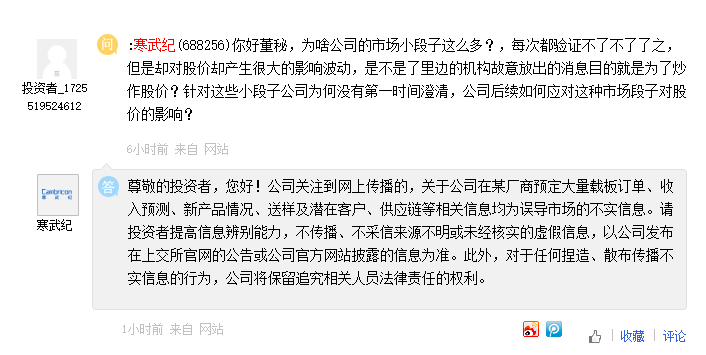
Core Viewpoint - The company, Cambrian, has addressed misleading information circulating online regarding its business operations, emphasizing the importance of verifying information from credible sources [1][2]. Group 1: Company Response and Market Impact - Cambrian's stock experienced a significant surge, reaching a 20% limit up on August 12, with a peak price of 848.88 yuan per share, leading to a market capitalization of 355.1 billion yuan [3]. - The surge was attributed to rumors about the upcoming release of the DeepSeek-R2 model, which was said to rival GPT-5 in performance [3][12]. - Cambrian urged investors to enhance their ability to discern information and warned against spreading unverified rumors, stating that it would pursue legal action against those disseminating false information [2][3]. Group 2: Financial Performance and Growth - Cambrian reported a revenue of 1.174 billion yuan in 2024, marking a year-on-year increase of 65.6%, with losses narrowing to 452 million yuan compared to 848 million yuan in the same period of 2023 [8]. - In Q1 2025, the company achieved a revenue of 1.111 billion yuan, a staggering year-on-year increase of 4230.2%, and turned a profit of 355 million yuan [9][10]. - The growth was driven by a surge in cloud product line revenues, which accounted for over 99% of 2024's revenue, alongside significant increases in inventory and prepayments, indicating a faster market order pace [10]. Group 3: Industry Context and Challenges - Cambrian, established in 2016, is recognized as a leading AI chip design company, but has faced challenges due to over-reliance on a single major client and high R&D costs, leading to previous financial losses [7]. - Despite recent successes, the company faces risks, including a decline in cash reserves and a high concentration of revenue from a few clients, with the top five clients contributing nearly 95% of total revenue [11]. - The AI chip market is characterized by intense competition, particularly from NVIDIA, and while Cambrian has made strides, it still faces significant hurdles in fully replacing high-end GPUs [12].
寒武纪股价涨停创新高,有投资者或一日浮盈 8.6 亿
Jing Ji Guan Cha Wang· 2025-08-13 08:48
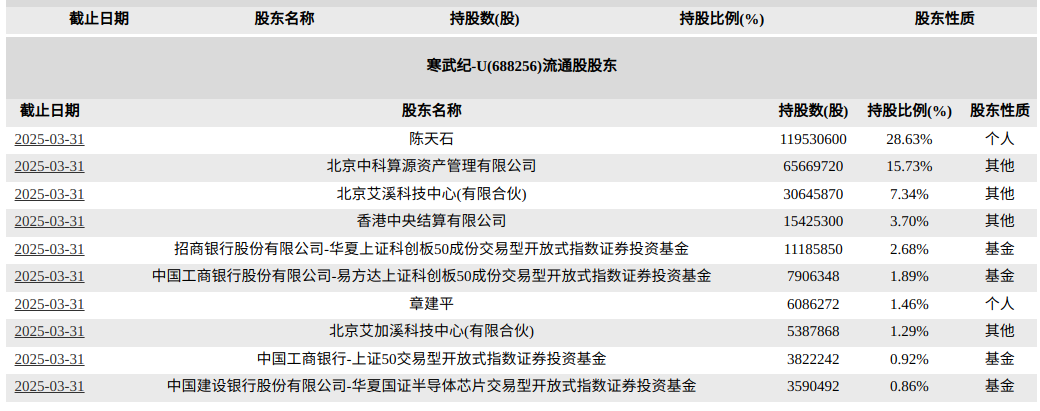
Core Viewpoint - The stock price of Cambricon (688256, SH) surged to a historical high of 848.88 CNY per share on August 12, 2023, marking a 17-fold increase since its low in April 2022, driven by market speculation regarding significant future orders and revenue potential [1][2]. Company Performance - Cambricon reported a revenue of 9.89 billion CNY in Q4 2023, achieving a net profit of 2.81 billion CNY, marking its first quarterly profit since going public [4]. - In Q1 2024, the company’s revenue reached 11.11 billion CNY, a substantial increase from 0.26 billion CNY in the same period last year, with a net profit of 3.55 billion CNY [4]. - The company’s inventory and prepayments have significantly increased, with inventory at 17.74 billion CNY (up 1684% year-on-year) and prepayments at 7.74 billion CNY (up 423% year-on-year) by the end of 2024 [4]. Shareholder Information - As of Q1 2025, major shareholder Zhang Jianping held 6.086 million shares, representing 1.46% of the total shares, with a market value increase of approximately 860 million CNY since the end of Q1 2025 [2][3]. - The top five customers accounted for 94.63% of total sales in 2024, with the largest customer contributing 79.15% [5]. Market Trends - The AI chip sector continues to attract significant capital market interest, with reports indicating an increase in capital expenditures by overseas cloud solution providers and a 19.6% year-on-year growth in global semiconductor sales as of June [3][4]. - Domestic demand for AI computing infrastructure remains strong, with expectations for accelerated deployment as the demand gap widens [4].
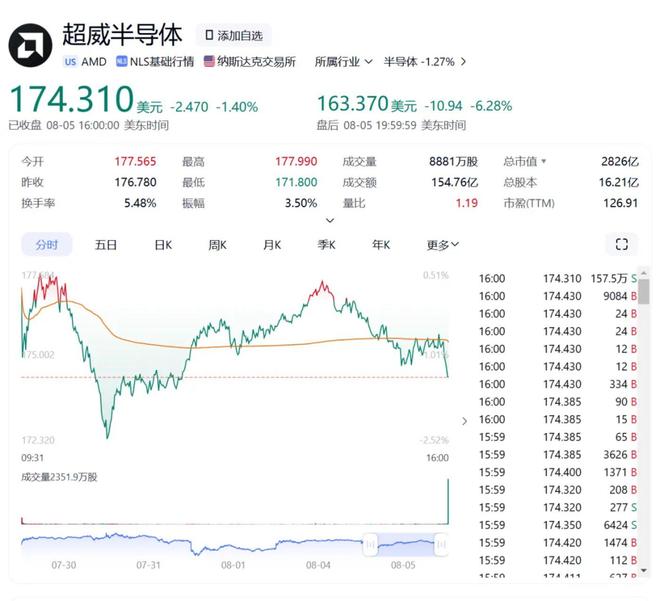
AMD降速,“芯片女王”败给了川普?
Tai Mei Ti A P P· 2025-08-13 07:19
Core Viewpoint - AMD's latest earnings report revealed a mixed outcome, with revenue exceeding expectations but profits falling short, leading to a 4% drop in stock price due to significant inventory write-downs related to a banned AI chip for the Chinese market [1][3][4] Financial Performance - AMD reported second-quarter revenue of $7.7 billion, a 32% year-over-year increase, surpassing market expectations by $270 million [1][3] - The adjusted earnings per share were 48 cents, slightly below the expected 49 cents, causing a decline in stock price [3] - The company faced an $800 million inventory write-down due to the inability to sell the MI308 AI chip in China, which negatively impacted gross margin, reducing it from a potential 54% to 39.8% [4][11] Market Position and Competition - AMD's client and gaming business saw a remarkable 69% growth, significantly outperforming the overall PC market, which grew only 5% [2][3] - The data center CPU market share increased from 10% to 30% over three years, enhancing AMD's presence in the server segment [3] - Despite being the second-largest AI chip player, AMD is facing fierce competition from NVIDIA, which reported a 73% growth in its data center business [6][10] Strategic Challenges - The U.S. government's ban on the MI308 AI chip for the Chinese market has created a significant hurdle for AMD, limiting access to a crucial revenue stream [4][11] - AMD's CEO, Lisa Su, expressed cautious optimism regarding the potential recovery of the Chinese market, but no immediate revenue from the MI308 is expected in the third quarter [6][11] - The company is investing heavily in R&D to launch new products like the MI350 and MI400 series, aiming to provide alternatives to NVIDIA's offerings [10][12] Leadership and Vision - Lisa Su, recognized as one of the highest-paid female CEOs globally, has transformed AMD from near bankruptcy to a leading chip supplier, but now faces more complex challenges in the AI chip market [2][9] - The current competitive landscape requires not only technological excellence but also navigating geopolitical and market dynamics, making the situation more challenging than in the past [9][12] - AMD's future success hinges on the interplay of technology, customer relationships, and regulatory approvals, with significant financial implications at stake [11][12]