万物智联

Search documents
国产操作系统再获进展!开源鸿蒙驶入快车道
Zheng Quan Shi Bao Wang· 2025-05-24 15:43
Core Insights - The OpenHarmony project has made significant progress in the past four years, with over 130 million lines of code and more than 8,600 contributors, making it one of the fastest-growing open-source operating systems [1][2] - The release of OpenHarmony 5.1 marks the eighth major version since its inception, with over 1,100 open-source libraries developed to accelerate application and device development [1][2] - The Shenzhen government emphasizes the importance of talent cultivation for the growth of OpenHarmony, establishing a three-tiered training system to support developers [2][4] Group 1 - OpenHarmony aims to expand its global ecosystem and promote large-scale commercial applications across various industries [2] - The OpenAtom OpenHarmony Foundation has successfully created numerous industry application cases since its establishment in September 2020 [2][3] - The foundation plans to focus on project introduction, cultivation, technological innovation, and ecosystem expansion to provide diverse resources for developers [2] Group 2 - Companies can develop their commercial versions of OpenHarmony, with Huawei launching HarmonyOS 5 and other companies like Shenzhen Kaihong Digital Industry Development Co., Ltd. introducing their own systems [3] - The OpenHarmony project group includes various companies, indicating a collaborative ecosystem for development [3] - Shenzhen Kaihong announced the launch of the first open-source Harmony learning platform and a robot operating system, M-Robots OS, aimed at developers [4] Group 3 - Shenzhen Kaihong plans to invest 500 million yuan over the next five years to support developers through a comprehensive service system [4] - The recent launch of Huawei's Harmony computer signifies a breakthrough for domestic operating systems in the desktop sector [5] - Analysts predict that the accelerated development of the Harmony ecosystem will lead to rapid growth in domestic operating systems in the coming years [5]

开源鸿蒙开发者大会2025举办 共筑万物智联新生态
Huan Qiu Wang Zi Xun· 2025-05-24 12:20
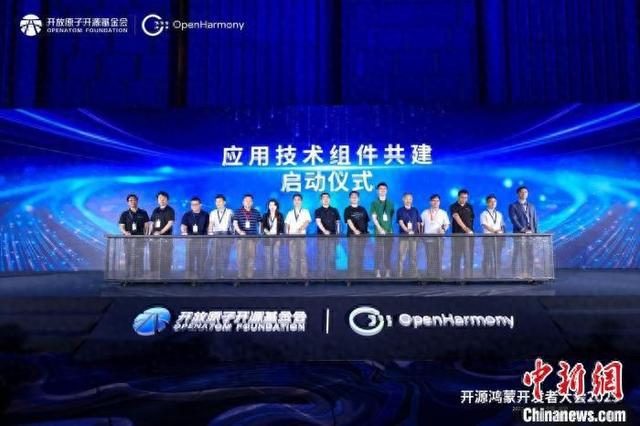
Core Insights - The OpenHarmony Developer Conference 2025 was held in Shenzhen, where the OpenHarmony 5.1 Release version was officially launched, along with the initiation of collaborative development for OpenHarmony application technology components and AI Agent technology [1][3]. Group 1: Project Development and Achievements - OpenHarmony has successfully created numerous industry application cases and has released various device categories, contributing to the construction of a new ecosystem for the Internet of Everything [1]. - The codebase of OpenHarmony has exceeded 130 million lines, with over 8,600 code contributors and more than 1,100 software and hardware products passing compatibility testing, covering multiple sectors such as finance, transportation, education, healthcare, and aerospace [3]. - Since its inception, OpenHarmony has released a total of 8 major versions and built over 1,100 open-source third-party libraries, accelerating the development of applications and devices [3]. Group 2: Future Plans and Initiatives - The foundation will focus on project introduction, cultivation, technological innovation, and ecological expansion to provide developers with richer and more diverse resources, accelerating the industrialization of open-source achievements [1]. - OpenHarmony aims to continue promoting global ecological layout and drive large-scale commercial use across various industries, establishing a globally influential open-source operating system ecosystem [3]. - The second China Graduate Operating System Open Source Innovation Competition was launched, aimed at cultivating innovative, composite, and application-oriented high-end talents to inject new energy into the sustainable development of the OpenHarmony ecosystem [5].
代码规模已达1.3亿多行!开源鸿蒙开发者大会在深圳举办
Nan Fang Du Shi Bao· 2025-05-24 11:24
Core Viewpoint - The OpenHarmony project, initiated by the OpenAtom Open Source Foundation, aims to create a distributed, open-source operating system for the Internet of Everything, with significant advancements showcased at the OHDC.2025 conference in Shenzhen [1][2]. Group 1: Event Highlights - The OHDC.2025 conference was held in Shenzhen, where the OpenHarmony 5.1 Release version was officially launched [1]. - Key initiatives announced include the launch of collaborative efforts for OpenHarmony application technology components and AI Agent technology [1]. - The conference featured demonstrations of various products based on OpenHarmony, including the first notebook and wearable devices, as well as smart screens and the Pura X series [1]. Group 2: Development and Ecosystem - Since its contribution to the OpenAtom Open Source Foundation in September 2020, OpenHarmony has developed numerous industry applications and released various device categories [2]. - The codebase of OpenHarmony has grown to over 130 million lines, with contributions from more than 8,600 developers, and over 1,100 hardware and software products have passed compatibility testing [2][3]. - OpenHarmony aims to build a global ecosystem that supports large-scale commercialization across various industries, including finance, transportation, education, healthcare, and aerospace [2][3]. Group 3: Future Directions - The OpenAtom Open Source Foundation plans to focus on project introduction, cultivation, technological innovation, and ecosystem expansion to provide diverse resources for developers [2]. - The community is actively incubating "AI + Robotics" technologies and has established an AI Model SIG and is forming a Robotics PMC working group to accelerate advancements in consumer sectors [3]. - The foundation emphasizes the importance of developer participation in the growth of the OpenHarmony ecosystem, with a call for more partners to join in the collaborative development of application technology components [3].

2025年美国消费电子行业趋势白皮书-探索中国企业出海美国的增长之路
Sou Hu Cai Jing· 2025-05-21 01:33
Core Insights - The report highlights the growth potential for Chinese consumer electronics companies in the U.S. market, driven by strong consumer purchasing power and evolving demographics [1][3] - Challenges include high tariffs on various goods, supply chain uncertainties, and strong local brand recognition [1][3] Consumer Demographics and Trends - The U.S. consumer market is increasingly influenced by Generation Z (19% of the population) and the aging population, with the latter expected to account for 22% by 2050 [1][3] - Generation Z seeks personalized and tech-savvy products, with spending projected to increase by $8.9 trillion from 2024 to 2034 [1][3] - The elderly demographic prioritizes health and convenience, maintaining a significant share of consumer spending [1][3] Product Innovation Trends - Three major trends in product innovation are identified: 1. Transition from "single product intelligence" to "ubiquitous connectivity," with 53% of consumers finding IoT products convenient, and a projected market revenue of $86.46 billion by 2025 [2] 2. "Micro and high-quality" innovations catering to diverse needs, such as projectors and drones [2] 3. Aesthetic design integration, with 31% of consumers preferring stylish tech products [2] Channel Transformation - Online penetration in the U.S. consumer electronics market reaches 60.6%, surpassing the global average, with major players like Amazon, Walmart, and Apple leading [2] - Offline channels are enhancing consumer experiences, although a slight decline is expected in 2024 [2] - Social media plays a significant role, with 62% of Generation Z using TikTok daily and 43% searching for product information via social media [2] Strategic Recommendations for Chinese Companies - Chinese companies should focus on product and brand upgrades by understanding local needs and leveraging platform data for market opportunities [3] - A comprehensive channel strategy is essential, including online presence on major e-commerce platforms and offline experience stores [3] - Emphasizing localization in branding and integrating cultural elements and sustainability concepts is crucial [3] - Optimizing information and capital flows through technologies like IoT and blockchain can enhance supply chain efficiency [3] - Implementing a "China + N" strategy to diversify production locations and optimize logistics costs is recommended [3] Market Opportunities and Challenges - The U.S. market presents both opportunities and challenges, necessitating a shift from "cost competition" to "value co-creation" for Chinese companies [3] - Embracing technological innovation, localized branding, and supply chain resilience will be key to capturing the needs of Generation Z and the elderly while integrating ESG and low-carbon principles [3]

5G从普惠性连接走向精准化赋能
Jing Ji Ri Bao· 2025-05-15 22:11
Core Viewpoint - The emergence of 5G-A, also known as 5.5G, represents an upgrade from 5G and serves as a transitional phase towards 6G, with both technologies expected to coexist for a significant period, each playing vital roles in various applications and scenarios [1][2]. Group 1: Technological Advancements - 5G-A offers substantial improvements over 5G, including a tenfold increase in speed, connection density, positioning accuracy, and energy efficiency [1]. - The technology supports new capabilities such as integrated sensing and communication, passive IoT, and endogenous intelligence, enhancing its applicability across diverse scenarios [1][2]. Group 2: Market Dynamics - The development of 5G-A is a response to the growing demands for communication networks in emerging fields like smart transportation and manufacturing, as existing 5G networks struggle to meet these needs [2]. - The introduction of 5G-A aims to address the slowdown in 5G growth and the challenges in acquiring new users, as the market has reached a saturation point in 5G adoption [2]. Group 3: Complementary Relationship - 5G and 5G-A are not in a simple replacement relationship; instead, they complement each other, with 5G-A optimizing and upgrading the existing 5G infrastructure without disrupting its architecture [2][3]. - The coexistence of both technologies fosters a more robust communication ecosystem, enhancing the overall industry landscape and driving innovation [3]. Group 4: User Adoption and Industry Impact - As of now, there are approximately 1.068 billion 5G mobile phone users in China, indicating widespread acceptance of 5G technology [3]. - 5G continues to support essential applications such as mobile payments and social networking, while 5G-A provides additional capabilities for more demanding applications, allowing users to choose the appropriate network based on their needs [3].
中国软件20250511
2025-05-12 01:48
• 鸿蒙生态体系由 OpenHarmony 开源项目、华为 HarmonyOS 发行版和 中国软件国际鸿蒙 OS 发行版组成,三者互联互通,但应用场景有所侧重, 华为侧重消费和汽车领域,中软国际则侧重 ToB 市场,尤其关注安全性和 实时性。 • 鸿蒙操作系统在安全性方面领先,是首个通过公安部安全检测认证的操作 系统,内核通过 EAL5 级别形式化验证,高于主流操作系统的 EAL4 级别, 并具备分布式安全防御技术和域内安全传输技术。 • 鸿蒙操作系统是 AI 原生操作系统,通过软总线连接多个硬件设备形成超级 AI 代理,管理的物理设备可抽象成 AI 代理并与大模型调用,在 AI 技术应 用方面具有领先优势。 • 华为计划在 2025 年发布鸿蒙 5.0 操作系统,扩展应用生态至办公和企业 管理软件,如钉钉、飞信和腾讯会议等已鸿蒙化,并推出元服务,实现服 务找人,提升用户体验。 • 中昂国际与华为在鸿蒙生态展开合作,聚焦文旅行业,将景区小程序升级 为鸿蒙云服务,提供一站式出行体验,已上架近 7,000 款元服务,并计划 扩展至其他生活服务领域。 中国软件 20250511 摘要 Q&A 中国软件国际在鸿蒙生态 ...

多措并举点亮长效回馈星辰 深市通信企业与投资者共赴价值星河
Zheng Quan Ri Bao Wang· 2025-05-11 12:03
Core Insights - The communication industry is at the forefront of technological innovation, driving significant advancements in digital life and economic development [1][2] - In 2024, companies in the Shenzhen Stock Exchange's communication sector are expected to achieve robust financial performance, with a total revenue of 2,271.71 billion yuan, a year-on-year increase of 12.15%, and a net profit of 93.10 billion yuan, up 53.52% [1] Technological Breakthroughs - The communication industry is undergoing a transformation towards "intelligent connectivity," driven by advancements in AI, big data, and cloud computing [2] - The Ministry of Industry and Information Technology plans to enhance the mobile IoT ecosystem by 2027, integrating 4G and 5G technologies [2] Company Performance - Guangzhou Guanghe Technology Co., Ltd. reported a revenue of 3.73 billion yuan in 2024, a 39.43% increase, and a net profit of 676 million yuan, up 63.04% [3] - Shenzhen Guanghetong Wireless Co., Ltd. is focusing on AI technology and has established an AI research institute to develop new communication products [3] Shareholder Returns - Shenzhen communication companies are committed to returning profits to shareholders through stable dividends and share buybacks [4] - Suzhou Kema Materials Technology Co., Ltd. has announced two profit distribution plans totaling 87.20 million yuan since its listing [5] - Guanghetong plans to distribute 267 million yuan in cash dividends for 2024, continuing its commitment to shareholder returns [5] Long-term Commitment - Shenzhen Feirongda Technology Co., Ltd. emphasizes sustainable development and long-term value creation for investors through innovation and operational efficiency [6] - The communication sector's focus on R&D and market-driven strategies aims to enhance competitiveness and ensure consistent returns for investors [6]


约500款上海应用已上架,政企为何全力拥抱鸿蒙?
Guan Cha Zhe Wang· 2025-05-11 06:46
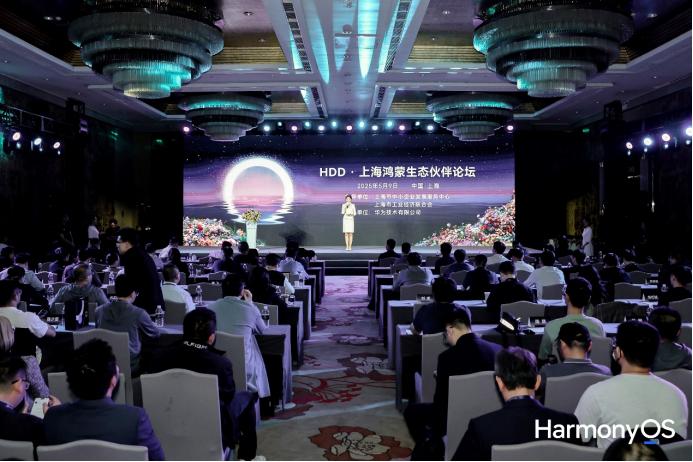
Core Viewpoint - Huawei's HarmonyOS is transforming the digital landscape in Shanghai, with a focus on creating a robust ecosystem that enhances user experience and application development across various sectors [1][3]. Group 1: HarmonyOS Ecosystem Development - The HarmonyOS ecosystem has seen significant growth in Shanghai, with approximately 500 applications upgraded and launched, contributing to the city's digital transformation [3]. - Over 3,000 government and enterprise units nationwide are undergoing internal application upgrades to HarmonyOS, indicating widespread adoption [3]. - The forum showcased nearly 100 applications that have deeply integrated HarmonyOS features, enhancing functionality and user experience [1][3]. Group 2: Application Areas and Benefits - In the public service sector, the "Suishenban Citizen Cloud" app has fully adapted to HarmonyOS, providing efficient government services while ensuring data security for 24 million citizens [4][5]. - Transportation applications like Metro and Shanghai Transportation Card leverage HarmonyOS's capabilities for smarter and more efficient travel experiences [5]. - Applications in practical tools and health sectors utilize HarmonyOS for improved user experiences, showcasing its versatility across different domains [5]. Group 3: Developer Experience and Security - HarmonyOS offers a more user-friendly development experience compared to Android and iOS, allowing for unified development tools and capabilities across various devices [6]. - The system's security architecture, including multi-layered protection measures, ensures data safety for critical government and enterprise applications [6][7]. - Companies are increasingly adopting HarmonyOS for internal applications, enhancing collaboration and operational efficiency through its innovative features [7]. Group 4: Financial Sector Integration - Several financial applications in Shanghai have integrated HarmonyOS features, enhancing security and intelligence in financial services [9]. - The launch of HarmonyOS computers completes the ecosystem, driving further collaboration and development within the financial sector [9].
5G-A,来了!
证券时报· 2025-05-09 08:40
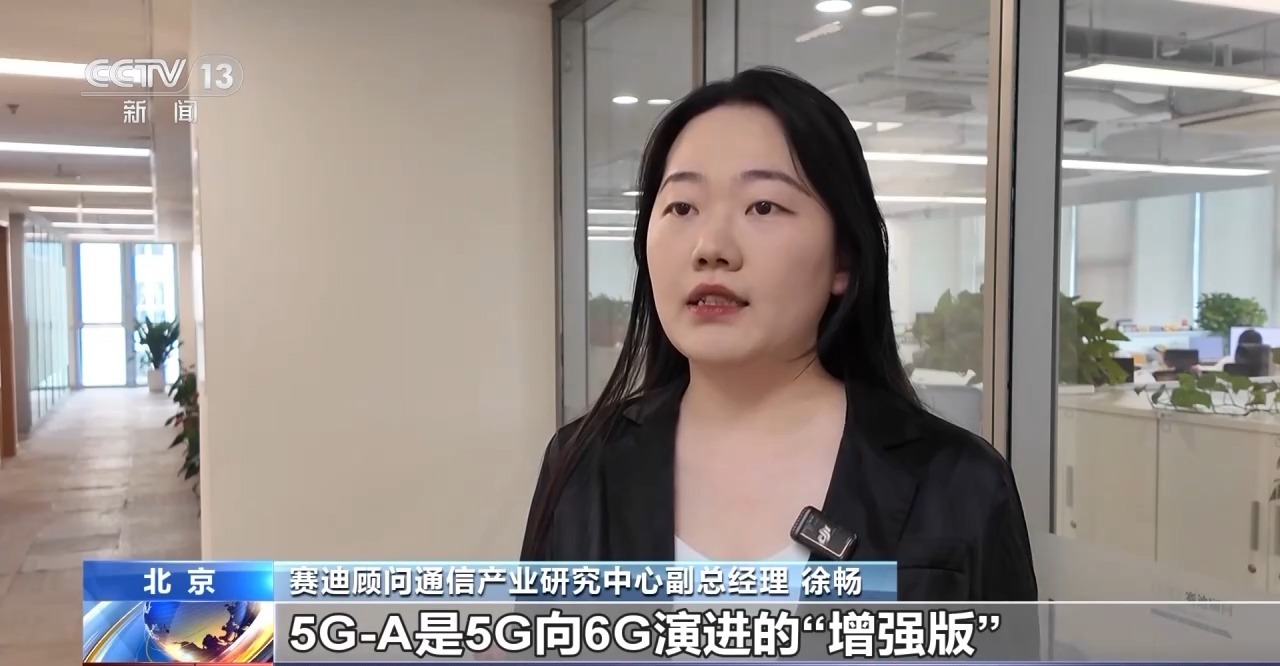
Core Viewpoint - The article discusses the emergence of 5G-Advanced (5G-A), also known as 5.5G, as an upgrade to traditional 5G technology, highlighting its significant improvements in speed, latency, and connectivity, as well as its broader application scenarios in various industries [1][2]. Group 1: Technical Enhancements - 5G-A offers a maximum data download speed increase from gigabits to 10 gigabits, and upload speeds from hundreds of megabits to 1 gigabit, enabling faster downloads of large files [1]. - The latency is reduced to millisecond levels, enhancing real-time communication applications such as online gaming and video conferencing, and making remote surgeries and industrial automation more reliable [1]. - 5G-A supports a larger number of devices simultaneously, ensuring stable connections in crowded environments like shopping malls and smart homes, thus facilitating the development of IoT and smart cities [1]. Group 2: New Application Scenarios - 5G-A introduces capabilities in three main directions: "integrated communication and sensing," which allows for real-time environmental awareness and data capture, enhancing applications in various fields [2]. - The "integrated communication and sensing" feature can improve vehicle traffic management and smart home automation by recognizing household activities and adjusting environments accordingly [2]. - 5G-A is positioned as a productivity engine, aligning with advancements in artificial intelligence, IoT, high-end manufacturing, and low-altitude economy, contributing to high-quality development of new productive forces [2]. Group 3: Accessibility and Deployment - To access 5G-A, users need compatible local base stations and mobile devices, with most mainstream models currently available supporting this network without additional charges [3]. - As of now, operators have deployed 5G-A testing networks across 31 provinces in China, with the capacity to support 50 million users [3]. - The Ministry of Industry and Information Technology emphasizes the importance of advancing 5G-A and 6G technologies, aiming to accelerate the establishment of new information infrastructure standards [3].

5G-A信号来了,比5G快10倍!如何体验、怎么收费?一文读懂
Mei Ri Jing Ji Xin Wen· 2025-05-09 06:59
Core Viewpoint - 5G-A, also known as 5.5G, is an upgraded version of traditional 5G, offering significant improvements in speed, latency, and connectivity, thus enhancing various applications and industries [1][2][5]. Group 1: Technical Advancements - 5G-A achieves a maximum data download speed of 10 Gbps, up from 1 Gbps in early 5G, and an upload speed peak of 1 Gbps, increased from 100 Mbps [2]. - It features millisecond-level low latency, making it suitable for real-time communication and applications such as online gaming and remote surgeries [2]. - The technology supports a larger number of devices simultaneously, enhancing connectivity in crowded environments and smart city applications [2][3]. Group 2: Deployment and Testing - Chinese operators have deployed 5G-A test networks across 31 provinces, with the capacity to support 50 million users [3]. - China Mobile has established over 7,000 5G-A base stations in Beijing, aiming to expand coverage to over 300 cities nationwide [8]. Group 3: Application Scenarios - 5G-A introduces new capabilities such as "integrated sensing and communication," which enhances environmental awareness and can be applied in smart homes and traffic management [4]. - The technology is expected to drive automation and efficiency in traditional industries, enabling real-time data sharing across supply chains [5][9]. Group 4: Industry Impact - 5G-A is seen as a productivity engine, facilitating the integration of artificial intelligence and smart manufacturing, thus promoting high-quality development in various sectors [5][9]. - The technology's capabilities are anticipated to support emerging fields like brain-computer interfaces and low-altitude economy applications [11].