
个人信息保护

Search documents
工信部通报24款APP及SDK存在侵害用户权益行为
Ren Min Wang· 2025-12-10 10:02
Core Viewpoint - The Ministry of Industry and Information Technology (MIIT) is taking action against 24 apps and SDKs for violating personal information protection laws, following a joint announcement by several government departments regarding a special campaign for personal information protection in 2025 [1] Group 1: Regulatory Actions - The MIIT is conducting governance on apps and SDKs that illegally collect and use personal information, as per the regulations outlined in the Personal Information Protection Law and other related laws [1] - A recent inspection by third-party testing agencies identified 24 apps and SDKs that infringe on user rights [1] - The MIIT has mandated that the identified apps and SDKs must rectify their issues according to relevant regulations, with potential legal actions for non-compliance [1]



69款APP被通报违法违规收集个人信息 安然纳米登榜
Zhong Guo Jing Ji Wang· 2025-12-10 06:16
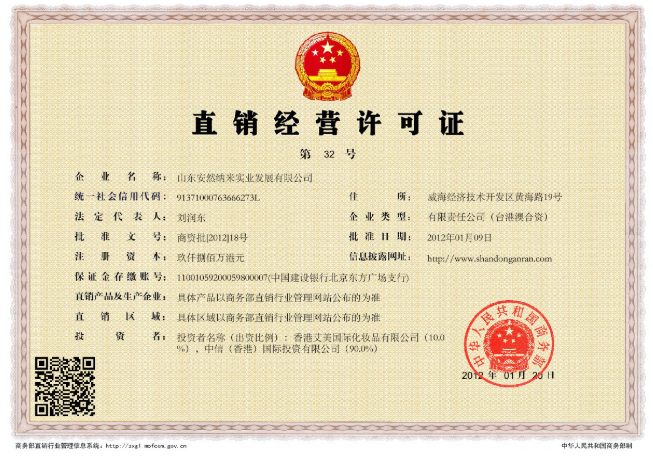
Group 1 - The National Computer Virus Emergency Response Center detected 69 mobile applications that illegally collect and use personal information [1] - The application "Anran Mall" (version V1.1.5) has issues with its privacy policy, failing to clearly list the purposes, methods, and scope of personal information collection [1] Group 2 - Anran Mall is operated by Shandong Anran Nano Industry Development Co., Ltd., which was established in 2004 by Liu Rundong and Liang Hao [2][3] - Shandong Anran Nano Industry Development Co., Ltd. is a wholly-owned subsidiary of Anran Group, focusing on research, production, sales, service, and education in the health industry, utilizing technologies such as nanotechnology and plant stem cell technology [3] - The company received a direct selling business license on January 9, 2012, and has 9 branches and 72 service outlets, offering 27 types of direct selling products [3]
上海这个商业区太离谱!想上厕所,先提供手机号码注册会员
Xin Lang Cai Jing· 2025-12-10 01:52
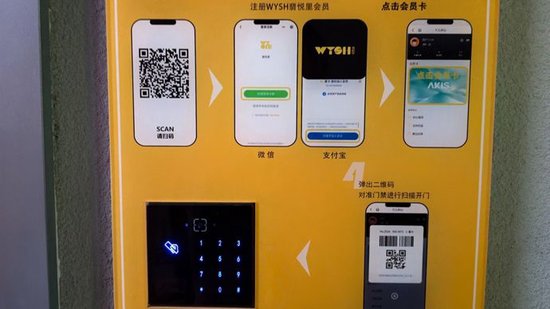
Core Viewpoint - The requirement for consumers to register as members to use restrooms in commercial areas raises concerns about convenience and consumer rights, highlighting a growing trend of "toilet exploration" notes on social media that reflect consumer experiences and frustrations [2][18][29] Group 1: Membership Registration Process - The restroom access at WYSH Feiyue Li requires consumers to complete a four-step process involving scanning a QR code, registering as a member, and using a member card to unlock the door [3][19] - Consumers face difficulties with the registration process, including failed verification codes and lengthy user agreements that require personal data submission [6][23] - Many consumers, including those interviewed, only registered to use the restroom, indicating a lack of understanding of the necessity for membership [9][25] Group 2: Consumer Rights and Legal Concerns - The practice of requiring personal information for restroom access has been deemed unreasonable and potentially illegal, violating consumer rights and privacy laws [29][30] - Industry experts suggest that there are more humane ways to manage restroom access without infringing on consumer privacy, such as providing temporary access codes or physical tokens [30][31] - The rationale provided by property management for the membership requirement is to "statistically track" restroom usage, which has been criticized as an inadequate justification for data collection [28][29]
违规收集个人信息、过度索取权限 会计云课堂等APP被通报
Xin Lang Cai Jing· 2025-12-09 11:20
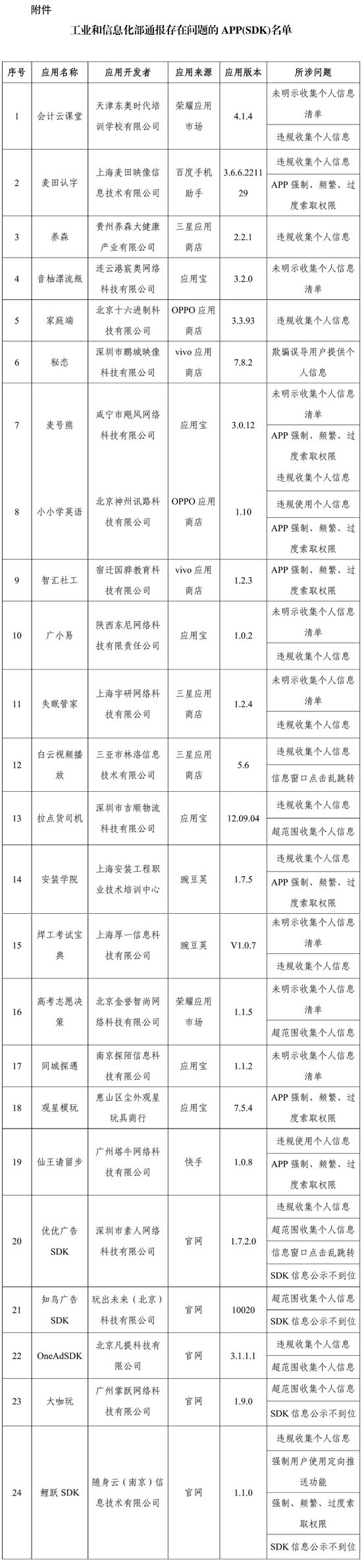
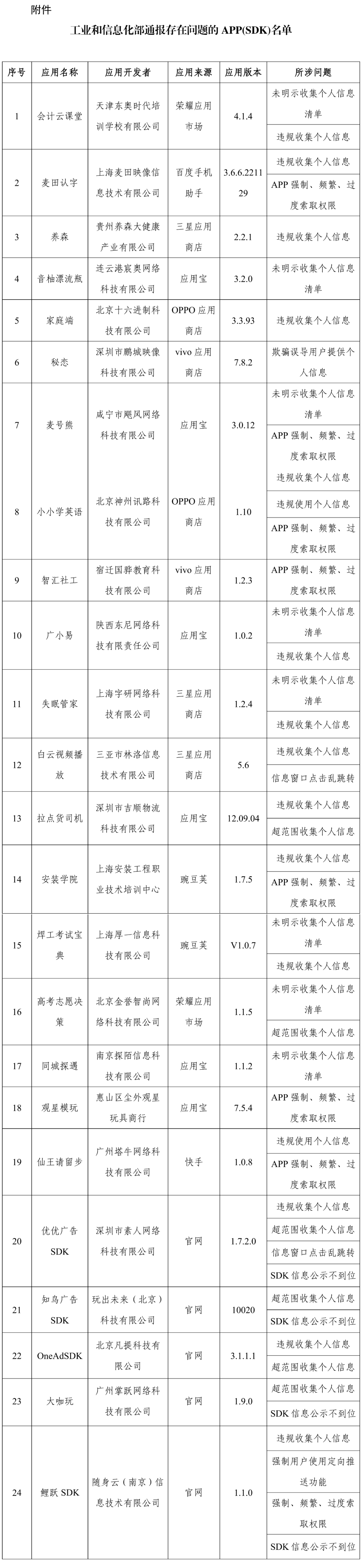
Core Viewpoint - The Ministry of Industry and Information Technology (MIIT) is conducting governance on illegal collection and use of personal information by apps and SDKs, having identified 24 apps and SDKs that infringe on user rights [1][4]. Group 1: Governance Actions - MIIT has organized third-party testing to identify apps and SDKs that violate regulations regarding personal information collection [1][4]. - The identified apps and SDKs are required to rectify their issues, and failure to comply will lead to further legal actions by MIIT [1][4]. Group 2: Identified Apps and SDKs - A total of 24 apps and SDKs were found to have issues, including: - "会计云课堂" (Accounting Cloud Classroom) - Fails to disclose personal information collection [1][4]. - "麦田认字" (Maitian Recognize Words) - Violates personal information collection regulations by requesting excessive permissions [1][4]. - "秘恋" (Secret Love) - Misleads users into providing personal information [1][4]. - "失眠管家" (Insomnia Manager) - Fails to disclose personal information collection [2][4]. - "高考志愿决策" (College Entrance Exam Volunteer Decision) - Collects personal information beyond necessary limits [6]. Group 3: Compliance Issues - Many of the identified apps and SDKs are noted for not clearly stating their personal information collection practices [2][5]. - Several apps are reported to request permissions excessively, which raises concerns about user privacy and data security [5][6].
违规收集个人信息、过度索取权限 这些APP被通报
Xin Hua She· 2025-12-09 11:12
记者12月9日从工业和信息化部获悉,依据相关法律法规,工业和信息化部对APP、SDK(第三方 软件开发工具包)违法违规收集使用个人信息等问题开展治理。近期,经组织第三方检测机构进行抽 查,共发现24款APP及SDK存在侵害用户权益行为。 据悉,上述APP及SDK应按有关规定进行整改,整改落实不到位的,工业和信息化部将依法依规组 织开展相关处置工作。(记者周圆) ...
工信部通报24款存在侵害用户权益行为APP及SDK
Yang Shi Wang· 2025-12-09 09:42
央视网消息:据"工信微报"公众号消息,根据中央网信办、工业和信息化部、公安部、市场监管总局等四部门联合发布的《关于开展2025年个人信息保护 系列专项行动的公告》,依据《个人信息保护法》《网络安全法》《电信条例》《电信和互联网用户个人信息保护规定》等法律法规,工业和信息化部对 APP、SDK违法违规收集使用个人信息等问题开展治理。近期,经组织第三方检测机构进行抽查,共发现24款APP及SDK存在侵害用户权益行为(详见附 件),现予以通报。 | 序号 | 应用名称 | 应用开发者 | 应用来源 | 应用版本 | 所涉问题 | | --- | --- | --- | --- | --- | --- | | 1 | 会计云课堂 | 天津东奥时代培 | 荣耀应用 | 4.1.4 | 未明示收集个人信息 清单 | | | | 训学校有限公司 | 市场 | | | | | | | | | 违规收集个人信息 | | 2 | 麦田认字 | 上海麦田映像信 | 百度手机 | 3.6.6.2211 | 违规收集个人信息 APP 强制、频繁、过 | | | | 息技术有限公司 | 助手 | 29 | | | | | | | | 度 ...
15款侵害用户权益行为APP被通报
Yang Zi Wan Bao Wang· 2025-12-09 02:01
12月8日,江苏省通信管理局发布关于侵害用户权益行为APP的通报(2025年第9批)。 | 序 름 | APP 名称 | APP 主 办者 | 所涉问题 | 版 本 信 | | --- | --- | --- | --- | --- | | | | | | 息 | | 1 | 全 澄 | 江 阴市 风 墙 网 络 科 技 | 违 规 收 集 个 人 信 息;超范 | 1. 9.2 | | | 道 | | | | | | | 有 限 公 | 围收集个 | 2 | | | | 司 | 人信息 | | | 2 | 旅 行 足迹 | 南京 熙 帅 科 技 | 违规收集 | 1 . | | | | | 个 人 信 | | | | | 有 限 公 | 息; 违 规 | 6.2 | | | | 司 | 使用个人 | | | | | | 信息 | | | | | | 违 规 收 集 | | | 3 | GPS 仪 表 | 昆山市 | 个 人 信 | 4.1 | | --- | --- | --- | --- | --- | | | | 费 罗 多 | 息 ; APP | | | | 찰 | 咖 啡 有 | 强制、频 | 36 ...

警惕!这种Wi-Fi不能连!你的手机可能会被远程操控
Huan Qiu Wang Zi Xun· 2025-12-09 00:35
Core Viewpoint - The article emphasizes the risks associated with connecting to public Wi-Fi networks, highlighting potential data theft and network attacks, and provides safety tips to mitigate these risks [1][2][3]. Group 1: Risks of Public Wi-Fi - Public Wi-Fi networks can be exploited by malicious actors, including foreign intelligence agencies, to monitor sensitive information from connected devices [1]. - Users connecting to insecure public Wi-Fi may unknowingly have malware installed on their devices, leading to remote control and threats to personal and public safety [2]. - Personal data such as browsing history and location information can be collected and analyzed by malicious entities, potentially undermining social stability and mainstream values [3]. Group 2: Prevention Measures - Users are advised to disable the "auto-connect" feature on their devices to prevent automatic connections to malicious networks [5]. - It is recommended to avoid sensitive operations, such as logging into private accounts or conducting financial transactions, while connected to public Wi-Fi [6]. - Installing and regularly updating protective software can help prevent malware attacks, and using virtual private networks (VPNs) can encrypt data transmission [7]. Group 3: Personal Information Safety - Users should be cautious about sharing personal information on social media, as seemingly innocuous posts can reveal sensitive details [8][9][10][11][12][13][14][15]. - Users should be wary of scams that offer "free benefits" through links or QR codes, as these can lead to malicious app installations that compromise personal data [17][18]. - It is important to manage app permissions to prevent unauthorized access to personal data, such as microphone and contact information [19][20][21]. Group 4: Response to Data Breaches - In the event of a suspected data breach, users should immediately disconnect from the compromised device and freeze affected accounts [22]. - Changing passwords for all related accounts and retaining evidence of the breach are crucial steps in addressing the situation [22]. - Users are encouraged to report violations to relevant platforms and authorities, and to consider legal action if financial loss occurs due to the breach [22].

2025携程集团个人信息保护外部监督专家团座谈会召开
Xin Lang Cai Jing· 2025-12-08 11:28
座谈会中,十位外部监督专家认真聆听了携程2025年度在个人信息保护方面取得的各项进展和面临的行业挑战,并基于汇报内容展开了专业指导和热烈讨 论。本次专家会的议题主要包括《大型网络平台设立个人信息保护监督委员会规定(征求意见稿)》等新法新规的适用解读、典型案件分享、携程集团个 保管理机制的落地执行、个人信息处理工作的进一步优化等方面。此次座谈会达成了多项具有建设性和前瞻性的共识,为携程接下来的个人信息保护工作 指明了方向。 2025年12月4日,携程集团第五届个人信息保护外部监督专家团座谈会在上海顺利召开。 据了解,携程个人信息保护外部监督专家团是携程集团设立的个人信息保护监督机构,依据法律法规及专家团章程履行监督职责,是携程提升个人信息保 护工作水平和透明度的重要机制。专家团成立于2021年,成员通过社会公开招募或定向邀请产生,主要包括法学专家、律师、行业专家、媒体代表及用户 代表。最新当选并履行监督职责的是第五届专家团。 据了解,携程个人信息保护外部监督专家团是携程集团设立的个人信息保护监督机构,依据法律法规及专家团章程履行监督职责,是携程提升个人信息保 护工作水平和透明度的重要机制。专家团成立于2021年 ...


国家网络与信息安全信息通报中心通报69款违法违规收集使用个人信息的移动应用
Yang Shi Wang· 2025-12-05 05:51
Core Viewpoint - The National Cybersecurity and Information Security Information Notification Center reported that 69 mobile applications were found to illegally collect and use personal information, violating laws such as the Cybersecurity Law and the Personal Information Protection Law [1][2][3]. Group 1: Non-compliance with Privacy Policies - 15 mobile applications failed to clearly inform users about the collection and use of personal information at the first run, including the lack of accessible privacy policies [1]. - 39 mobile applications did not list the purposes, methods, and scope of personal information collection in their privacy policies [2]. - 15 mobile applications did not inform users about the recipients of their personal information when shared with other processors, nor did they obtain separate consent [3]. Group 2: User Consent and Rights - 3 mobile applications began collecting personal information without obtaining user consent [4]. - 8 mobile applications did not provide effective means for users to correct, delete personal information, or cancel their accounts, or set unreasonable conditions for these actions [5]. - 3 mobile applications failed to process complaints and reports within the promised timeframe and did not establish a convenient mechanism for users to exercise their rights [6]. Group 3: Withdrawal of Consent - 35 mobile applications did not provide users with a way to withdraw consent for the collection of personal information [7]. Group 4: Automated Decision-Making and Sensitive Information - 5 mobile applications used automated decision-making for information push and marketing without providing options to refuse or not targeting personal characteristics [8]. - 1 mobile application did not inform users about the necessity and impact of processing sensitive personal information [8]. Group 5: Security Measures - 21 mobile applications did not implement appropriate security measures such as encryption or de-identification [8]. Group 6: Absence of Privacy Policies - 2 mobile applications were found to have no privacy policy at all [8].