产业振兴

Search documents
五位第一书记的乡情笔记(守望·特别策划)
Ren Min Ri Bao· 2025-05-06 21:59
Core Viewpoint - The article emphasizes the importance of the "First Secretary" system in rural revitalization, highlighting the roles of these officials in promoting agricultural efficiency, increasing farmers' income, and enhancing rural development through various initiatives and community engagement [6]. Group 1: Industrial Revitalization - The article discusses the challenges faced by farmers in selling sweet potatoes and the innovative solutions implemented by the First Secretary, such as live-streaming sales, which resulted in selling over 100,000 pounds of sweet potatoes and generating more than 400,000 yuan in revenue [10]. - The First Secretary in Shandong province introduced a selenium-rich sweet potato variety, leading to a 15% price increase compared to regular sweet potatoes, demonstrating the impact of differentiated agricultural products on market success [9][10]. Group 2: Talent Revitalization - The article highlights the efforts of the First Secretary in Chongqing to attract young talent back to the village by leveraging local advantages and developing the tourism industry, resulting in over 100 villagers finding employment [12]. - The introduction of a local agricultural company and the engagement of university graduates in village governance have improved the village's economic prospects, with collective income projected to exceed 3 million yuan in 2024 [12]. Group 3: Cultural Revitalization - The First Secretary in Hainan has focused on promoting local ethnic culture through the establishment of a song and dance troupe, which has gained popularity and contributed to the village's tourism revenue, reaching 8.51 million yuan in 2024 [15]. - The formation of a children's choir has also been initiated, showcasing local talent and enhancing cultural exchange opportunities, including performances abroad [15]. Group 4: Ecological Revitalization - The article describes the efforts of the First Secretary in Yunnan to combat soil erosion and improve the local environment through tree planting initiatives, which have significantly enhanced the ecological landscape of the village [16][17]. - The community's active participation in planting over 2,300 trees and 1,400 economic fruit trees reflects a collective commitment to ecological sustainability and environmental improvement [17]. Group 5: Organizational Revitalization - The First Secretary in Jiangxi has implemented a community governance model that encourages villagers to voice their concerns and participate in decision-making processes, fostering a sense of ownership and responsibility among residents [20][21]. - The establishment of a hotline for villagers to report issues has improved communication and problem-solving within the community, leading to a more cohesive and responsive governance structure [21].

国企担当 土地赋能 土地熟化助力“振兴罗庄 重回千亿”战略
Qi Lu Wan Bao Wang· 2025-04-30 03:50
破局"闲置土地",激活产业新引擎。原佳贝特地块闲置多年,为支持项目落地,罗开集团完成土地熟化 112亩,成功招引投资32亿元的瑞德利超薄超强电池隔膜项目,该项目已被列入2025年"省重大"项目。 生态修复赋能,助推绿色低碳转型。原佳宝地块因土壤污染一直闲置,罗开集团组织对292亩进行土壤 污染调查,并一次性评审通过,有效支持了天环膜结构、旗悦新风、绿临电池回收和瑞德利二期等项目 落地,极大的缩短项目落地时间。 土地熟化,熟的是资源整合的"效率",化的是高质量发展的"动能",从"闲置锈带"到"产业走廊",从"历 史包袱"到"发展引擎",罗开控股以土地熟化"关键笔",绘就罗庄振兴"新画卷"。未来,罗开集团将继 续以"攻坚者"姿态,以更高站位、更实举措,持续深化土地要素改革,为"振兴罗庄重回千亿"筑牢产业 基石,谱写高质量发展崭新篇章!国企担当土地赋能土地熟化助力"振兴罗庄重回千亿"战略 齐鲁晚报.齐鲁壹点徐昊囡 土地熟化是城市更新的"先手棋",更是产业振兴的"关键子"。面对罗庄区产业转型与空间重构的双重挑 战,罗开集团立足国企责任,以"盘活低效用地、重塑产业动能"为核心,靶向攻坚历史遗留项目,累计 推动1519亩 ...
“土特产”链接“大市场” 产业振兴“钱”景好
Xin Hua She· 2025-04-24 11:29
Group 1: Flower Industry - The flower industry in Yunnan has become a significant contributor to local farmers' income, with an average increase of over 50,000 yuan per household for 190,000 flower farmers, impacting over 1 million people in employment and entrepreneurship [2] - In the first quarter of this year, Yunnan exported 9,134 tons of fresh-cut flowers, generating an export value of 270 million yuan, representing a year-on-year increase of 10% in volume and 48.2% in value [2] - The Kunming International Flower Auction Center has a transaction rate of 95.34%, with an average transaction time of just 4 seconds, establishing itself as a global benchmark for flower trading [1][2] Group 2: Coffee Industry - Yunnan's coffee industry has seen significant growth, with over 1.2 million acres of coffee planted and an annual production exceeding 140,000 tons, accounting for over 98% of the national total [3] - The expected output value of coffee for the current season is projected to exceed 10 billion yuan, marking the best year since the inception of coffee cultivation in the region [3] - Technological advancements in coffee cultivation have led to the development of new varieties and improved cultivation techniques, enhancing the overall quality and yield of Yunnan's coffee [3] Group 3: Aquaculture Industry - The rice-shrimp farming model in Hunan has expanded to cover 420,000 acres, with an annual production of 62,000 tons of shrimp and a total output value of 9.25 billion yuan [5] - The integration of cold chain logistics has enabled efficient distribution of fresh shrimp to major markets across Guangdong, Hubei, and Sichuan [5] - The cooperative model involving enterprises, cooperatives, and farmers has strengthened the local economy and improved land utilization through the rice-shrimp farming approach [5] Group 4: Mushroom Industry - The mushroom industry in Jiangxi has been revitalized through a semi-automated production facility, with an expected output of over 200,000 mushroom sticks this year [6] - The collaborative model of "company + cooperative + base + farmer" has successfully integrated 137 mushroom farmers, enhancing local production and reducing costs [6] - The mushroom industry is projected to produce 500,000 pounds of edible mushrooms in 2024, providing over 400 job opportunities [6] Group 5: Agricultural Policy and Development - The Ministry of Agriculture and Rural Affairs emphasizes the importance of industrial revitalization as a key component of rural revitalization, focusing on strengthening leading enterprises and improving agricultural product processing efficiency [7] - The development of new industries and business models has significantly contributed to rural prosperity and increased farmers' incomes across various regions [7]
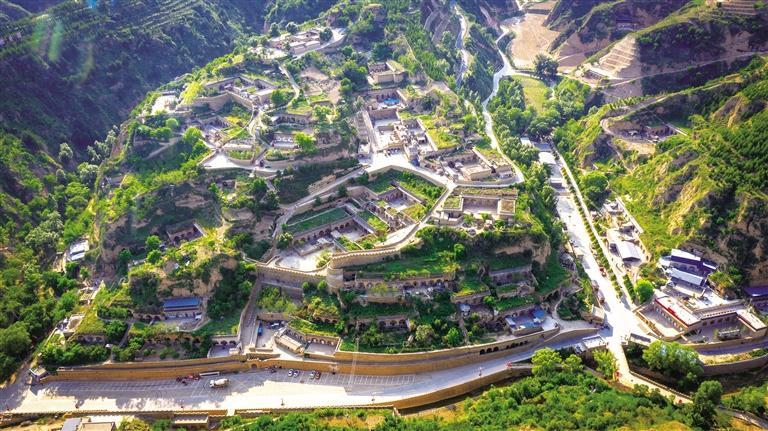
杨家沟革命旧址:让红色基因焕发时代光芒
Shan Xi Ri Bao· 2025-04-22 23:00
Core Viewpoint - The Yangjiagou Revolutionary Site is actively utilizing red cultural resources to promote education and tourism, ensuring the legacy of revolutionary history continues to thrive [5][6][10]. Group 1: Historical Significance - Yangjiagou Village is recognized as a pivotal location in Chinese revolutionary history, serving as the last stop for the Central Committee of the Communist Party before moving towards national victory [5][10]. - The site has been visited by significant leaders, including Xi Jinping, who emphasized the importance of utilizing red resources for educational purposes [5][6]. Group 2: Cultural and Educational Initiatives - The Yangjiagou Revolutionary Memorial Hall is implementing advanced technologies for the digital preservation of cultural artifacts and is actively engaging in educational outreach through lectures in schools and communities [3][6]. - The site has become a key location for patriotic education, attracting increasing numbers of visitors, including students, to learn about revolutionary history [16][20]. Group 3: Economic Development through Tourism - The growth of red tourism has significantly boosted the local economy, with villagers benefiting from increased income through tourism-related activities [22][24]. - The village's collective economic income reached 2.05 million yuan, with individual per capita income exceeding 20,000 yuan in 2024 [23][24]. Group 4: Future Development Plans - Plans are underway to enhance the red cultural tourism experience, including the construction of a cultural technology industrial park and a film base, which are expected to attract over 20,000 visitors annually [26][27]. - The village aims to integrate red culture with green development, creating a sustainable economic model that includes various agricultural and tourism initiatives [24][27].