
全球发展倡议

Search documents
中方愿同拉方携手推进共建命运共同体“五大工程”
Ren Min Ri Bao Hai Wai Ban· 2025-12-10 23:20
拉美和加勒比国家驻华使团长、多米尼克驻华大使查尔斯表示,政策文件的实施对于拉中命运共同体建 设的持续推进至关重要,将直接影响基础设施建设、科技、教育、文化、农业、可持续发展等领域合 作。拉中加强合作是拉美和加勒比实现伙伴多元化、拓宽合作视野、增强区域战略决策自主性的重要机 遇。 2008年11月和2016年11月,中国政府先后发布首份和第二份对拉政策文件,为中拉关系发展提供了政策 依据。 《人民日报海外版》(2025年12月11日 第 02 版) 新华社北京12月10日电(记者邵艺博、冯歆然)第三份《中国对拉丁美洲和加勒比政策文件》10日在北 京发布。政策文件说,中方愿同拉方携手推进团结、发展、文明、和平、民心"五大工程",共谋发展振 兴,共同谱写构建中拉命运共同体新篇章。 作为发展中国家、全球南方的一员,中国始终同包括拉美和加勒比在内的全球南方同呼吸、共命运。近 年来,中国国家主席习近平就加强中拉关系和各领域合作提出一系列重大倡议和举措,赋予中拉关系新 的时代内涵。中国政府发布第三份《中国对拉丁美洲和加勒比政策文件》,旨在总结经验,展望未来, 全面阐述中国对拉政策,推动中拉关系和各领域合作再上新台阶。 政策 ...

坚持团结合作 促进开放包容——“2025从都国际论坛”汇聚共赢发展的时代强音
Xin Hua She· 2025-12-10 23:19
Core Viewpoint - The "2025 From Du International Forum" emphasized the need for dialogue and cooperation among nations to address global challenges, highlighting the importance of multilateralism and free trade in the face of rising unilateralism and protectionism [1][2]. Group 1: Multilateralism and Global Cooperation - The forum participants stressed that multilateralism is essential for common development, especially as unilateralism and geopolitical conflicts rise, impacting global supply chains and economic stability [2][3]. - Former Italian Prime Minister Romano Prodi warned against prioritizing national interests at the expense of global cooperation, stating that such actions threaten collective benefits and development [2]. - Former UN Secretary-General Ban Ki-moon noted that recent U.S. tariffs have exacerbated global inflation risks and created uncertainty for multinational cooperation, calling for the establishment of inclusive and fair trade rules [2]. Group 2: China's Global Initiatives - China's proposals, including the Global Development Initiative and Global Security Initiative, were positively received at the forum, with many leaders believing they contribute to international consensus and promote fair global governance [4][5]. - The initiatives were seen as a constructive path to revitalizing global development cooperation, showcasing China's commitment to pragmatic and inclusive collaboration [4][6]. Group 3: China's Development Experience - Forum discussions highlighted China's modernization as a valuable experience for developing countries, with many leaders acknowledging its role in providing stability and growth opportunities for the global economy [6][7]. - Former Nigerian President Olusegun Obasanjo praised China's economic achievements, particularly its success in poverty alleviation, which serves as a model for other developing nations [7]. - The forum also featured discussions on AI governance, with European leaders recognizing the complementary relationship between Europe and China, advocating for mutual benefits through collaboration [7].
《中国对拉丁美洲和加勒比政策文件》发布
Ren Min Ri Bao· 2025-12-10 22:30
Core Viewpoint - The third policy document on China's relations with Latin America and the Caribbean emphasizes collaboration in five key areas to promote development and strengthen the China-Latin America community of shared destiny [1][2]. Group 1: Policy Document Overview - The document outlines China's commitment to work with Latin American countries to advance unity, development, civilization, peace, and people's well-being [1]. - It reflects on the historical development of China-Latin America relations and sets forth policy proposals for cooperation in over 40 areas, addressing trade, investment, finance, technology innovation, and climate change [2]. Group 2: Importance of the Policy Document - The implementation of the policy document is deemed crucial for the ongoing construction of the China-Latin America community of shared destiny, impacting sectors such as infrastructure, technology, education, culture, agriculture, and sustainable development [2]. - The document serves as a roadmap and operational manual for the development of China-Latin America relations in the new era, highlighting China's sincere willingness to promote mutual development [2].
特稿丨读懂中国式现代化的钥匙——《习近平谈治国理政》第五卷出版发行激发世界回响
Xin Hua Wang· 2025-12-10 12:49
Core Viewpoint - The publication of "Xi Jinping: The Governance of China, Volume 5" serves as a key to understanding Chinese-style modernization and is generating significant international interest in China's development strategies and contributions to global peace and prosperity [1][3]. Group 1: Global Reception and Interest - The book has attracted hundreds of participants at events like the reader meeting in Nairobi, Kenya, indicating a strong global interest in understanding China's modernization process [1]. - International readers view the book as a vital link for understanding contemporary China and a guide through the complexities of the current global landscape [1][3]. Group 2: Key Themes and Insights - The volume contains 91 important discourses across 18 topics, highlighting China's journey towards national rejuvenation, innovation, and resilience in the face of global challenges [3][4]. - Key themes include the importance of self-reliance in technology, the commitment to reform, and the emphasis on a people-centered development approach [4][5]. Group 3: Global Development Initiatives - The book discusses four global initiatives proposed by Xi Jinping, which aim to address global challenges and promote a shared future for humanity [10][11]. - These initiatives are seen as a response to the current global environment characterized by division and instability, positioning China as a leader in multilateralism [10][12]. Group 4: Lessons for Other Nations - The insights from the book are viewed as valuable references for other developing countries, emphasizing that each nation has its unique path to development [8][9]. - The emphasis on openness, innovation, and high-quality development resonates with global audiences, suggesting a collaborative approach to achieving prosperity [8][9].
特稿|读懂中国式现代化的钥匙——《习近平谈治国理政》第五卷出版发行激发世界回响
Xin Hua She· 2025-12-10 12:27
Core Viewpoint - The publication of "Xi Jinping: The Governance of China, Volume Five" has generated significant international interest, serving as a key to understanding China's modernization process and its contributions to global peace and development [1][2]. Group 1: Global Reception and Impact - The book has been well-received at international events, such as the Frankfurt Book Fair, where it was highlighted as an important entry point for understanding contemporary China and Xi Jinping's governance philosophy [2]. - Readers from various countries express that the book provides insights into China's modernization and development strategies, emphasizing the importance of learning from China's experiences [2][3]. Group 2: Key Themes and Concepts - The volume discusses the importance of expanding domestic demand and strengthening cooperation with developing countries, showcasing China's adaptability to external changes [3]. - It emphasizes a people-centered development philosophy, a commitment to reform, and the importance of openness in promoting development [3][4]. - The book outlines China's unique path to modernization, which not only aims for national prosperity but also supports the progress of other developing nations [6]. Group 3: Global Initiatives and Responsibilities - The text highlights four global initiatives proposed by Xi Jinping: the Global Development Initiative, Global Security Initiative, Global Civilization Initiative, and Global Governance Initiative, which aim to address global challenges and promote a shared future [7][8]. - These initiatives are seen as a response to the current global environment, advocating for multilateralism and cooperation to create stability and certainty in a turbulent world [8][9]. Group 4: Cultural and Ideological Significance - The book is viewed as a reflection of the integration of Marxist principles with Chinese realities, showcasing the Communist Party's innovative approach to governance [3]. - It stresses the importance of respecting diverse civilizations and promoting dialogue, which resonates with the global south and emphasizes the need for countries to choose their own development paths [6][9].
国际观察|坚持团结合作 促进开放包容——“2025从都国际论坛”汇聚共赢发展的时代强音
Xin Hua She· 2025-12-10 11:23
Group 1 - The "2025 From Du International Forum" emphasized the need for dialogue and cooperation among nations to address global challenges, highlighting the importance of multilateralism and free trade as essential for common development [1][2][3] - Former leaders and representatives at the forum expressed concerns over rising unilateralism and protectionism, which threaten global cooperation and economic stability [2][3] - China's global initiatives, including the Global Development Initiative and Global Security Initiative, were recognized for their potential to foster international consensus and promote fair global governance [4][5] Group 2 - The forum participants acknowledged China's modernization as a valuable experience for developing countries, contributing to global economic stability and growth [6][7] - Former leaders noted that China's development achievements, including poverty alleviation, serve as a model for other nations, enhancing China's role in the international arena [7] - The importance of EU-China cooperation was highlighted, with calls for mutual benefits and collaborative efforts to promote development [7]
国际观察|坚持团结合作 促进开放包容——“2025从都国际论坛”汇聚共赢发展的时代强音
Xin Hua She· 2025-12-10 10:49
Core Viewpoint - The "2025 Forum" highlighted the need for dialogue and cooperation among nations to address global challenges, emphasizing that multilateralism is essential for common development [1][3][4]. Group 1: Multilateralism and Global Trade - The rise of unilateralism and protectionism, along with geopolitical conflicts, is putting pressure on global trade and economic stability, making multilateralism and free trade crucial for addressing these challenges [3][4]. - Former Italian Prime Minister Romano Prodi stressed that pursuing only national interests could threaten collective global interests and development [3]. - Former UN Secretary-General Ban Ki-moon noted that U.S. tariffs and trade tensions have exacerbated global inflation risks and created uncertainties for multinational cooperation [3]. Group 2: China's Role in Global Governance - China's initiatives, including the Global Development Initiative and Global Security Initiative, are seen as stabilizing factors that provide constructive solutions to global challenges [6][7]. - Former Slovenian President Danilo Türk emphasized that China's proposals guide nations in building a safer and more respectful world while enhancing global governance [6]. - The initiatives are viewed positively by various former leaders, who believe they can foster consensus and promote fairer global governance [6][7]. Group 3: China's Development Experience - China's modernization is regarded as a valuable experience for developing countries, showcasing significant achievements in poverty alleviation and economic growth [9][10]. - Former Nigerian President Olusegun Obasanjo highlighted China's success in lifting 800 million people out of poverty as a model for other nations [9]. - The forum discussions indicated that China's development trajectory injects stability and growth potential into the global economy [9][10]. Group 4: Future Prospects - The importance of China's economic growth for the world was underscored, with expectations for continued high-quality development during the "14th Five-Year Plan" period [10].
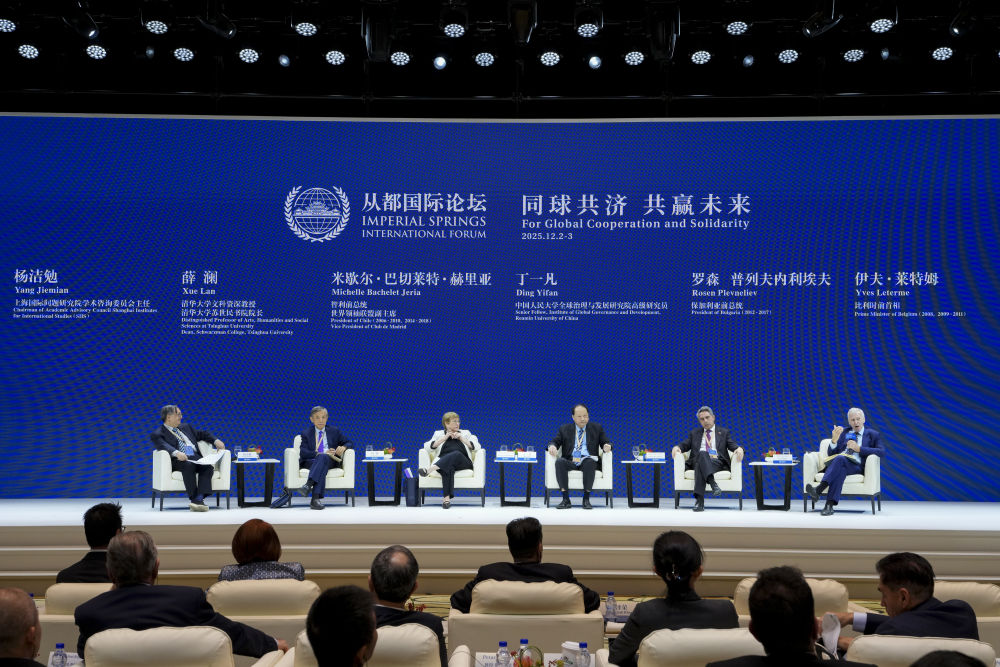
国际观察丨“2025从都国际论坛”汇聚共赢发展的时代强音
Bei Jing Ri Bao Ke Hu Duan· 2025-12-10 10:03
Group 1 - The forum emphasized the need for dialogue over confrontation and cooperation over zero-sum approaches to address global challenges [3] - Participants highlighted the rise of unilateralism and protectionism, urging a commitment to multilateralism and free trade as essential for global development [2][4] - The forum discussed China's global initiatives, which are seen as contributing to international consensus and promoting fair global governance [4][5] Group 2 - Former leaders acknowledged China's modernization as a valuable experience for developing countries, providing stability and certainty to the global economy [6][7] - The forum participants noted that China's economic growth is crucial for global development, with expectations for continued high-quality growth during the 14th Five-Year Plan [7]
扩大高水平对外开放 大力提振消费(权威访谈·学习贯彻党的二十届四中全会精神)——访商务部党组书记、部长王文涛
Ren Min Ri Bao· 2025-12-06 03:39
Core Viewpoint - The "14th Five-Year Plan" emphasizes the importance of a strong domestic market and high-level opening-up as strategic foundations for China's modernization, highlighting the necessity of open cooperation and mutual benefits in this process [1][2]. Group 1: High-Level Opening-Up - The "14th Five-Year Plan" outlines a dedicated chapter on expanding high-level opening-up, reflecting the central government's commitment to open cooperation and signaling China's intent to lead rather than follow in global trade [2]. - High-level opening-up is seen as a crucial tool for promoting reform and development, with China maintaining its position as the world's largest goods trader for eight consecutive years and achieving over $1 trillion in service trade [2][3]. - The plan aims to enhance the synergy between domestic and international markets, fostering both qualitative improvements and reasonable quantitative growth in the economy [2]. Group 2: Key Tasks for High-Level Opening-Up - The plan identifies four main tasks for expanding high-level opening-up, including strengthening party leadership in open work, enhancing the level of openness, and expanding the development space for Chinese-style modernization [4]. - The first task is to actively expand autonomous opening, focusing on aligning with international high-standard trade rules and increasing market access, particularly in the service sector [4]. - The second task involves promoting trade innovation, optimizing goods trade, and developing service trade while enhancing digital trade and cross-border e-commerce [5]. - The third task is to expand bilateral investment cooperation, improving the investment environment and ensuring transparency and stability for foreign investors [5]. - The fourth task emphasizes high-quality co-construction of the "Belt and Road" initiative, enhancing cooperation with partner countries in various sectors [6]. Group 3: Domestic Demand and Consumption - The plan stresses the importance of expanding domestic demand as a strategic foundation, leveraging China's large population and growing middle-income group to stimulate consumption [7]. - It highlights that consumption contributed approximately 60% to economic growth during the "14th Five-Year" period, with a focus on enhancing the quality of consumer goods and services [7][8]. - The plan outlines specific actions to boost service consumption, including relaxing market access and promoting new growth areas such as tourism and sports events [8]. - It also aims to upgrade goods consumption by implementing policies that directly benefit consumers and promoting durable goods and green consumption [9].
扩大高水平对外开放 大力提振消费(权威访谈·学习贯彻党的二十届四中全会精神)
Ren Min Ri Bao· 2025-12-05 23:39
Core Viewpoint - The "14th Five-Year Plan" emphasizes the importance of a strong domestic market and high-level opening-up as strategic foundations for China's modernization, highlighting the need for open cooperation and mutual benefits [1][2]. Group 1: High-Level Opening-Up - The "14th Five-Year Plan" includes a dedicated section on expanding high-level opening-up, reflecting the central government's commitment to open cooperation and mutual benefits [2]. - High-level opening-up is seen as a crucial tool for promoting reform and development, with China maintaining its position as the world's largest goods trader for eight consecutive years and achieving over $1 trillion in service trade [2][3]. - The plan aims to enhance the synergy between domestic and international markets, promoting qualitative improvements and reasonable growth in the economy [2]. Group 2: Key Tasks for High-Level Opening-Up - The plan outlines four main tasks for expanding high-level opening-up, including strengthening party leadership, promoting autonomous opening, and actively engaging in international trade agreements [4]. - Emphasis is placed on trade innovation, including optimizing goods trade, expanding service trade, and developing digital trade to enhance trade digitalization [5]. - The plan also focuses on expanding investment cooperation, improving the investment environment, and promoting the integration of trade and investment [5]. Group 3: Domestic Demand and Consumption - The "14th Five-Year Plan" stresses the importance of expanding domestic demand, leveraging China's large market size and growing middle-income population to boost consumption [7]. - The plan aims to enhance service consumption by relaxing market access and promoting new growth areas such as tourism and sports events [8]. - Efforts will be made to upgrade goods consumption, including promoting durable goods and supporting the consumption of domestic and international quality products [9]. Group 4: Innovation in Consumption Scenarios - The plan encourages the creation of new consumption scenarios by establishing management methods that adapt to new business models and consumer behaviors [9]. - It aims to cultivate international consumption centers and enhance the integration of commerce, tourism, and culture to create diverse consumption experiences [9].