
大力提振消费

Search documents
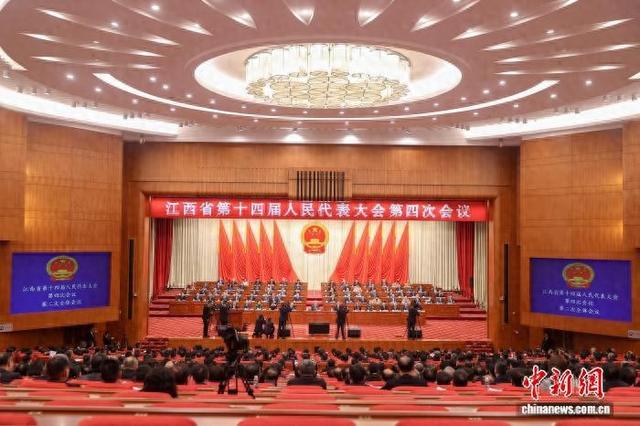
2025年江西制定修改地方性法规18件、废止3件
Xin Lang Cai Jing· 2026-01-29 13:35
Group 1 - In 2025, Jiangxi plans to introduce a series of legislative achievements characterized by contemporary features, local characteristics, and practical traits, including the formulation and amendment of 18 local regulations and the repeal of 3, along with the approval of 20 regulations and decisions by municipal governments [1][3] - The Jiangxi Provincial People's Congress aims to enhance legislative quality by exploring "small, quick, and flexible" legislative paths and expanding public participation in legislation, collecting nearly 800 suggestions from the public regarding the electric bicycle fire safety management regulations [3] - The Jiangxi Provincial People's Congress will conduct 26 hearings and reviews of relevant reports, one special inquiry, and one satisfaction survey in 2025, while also checking the implementation of 2 laws and regulations, demonstrating a commitment to effective supervision [3] Group 2 - In 2025, the Jiangxi Provincial People's Congress will focus on boosting consumption by organizing 128 representatives to engage with 506 entrepreneurs and consumers across 11 cities and 80 counties, gathering 163 opinions to enhance the consumer market [4] - The Jiangxi Provincial People's Congress emphasizes the importance of its work in 2026, pledging to uphold the leadership of the Communist Party, improve local legislative quality, enhance the effectiveness of supervision, and fully leverage the role of representatives [4]

余蔚平:大力提振消费的战略意义和实践要求
Xin Lang Cai Jing· 2026-01-26 00:25
Core Viewpoint - The Chinese government emphasizes the importance of boosting consumption as a key driver for economic growth and stability, with strategic plans to enhance domestic demand and consumer spending [1][2][4]. Group 1: Strategic Importance of Consumption - Consumption is identified as the foundation of the national economy and a crucial engine for economic growth, with ongoing efforts to enhance its role [2][3]. - The government aims to establish a robust domestic market by prioritizing domestic demand and consumption, reflecting a strategic shift in economic policy [1][4]. Group 2: Economic Development Trends - As China transitions towards a high-income economy, the role of consumption in driving economic growth is expected to increase significantly, especially as investment returns diminish [3][4]. - The current economic environment necessitates a shift from reliance on investment and exports to a focus on domestic consumption, which is seen as essential for sustainable growth [4][5]. Group 3: Consumer Market Potential - China's consumer market is projected to reach 48.3 trillion yuan in retail sales by 2024, with expectations to exceed 50 trillion yuan by 2025, solidifying its position as the world's second-largest consumer market [7]. - The contribution of domestic demand to economic growth is anticipated to surpass 67% by 2025, with consumption alone accounting for 52% [7]. Group 4: Consumption Structure and Trends - The current consumer spending rate in China is approximately 40%, indicating significant room for growth compared to developed nations, where the rate is 10-20 percentage points higher [8]. - The ongoing urbanization and income growth are expected to further enhance consumer spending capacity, with projections indicating a steady increase in disposable income [9][10]. Group 5: Policy Recommendations for Consumption Growth - The government plans to implement targeted actions to stimulate consumption, focusing on increasing residents' income and improving social security systems to enhance consumer confidence [11][12]. - Expanding the supply of quality goods and services is crucial to meet diverse consumer needs, with initiatives aimed at fostering new consumption patterns and enhancing market environments [14][15].
大力提振消费的战略意义和实践要求
Ren Min Ri Bao· 2026-01-26 00:12
Core Viewpoint - The Chinese government emphasizes the importance of boosting consumption as a key driver for economic growth and stability, with strategic plans to enhance domestic demand and consumer spending [1][2][4]. Group 1: Strategic Importance of Consumption - Consumption is identified as the foundation of the national economy and a crucial engine for economic growth, with ongoing emphasis from the central government on its role [2][4]. - The government aims to establish a robust domestic market by prioritizing domestic demand and enhancing consumer spending as part of its economic strategy [1][2][4]. Group 2: Economic Development and Consumption Trends - As China transitions towards a high-income economy, the shift from investment-driven growth to consumption-driven growth is seen as a natural progression, supported by a large domestic market [3][4]. - The potential for consumption growth remains significant, with current consumer spending levels lower than those in developed countries, indicating room for expansion [8][9]. Group 3: Factors Supporting Consumption Growth - Rising household incomes and the expansion of the middle-income group are expected to drive consumption upgrades, with average disposable income projected to grow by 5.4% annually during the 14th Five-Year Plan [9][10]. - Urbanization efforts are anticipated to further enhance consumption, with estimates suggesting that a 1% increase in urbanization could generate over 200 billion yuan in additional consumer demand [9]. Group 4: Consumption Structure and Quality Upgrades - The consumption structure is shifting towards higher quality and service-oriented products, with significant growth expected in sectors such as healthcare and digital services [10]. - The rise of new consumption patterns, including digital and green consumption, is expected to create new market opportunities, with e-commerce continuing to thrive [10]. Group 5: Policy Measures to Stimulate Consumption - The government plans to implement targeted actions to boost consumption, focusing on enhancing residents' income, improving social security systems, and expanding the supply of quality goods and services [11][12][14]. - A comprehensive policy framework is being developed to support consumption, including fiscal measures, financial incentives, and regulatory improvements to create a favorable environment for consumer spending [15].
释放消费潜力活力 以高水平开放赢得战略主动
Xin Lang Cai Jing· 2026-01-15 18:26
Group 1: Core Insights - The "14th Five-Year Plan" emphasizes the importance of building a strong domestic market and expanding high-level opening-up, with specific measures to boost consumption and promote trade innovation [1][2] - The Ministry of Commerce aims to achieve a steady growth in the consumption market, projecting a retail sales total of over 50 trillion yuan for the year, with a 4.0% increase in the first eleven months [2][3] Group 2: Consumption Strategies - Focus on cultivating service consumption and optimizing the old-for-new policy for consumer goods, with an emphasis on green and smart products [3][4] - The strategy includes enhancing service consumption in key areas such as transportation, home services, and entertainment, while also promoting local consumption through events like "Service Consumption Season" [3][4] Group 3: Trade Innovation - The Ministry of Commerce identifies three pillars for trade development: goods trade, service trade, and digital trade, aiming to stabilize foreign trade amidst global economic challenges [5][6] - Emphasis on diversifying trade markets and balancing trade development, with initiatives to enhance import trade and support cross-border e-commerce [6][7] Group 4: High-Level Opening-Up - The Ministry plans to expand autonomous opening-up in various service sectors and implement zero-tariff measures for all trading partners in Africa [8][9] - Focus on enhancing the global supply chain and participating in global economic governance through significant events like APEC and WTO meetings [9][10]
中国社会科学院学部委员高培勇:确保高质量发展取得显著成效有两大支点
Shang Hai Zheng Quan Bao· 2025-12-09 00:19
Core Viewpoint - The key to ensuring significant achievements in high-quality development during the "15th Five-Year Plan" period lies in two main supports: boosting consumption and expanding effective investment [1][2]. Group 1: Economic Growth and Development Goals - The environment for development during the "15th Five-Year Plan" is increasingly complex, with a target for per capita GDP to reach between $25,000 and $26,000 by 2035, requiring it to double from approximately $13,500 in 2024 [1][2]. - The reasonable range for economic growth over the next five years is projected to be between 4.5% and 5.5%, with a target of around 5% for the "15th Five-Year Plan" [2]. Group 2: Challenges and Consumer Confidence - Current challenges to achieving high-quality development include insufficient effective demand and significant pressure on employment and income growth [2]. - Weak expectations are identified as the root cause of insufficient domestic demand, which in turn affects consumption levels [2]. Group 3: Policy and Reform Recommendations - To boost consumption, policies should focus on releasing current consumption potential through adjustments in fiscal subsidies and loan interest [3]. - Deepening reforms is necessary to enhance long-term consumption capacity, including tax reforms that align with personal income and social equity [3]. Group 4: Investment and Business Environment - Expanding effective investment should not merely focus on increasing investment volume but should strategically develop new productive forces and improve the business environment [3][4]. - The business environment significantly influences the scale and structure of investments, thus optimizing it is essential for enhancing investment confidence among entrepreneurs [4].
扩大高水平对外开放 大力提振消费(权威访谈·学习贯彻党的二十届四中全会精神)——访商务部党组书记、部长王文涛
Ren Min Ri Bao· 2025-12-06 03:39
Core Viewpoint - The "14th Five-Year Plan" emphasizes the importance of a strong domestic market and high-level opening-up as strategic foundations for China's modernization, highlighting the necessity of open cooperation and mutual benefits in this process [1][2]. Group 1: High-Level Opening-Up - The "14th Five-Year Plan" outlines a dedicated chapter on expanding high-level opening-up, reflecting the central government's commitment to open cooperation and signaling China's intent to lead rather than follow in global trade [2]. - High-level opening-up is seen as a crucial tool for promoting reform and development, with China maintaining its position as the world's largest goods trader for eight consecutive years and achieving over $1 trillion in service trade [2][3]. - The plan aims to enhance the synergy between domestic and international markets, fostering both qualitative improvements and reasonable quantitative growth in the economy [2]. Group 2: Key Tasks for High-Level Opening-Up - The plan identifies four main tasks for expanding high-level opening-up, including strengthening party leadership in open work, enhancing the level of openness, and expanding the development space for Chinese-style modernization [4]. - The first task is to actively expand autonomous opening, focusing on aligning with international high-standard trade rules and increasing market access, particularly in the service sector [4]. - The second task involves promoting trade innovation, optimizing goods trade, and developing service trade while enhancing digital trade and cross-border e-commerce [5]. - The third task is to expand bilateral investment cooperation, improving the investment environment and ensuring transparency and stability for foreign investors [5]. - The fourth task emphasizes high-quality co-construction of the "Belt and Road" initiative, enhancing cooperation with partner countries in various sectors [6]. Group 3: Domestic Demand and Consumption - The plan stresses the importance of expanding domestic demand as a strategic foundation, leveraging China's large population and growing middle-income group to stimulate consumption [7]. - It highlights that consumption contributed approximately 60% to economic growth during the "14th Five-Year" period, with a focus on enhancing the quality of consumer goods and services [7][8]. - The plan outlines specific actions to boost service consumption, including relaxing market access and promoting new growth areas such as tourism and sports events [8]. - It also aims to upgrade goods consumption by implementing policies that directly benefit consumers and promoting durable goods and green consumption [9].
扩大高水平对外开放 大力提振消费——访商务部党组书记、部长王文涛(权威访谈·学习贯彻党的二十届四中全会精神)
Ren Min Ri Bao· 2025-12-05 22:53
Core Viewpoint - The "14th Five-Year Plan" emphasizes the importance of a strong domestic market and high-level opening-up as strategic foundations for China's modernization, highlighting the need for cooperation and mutual benefits in international relations [1][2]. Group 1: High-Level Opening-Up - The "14th Five-Year Plan" proposes a dedicated chapter on expanding high-level opening-up, reflecting the central government's commitment to open cooperation and mutual benefits [2]. - The period of the "14th Five-Year Plan" is crucial for achieving socialist modernization, with high-level opening-up serving as a key tool for reform and development [2]. - China has maintained its position as the world's largest goods trader for eight consecutive years, with service trade exceeding $1 trillion and foreign investment goals for the "14th Five-Year Plan" achieved six months ahead of schedule [2][3]. Group 2: International Trade and Investment - China is a major trading partner for over 150 countries and regions, with imports and exports exceeding $15 trillion during the "14th Five-Year Plan" period, contributing over $300 billion in taxes to host countries [3]. - Despite rising unilateralism and protectionism, economic globalization remains a historical trend, with China signing 24 free trade agreements with 31 countries and regions [3]. - The government aims to enhance trade innovation, optimize goods trade, and promote service trade, including digital trade and cross-border e-commerce [5]. Group 3: Domestic Consumption - The "14th Five-Year Plan" emphasizes expanding domestic demand as a strategic foundation, leveraging China's large population and growing middle-income group to boost consumption [7]. - The contribution of consumption to economic growth has averaged 60% annually, with a focus on enhancing service and goods consumption [7][8]. - Initiatives will be implemented to promote service consumption, upgrade goods consumption, and innovate consumption scenarios to meet diverse consumer needs [8][9]. Group 4: Belt and Road Initiative - The Belt and Road Initiative is framed as a collaborative effort, focusing on strategic alignment with partner countries and promoting both large-scale and small-scale projects [6]. - The initiative aims to deepen cooperation in trade, investment, and industry while expanding collaboration in green, digital, and AI sectors [6].
贯彻落实党的二十届四中全会精神权威访谈|扩大高水平对外开放 加快建设强大国内市场——访商务部党组书记、部长王文涛
Xin Hua She· 2025-12-05 11:09
Core Viewpoint - The article discusses the key strategies outlined in the "Suggestions for Formulating the 15th Five-Year Plan for National Economic and Social Development," emphasizing the importance of expanding high-level opening-up and boosting domestic consumption as essential components for achieving modernization in China [1]. Group 1: Importance of High-Level Opening-Up - Expanding high-level opening-up is a strong driving force for promoting high-quality development during the 15th Five-Year period, as it helps leverage both domestic and international markets and resources [2]. - High-level opening-up is an inherent requirement to meet the people's needs for a better life, with nearly 700,000 foreign trade enterprises and around 500,000 foreign-funded enterprises contributing to employment and consumption upgrades [3]. - It is a proactive measure to promote economic globalization, countering unilateralism and protectionism while enhancing international cooperation in supply chains [4]. Group 2: Key Tasks for High-Level Opening-Up - The plan outlines four main tasks for expanding high-level opening-up, including actively expanding autonomous opening, enhancing trade innovation, expanding bilateral investment cooperation, and high-quality co-building of the Belt and Road Initiative [5][6][7][8]. - Emphasis is placed on aligning with international high-standard trade rules, particularly in the service sector, and expanding market access [5]. - The strategy includes optimizing trade structures, promoting digital trade, and enhancing the balance of imports and exports to meet both industrial and consumer needs [7]. Group 3: Boosting Domestic Consumption - The plan highlights the need to strengthen the domestic market as a strategic foundation for modernization, with a focus on boosting consumption to leverage the large population and growing middle-income group [9]. - Specific actions include expanding service consumption, promoting goods consumption upgrades, and innovating consumption scenarios to adapt to new consumer behaviors [10][11]. - The government aims to implement policies that enhance consumer experiences and stimulate demand across various sectors, including durable goods and services [10].
扩大高水平对外开放 加快建设强大国内市场——访商务部党组书记、部长王文涛
Xin Hua She· 2025-12-05 10:15
Core Viewpoint - The article discusses the key strategies outlined in the "Suggestions for Formulating the 15th Five-Year Plan for National Economic and Social Development," emphasizing the importance of expanding high-level opening-up and building a strong domestic market as essential components for China's modernization and economic growth [1]. Group 1: Importance of High-Level Opening-Up - Expanding high-level opening-up is a strong driving force for promoting high-quality development, especially during the critical "15th Five-Year" period, which faces both strategic opportunities and challenges [2]. - High-level opening-up is an inherent requirement to meet the people's needs for a better life, with nearly 700,000 foreign trade enterprises and around 500,000 foreign-funded enterprises contributing to employment and consumption upgrades [3]. - It is also a proactive measure to promote economic globalization, countering rising protectionism and unilateralism while maintaining multilateralism and free trade [4]. Group 2: Key Tasks for High-Level Opening-Up - The "Suggestions" outline four main tasks for expanding high-level opening-up, including strengthening party leadership, enhancing openness levels, and expanding the development space for Chinese-style modernization [5]. - The first task is to actively expand autonomous opening-up by aligning with international high-standard trade rules and increasing market access, particularly in the service sector [5][6]. - The second task focuses on promoting trade innovation and development, enhancing goods, services, and digital trade, and balancing import and export growth [7]. - The third task involves expanding bilateral and multilateral investment cooperation, improving the investment environment, and ensuring foreign investments are welcomed and retained [7]. - The fourth task emphasizes high-quality co-construction of the "Belt and Road" initiative, enhancing cooperation in trade, investment, and cultural exchanges with partner countries [8]. Group 3: Strengthening Domestic Market and Consumption - The "Suggestions" highlight the importance of a strong domestic market as a strategic foundation for modernization, with a focus on boosting consumption [9]. - The plan aims to expand service consumption by relaxing access restrictions and promoting new growth points in sectors like tourism and sports [10]. - It also seeks to upgrade goods consumption through policies that directly benefit consumers, promoting durable goods and supporting domestic brands [10]. - Finally, the initiative includes innovating consumption scenarios by establishing management methods for new consumption models and fostering international consumption centers [11].
贯彻落实党的二十届四中全会精神权威访谈丨扩大高水平对外开放 加快建设强大国内市场——访商务部党组书记、部长王文涛
Xin Hua Wang· 2025-12-05 10:04
Core Viewpoint - The article emphasizes the importance of expanding high-level opening-up and accelerating the construction of a strong domestic market as outlined in the 15th Five-Year Plan proposal, highlighting specific measures such as actively expanding autonomous opening and significantly boosting consumption [1]. Group 1: Importance of High-Level Opening-Up - Expanding high-level opening-up is a strong driving force for promoting high-quality development, especially during the critical period of the 15th Five-Year Plan, which faces both strategic opportunities and challenges [2]. - It is an inherent requirement to meet the people's needs for a better life, with nearly 700,000 foreign trade enterprises and about 500,000 foreign-funded enterprises expected to contribute to employment and consumption upgrades [3]. - High-level opening-up is a proactive measure to promote economic globalization, countering unilateralism and protectionism while maintaining multilateralism and free trade [4]. Group 2: Key Tasks for High-Level Opening-Up - The proposal outlines four key tasks for the 15th Five-Year Plan period, including actively expanding autonomous opening by aligning with international high-standard trade rules and focusing on service sector market access [5]. - Promoting trade innovation development by enhancing goods, services, and digital trade, while also balancing imports and exports to meet both industrial and consumer needs [7]. - Expanding bilateral investment cooperation by creating a transparent and stable environment for foreign investment and enhancing overseas investment management [6]. Group 3: Strengthening Domestic Market and Consumption - The proposal stresses the strategic importance of expanding domestic demand, with a focus on boosting consumption as a key driver of economic growth, supported by a large population and a growing middle-income group [9]. - Specific measures to enhance service consumption include relaxing access restrictions and promoting new growth areas such as tourism and sports events [10]. - Efforts to upgrade goods consumption will involve implementing policies to increase consumer access to quality products and promoting durable goods consumption [11].