
农业科技创新

Search documents
集聚农业领域科技力量 北京平谷打造农业强国的首都窗口
Zhong Guo Xin Wen Wang· 2025-11-11 09:08
中关村科 中新网北京11月11日电 (记者 徐婧)过去五年,北京市平谷区地区生产总值年均增长8.2%,总量跃居北 京生态涵养区首位,年均增速居全市第一。根据国家统计局公布的乡村振兴统计监测指数,平谷连续两 年居首都生态涵养区首位,今年排名全国第58位,较去年又上升20位。 北京市平谷区委副书记、区长狄涛在11日举行的新闻发布会上介绍,平谷区奋力将承载着悠久农耕记忆 的土地,打造成为展示农业强国建设的首都窗口,为中国式现代化北京篇章贡献平谷力量。 推进农业中关村核心区建设 平谷区肩负着农业中关村主阵地的使命,承担着服务国家农业科技自立自强的责任。过去五年,该区在 种业核心技术攻关上取得丰硕成果,国产种鸡、种蛋首次实现出口"零的突破",沃德系列白羽肉鸡填补 国内空白。中国农业科学院蔬菜生物育种全国重点实验室、中国中医科学院道地药材全国重点实验室等 国家科技力量相继落户,国家农业科技创新港落地生根、启动建设,加快形成农业科技创新突破的"集 群效应"。 技园区平谷园。平谷区供图 下一步,该区将全面推进农业中关村核心区建设,加快打造国家农业科技创新港,一期11个项目计划于 2028年全面建成投用。国家农业科技创新港二期 ...

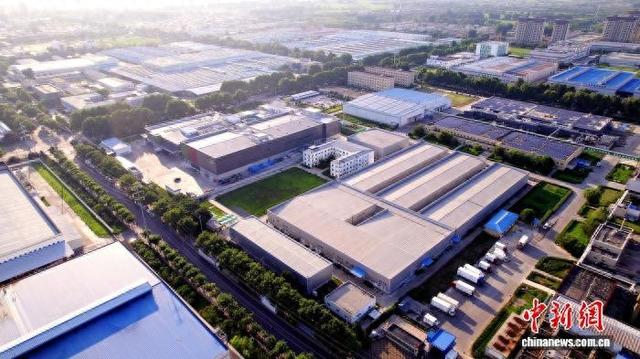
平谷加快打造国家农业科技创新港,将成为农业科技突破策源地
Xin Jing Bao· 2025-11-11 07:42
Core Insights - The event "One Leader Release · Jinghua Tour" highlighted the development of Pinggu District as a key agricultural innovation hub in Beijing, focusing on the establishment of the National Agricultural Science and Technology Innovation Port [1][2] Group 1: Agricultural Development Initiatives - Pinggu is advancing the construction of the National Agricultural Science and Technology Innovation Port, with Phase I consisting of 11 projects expected to be operational by 2028 [2][3] - The district has achieved an average GDP growth of 8.2% over the past five years, ranking first in the capital's ecological conservation area [2][3] - Pinggu has made significant strides in agricultural technology, including the development of the DNA chip "Fengxin No. 1" and the first export of domestic breeding chickens and eggs [2][3] Group 2: Infrastructure and Investment - Fixed asset investment in Pinggu has consistently ranked among the top in the city, with a notable milestone of surpassing 10 billion in the first half of this year [2][3] - The district is set to establish the largest logistics and warehousing cluster in the city, with a high-standard warehouse area expected to reach 3.1 million square meters by the end of the year [3] Group 3: Talent Development and Education - Pinggu is launching initiatives to support talent development, including the "Pinggu Talent Ten Measures" and plans for a "Thousand People Hundred Villages" summer practice program [4] - The National Agricultural Science and Technology Innovation Port School is scheduled to begin construction by the end of this year, aiming to enhance educational resources in the region [4]
以教育科技人才一体化发展推动农业现代化(专题深思)
Ren Min Ri Bao· 2025-11-09 22:20
Core Viewpoint - The modernization of agriculture is essential for the overall modernization of China, emphasizing the importance of technology and talent in achieving agricultural strength [1][2][3]. Group 1: Agricultural Modernization - Agricultural modernization is a fundamental requirement for high-quality development, with a focus on integrating new technologies into traditional agricultural practices [1][2]. - The Chinese government has made significant achievements in agricultural technology, particularly in key areas such as seeds, arable land, and agricultural machinery [2][3]. - Despite advancements, there remains a gap between China's agricultural technology progress and the world's leading levels, indicating areas for improvement [2]. Group 2: Education, Technology, and Talent - Education, technology, and talent are the core elements for accelerating the construction of a strong agricultural nation [3][4]. - A unified approach to education, technology, and talent development is necessary to overcome systemic barriers and enhance agricultural innovation [3]. - Higher education institutions play a crucial role in integrating education, technology, and talent to support agricultural modernization [4]. Group 3: Technological Innovation - The path to agricultural modernization requires a focus on technological self-reliance and innovation, addressing challenges in agricultural technology and key components [5][6]. - Collaborative efforts among universities, research institutions, and enterprises are essential to foster innovation and achieve breakthroughs in agricultural technology [5]. - Establishing platforms for the transformation of agricultural technology achievements is vital for promoting industrialization and collaboration across the agricultural sector [5]. Group 4: Talent Development - Talent is a dynamic factor in building a strong agricultural nation, necessitating the cultivation of skilled individuals who understand technology and management [6][7]. - A flexible talent recruitment mechanism is needed to attract and retain agricultural professionals, particularly in strategic scientific roles [6]. - Encouraging the return of skilled individuals to rural areas can invigorate local agricultural development and contribute to comprehensive rural revitalization [7].
农业企业科技创新主体地位强化 “十四五”以来,重大项目企业参与比例为50%左右
Ren Min Ri Bao· 2025-11-08 05:52
Core Insights - The Ministry of Agriculture and Rural Affairs held a conference in Wuhan to promote the cultivation of leading agricultural technology enterprises and enhance the role of these enterprises in technological innovation [1] Group 1: Policy and Initiatives - Multiple policy measures have been introduced this year to foster leading agricultural technology enterprises and improve the overall effectiveness of the agricultural technology innovation system [1] - The newly launched Agricultural Technology Leading Enterprises Cultivation Database has included over 2,600 agricultural technology companies [1] - A number of innovation consortia led by these leading enterprises have been established nationwide to strengthen the deep integration of production, education, and research [1] Group 2: Industry Performance - Since the beginning of the 14th Five-Year Plan, approximately 50% of major agricultural technology projects have involved enterprise participation [1] - The comprehensive mechanization rate for crop planting and harvesting has surpassed 75%, while the coverage rate of quality seeds remains stable at over 96% [1] - The contribution rate of agricultural technology progress has risen to 63.2%, positioning the overall agricultural technology innovation in the world's leading group [1]
农业企业科技创新主体地位强化
Ren Min Ri Bao· 2025-11-07 22:00
Core Viewpoint - The Ministry of Agriculture and Rural Affairs is actively promoting the cultivation of leading agricultural technology enterprises and enhancing the role of these enterprises in technological innovation [1] Group 1: Policy Initiatives - Multiple policy measures have been introduced this year to strengthen leading agricultural technology enterprises and improve the overall effectiveness of the agricultural technology innovation system [1] - The newly launched Agricultural Technology Leading Enterprises Cultivation Database has already included over 2,600 agricultural technology companies [1] Group 2: Industry Collaboration - A number of innovation consortia led by leading technology enterprises have been established nationwide to enhance the deep integration of production, education, and research [1] - Since the beginning of the 14th Five-Year Plan, the participation rate of enterprises in major agricultural technology projects has been around 50% [1] Group 3: Technological Advancements - The comprehensive mechanization rate for crop planting and harvesting has surpassed 75% [1] - The coverage rate of quality crop seeds remains stable at over 96% [1] - The contribution rate of agricultural technology progress has risen to 63.2%, positioning China's agricultural technology innovation among the world's top ranks [1]
农业企业科技创新主体地位强化 “十四五”以来 重大项目企业参与比例为50%左右
Ren Min Ri Bao· 2025-11-07 21:59
Core Viewpoint - The Ministry of Agriculture and Rural Affairs is actively promoting the cultivation of leading agricultural technology enterprises and enhancing the role of these enterprises in technological innovation [1] Group 1: Policy Initiatives - Multiple policy measures have been introduced this year to foster and expand leading agricultural technology enterprises and improve the overall effectiveness of the agricultural technology innovation system [1] - The newly launched Agricultural Technology Leading Enterprise Cultivation Database has already included over 2,600 agricultural technology companies [1] Group 2: Industry Collaboration - A number of innovation consortia led by leading technology enterprises have been established nationwide to strengthen the deep integration of production, education, and research [1] - Since the beginning of the 14th Five-Year Plan, the participation rate of enterprises in major agricultural technology projects has been around 50% [1] Group 3: Technological Advancements - The comprehensive mechanization rate for crop planting and harvesting has surpassed 75% [1] - The coverage rate of quality crop seeds remains stable at over 96% [1] - The contribution rate of agricultural technology progress has risen to 63.2%, positioning the overall agricultural technology innovation in the world's leading group [1]
农业农村部:把培育壮大农业科技领军企业放在突出位置
Xin Hua She· 2025-11-07 11:13
Core Viewpoint - The Chinese Ministry of Agriculture and Rural Affairs emphasizes the importance of cultivating leading agricultural technology enterprises and implementing supportive policies to enhance innovation and productivity in the agricultural sector [1][2] Group 1: Policy and Support Measures - The Ministry plans to develop a series of supportive policies to assist agricultural technology enterprises in overcoming challenges and achieving practical results [1] - There is a focus on creating a gradient cultivation mechanism for leading agricultural technology enterprises and establishing a regular service mechanism for enterprise support [2] Group 2: Innovation and Collaboration - The initiative aims to deepen the integration of agricultural enterprises with research institutions, fostering the creation of agricultural technology innovation alliances and joint research institutes [2] - The strategy includes encouraging enterprises to take a leading role in agricultural technology innovation and participate more actively in national agricultural technology projects [2] Group 3: Financial Support - Strengthening financial services for agricultural technology enterprises is a priority, with plans to establish mechanisms for financing and support to create a conducive environment for high-quality development [2]
关于培育农业科技领军企业,这场现场会指明新思路
Nan Fang Nong Cun Bao· 2025-11-07 00:35
Core Viewpoint - The meeting emphasizes the importance of cultivating leading agricultural technology enterprises to enhance innovation and support the goal of achieving high-level agricultural self-reliance and strength in China [4][7][9]. Group 1: Meeting Objectives and Importance - The Ministry of Agriculture and Rural Affairs is focusing on strengthening the role of agricultural enterprises in technological innovation [4][6]. - The meeting aligns with the directives from the 20th National Congress of the Communist Party of China, highlighting the need for high-level technological self-reliance [5][9]. - Cultivating leading agricultural technology enterprises is identified as a major task to break through key core technologies [10][16]. Group 2: Strategies for Cultivation - The meeting calls for innovative institutional mechanisms and increased support for the "Hundred Million" agricultural technology enterprise cultivation project [17][18]. - A gradient cultivation mechanism for leading agricultural technology enterprises will be established, focusing on tailored support for different types of enterprises [20][21]. - The integration of agricultural enterprises with research institutions is encouraged to foster innovation alliances and collaborative research [23][24]. Group 3: Financial and Policy Support - The meeting stresses the need for improved financial services for agricultural technology enterprises, including establishing financing mechanisms that align with their lifecycle needs [28][30]. - Local agricultural departments are urged to prioritize the cultivation of leading agricultural technology enterprises and develop supportive policies [29][31]. - Strengthening intellectual property protection for agricultural innovations is highlighted as essential for safeguarding the rights of innovative entities [32].

九十年耕耘,广西农科院挺起八桂农业创新“脊梁”
Ke Ji Ri Bao· 2025-11-06 04:58
Core Insights - The Guangxi Academy of Agricultural Sciences celebrated its 90th anniversary, highlighting its evolution from a small agricultural testing site to a leading agricultural research institution in China, focusing on food security and specialty crops [1][2] Group 1: Achievements and Contributions - The academy has developed key agricultural technologies and high-quality crop varieties, significantly contributing to the agricultural innovation in Guangxi, which is crucial for local farmers' income [1][2] - Notably, Guangxi produces two-thirds of China's sugar, with the academy responsible for developing two generations of the main sugarcane varieties since the establishment of New China, including "Guitang 11," which occupies 50% of the national planting area [1][2] - The academy has introduced numerous successful crop varieties, including "Guizhou 99" rice and "Guizhou 6" banana, with over 856 varieties recognized at provincial levels and 1,280 patents granted since 1978 [2] Group 2: Technological Innovations - The academy has pioneered various agricultural techniques, such as the "two migrations" pest warning system for rice, and efficient sugarcane cultivation methods, enhancing productivity and sustainability in agriculture [2] - It has established 1,334 technology demonstration sites and provided services to 2,381 agricultural enterprises and cooperatives, emphasizing the practical application of research outcomes [2] Group 3: Future Directions - The academy aims to continue leading agricultural technology innovation in Guangxi, contributing to national food security and rural revitalization, as well as supporting the Belt and Road Initiative [3]
学习贯彻中共二十届四中全会精神
Ren Min Ri Bao· 2025-11-06 01:25
Group 1 - The core viewpoint emphasizes the importance of high-quality development as a response to the rapidly changing external environment, aiming to advance national strength and rejuvenation [1][2] - The focus is on implementing a comprehensive new development concept and proactive macro policies to boost effective demand and promote a unified national market [1] - There is a strategic emphasis on enhancing new quality productivity, particularly through the integration of artificial intelligence and fostering innovation within enterprises [1] Group 2 - Recommendations include strengthening legal protections for service consumption and optimizing policies to support various service sectors [3][4] - The proposal suggests innovating service consumption scenarios and platforms to align with digital, green, and quality development trends [3] Group 3 - The need for educational reform is highlighted, focusing on a system that integrates general and vocational education to better prepare students for diverse career paths [6][7] - A multi-faceted talent selection mechanism is proposed to enhance fairness and accessibility in education [6] Group 4 - The importance of advancing a unified national market is underscored, with a focus on property rights protection and the cultivation of new quality productivity [8][9] - The activation of data elements is seen as crucial for unleashing the potential of the digital economy [8] Group 5 - Cultural innovation and integration are emphasized, with recommendations for reforming cultural mechanisms to enhance creativity and market efficiency [10][11] - The integration of technology and culture is proposed to enrich cultural offerings and create new consumption scenarios [10] Group 6 - The health sector's development is prioritized, with a call for a shift towards a health-centered service system and improvements in public health emergency response [12][13] - Recommendations include enhancing the distribution of quality medical resources and promoting a balanced healthcare system [12] Group 7 - Environmental quality improvement is highlighted as a key goal, with strategies for addressing climate change and enhancing ecological monitoring [14][15] - The proposal includes promoting green development to meet the evolving expectations of the populace [14] Group 8 - The integration of technology in agriculture is emphasized, with a focus on building a robust agricultural technology innovation system [25][26] - Recommendations include leveraging digital technologies for efficient agricultural management and enhancing farmer participation in technological advancements [26] Group 9 - The role of Hong Kong in facilitating domestic and international economic cycles is recognized, with suggestions for deepening integration with the mainland [27] - The proposal emphasizes the importance of Hong Kong's unique position in supporting national innovation and economic development [27] Group 10 - The need for modern governance in private enterprises is stressed, with a focus on enhancing corporate governance and social responsibility [20][21] - Recommendations include fostering a supportive ecosystem for private enterprises to thrive and contribute to high-quality development [21][22]