
房企债务重组

Search documents
房企化债样本
经济观察报· 2025-08-17 09:55
目前,出险的房企中,融创和龙光等房企的境内债重组方案获 得持有人投票通过,远洋和旭辉等房企的境外债重组方案生 效。这些房企在重组过程中的成败得失,也为其他房企进行债 务重组提供了经验和教训。 作者:田国宝 封图:本报资料库 8月13日,上交所和深交所披露了融创中国控股有限公司(01918.HK,下称"融创中国")境内债重 组最新进展:股票选项申报登记等相关工作已经完成。 2025年1月,融创中国的境内债重组方案获得持有人投票通过,为持有人提供了现金兑付、股票经 济权益、资产抵债和留债等四种选项。4月,现金兑付选项的投资人完成了兑付,8月,股票选项 完成登记。 融创中国是新一轮房企化债的先行者,其境内债重组方案和境外债重组方案均成为其他房企设计重 组方案的模板,比如,为投资人提供重组方案选项及选项的框架内容等,均首次出现在国内债务重 组中。 目前,出险的房企中,融创和龙光等房企的境内债重组方案获得持有人投票通过,远洋和旭辉等房 企的境外债重组方案生效。这些房企在重组过程中的成败得失,也为其他房企进行债务重组提供了 经验和教训。 融创样本 在房地产市场低迷的2022年上半年,融创中国首次面临境外债违约,债务规模高 ...

房企化债样本
Jing Ji Guan Cha Wang· 2025-08-17 07:04
经济观察报 记者 田国宝 8月13日,上交所和深交所披露了融创中国控股有限公司(01918.HK,下称"融创中国")境内债重组最新进展:股票选项申报登记等相关工作已经完成。 2025年1月,融创中国的境内债重组方案获得持有人投票通过,为持有人提供了现金兑付、股票经济权益、资产抵债和留债等四种选项。4月,现金兑付选项 的投资人完成了兑付,8月,股票选项完成登记。 融创中国是新一轮房企化债的先行者,其境内债重组方案和境外债重组方案均成为其他房企设计重组方案的模板,比如,为投资人提供重组方案选项及选项 的框架内容等,均首次出现在国内债务重组中。 目前,出险的房企中,融创和龙光等房企的境内债重组方案获得持有人投票通过,远洋和旭辉等房企的境外债重组方案生效。这些房企在重组过程中的成败 得失,也为其他房企进行债务重组提供了经验和教训。 这一设计基于公司基本面评估,旨在通过境外全额债转股,降低企业偿债负担,恢复经营能力。方案公告于4月,并在6月获得约75%境外债权人支持。一位 接近融创中国境外债重组人士介绍,第二轮境外债重组预计9月中旬在香港高等法院召集聆讯;10月召开债权人大会对重组方案进行投票。 模板效应 融创样本 根 ...
唉,奥园总部骨折价拍卖,曾被视为福地...
Sou Hu Cai Jing· 2025-08-15 15:27
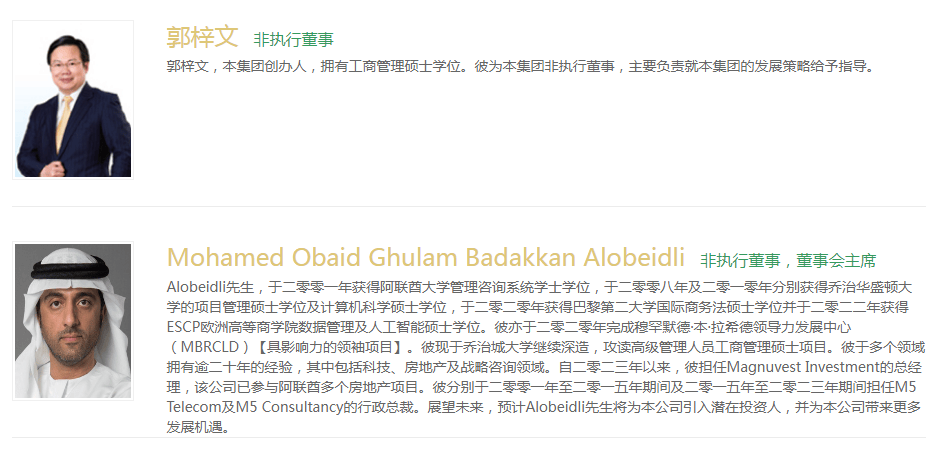
Core Viewpoint - The auction of China Aoyuan's headquarters highlights the company's ongoing financial struggles, with significant declines in property value and repeated failed auction attempts, reflecting a broader crisis in the real estate sector [1][4][15]. Group 1: Auction Details - Aoyuan's headquarters, located in Tianhe Aoyuan Building, is being auctioned on Alibaba's platform, with a starting price of approximately 85.3 million yuan for 44 properties across four floors [4][12]. - This is not the first auction for Aoyuan's headquarters; it has been listed multiple times, with the initial auction in October 2022 starting at 190 million yuan, which ultimately failed to attract bidders [13][15]. - The current starting price represents a 56% decrease compared to the previous auction price and is significantly lower than the original purchase price of 165 million yuan in 2010 [15]. Group 2: Financial Struggles - Aoyuan has been in a state of insolvency, struggling to repay financial loans, particularly to the Industrial and Commercial Bank of China in Guangzhou, leading to the auction of its headquarters [18]. - The company's debt restructuring process has been slow, with a recent announcement extending the deadline for overseas debt restructuring to September 22 [18]. - The involvement of a Middle Eastern investor has not resulted in operational improvements or additional funding for Aoyuan, indicating ongoing challenges in management and financial recovery [20]. Group 3: Industry Context - The situation of Aoyuan is reflective of a larger crisis in the Chinese real estate sector, with other major companies like Evergrande also facing severe financial difficulties, including the cancellation of its listing status due to failure to meet stock exchange requirements [22]. - The real estate market is experiencing widespread turmoil, with numerous companies struggling with debt and restructuring, indicating a systemic issue within the industry [22].
昔日千亿房企债务重组迎新进展,力争本月底前达成重组条件
Nan Fang Du Shi Bao· 2025-08-14 09:41
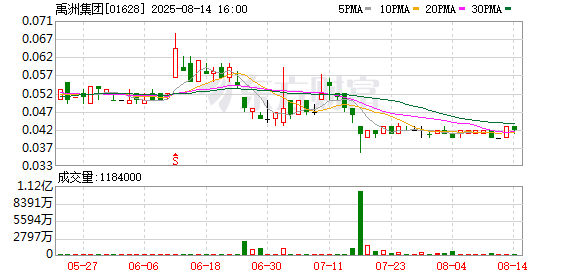
Core Viewpoint - Yuzhou Group is actively seeking consent from qualified holders to amend the covenants of its 6.0% senior notes due in 2027, aiming to optimize debt repayment arrangements and ensure financial stability post-restructuring [2][3]. Company Summary - Yuzhou Group's offshore debt restructuring process began in 2024, with creditor support obtained and restructuring plans effective from October 4, 2024. However, due to the ongoing downturn in the Chinese real estate market, the final deadline for completing the restructuring has been extended to August 31, 2025 [2][3]. - The company completed a rights issue in July 2025, raising approximately HKD 92.2 million to cover restructuring costs and supplement operational funds, marking a significant milestone in the restructuring process [2]. - As of the end of June 2024, Yuzhou Group had total assets nearing CNY 100 billion, and for the first seven months of 2025, the cumulative sales amounted to CNY 4.149 billion, with an average selling price of CNY 14,606 per square meter [3]. Industry Context - Since 2025, numerous real estate companies have reported progress in debt restructuring and corporate reorganization, including major players like Country Garden, Sunac, and Longfor. As of August 4, 2025, a total of 60 distressed real estate firms have disclosed advancements in their debt restructuring or bankruptcy reorganization efforts, indicating a new phase of risk clearance in the real estate industry [4].
专题 | 2025上半年房企债务重组进展解析
克而瑞地产研究· 2025-08-08 10:16
Core Viewpoint - The restructuring of real estate companies has entered a critical phase, with an increasing focus on debt reduction and debt-to-equity swaps becoming mainstream, facilitating risk clearance in the industry [1][3]. Group 1: Debt Restructuring Trends - As of August 4, 2025, 60 distressed real estate companies have disclosed progress in debt restructuring or bankruptcy reorganization, with 42 companies reporting restructuring, and 16 completing all or part of their debt restructuring [5][19]. - Among the 16 companies that completed restructuring, 8 received approval for their plans in 2025, indicating a significant acceleration in the pace of debt restructuring [5][19]. - Four companies have initiated bankruptcy reorganization, while five H-share companies have been ordered to liquidate [6][19]. Group 2: Debt-to-Equity Swaps - Debt-to-equity swaps are becoming a standard feature in restructuring plans, with cash buybacks, debt extensions, and debt-to-equity swaps being the primary methods employed [9][19]. - Most companies are targeting a debt reduction ratio of around 70%, and the time taken for plan approvals has decreased [9][19]. Group 3: Characteristics of Restructuring Plans - Each company's restructuring plan has unique features, with the core objective being debt reduction [15][19]. - Notable examples include Longguang's successful restructuring of 22 billion yuan in domestic debt within 20 days, and Sunac's full debt-to-equity swap for its offshore debt, aiming for a win-win situation [15][19]. - Jinke's bankruptcy reorganization is nearing completion, with 2.6 billion yuan in investment funds fully received [15][19]. Group 4: Industry Risk Clearance - The progress in debt restructuring reflects the ongoing negotiation and balance between real estate companies and their creditors, with the goal of achieving a stable market [16][18]. - The central government has introduced measures to stabilize the real estate market, which is expected to support companies in returning to normal operations post-restructuring [18].



房企寻找债务重组最大公约数化债
Zheng Quan Ri Bao· 2025-08-02 02:45
Group 1 - The core viewpoint of the articles highlights that debt restructuring for real estate companies is accelerating, with 14 companies having received approval for debt restructuring or reorganization as of now, marking a critical step in resolving debt risks [1] - Analysts believe that effectively promoting debt restructuring is not only a necessary means for corporate relief but also a key path to mitigate current industry risks [1][3] - The threshold for debt restructuring is high, with less than 30% of over 50 large real estate companies that faced liquidity crises since 2021 successfully completing debt restructuring, indicating that only 2-3 out of every 10 distressed companies can reach this stage [2] Group 2 - Since 2023, multiple departments have expressed support for real estate companies to negotiate debt restructuring with creditors through market-oriented methods, providing clear policy guidance for risk mitigation in the industry [3] - The trend of debt restructuring has shifted from primarily extending debt to substantial debt reduction, with companies increasingly utilizing methods such as debt-to-equity swaps, cash offers, and asset pledges to reduce their debt [3] - The liquidity crisis for real estate companies remains unresolved, with the scale of maturing debts expected to rise to 525.7 billion yuan in 2025, while sales continue to decline, with a 47% drop in national commodity housing sales compared to the peak in 2021 [3] Group 3 - There is a call for real estate companies and creditors to focus on finding a "greatest common divisor" in negotiations, aiming for practical and rational agreements to avoid extreme conflicts that could lead to a "lose-lose" situation [4] - The "greatest common divisor" refers to a restructuring plan that maximally protects the overall interests of creditors while considering market conditions and the sustainable operational capacity of the companies [4] - If consensus is not reached among creditors, it may lead to prolonged restructuring processes or failures, resulting in significant asset value losses and lower recovery rates for creditors compared to timely restructuring agreements [4]
“自救”关键一步 多家房企债务重组提速
Zheng Quan Shi Bao Wang· 2025-07-26 13:08
Group 1: Debt Restructuring Progress - Several real estate companies have made positive progress in debt restructuring, with Country Garden agreeing to key restructuring conditions requested by bank creditors [1] - Country Garden has reached an agreement with a bondholder special committee on a compensation payment of $178 million to the bank coordination committee, which consists of seven banks holding 48% of the existing syndicated loans [1] - As of June 30, over 75% of the holders of existing public notes have joined the restructuring support agreement, indicating strong creditor backing for the restructuring efforts [1] Group 2: Industry Trends and Financing Environment - The debt restructuring process for distressed real estate companies is shifting from extension to accelerated debt reduction, with over ten companies, including Sunac and R&F, having received approval for debt restructuring or reorganization [2] - The total scale of overseas debt for real estate companies has significantly decreased from its peak, with over 100 billion yuan remaining due by 2025, indicating a reduction in overseas debt risk [2] - Despite favorable policies easing liquidity pressure for real estate companies, financing remains concentrated among leading firms, necessitating faster policy implementation and market-driven solutions for distressed companies [2] Group 3: Sales and Financing Outlook - Real estate companies are expected to face significant sales pressure in the second half of the year, with potential improvements contingent on stronger policy support [3] - The financing environment for real estate companies is expected to remain stable in the second half, with no further deterioration, although substantial growth in financing scale is unlikely [3]
多元探索化债高效路径 多家房企“刷新”债务重组进展
Shang Hai Zheng Quan Bao· 2025-07-18 18:23
Core Viewpoint - The debt restructuring and reorganization process among real estate companies has significantly accelerated, with multiple firms disclosing their restructuring progress, indicating a shift towards substantial implementation of risk mitigation strategies in the industry [2][3][4]. Group 1: Debt Restructuring Progress - Companies such as *ST Jinke, Times China Holdings, and Longguang Group have reported advancements in their restructuring efforts, including approvals for overseas and domestic debt plans [2][3]. - As of June 25, over ten real estate companies, including Sunac, R&F, and Jinke, have received approval for debt restructuring or reorganization [2][4]. - The restructuring process is characterized by a diverse range of methods, standardized procedures, balanced interests, and policy coordination [5][6]. Group 2: Specific Company Updates - *ST Jinke has entered the execution phase of its restructuring plan, with a total of 2.628 billion yuan in investment funds received [3]. - Times China Holdings has received approval from the majority of its plan creditors for its debt restructuring plan, with a total of 29.05 billion USD in voting creditors [3]. - Longguang Group announced that its restructuring plan for 21 domestic bonds has been approved by relevant bondholders, with various options for principal and interest repayment [4]. Group 3: New Characteristics of Restructuring - The restructuring methods have diversified, including debt swaps, debt-to-equity conversions, and asset sales, with some companies employing combinations of repayment methods [5][6]. - The "early bird consent fee" mechanism has emerged as an innovative approach to expedite restructuring, providing incentives for creditors to agree to plans [6][7]. - The current market conditions, including stable housing prices, are favorable for enhancing asset valuations, which can facilitate the implementation of restructuring plans [7].
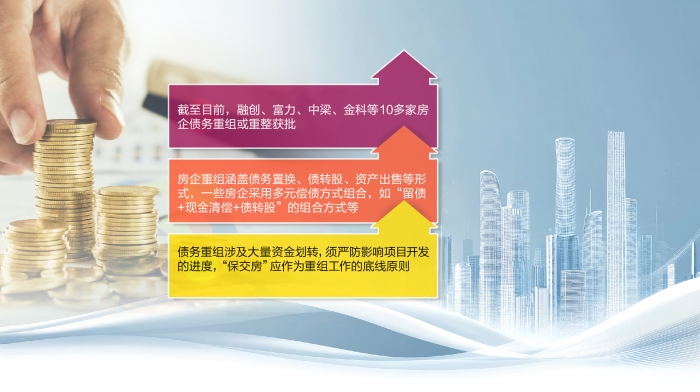
楼市“半年考”| 房企风险出清提速:十余家债务重组获批,总化债或达数千亿元
Mei Ri Jing Ji Xin Wen· 2025-07-17 05:28
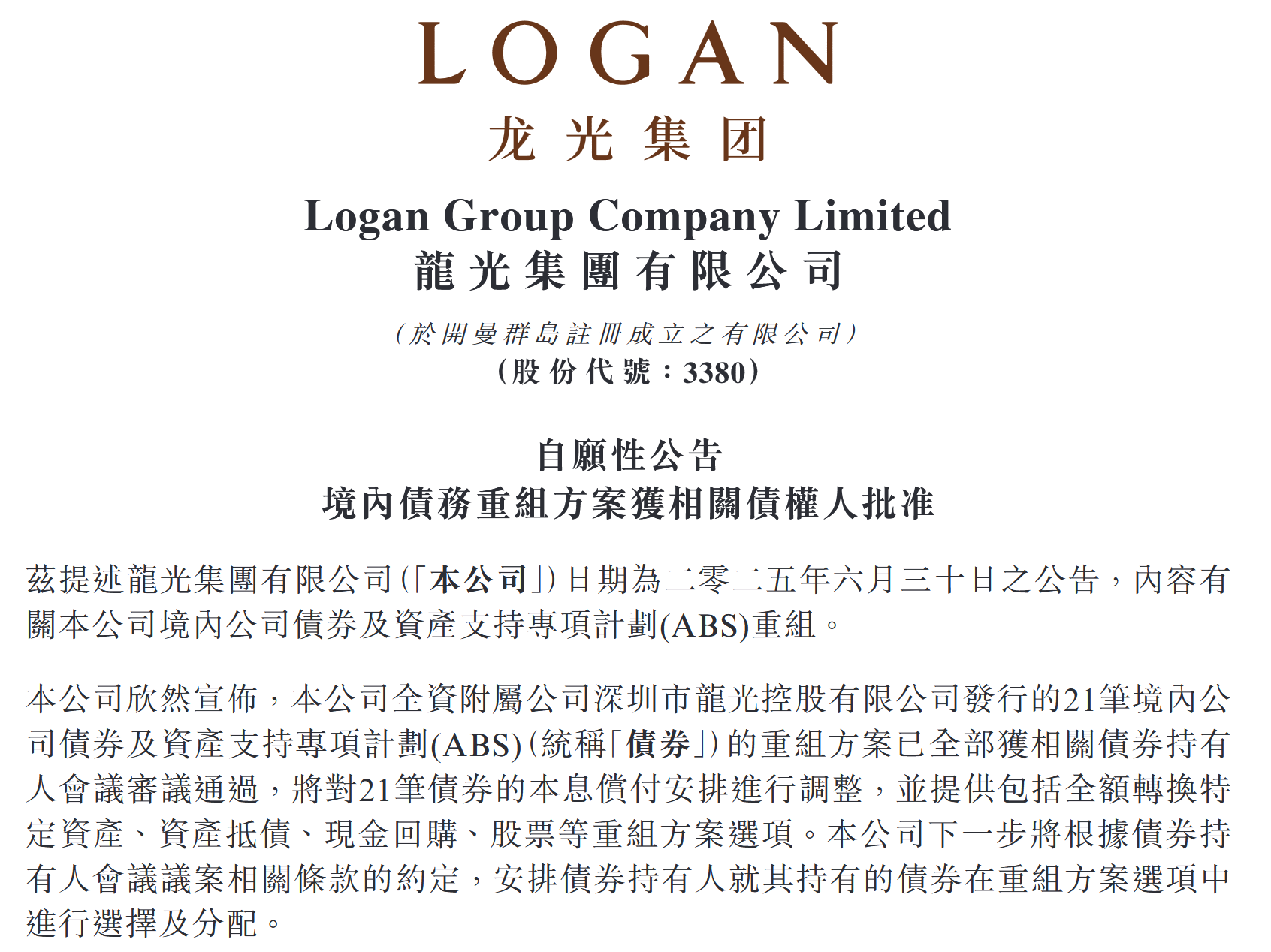
Group 1 - The core point of the article highlights the acceleration of debt restructuring among real estate companies, with several firms successfully passing their restructuring proposals, including "H20 Xuhui 3," "H20 Xuhui 2," and "H21 Xuhui 01," totaling approximately 3.09 billion yuan [1] - As of now, over ten distressed real estate companies, including Sunac China, Zhongliang Holdings, and Kaisa Group, have received approval for their debt restructuring or reorganization plans, with an estimated total debt reduction of several hundred billion yuan if successful [1][14] - The restructuring efforts are seen as a means to alleviate risks, but experts emphasize that a market recovery is essential for companies to truly emerge from their crises [1][21] Group 2 - Longguang Group announced the completion of its debt restructuring, with 21 company bonds and asset-backed securities totaling 21.96 billion yuan approved by investors [2][3] - The restructuring plan includes options such as asset swaps, cash buybacks, and debt-to-equity swaps, with the cash buyback ratio increased from 15% to 18% and the asset swap ratio raised by 10 percentage points to 35% [3] - Sunac China has also made significant strides in its debt restructuring, with plans to issue 754 million shares to repay approximately 5.6 billion yuan of domestic debt, following a successful restructuring of 15.4 billion yuan earlier this year [8][12] Group 3 - Xuhui Group's restructuring plan aims to reduce its offshore debt by approximately 5.27 billion USD (around 37.9 billion yuan), accounting for 66% of its total offshore debt [17] - Country Garden has reported that over 75% of its existing bondholders have joined the offshore debt restructuring support agreement, with plans to finalize the restructuring by the end of 2025 [12][13] - The restructuring strategies adopted by various companies reflect a trend towards substantial debt reduction, with Longguang Group's plan being more conventional compared to the innovative approaches of Xuhui and Sunac [17][21]
财新周刊-第26期2025
2025-07-11 02:22
本文由第三方AI基于财新文章 [https://a.caixin.com/yHpVw50A](https://a.caixin.com/yHpVw50A) 提炼总结而成,可能与原文真实意图存在偏差。不代表财新观点和立场。推荐点击链接阅读原文细致比对和校验 Summary of Key Points Industry Overview - The real estate industry in China is facing a significant debt crisis, with over 100 companies having defaulted on their debts, amounting to nearly 1.66 trillion yuan in outstanding bonds [30][30][30] - Major players in the industry include Evergrande, Country Garden, and Sunac, with Evergrande being the largest with a total debt of approximately 1,937.73 billion yuan [30][30][30] Debt Restructuring Trends - The trend of debt restructuring among real estate companies has intensified since 2021, with many firms abandoning the hope of repaying debts through sales and opting for comprehensive debt restructuring [18][18][19] - Sunac was the first to complete a comprehensive debt restructuring plan, reducing its debt by over 50% [16][16][16] - Companies like Xuhui and Longguang are currently engaged in difficult negotiations with creditors, reflecting a shift in mindset among real estate firms towards debt reduction [18][18][18] Financial Data and Performance - The real estate sector's revenue for 2024 is projected to be 4.33 trillion yuan, with a net profit loss of 374 billion yuan [16][16][16] - Sales of new residential properties have significantly declined, with the sales area dropping from 17.94 billion square meters in 2021 to an estimated 9.7 billion square meters in 2024 [24][24][24] Restructuring Proposals - Various restructuring proposals have been put forth, with Sunac's plan including options for cash buybacks, debt-to-equity swaps, and asset-backed debt [14][14][14] - Longguang and Xuhui have also proposed similar restructuring plans, but their terms are considered less favorable compared to Sunac's [27][27][27] Challenges and Risks - The restructuring process is fraught with challenges, particularly regarding the valuation of assets used as collateral, which can be inflated and lead to disputes among creditors [21][21][21] - The reliance on asset-backed debt restructuring raises concerns about the actual value of the underlying assets, which may not provide sufficient security for creditors [21][21][21] Regulatory Environment - The Chinese government has indicated a willingness to support the real estate sector through policy adjustments aimed at stabilizing the market and addressing risks [22][22][22] - Regulatory measures are being implemented to ensure that debt restructuring processes are fair and transparent, but there are concerns that the burden of risk is disproportionately placed on creditors [36][36][36] Conclusion - The real estate industry in China is at a critical juncture, with many companies facing insurmountable debt challenges. The shift towards comprehensive debt restructuring reflects a broader recognition of the need for sustainable financial practices within the sector [18][18][18]