房住不炒

Search documents
保利发展的“十四五”答卷:品质时代建“好房子”
Zheng Quan Ri Bao· 2025-09-23 16:12
Core Viewpoint - The real estate industry is undergoing a deep transformation from scale expansion to quality leadership during the "14th Five-Year Plan" period, with a focus on providing quality housing rather than speculative investment [1][6]. Group 1: Industry Transformation - The "14th Five-Year Plan" emphasizes that housing is for living, not for speculation, aiming to establish a multi-supplier and multi-channel housing system [1]. - Poly Developments has shifted from rapid expansion to a steady development strategy, leading the industry in proposing a transition from the "peak era" to the "quality era" in housing development [1][6]. Group 2: Quality Housing Concept - Poly Developments is actively exploring the concept of "good housing," which was first included in the 2025 Government Work Report, focusing on safety, comfort, sustainability, and intelligence [2][3]. - The company is addressing basic issues such as water leakage, smoke backflow, and sound insulation to enhance the living experience for residents [3]. Group 3: Financial Resilience - Poly Developments has demonstrated financial resilience with positive cash flow from operating activities from 2018 to 2024, with a net cash flow of 62.57 billion in 2024 and 160.17 billion in the first half of 2025 [4][5]. - The company achieved a sales recovery of 144.8 billion in the first half of 2025, with a comprehensive recovery rate of 100%, reflecting a 15 percentage point increase year-on-year [5]. Group 4: Market Position and Strategy - In 2023, Poly Developments became the industry sales champion with a signed sales area of 23.86 million square meters and a total sales amount of 422.2 billion [6]. - The company is focusing on revitalizing existing projects and accelerating the launch of quality new projects to maintain its leading position in a challenging market [6][10]. Group 5: New Business Model - Poly Developments is transitioning from incremental development to stock operation and comprehensive services, aiming to meet new demands in the rental and property markets [9]. - The company is implementing a strategic restructuring to enhance its real estate investment, operation, and comprehensive service capabilities, with a goal of achieving diversified and balanced development [8][10].

我国楼市或成定局,未来全国45%的家庭,或将不得不面临“4大挑战”
Sou Hu Cai Jing· 2025-09-23 00:58
Core Insights - The Chinese real estate market is undergoing a significant transformation, moving from a "golden era" of rapid growth to a challenging "new normal" characterized by declining sales and changing housing demands [2][3][5] Group 1: Market Trends - In Q1 2025, the national sales area of commercial housing decreased by 8.7% year-on-year, with sales revenue dropping by 12.3% [2] - The average return on residential investment has halved from 9.7% in 2018 to 3.2% in 2025, indicating a shift away from real estate as a reliable investment [3][5] Group 2: Challenges Facing the Housing Market - The housing market is facing four major challenges: the return of housing to its primary function of residence, demographic changes leading to a qualitative shift in housing demand, regional disparities causing market segmentation, and high financial pressure on households [2][6][8][9] - Approximately 45% of families will confront these challenges, which include a significant decline in the perceived investment value of real estate [2][5] Group 3: Demographic Shifts - The birth rate in China is projected to fall below 10 million by 2024, with a natural population growth rate of only 0.9‰, leading to an aging population where those over 60 may comprise nearly 30% by 2035 [6] - There is a growing demand for age-appropriate housing and senior living facilities, as 42.7% of seniors feel their current housing conditions are inadequate [6][7] Group 4: Regional Disparities - The price gap between first-tier cities and third- and fourth-tier cities has widened, with the difference in price fluctuations increasing from 5.7 percentage points in 2020 to 11.3 percentage points [8] - About 127 third- and fourth-tier cities have new housing inventory turnover periods exceeding 24 months, indicating significant market pressure [8] Group 5: Financial Pressures on Households - The average monthly housing loan payment now accounts for 38.2% of urban household income, surpassing the internationally recognized threshold of 30% [9] - Households with mortgages spend 27.3% less on education and entertainment compared to those without, highlighting the financial strain caused by high housing costs [9] Group 6: Future Outlook and Recommendations - Families are advised to reassess their housing needs, focusing on the primary function of housing as a place to live rather than an investment vehicle [10][12] - Emphasis should be placed on long-term city development prospects and the diversification of household assets to ensure financial stability [10][12]

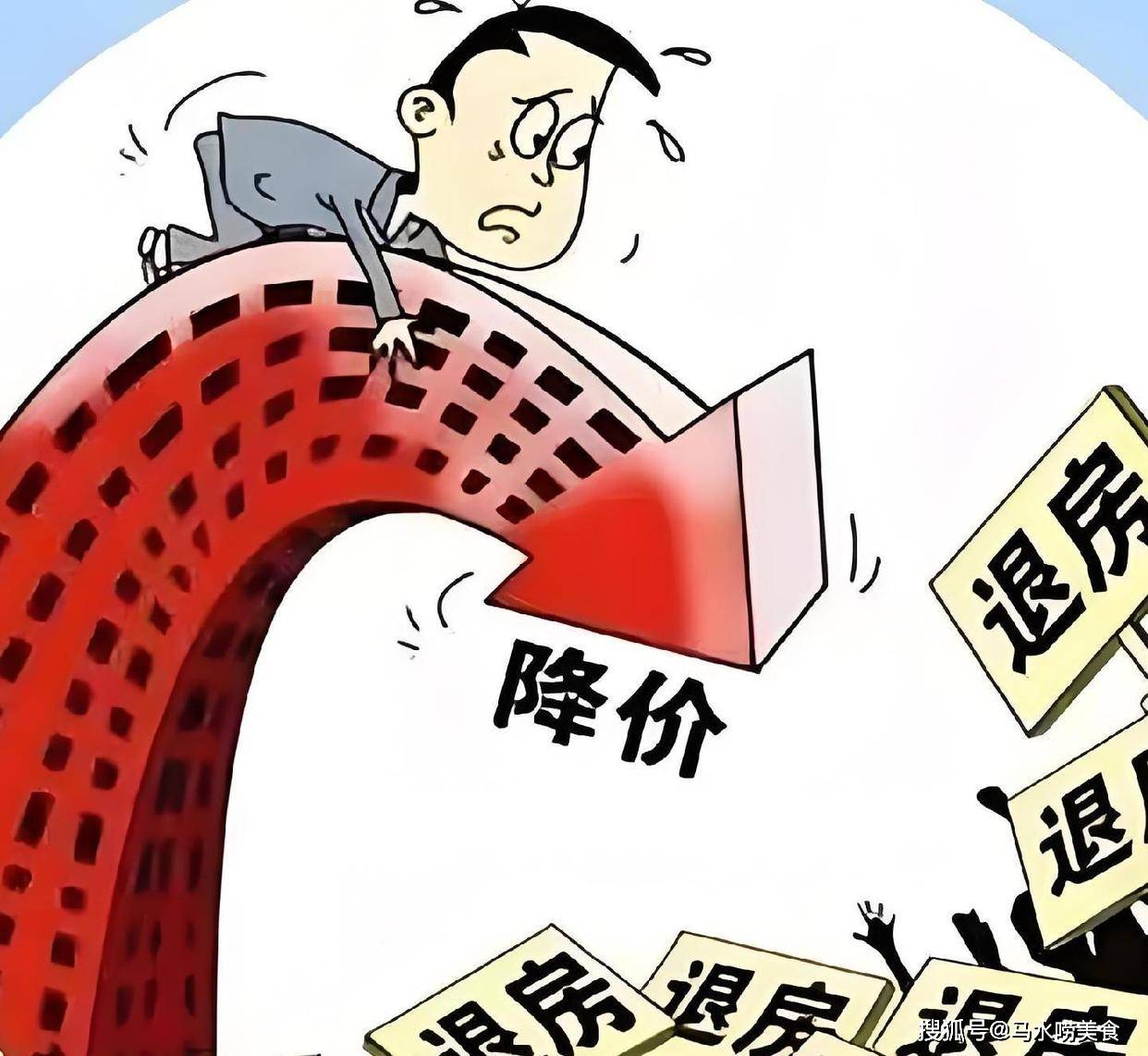
未来2年房价会持续下跌?普通老百姓挣钱越来越难,要看清楚未来趋势
Sou Hu Cai Jing· 2025-09-22 23:28
Core Viewpoint - The Chinese real estate market is undergoing a prolonged downturn, raising concerns about future housing prices amidst increasing income pressure on households [1] Group 1: Market Performance - The price index for newly built residential properties in 70 major cities has decreased by 3.2% year-on-year, while the second-hand housing price index has dropped by 5.7%, marking the eighth consecutive quarter of decline [2] - In first-tier cities like Beijing, Shanghai, Guangzhou, and Shenzhen, housing prices are showing signs of fatigue, with some regions experiencing price declines exceeding 10%, reaching the lowest levels in nearly a decade [2] Group 2: Demographic Changes - By the end of 2024, China's population is projected to decrease by approximately 2.21 million, with the birth rate falling to a record low of 5.5‰ [3] - The population of the primary home-buying age group (25 to 45 years) is expected to decline by about 120 million over the next 20 years, leading to a significant drop in housing demand [3] Group 3: Urbanization and Market Challenges - China's urbanization rate has reached 66.5%, nearing developed country levels, but the pace of expansion is slowing [4] - There are nearly 50 million idle residential properties nationwide, with an average absorption period extending to 26 months, far exceeding healthy market standards [4] Group 4: Household Debt and Purchasing Power - As of Q1 2025, the household leverage ratio in China has risen to 64.7%, approaching the internationally recognized warning line [7] - The total household mortgage balance exceeds 38 trillion yuan, with an average mortgage burden of approximately 80,000 yuan per family, significantly constraining purchasing power and willingness to buy [7] Group 5: Local Government and Policy Responses - Despite the declining real estate market, local governments remain heavily reliant on land finance, with land transfer revenue still reaching 3.2 trillion yuan, accounting for about 24% of local fiscal revenue [8] - Over 200 cities have relaxed purchase and loan restrictions, with first-time home loan rates in major cities dropping to around 3.8%, a historical low [8] Group 6: Economic Transition and Income Constraints - In the first half of 2025, the actual growth rate of per capita disposable income for residents was only 2.7%, lower than GDP growth, leading to squeezed purchasing power [10] - Average monthly income in third and fourth-tier cities hovers around 5,000 yuan, creating a severe imbalance with local housing prices [10] Group 7: Employment and Skills Development - The internet economy's golden age has passed, with an average layoff rate of 15% in the internet sector and a 20% drop in starting salaries for fresh graduates compared to three years ago [11] - There is a growing demand for high-skilled talent in emerging fields, with a significant increase in users of vocational training and online education platforms [16] Group 8: Market Outlook and Consumer Behavior - Economists predict that the real estate market will continue to adjust over the next two years, with a potential further decline of 5-10% in housing prices [11] - A survey indicates that over 67% of respondents plan to postpone home purchases and invest more in education and skills, with 78.3% of young people prioritizing career competitiveness over buying a home [13]


楼市大局已定,中国房地产或将重回2016年,背后原因超出你的想象
Sou Hu Cai Jing· 2025-09-22 02:35
Core Viewpoint - The Chinese real estate market is undergoing a significant adjustment, moving towards a more balanced and reasonable state reminiscent of 2016, driven by various economic and demographic factors [3][4][5]. Market Performance - In the first half of 2025, the national sales area of commercial housing decreased by 8.3% year-on-year to 562 million square meters, while sales revenue fell by 12.5% to 5.83 trillion yuan [4]. - The number of cities experiencing a decline in new residential prices reached 53, and 58 cities saw a drop in second-hand housing prices, indicating a widespread market downturn [4]. Historical Context - The year 2016 is highlighted as a pivotal point, with commercial housing sales area at 1.573 billion square meters and sales revenue at 11.76 trillion yuan, alongside a reasonable price-to-income ratio [4]. - Current price-to-income ratios have improved, with first-tier cities at approximately 13:1, second-tier cities at 9:1, and third and fourth-tier cities at 6:1, moving closer to the 6-8 range considered reasonable [5][7]. Demographic and Economic Factors - Population aging and negative growth are expected to reduce annual housing demand to around 8 million units by 2030, a decrease of about 30% from 2016 levels [7]. - Urbanization is slowing, with the urbanization rate projected to grow by less than 0.5 percentage points annually over the next decade, compared to 1.2 percentage points from 2010 to 2020 [7]. Investment Trends - There is a shift in asset allocation among residents, with investments in deposits, financial products, and stocks surpassing real estate for the first time in 2025 [7]. - The financial environment for real estate is becoming more rational, with the growth rate of real estate loans declining from double digits to single digits [7]. Supply and Demand Dynamics - The supply-demand imbalance is easing, with new residential supply in first-tier cities increasing by 5.3% while decreasing by 7.8% in third and fourth-tier cities [8]. Future Market Characteristics - Regional differentiation is expected to become more pronounced, with stable prices in first-tier and strong second-tier cities, while third and fourth-tier cities face greater price adjustment pressures [9]. - The market is anticipated to return to a focus on residential needs rather than speculative investments, with a growing emphasis on the intrinsic value of housing [9]. - The secondary market and rental market are projected to dominate, with second-hand transactions expected to account for over 65% of total transactions by 2030 [9]. - Quality competition will replace price competition, as consumer preferences shift towards better quality and services in housing [10].
5年后,现在200万的房子会贬值吗?三大趋势已揭示真相
Sou Hu Cai Jing· 2025-09-21 23:42
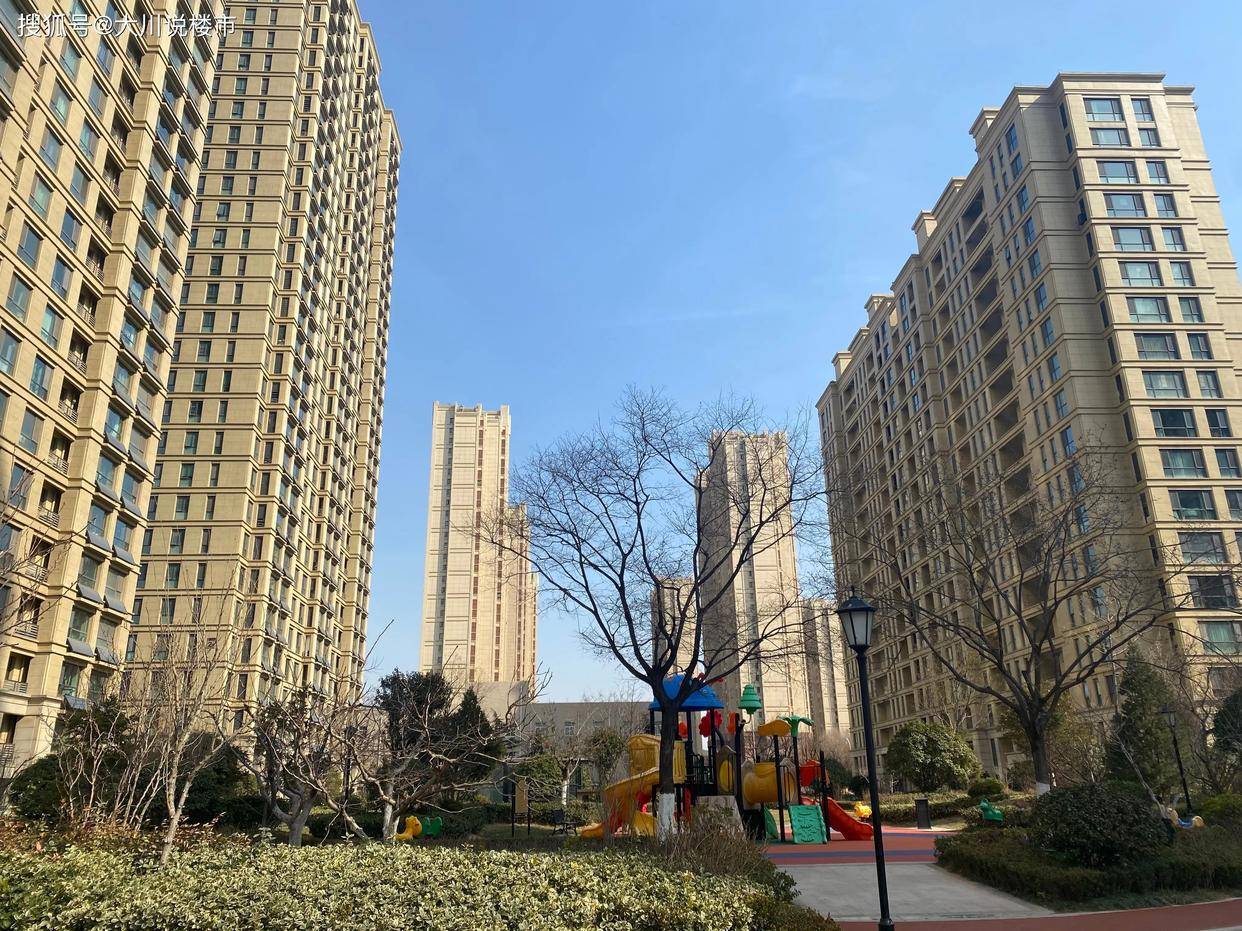
Core Viewpoint - The real estate market in China is undergoing a significant transformation, with a projected decline in property values over the next five years due to demographic shifts, oversupply, and decreasing purchasing intent among younger generations [1][3][11]. Group 1: Demographic Changes - The aging population in China is increasing rapidly, with 60+ individuals reaching 310 million, accounting for 22% of the total population. This is expected to exceed 400 million by 2035, representing nearly 30% of the population [3]. - The primary home-buying demographic is shrinking, as the younger population (those born in the 90s and 00s) is significantly smaller than older generations [3][7]. - Approximately 70% of individuals aged 60 and above already own homes and show little interest in purchasing additional properties, while younger buyers are deterred by high prices and financial pressures [3][9]. Group 2: Supply and Demand Dynamics - There is a significant oversupply in the housing market, with 6 billion homes available, which is sufficient for 30 billion people, while the current population is only 1.4 billion [3]. - Over 10 million new homes are added to the market annually, but demand is declining, with 96% of families already owning homes [3][9]. - In a recent case, a property development in a third-tier city sold only 50 out of 300 units in six months, highlighting the lack of buyers rather than a shortage of homes [3][9]. Group 3: Future Property Value Projections - In core areas of first-tier cities, property values may decline by 10-15%, bringing a 2 million yuan property down to approximately 1.7-1.8 million yuan [4]. - In non-core areas of second-tier cities, property values could drop by 20-25%, resulting in a value of about 1.5-1.6 million yuan [4]. - In third and fourth-tier cities, property values may decrease by 30-40%, leading to a valuation of around 1.2-1.4 million yuan [4]. Group 4: Market Sentiment and Investment Strategy - The investment appeal of real estate is diminishing, prompting a shift towards other asset classes such as stocks and funds [8]. - The notion that housing is primarily for living rather than speculation is gaining traction, aligning with the "housing is for living, not for speculation" policy direction [11]. - The market is expected to undergo a "de-bubbling" process, where property values align more closely with their actual living value rather than speculative gains [11].
重大消息!时隔九个月,美联储降息,中国楼市迎来大利好,买房?
Sou Hu Cai Jing· 2025-09-21 23:23
Core Viewpoint - The recent interest rate cut by the Federal Reserve is expected to trigger a new round of "value reassessment" in China's first-tier real estate market, similar to the effects seen in 2019, with potential for significant price increases and increased foreign investment [1][2]. Group 1: Impact of Federal Reserve's Rate Cut - The Federal Reserve's decision to cut interest rates by 25 basis points has led to a decline in the US dollar index, which in turn has strengthened the Chinese yuan, making Chinese real estate more attractive to international investors [2][4]. - The average mortgage rate for first-time homebuyers in China has dropped to 3.45%, with expectations that it may soon enter the "2% era" in first-tier cities, significantly reducing monthly payments and total interest costs for borrowers [4][5]. Group 2: Changes in Financing Environment - The improved financing environment for real estate developers is evident, as lower interest rates on existing debts will reduce annual interest expenses, allowing companies like Baolong Real Estate to save approximately $5 million annually on a $1 billion debt [4][5]. - The recent policy changes by the State Administration of Foreign Exchange to facilitate overseas individuals purchasing property in China will simplify the process for foreign investors, potentially increasing capital inflow into the real estate market [5][6]. Group 3: Market Dynamics and Buyer Sentiment - Despite favorable policies, buyer confidence remains low, with a reported 10.7% decline in real estate development investment and a 2.9% drop in new housing sales in the first five months of 2025 [7][11]. - The differentiation in real estate markets between first-tier cities and lower-tier cities is becoming more pronounced, with first-tier cities expected to attract more buyers due to stronger economic fundamentals [7][9]. Group 4: Long-term Investment Strategies - Foreign investment strategies in China's real estate market are shifting from short-term speculation to long-term value holding, as evidenced by the establishment of a RMB 3 billion private equity fund focused on office buildings and consumer infrastructure in the Yangtze River Delta [5][6]. - The overall sentiment in the real estate market indicates that while external factors like the Fed's rate cut may provide temporary relief, the fundamental issues of market confidence and demand need to be addressed for a sustainable recovery [11].
鲍威尔引发降息风暴!美联储9月行动撬动全球,房市低位反弹迎转机
Sou Hu Cai Jing· 2025-09-20 23:28
Group 1 - The Federal Reserve has lowered the federal funds rate target range to 4.00-4.25%, indicating a strategic shift towards a more accommodative monetary policy after nine months of stability [2] - The U.S. economy is showing signs of weakness, with the consumer price index (CPI) rising to 2.9% year-on-year in August, and the labor market showing signs of fatigue [5] - The shift in monetary policy is seen as a necessary response to high inflation pressures and a cooling labor market, moving away from the previously anticipated "soft landing" scenario [5] Group 2 - The easing of U.S. monetary policy is expected to influence capital flows, coinciding with key adjustments in China's domestic policies, particularly in the real estate sector [8] - China's real estate market has been undergoing a significant correction since 2021, with policies aimed at reducing leverage and financial risks, but recent external liquidity easing may ignite market activity [8][9] - Mortgage rates in China have dropped to around 3%, with some cities nearing 2.8%, providing tangible cash flow improvements for homebuyers [9] Group 3 - The perception of housing prices is influenced by market expectations, where a consensus that prices will not fall further can lead to increased transaction volumes [13] - The decline in financing costs for real estate companies due to U.S. rate cuts, combined with domestic debt restructuring efforts, is expected to alleviate financial pressures on these firms [16] - The stability of the RMB and improved financing conditions could restore buyer confidence and project delivery timelines in the real estate market [16] Group 4 - The current environment allows for a potential rebound in the real estate market, driven by improved credit conditions and a shift in investor sentiment towards real estate as a stable asset class [19] - The Chinese central bank's policy adjustments are aimed at maintaining exchange rate stability while facilitating capital flows, creating a conducive environment for market recovery [20] - The effectiveness of policy transmission from interest rates to real estate transactions will be crucial for achieving a sustainable recovery in the sector [31]
每经热评丨外资购房限制虽放宽 “房住不炒”仍是刚性约束
Mei Ri Jing Ji Xin Wen· 2025-09-18 14:36
Group 1 - The core viewpoint of the news is that the recent adjustment of foreign exchange management policies regarding foreign investment in real estate aims to optimize market demand rather than signal a return to speculative real estate practices [1][2][3] - The new policy allows for greater convenience in cross-border payment for foreign individuals purchasing real estate in China, resolving previous procedural conflicts [1] - The adjustment reflects a broader trend of optimizing macro-control measures in the real estate sector, aligning with the changing market conditions and supporting stable development [2] Group 2 - The policy is designed to enhance the flexibility of foreign capital usage for enterprises, allowing them to invest in commercial real estate according to their development strategies [1] - The government emphasizes that the policy is not intended to stimulate speculation but to stabilize the market while meeting diverse housing needs [2][3] - The current real estate supply-demand relationship has shifted, reducing liquidity in the property market, which diminishes the potential for short-term speculative profits from foreign investments [2][3]
外资购房限制虽放宽 “房住不炒”仍是刚性约束
Mei Ri Jing Ji Xin Wen· 2025-09-18 13:56
Group 1 - The core viewpoint of the news is that the recent adjustment of foreign exchange management policies for foreign real estate purchases aims to optimize cross-border capital management and meet reasonable housing demands, rather than signaling a return to speculation in the housing market [1][2][3] - The new policy allows for greater flexibility in foreign capital usage, enabling companies to invest in commercial real estate according to their development strategies, which is significant for revitalizing existing assets [1] - The adjustment reflects a shift in the domestic real estate market, with macro-control measures being optimized to adapt to new conditions, thereby supporting stable development in the real estate sector [2] Group 2 - The policy is designed to activate market demand precisely, focusing on the needs of foreign individuals for self-use housing while ensuring compliance with local purchasing qualifications [2] - The combination of "relaxation + constraints" in policy indicates a move towards more refined and precise real estate regulation, aiming to prevent market overheating while catering to diverse housing needs [2] - The overarching goal of real estate regulation remains to stabilize the market rather than stimulate speculation, with the principle of "housing is for living, not for speculation" being a rigid constraint [2][3]
楼市新政助力新盘热度提升
Bei Jing Wan Bao· 2025-09-18 08:46
Core Viewpoint - The recent policy adjustments in Beijing's real estate market have led to a surge in new housing projects, particularly in areas outside the Fifth Ring Road, attracting significant buyer interest [1][4][8]. Group 1: Policy Impact - The Beijing Municipal Housing and Urban-Rural Development Committee and the Beijing Housing Provident Fund Management Center issued a notification allowing eligible families to purchase an unlimited number of homes outside the Fifth Ring Road [1]. - Following the implementation of this notification, the new housing market in Beijing has seen increased activity, with many new projects launching and drawing attention from potential buyers [1][4]. Group 2: New Housing Projects - Numerous new housing projects have recently opened, particularly in districts such as Tongzhou, Changping, Shijingshan, and Daxing, offering a variety of product types including affordable, upgraded, and high-end residences [3][4]. - The new projects are strategically located in both core areas with established amenities and emerging regions with significant growth potential, appealing to diverse buyer demographics [3][4]. Group 3: Market Dynamics - The new projects are enhancing the diversity of options available to buyers, thereby stimulating regional development and meeting various consumer needs [6]. - The upcoming traditional sales season, "Golden September and Silver October," combined with the recent policy changes, has prompted developers to aggressively pursue market share [8]. Group 4: Land Supply and Future Outlook - The seventh batch of proposed residential land supply has been released, involving eight plots covering approximately 27 hectares and a construction scale of about 630,000 square meters, aimed at enriching the new housing market supply [9]. - The land supply is strategically located near transit stations, indicating a focus on areas with strong market demand and well-developed infrastructure [9].