数字货币

Search documents
天融信:自2020年起在数字货币、跨境支付安全相关领域加大技术储备和布局
Zheng Quan Ri Bao Wang· 2026-01-12 12:14
Group 1 - The company, Tianrongxin, has increased its technological reserves and layout in the fields of digital currency and cross-border payment security since 2020 [1] - The company offers products and solutions in network security, data security, and intelligent cloud computing [1] - Currently, the related software orders represent a small proportion of the company's revenue [1]

TCL智家涨0.29%,成交额1.13亿元,近5日主力净流入-3735.41万
Xin Lang Cai Jing· 2026-01-12 07:20
Core Viewpoint - TCL Smart Home has shown a slight increase in stock price and has a market capitalization of 11.145 billion yuan, indicating stable market performance [1] Group 1: Business Overview - The company's main business includes the research, production, and sales of household refrigerators, freezers, and washing machines [3] - As of the 2024 annual report, overseas revenue accounts for 73.50% of total revenue, benefiting from the depreciation of the RMB [4] - The revenue composition of TCL Smart Home is as follows: refrigerators and freezers 84.92%, washing machines 14.37%, and others 0.72% [8] Group 2: Market Position and Performance - TCL Smart Home has maintained the position of the largest exporter of refrigerators in China for 14 consecutive years, serving over 130 countries and regions, including those involved in the Belt and Road Initiative [2] - The company achieved a revenue of 14.346 billion yuan in the first nine months of 2025, representing a year-on-year growth of 2.87%, while net profit attributable to shareholders increased by 18.45% to 977 million yuan [8] Group 3: Technological Advancements - The company has made advancements in AI voice control and AI intelligent dual-inverter technology, enhancing the smart capabilities of its products to meet customer demands [4] Group 4: Shareholder and Market Activity - As of September 30, 2025, the number of shareholders is 36,200, a decrease of 2.23% from the previous period, with an average of 29,971 circulating shares per person, an increase of 2.28% [8] - The stock has seen a net inflow of 1.471 million yuan today, with a lack of significant trends in major shareholder activity [5][6]

新北洋涨2.05%,成交额1.66亿元,主力资金净流入1023.32万元
Xin Lang Zheng Quan· 2026-01-12 06:05
Core Viewpoint - The stock of Xinbeiyang has shown positive performance with a 2.05% increase on January 12, 2023, and a total market capitalization of 6.468 billion yuan, indicating strong investor interest and potential growth in the company's operations [1]. Group 1: Stock Performance - As of January 12, 2023, Xinbeiyang's stock price reached 7.98 yuan per share, with a trading volume of 1.66 billion yuan and a turnover rate of 2.69% [1]. - Year-to-date, the stock price has increased by 3.37%, with a 3.23% rise over the last five trading days, a 10.07% increase over the last 20 days, and a 5.00% increase over the last 60 days [1]. Group 2: Financial Performance - For the period from January to September 2025, Xinbeiyang reported a revenue of 1.982 billion yuan, representing a year-on-year growth of 16.82%, and a net profit attributable to shareholders of 61.09 million yuan, reflecting a significant increase of 56.26% [2]. - Since its A-share listing, Xinbeiyang has distributed a total of 1.579 billion yuan in dividends, with 351 million yuan distributed over the past three years [3]. Group 3: Shareholder Information - As of December 31, 2025, the number of shareholders for Xinbeiyang was 48,000, a decrease of 2.22% from the previous period, while the average number of circulating shares per person increased by 2.27% to 16,275 shares [2]. - Among the top ten circulating shareholders, Hong Kong Central Clearing Limited is the sixth largest, holding 6.2141 million shares as a new shareholder [3]. Group 4: Business Overview - Xinbeiyang, established on December 6, 2002, and listed on March 23, 2010, is based in Weihai, Shandong Province, and specializes in the research, production, sales, and service of intelligent devices and equipment [1]. - The company's main business revenue breakdown includes: intelligent self-service terminal products (26.79%), printing and scanning products (21.43%), service operations (14.55%), smart financial equipment (13.06%), key basic components (10.49%), intelligent logistics equipment (9.19%), and others (4.49%) [1].

天融信:可为客户提供网络安全、数据安全、智算云等产品及解决方案,目前已有相关的软件订单
Mei Ri Jing Ji Xin Wen· 2026-01-12 04:03
Core Viewpoint - The company has been actively investing in digital currency and cross-border payment security since 2020, focusing on technology reserves and solutions in these areas [1] Group 1: Company Initiatives - The company has increased its technological reserves and layout in the fields of digital currency and cross-border payment security since 2020 [1] - The company offers products and solutions related to network security, data security, and intelligent cloud computing [1] - There are existing software orders related to these initiatives, although they currently represent a small proportion of the company's revenue [1]
南天信息涨2.04%,成交额2.29亿元,主力资金净流出1113.85万元
Xin Lang Zheng Quan· 2026-01-12 03:51
Group 1 - The core viewpoint of the news is that Nantian Information has shown a positive stock performance with a 6.07% increase year-to-date and a significant rise in recent trading days, despite a net outflow of funds [1][2] - As of January 12, Nantian Information's stock price reached 19.04 yuan per share, with a market capitalization of 7.423 billion yuan [1] - The company reported a revenue of 7.091 billion yuan for the first nine months of 2025, reflecting a year-on-year growth of 21.90%, while the net profit attributable to shareholders was a loss of 10.8998 million yuan, a decrease of 119.49% compared to the previous year [2] Group 2 - Nantian Information's main business segments include IT product sales and industrial internet (47.59%), integrated solutions (31.41%), software development and services (19.63%), smart channel solutions (1.02%), and others (0.36%) [1] - The company has distributed a total of 469 million yuan in dividends since its A-share listing, with 102 million yuan distributed in the last three years [3] - As of September 30, 2025, the number of shareholders decreased by 20.65% to 59,900, while the average circulating shares per person increased by 26.02% to 6,494 shares [2]

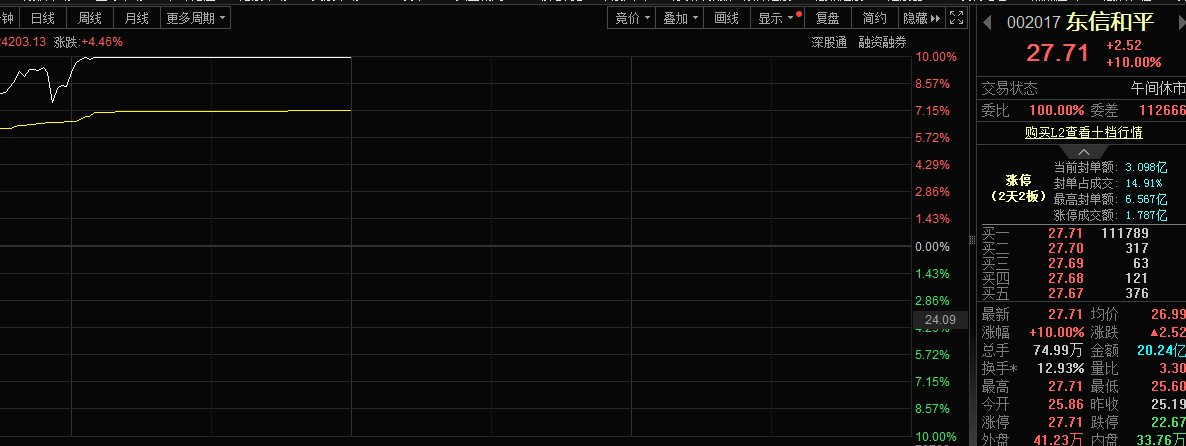
数字货币概念集体走强,东信和平2连板
Sou Hu Cai Jing· 2026-01-12 03:41
Group 1 - The digital currency sector experienced a collective surge, with Dongxin Peace (002017) achieving a consecutive two-day limit-up [1] - Starting from January 1, 2026, the balance in digital RMB wallets will earn interest based on the bank's current deposit rate, marking a transition from "digital cash" to "digital deposit currency" [1] Group 2 - Guotai Junan Securities reported that the "14th Five-Year Plan" emphasizes the steady development of digital RMB, which is expected to enhance monetary policy transmission efficiency and support the internationalization of the RMB [2] - CITIC Securities noted that digital RMB is evolving from a "central bank liability" model to a "deposit currency" model, which will allow interest accrual and reserve requirements, effectively becoming a general deposit [2] - This institutional adjustment is anticipated to stabilize bank liabilities and improve the efficiency of monetary policy transmission under the reserve and interest rate framework [2] - The digital RMB is expected to serve as a crucial tool linking corporate and retail sectors, potentially replacing third-party payment platforms in the payment process [2] - Future developments in bank digital RMB services will shift focus from qualification to capability, necessitating banks to enhance their service offerings in a scenario-based and specialized manner [2]


中科江南涨2.05%,成交额1.36亿元,主力资金净流入135.87万元
Xin Lang Cai Jing· 2026-01-12 02:33
Core Viewpoint - Zhongke Jiangnan's stock price has shown fluctuations with a recent increase of 2.05%, while the company faces a significant decline in revenue and net profit for the year 2025 [1][2]. Group 1: Stock Performance - As of January 12, Zhongke Jiangnan's stock price is 25.92 CNY per share, with a market capitalization of 9.146 billion CNY [1]. - The stock has increased by 4.85% year-to-date, but has decreased by 1.63% over the last five trading days [1]. - Over the past 20 days, the stock has risen by 33.40%, while it has increased by 17.18% over the last 60 days [1]. Group 2: Financial Performance - For the period from January to September 2025, Zhongke Jiangnan reported a revenue of 364 million CNY, representing a year-on-year decrease of 26.28% [2]. - The company recorded a net profit attributable to shareholders of -64.249 million CNY, a significant decline of 1048.15% compared to the previous year [2]. Group 3: Shareholder Information - As of December 31, the number of shareholders for Zhongke Jiangnan is 21,100, a decrease of 1.25% from the previous period [2]. - The average number of circulating shares per shareholder has increased by 1.27% to 15,624 shares [2]. - The company has distributed a total of 473 million CNY in dividends since its A-share listing, with 365 million CNY distributed over the last three years [3].
御银股份涨2.14%,成交额6.76亿元,主力资金净流出1046.42万元
Xin Lang Zheng Quan· 2026-01-12 02:12
Core Viewpoint - Yuyin Co., Ltd. has shown significant stock price performance, with a year-to-date increase of 1.59% and a notable rise of 46.40% over the past 20 trading days, indicating strong market interest and potential growth in the smart financial equipment sector [2] Group 1: Stock Performance - As of January 12, Yuyin's stock price increased by 2.14%, reaching 9.56 CNY per share, with a trading volume of 6.76 billion CNY and a turnover rate of 10.81%, resulting in a total market capitalization of 72.77 billion CNY [1] - Year-to-date, Yuyin's stock has risen by 1.59%, with a 10.90% increase over the last five trading days and a 23.07% increase over the last 60 days [2] Group 2: Trading Activity - In the recent trading session, there was a net outflow of 10.46 million CNY from main funds, with large orders accounting for 18.91% of total purchases and 18.46% of total sales [1] - Yuyin has appeared on the "Dragon and Tiger List" twice this year, with the latest appearance on January 6, where it recorded a net purchase of 47.84 million CNY [2] Group 3: Company Overview - Yuyin Co., Ltd., established on April 26, 2001, and listed on November 1, 2007, operates in the smart financial equipment industry, focusing on operational services and property development [2] - The company's revenue composition includes 93.42% from operational leasing and 6.58% from ATM technology and financial services [2] Group 4: Financial Performance - For the period from January to September 2025, Yuyin reported a revenue of 44.46 million CNY, reflecting a year-on-year decrease of 13.30%, while the net profit attributable to shareholders was 11.69 million CNY, down 6.92% year-on-year [2] - Since its A-share listing, Yuyin has distributed a total of 136 million CNY in dividends, with 15.99 million CNY distributed over the past three years [3] Group 5: Shareholder Information - As of September 30, 2025, Yuyin had 138,900 shareholders, a decrease of 12.20% from the previous period, with an average of 4,857 circulating shares per shareholder, an increase of 13.89% [2] - The second-largest circulating shareholder is the Southern CSI Real Estate ETF, holding 9.62 million shares, which is a decrease of 97,100 shares from the previous period [3]

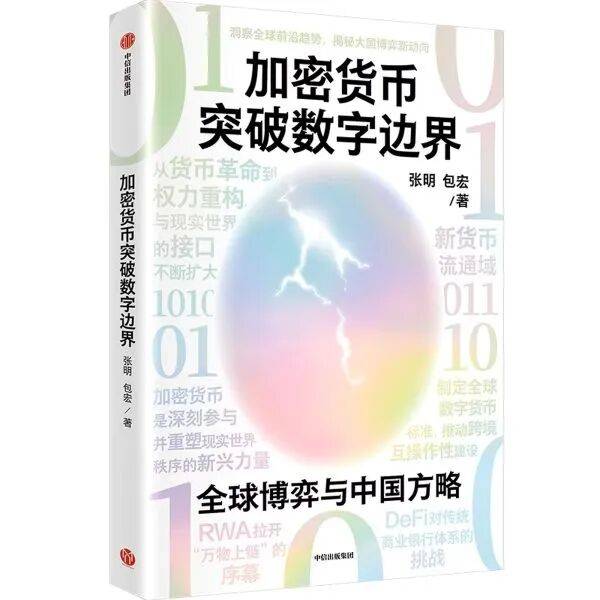
新著《加密货币突破数字边界:全球博弈与中国方略》出版
Sou Hu Cai Jing· 2026-01-11 15:05
注:2024年3月,笔者与杨晓晨、王喆、陈胤默合著的《数字货币的边界:颠覆还是渐进式变革?》在东方出版社出版。2026年1月,笔者与包宏合著的 《加密货币突破数字边界:全球博弈与中国方略》在中信出版集团出版,这是笔者团队关于数字货币的第二本书。欢迎朋友们关注。目前本书已经可以在 京东商城等线上书店购买。 第七章 中国的应对方略 一、本书目录 第三章 重塑美元霸权:加密货币对国际货币秩序的冲击 第四章 改变权力平衡:加密货币的政治化与地缘工具化 第一章 回溯突破之路:加密货币与现实世界的融合历程 加密货币从极客世界接入现实的"第一段路"(2009—2013年) 加密货币与现实世界的接口全面扩大(2014—2017年) 加密货币行业"现实化"和重构的关键阶段(2018—2020年) 加密货币的主流化与全面融入现实世界(2021—2025年) 第二章 扩展货币流通域:稳定币作为链接加密与现实世界的关键桥梁 稳定币发展的"全景图":驱动因素、属性类别及角色定位 美元稳定币的主导地位:形成历程、深层动因与系统性影响 从货币流通域视角分析稳定币何以"破圈" 稳定币对国际支付与结算体系的革新与挑战 法币数字化的路径之争:以 ...
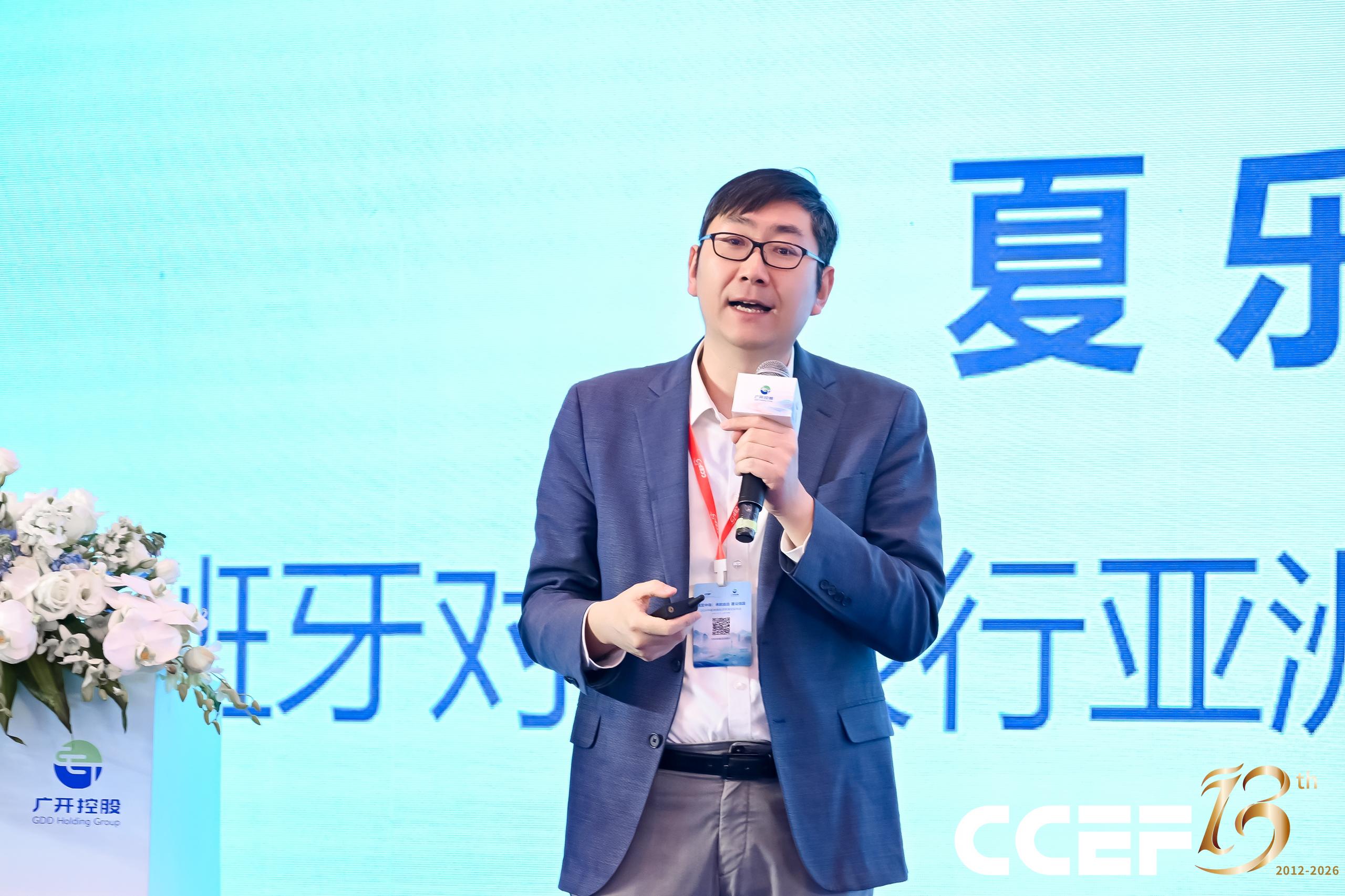
夏乐:美元霸权松动与数字浪潮交汇下,人民币国际化“风再起”
Di Yi Cai Jing· 2026-01-11 07:25
"中国资产不可投资论"退潮。 1月10日,在"2026年中国首席经济学家论坛年会"上,西班牙对外银行(BBVA)首席经济学家夏乐指出,在美元大循环边际弱化、数字货币重塑国际支付 体系的背景下,人民币国际化正重新站上顺风口。 同时,产业链重构与中国企业"走出去"正在创造更多跨境人民币使用场景;人民币汇率中期偏强、双边本币互换和跨境支付合作经验不断积累;CIPS体系、 海外清算行及多边"货币桥"项目的实践,也持续夯实人民币国际化的基础。 "更值得关注的是,海外投资者对中国资产的认知正在发生转变,'中国资产不可投资论'明显退潮,部分机构已将中国市场视为对冲美国科技资产泡沫的重 要选择。"夏乐表示。 尽管前景向好,夏乐强调,必须清醒认识到美元霸权不会轻易让位。人民币国际化的目标不应是取代美元,而是获得足够的体系性影响力。展望未来,他认 为,人民币国际化仍面临一系列现实政策抉择,包括如何在数字货币和支付"出海"路径上进行更优组合,以及如何在复杂地缘政治环境下稳步推进制度型开 放。 在夏乐看来,人民币国际化"风再起"的关键,首先来自外部环境的变化。其一,美国"MAGA"政策及高关税取向正在侵蚀美元的主导地位。2025年春 ...