生态治理

Search documents
见证河湖蝶变·共建美丽山东丨天平湖绘就泰安生态新画卷
Qi Lu Wan Bao· 2025-09-12 11:06
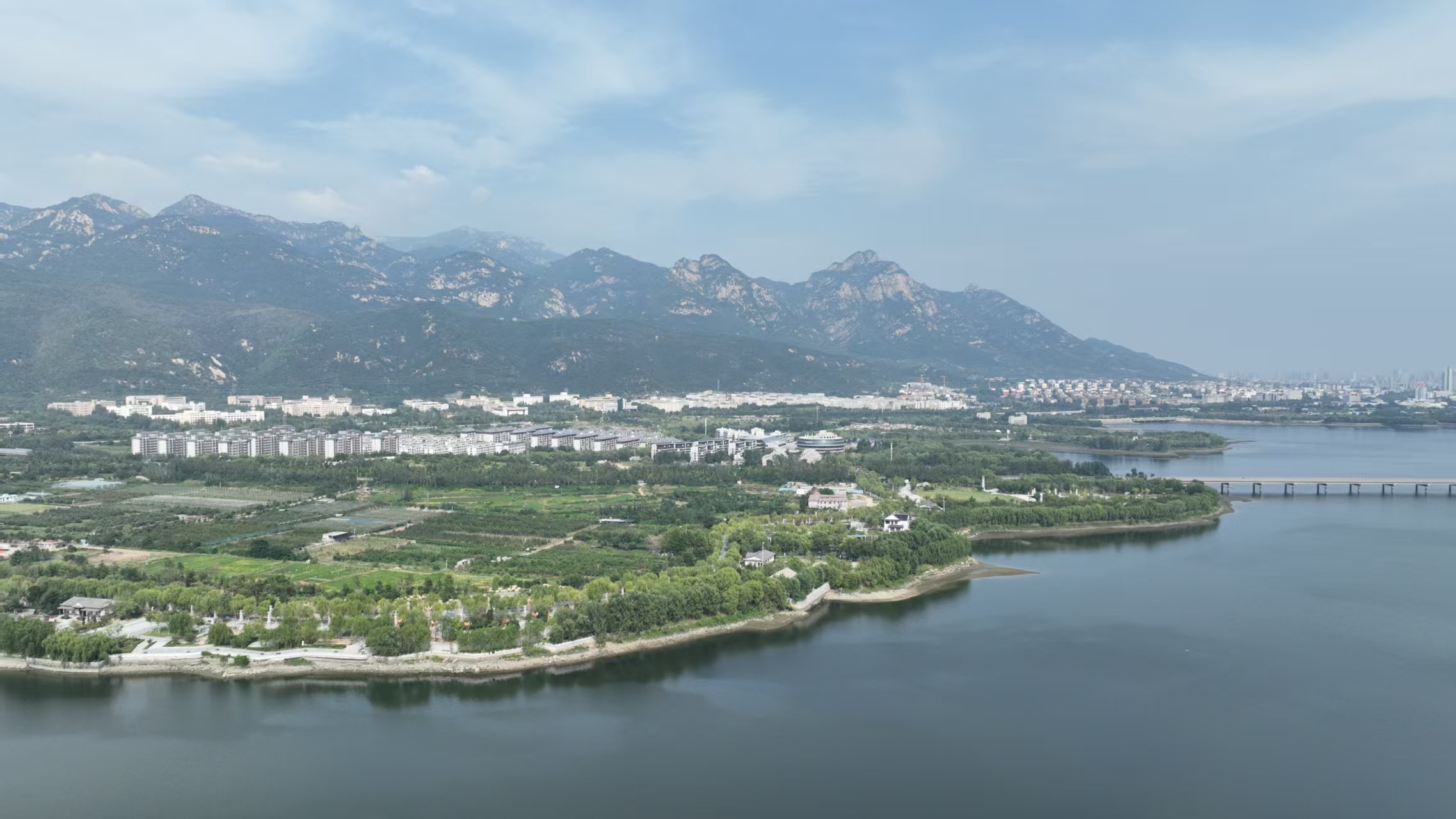
Core Viewpoint - The article highlights the successful ecological restoration of Tianping Lake in Tai'an, Shandong Province, transforming it from a polluted area into a vibrant ecological space, showcasing a model for beautiful river and lake protection in China [1][3]. Group 1: Ecological Restoration Efforts - Tianping Lake faced severe pollution issues in the 1990s due to untreated sewage from surrounding villages and other waste management problems [3]. - Recent ecological governance actions in Daiyue District included relocating lakeside villages, treating sewage outlets, and constructing separate rainwater and sewage drainage systems, resulting in the establishment of 18 kilometers of sewage pipelines and 20 kilometers of rainwater pipelines [3][4]. Group 2: Infrastructure and Investment - The district invested 1.2 billion yuan (approximately 12 billion) in projects such as lakeside road renovations, wetland park construction, and ecological restoration, creating over 800 acres of wetland parks and 400 acres of surface wetlands [4]. - The ecological restoration of the Shila River, which feeds into Tianping Lake, involved dredging and widening the river to restore its natural beauty [4]. Group 3: Community Engagement and Tourism Development - The revitalized Tianping Lake has become a popular recreational area for citizens and tourists, with a harmonious coexistence of nature and community activities [5]. - Cultural initiatives, including the establishment of large-scale cultural tourism projects and events, have enhanced the area's appeal, attracting over 3.5 million visitors annually [8]. Group 4: Technological Integration - The governance of Tianping Lake incorporates innovative technologies, including a digital platform for water quality monitoring and flood forecasting, which supports management decisions [7]. - The lake also plays a crucial role in regional energy management and low-carbon transition through its association with a pumped storage power station [7].

亚洲第一大露天矿坑:从“工业伤疤”变身“矿坑森林”
Ke Ji Ri Bao· 2025-09-11 09:26
Core Viewpoint - The ecological restoration of the Fushun West Open-pit Mine is crucial due to its long history of coal mining and the resulting environmental degradation, with significant efforts being made to address geological hazards and restore the ecosystem [3][5][6]. Group 1: Historical Context and Environmental Issues - The Fushun West Open-pit Mine has been in operation since 1901, producing 280 million tons of coal and 530 million tons of oil shale, contributing significantly to China's economic development [3]. - The mine has left behind a massive pit measuring 6.6 kilometers long and 2.2 kilometers wide, leading to severe environmental issues such as vegetation destruction, land degradation, and ecological imbalance [3]. - Geological hazards have been escalating, with notable incidents of ground fissures and subsidence occurring from 2009 to 2013, indicating a critical need for ecological governance [3][4]. Group 2: Governance and Restoration Efforts - In 2016, the Shenyang Research Institute began systematic research on the comprehensive governance of the West Open-pit Mine, focusing on various geological hazards and their underlying causes [4]. - The project team has proposed multiple remediation measures, including slope reduction, fire root removal, and groundwater drainage to address the complex geological issues [4]. - A dedicated project team was established in August 2021 to conduct on-site research and develop strategies for disaster governance, fire prevention, and ecological restoration [5]. Group 3: Ecological Restoration Plan - The ecological restoration plan aims to complete the afforestation of 8.16 million square meters within three years, with a total area of 9.79 million square meters planned for restoration [5]. - The project incorporates a comprehensive approach, utilizing engineering, botanical, and management measures to improve soil quality and enhance ecological safety [6]. - As a result of these efforts, the vegetation coverage in the mine area has increased from 14% to 63%, transforming the site into a green oasis and a recreational area for the local community [6][7].
砥砺奋进七十载 天山南北谱华章丨十年巧治流沙 台特玛湖焕然新生
Yang Shi Xin Wen· 2025-09-11 05:36
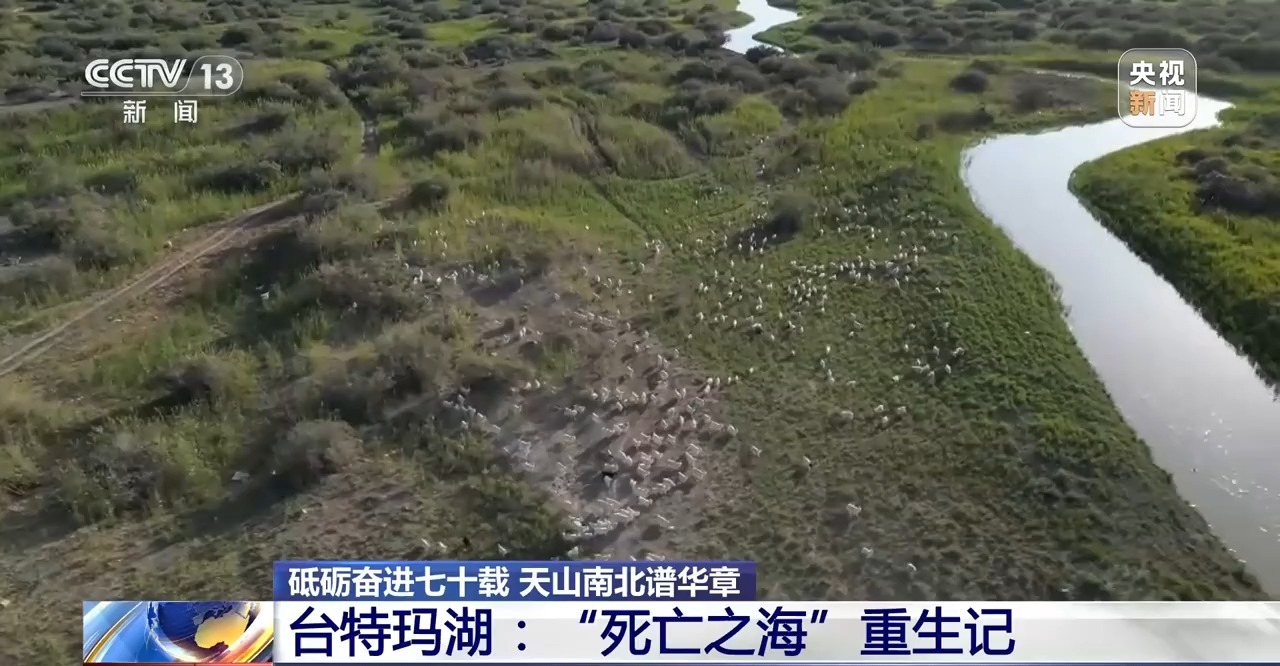
Group 1 - The 70th anniversary of the Xinjiang Uyghur Autonomous Region highlights significant achievements and development under the guidance of the Party's governance strategy since the 18th National Congress [1] - The region has transformed into a harmonious, prosperous, and ecologically sound area, showcasing a vibrant and thriving landscape [1] Group 2 - The revival of the Taitema Lake, previously known as the "Sea of Death," is attributed to ecological water replenishment from the upstream Tarim River, with seven large water conservancy projects storing snowmelt water [2][8] - Over the past decade, the groundwater level within 1 kilometer of the Tarim River's lower reaches has risen by approximately 7 meters, with over 800 square kilometers of desertification reduced and 2,300 square kilometers of vegetation restored [12] Group 3 - The successful implementation of the "green collar" initiative has led to the transformation of desert areas into productive agricultural land, with 4.25 million square kilometers of desertified land treated since the 18th National Congress [31] - The area has seen the establishment of a 3,046-kilometer green barrier around the Taklamakan Desert, facilitating the cultivation of economic crops such as grapes and jujubes [21][31]
乌梁素海系统治理生态持续向好
Nei Meng Gu Ri Bao· 2025-09-08 01:51
Core Insights - The ecological environment of the Uliangsuhai wetland is improving, with bird species increasing to 260 and a total population of approximately 700,000 [1] - The population of the swan goose, a key indicator species, has risen from 200 to over 600, reflecting the positive ecological changes [1] - A comprehensive restoration initiative was launched in 2018, marking a significant turning point for the Uliangsuhai watershed [1] Investment and Projects - A total investment of 50.86 billion yuan has been made for 35 national pilot projects, focusing on desert edge locking, agricultural pollution control, and industrial wastewater treatment [2] - During the 14th Five-Year Plan period, an additional 35.89 billion yuan is planned for 13 projects related to water environment, ecology, and resources [2] - The governance model has shifted from simple lake management to a systematic watershed approach, emphasizing multi-factor collaborative governance [2]
湖北五峰:一湾清水“润”茶乡
Zhong Guo Xin Wen Wang· 2025-09-04 11:41
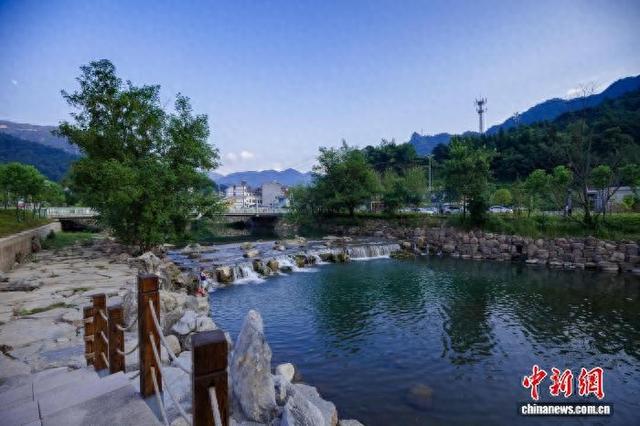
Core Viewpoint - The article highlights the ecological restoration and sustainable development efforts in Wufeng County, Hubei, particularly focusing on the improvement of the Yuyang River and its impact on local tea culture and tourism [1][6]. Group 1: Ecological Restoration Efforts - Wufeng County has implemented a multi-departmental collaborative governance mechanism to promote ecological protection, green development, and improvement of livelihoods [3][6]. - The Yuyang River, which flows 37.6 kilometers through Wufeng, faced water quality issues, dropping to Class IV due to increased wastewater from population growth and industrial activities after the county seat was relocated in 2015 [3][6]. - The county has successfully eliminated 420,000 tons of excess coal production capacity and achieved a "zero" status for chemical enterprises, significantly improving the river's ecological condition [3][6]. Group 2: Infrastructure and Water Quality Improvement - Several ecological restoration infrastructure projects, including the Yangtze River protection and the Moxi Chong watershed restoration, have been initiated, resulting in the treatment capacity of sewage plants increasing to 20,000 tons per day [6][8]. - As of September this year, the ecological flow compliance rate for 13 hydropower stations in the Yuyang River basin reached 100%, and the water quality stabilized at Class II [6][8]. Group 3: Integration of Tea Industry and Tourism - Wufeng is recognized as "China's Famous Tea Town," and the tea industry is a key pillar of the local economy. The integration of water ecology, tea culture, and Tujia culture is being promoted to enhance agricultural and tourism development [6][8]. - A tea cultural tourism complex, developed by returning youth, has become a popular destination, expected to provide over 40,000 yuan in annual dividends to around 20 local households [6][8]. Group 4: Future Plans - Wufeng County plans to continue its ecological restoration and long-term management efforts in the Yuyang River basin, ensuring stable water quality to support the integration of tea culture and tourism [8].
吉林长春:臭水河变生态福利
Jing Ji Ri Bao· 2025-08-30 06:11
Group 1 - The "Iton River Comprehensive Governance" project in Changchun has transformed the river from a polluted state to an ecological haven, enhancing the quality of life for residents [1][2] - The project has achieved significant results, including the completion of 124 river inlet governance projects and the construction of 120 kilometers of new sewage pipelines, effectively controlling internal pollution [2] - The establishment of ecological projects such as artificial wetlands has further improved the river's ecological environment, attracting various bird species [2] Group 2 - The revitalization of the Iton River has led to the emergence of new cultural and tourism landmarks, such as the Chengtou Nanxi Li Cultural and Tourism Town, which attracts nearly 10,000 visitors on weekends and has an annual reception of 3 million visitors [2] - Infrastructure improvements, including the completion of 10 parks and 11 bridge renovations along the river, have integrated cultural elements and enhanced the scenic beauty of the area [2] - The local power supply company has implemented safety measures to protect electrical facilities along the river, ensuring the smooth operation of cultural events and enhancing visitor experience [3]
开创多元协同治理格局 促进人工智能安全有序发展
Ke Ji Ri Bao· 2025-08-29 06:37
Group 1 - The core viewpoint of the article emphasizes the strategic importance of AI as a key driver for high-quality development in China, as outlined in the recent government opinion document [1][3][10] - The document identifies six key actions and eight foundational supports to promote the dual empowerment of technology and application, aiming for deep integration of AI into various sectors including scientific research, industry, and public welfare [1][3] Group 2 - AI is positioned as a "key increment" for high-quality development, with its core value reflected in four dimensions: empowerment, burden reduction, quality improvement, and efficiency enhancement [3][10] - AI is expanding the cognitive boundaries of scientific research, acting as an accelerator for foundational studies, such as AlphaFold solving the protein folding problem [3] - The document highlights AI's role in reducing workload through automation, thereby creating better job opportunities and enhancing consumer satisfaction [3] - In manufacturing, AI has been shown to reduce equipment failure rates by 20%, while in education and healthcare, AI systems are customizing learning paths and assisting doctors, respectively [3] Group 3 - The document addresses the need for a "safety and controllability" principle, emphasizing the importance of preventing security risks associated with AI [6][10] - It outlines inherent risks of AI models, including their "black box" nature, which leads to challenges in understanding decision-making processes and vulnerabilities to adversarial attacks [6] - Ethical challenges are also highlighted, where biases in training data can amplify societal issues, potentially leading to the spread of negative sentiments [6] Group 4 - The document proposes a new governance framework that emphasizes multi-dimensional collaboration to ensure the safe development of AI [8][9] - It suggests a "four-in-one" collaborative governance system that includes improving legal frameworks, establishing a multi-faceted public safety system, creating a network governance system, and developing an intelligent emergency response system [8] - The document also emphasizes enhancing safety governance capabilities across four key areas: technical safety, ethical safety, application safety, and national security [9]
河套平原的绿富同兴之路:沙地长出“钱” 玉米“黄金链”
Zhong Guo Xin Wen Wang· 2025-08-28 11:17
Core Insights - The article highlights the transformation of the Khatou Plain, where previously barren land has been converted into productive agricultural and ecological zones, showcasing a successful model of ecological governance and industrial revitalization [1][2]. Agricultural Development - In the Urat Front Banner, the introduction of high-quality glutinous corn has created a "golden chain" for local farmers, with guaranteed prices increasing from 0.4-0.8 yuan to 1 yuan per stick, leading to stable earnings of 3,000 yuan per mu [5][6]. - The average yield of glutinous corn in Dashi Tai Town reached 1,266.2 kg per mu, with a record single yield of 1,473.27 kg per mu expected in 2024 [5][6]. - The town has implemented technological advancements such as variety improvement and integrated water and fertilizer management across 70,000 mu to enhance both yield and quality [5][6]. Ecological Restoration - The Urat Back Banner has seen the establishment of over 2,400 acres of ecological economic forests through local initiatives to combat desertification, significantly improving the local environment and economy [2]. - The area has initiated multiple ecological governance projects, with a total treatment area expected to reach 7.3 million acres by the end of the year [2]. Circular Economy - The corn processing facility in Ulan Village recycles 3,500 tons of corn husks annually, generating a net income of 168,000 yuan for the village and providing local employment opportunities [6]. - The town aims to enhance its processing capacity from 50 million to 150 million corn ears over the next three years, establishing itself as the largest fresh corn base in western Inner Mongolia [6].
“光伏长城”让“死亡之海”变能源绿洲
Xin Hua She· 2025-08-28 01:32
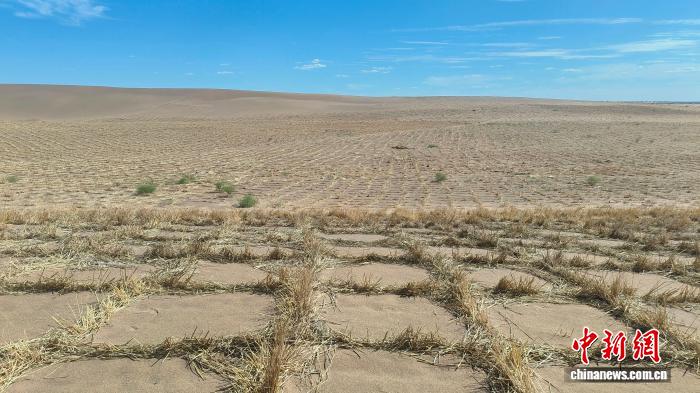
Core Viewpoint - The construction of a "photovoltaic wall" in the Kubuqi Desert is a significant innovation that combines ecological restoration with renewable energy generation, showcasing a sustainable approach to combating desertification and promoting economic development [1][2][3]. Group 1: Project Overview - The Kubuqi Desert's Erdos North Central New Energy Base has a planned total installed capacity of 16 million kilowatts, including 8 million kilowatts of solar power, 4 million kilowatts of wind power, and 400,000 kilowatts of thermal power [3]. - The project aims to deliver approximately 36 billion kilowatt-hours of clean energy annually, reducing carbon dioxide emissions by 16 million tons [3]. - The "photovoltaic wall" spans about 400 kilometers in length and 5 kilometers in average width, integrating ecological restoration with renewable energy development [3]. Group 2: Ecological and Economic Benefits - The "photovoltaic + ecological restoration" model effectively reduces surface evaporation and wind speed, creating a favorable environment for plant growth beneath the solar panels [2]. - The project utilizes water from nearby coal mines for irrigation and maintenance, addressing the challenges of desertification while enhancing local agricultural productivity [2]. - The implementation of the project has led to the establishment of over 10,000 acres of high-standard farmland, increasing local farmers' income by 900 yuan per acre [5]. Group 3: Community and Global Impact - The project has created a dual-layer protective network against sand invasion, integrating the photovoltaic wall with a 420-kilometer shelter forest [4]. - Local communities benefit economically from the project, with increased tourism and agricultural opportunities arising from the solar energy initiatives [5]. - The Kubuqi Desert's management practices are being shared globally as a model for sustainable desertification prevention, highlighting the balance between ecological and economic goals [5].
活力中国调研行丨采煤沉陷区变身“生态光伏园”
Huan Qiu Shi Bao· 2025-08-27 09:08
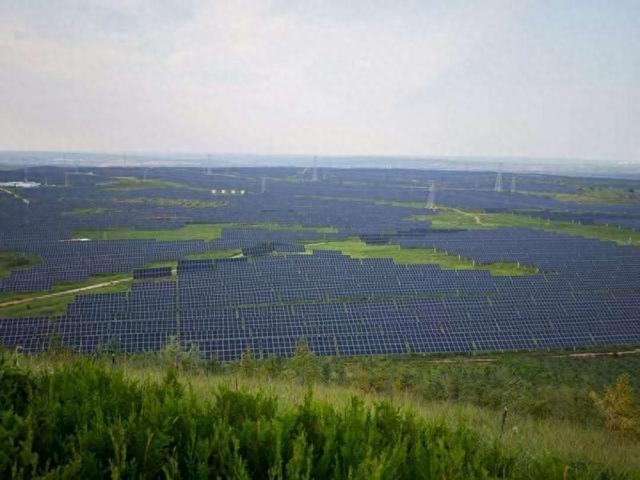
Group 1 - The "Vibrant China Research Tour" recently visited the 500,000-kilowatt ecological restoration photovoltaic power generation demonstration project in the coal mining subsidence area of Yijinhuoluo Banner, Ordos, Inner Mongolia, showcasing the transformation of damaged land into productive solar energy sites [2][4] - The project covers an area of 42,000 acres, with 19,000 acres already covered by solar panels, demonstrating significant land utilization improvement in previously unusable areas due to subsidence [2][4] - The project has increased vegetation coverage from less than 19% to over 64% since its completion in 2021, highlighting the ecological restoration efforts alongside energy production [4][6] Group 2 - The photovoltaic panels not only generate green energy but also help in soil stabilization and reducing water evaporation, contributing to local environmental improvements [4] - The project plans to implement "agriculture-photovoltaic complementary" practices, with alfalfa being cultivated under the solar panels to serve as high-protein feed for cattle, indicating a shift towards integrating livestock farming with renewable energy [6]