
网络安全

Search documents
美国出口审批机构陷入瘫痪,H20对华出口卡壳!
Xin Lang Cai Jing· 2025-08-04 03:32
Group 1 - The U.S. has relaxed restrictions on NVIDIA's H20 chip exports to China following discussions in June, but the Bureau of Industry and Security (BIS) is currently facing operational chaos due to staff shortages, leading to delays in export licenses for thousands of applications, including those from NVIDIA [1][2] - As of the end of July, no export licenses have been issued, affecting orders worth billions of dollars, which may push Chinese companies to seek local or alternative suppliers [2] - The BIS has been criticized for increased internal management chaos since Jeffrey Kessler took over in March, with reduced industry communication and ongoing staff departures impacting its operations [2] Group 2 - Concerns have been raised regarding the security of NVIDIA's H20 chip, which has been reported to have serious vulnerabilities, prompting a meeting with China's cybersecurity authorities [3][5] - NVIDIA has stated that its chips do not have backdoors and emphasized the importance of cybersecurity, but it must provide convincing security proof to regain market trust in China [5][6] - Recent incidents, such as cyberattacks on Russian public services and failures in the U.S. Starlink service, highlight the critical importance of network security [6] Group 3 - The semiconductor special gas market in China is projected to reach nearly 30 billion by 2025, with a consistent annual growth rate of 10%, indicating significant development potential [8] - Domestic companies have made breakthroughs in key areas, entering the supply chains of major international foundries, although high-end precursors and photolithography gases still rely heavily on imports [8] - The global semiconductor metal/oxide precursor market is expected to reach $1.7 billion in 2024, with a 15% year-on-year growth, driven by demand from advanced storage and logic chip processes [8]


民航安徽监管局调研合肥机场网络安全工作
Zhong Guo Min Hang Wang· 2025-08-02 02:37
Core Insights - The Civil Aviation Administration of Anhui conducted a special investigation on the cybersecurity status of Hefei Airport, receiving support from the Anhui Airport Group and the Cyberspace Administration [1] Group 1: Cybersecurity Assessment - Hefei Airport provided a detailed report on its recent key security measures, including personnel training, emergency plan formulation, information communication processes, legal self-inspection, and public display management [1] - The investigation team recognized Hefei Airport's recent cybersecurity efforts and provided specific recommendations for improvement, emphasizing the need for effective implementation of corrective measures and in-depth analysis of identified issues [1] Group 2: Ongoing Monitoring and Coordination - The investigation group advised continuous attention to three areas: national and industry cybersecurity activities, internal management systems and procedures, and the operational status of critical business systems [1] - The group also recommended the establishment of an internal cybersecurity coordination mechanism within the Anhui Airport Group to facilitate communication among subsidiaries and promote the advancement of cybersecurity efforts [1][2]
人民日报:英伟达,让我怎么相信你?
Xin Lang Cai Jing· 2025-08-02 02:25
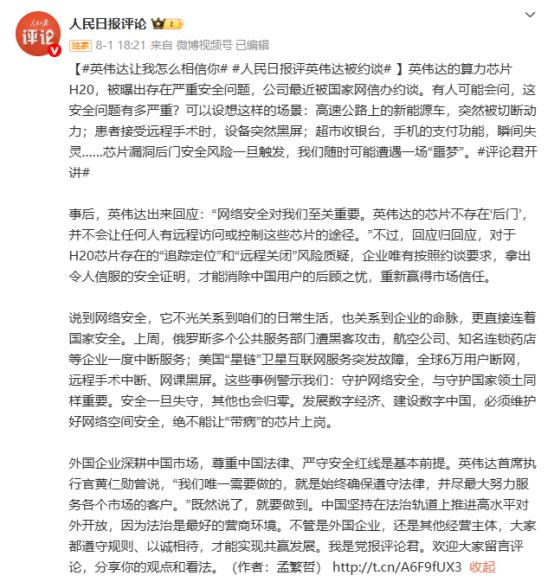
此前报道—— 据"网信中国"微信公众号7月31日消息,国家互联网信息办公室就H20算力芯片漏洞后门安全风险约谈 英伟达公司。 英伟达的算力芯片H20,被曝出存在严重安全问题,公司最近被国家网信办约谈。有人可能会问,这安 全问题有多严重?可以设想这样的场景:高速公路上的新能源车,突然被切断动力;患者接受远程手术 时,设备突然黑屏;超市收银台,手机的支付功能,瞬间失灵……芯片漏洞后门安全风险一旦触发,我 们随时可能遭遇一场"噩梦"。 事后,英伟达出来回应:"网络安全对我们至关重要。英伟达的芯片不存在'后门',并不会让任何人有 远程访问或控制这些芯片的途径。"不过,回应归回应,对于H20芯片存在的"追踪定位"和"远程关闭"风 险质疑,企业唯有按照约谈要求,拿出令人信服的安全证明,才能消除中国用户的后顾之忧,重新赢得 市场信任。 说到网络安全,它不光关系到咱们的日常生活,也关系到企业的命脉,更直接连着国家安全。上周,俄 罗斯多个公共服务部门遭黑客攻击,航空公司、知名连锁药店等企业一度中断服务;美国"星链"卫星互 联网服务突发故障,全球6万用户断网,远程手术中断、网课黑屏。这些事例警示我们:守护网络安 全,与守护国家领 ...
美情报机构瞄准我军企网攻窃密,外交部:暴露美国贼喊捉贼的虚伪面目
Huan Qiu Shi Bao· 2025-08-01 22:49
Group 1 - The article highlights two significant incidents of cyberattacks by US intelligence agencies targeting China's defense and military industry, providing security warnings for critical sectors [1] - In the first case, from July 2022 to July 2023, US intelligence exploited a zero-day vulnerability in Microsoft Exchange to attack a major military enterprise in China, controlling its email server for nearly a year and conducting over 40 attacks, resulting in the theft of emails from 11 individuals, including high-level officials [1] - The second case involved cyberattacks from July to November 2024 on a military enterprise in the communication and satellite internet sector, where attackers used vulnerabilities in electronic file systems to control over 300 devices and targeted sensitive data related to military networks [1] Group 2 - The article notes that in 2024, there were over 600 cyberattack incidents against important Chinese entities by foreign state-level APT organizations, with the defense and military sector being the primary target [1] - A Chinese government spokesperson emphasized that the US is the primary cyber threat to China and criticized the US for its hypocritical stance on cybersecurity, asserting that China will take necessary measures to protect its network security [2] - The spokesperson also pointed out that the US conducts these malicious cyber activities using its allies in Europe and around China as a base, advocating for international dialogue and cooperation to address cybersecurity challenges [2]
最新证据再次表明美国是中国面临的头号网络威胁
Ren Min Ri Bao Hai Wai Ban· 2025-08-01 22:20
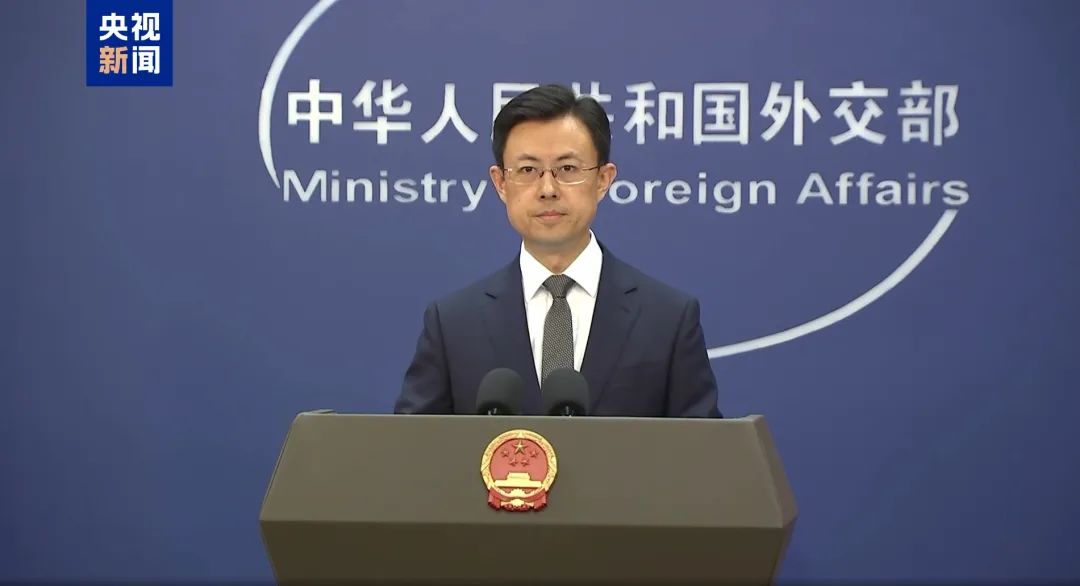
当日例行记者会上,有记者问:中国网络空间安全协会1日发布了美国政府以德国、韩国、新加坡、荷 兰等为跳板对中国实施网络攻击的两起案例,还透露了2024年境外国家级APT组织对中国重要单位实施 超过600起网络攻击事件,对中国关键信息基础设施、重要信息系统等进行攻击渗透。中方对此有何评 论? 新华社北京8月1日电(记者马卓言、许可)中国网络空间安全协会1日发布了美国政府对中国实施网络 攻击相关案例。外交部发言人郭嘉昆1日在答问时表示,中方注意到相关报告。这是美国政府对中国实 施恶意网络攻击的最新证据,再次表明美国是中国面临的头号网络威胁。中国将继续采取必要措施维护 自身的网络安全。 "这是美国政府对中国实施恶意网络攻击的最新证据,再次表明美国是中国面临的头号网络威胁,也暴 露了美国在网络安全上贼喊捉贼的虚伪面目。"郭嘉昆说,"中国将继续采取必要措施维护自身的网络安 全。" (责编:胡永秋、杨光宇) "我们还注意到,美方是以其欧洲及中国周边的盟国为跳板实施的上述恶意网络活动。中方一贯主张, 网络安全是各国面临的共同挑战,应当通过对话与合作共同应对。"他说。 ...
人民日报评论:英伟达,让我怎么相信你?
Hua Er Jie Jian Wen· 2025-08-01 10:32
人民日报评论称,英伟达的算力芯片H20,被曝出存在严重安全问题,公司最近被国家网信办约谈。有 人可能会问,这安全问题有多严重?可以设想这样的场景:高速公路上的新能源车,突然被切断动力; 患者接受远程手术时,设备突然黑屏;超市收银台,手机的支付功能,瞬间失灵……芯片漏洞后门安全 风险一旦触发,我们随时可能遭遇一场"噩梦"。 事后,英伟达出来回应:"网络安全对我们至关重要。 英伟达的芯片不存在'后门',并不会让任何人有远程访问或控制这些芯片的途径。"不过,回应归回 应,对于H20芯片存在的"追踪定位"和"远程关闭"风险质疑,企业唯有按照约谈要求,拿出令人信服的 安全证明,才能消除中国用户的后顾之忧,重新赢得市场信任。 外国企业深耕中国市场,尊重中国法 律、严守安全红线是基本前提。英伟达首席执行官黄仁勋曾说,"我们唯一需要做的,就是始终确保遵 守法律,并尽最大努力服务各个市场的客户。"既然说了,就要做到。中国坚持在法治轨道上推进高水 平对外开放,因为法治是最好的营商环境。不管是外国企业,还是其他经营主体,大家都遵守规则、以 诚相待,才能实现共赢发展。 市场有风险,投资需谨慎。本文不构成个人投资建议,也未考虑到个别用 ...
外交部:最新证据再次表明美国是中国面临的头号网络威胁
Xin Hua She· 2025-08-01 10:02
当日例行记者会上,有记者问:中国网络空间安全协会1日发布了美国政府以德国、韩国、新加坡、荷 兰等为跳板对中国实施网络攻击的两起案例,还透露了2024年境外国家级APT组织对中国重要单位实施 超过600起网络攻击事件,对中国关键信息基础设施、重要信息系统等进行攻击渗透。中方对此有何评 论? "我们还注意到,美方是以其欧洲及中国周边的盟国为跳板实施的上述恶意网络活动。中方一贯主张, 网络安全是各国面临的共同挑战,应当通过对话与合作共同应对。"他说。 新华社北京8月1日电(记者马卓言、许可)中国网络空间安全协会1日发布了美国政府对中国实施网络 攻击相关案例。外交部发言人郭嘉昆1日在答问时表示,中方注意到相关报告。这是美国政府对中国实 施恶意网络攻击的最新证据,再次表明美国是中国面临的头号网络威胁。中国将继续采取必要措施维护 自身的网络安全。 "这是美国政府对中国实施恶意网络攻击的最新证据,再次表明美国是中国面临的头号网络威胁,也暴 露了美国在网络安全上贼喊捉贼的虚伪面目。"郭嘉昆说,"中国将继续采取必要措施维护自身的网络安 全。" ...
美国对中国实施网络攻击,中方回应
Zheng Quan Shi Bao Wang· 2025-08-01 09:15
Group 1 - The Chinese Ministry of Foreign Affairs highlighted that the U.S. government is the primary cyber threat to China, as evidenced by recent reports of cyber attacks against China using allies as a base [3] - The Ministry emphasized the need for dialogue and cooperation in addressing cybersecurity challenges, asserting that it is a common issue faced by all nations [3] - China expressed its consistent opposition to the imposition of tariffs, stating that trade wars have no winners and that protectionism harms the interests of all parties involved [3] Group 2 - China expressed shock and disappointment over U.S. sanctions against Palestinian officials, criticizing the U.S. for ignoring international efforts for peace [4] - The Ministry reaffirmed its support for the Palestinian people's legitimate rights and called for a fair and responsible approach from the international community, particularly the U.S., in resolving the Palestinian issue [4] - China aims to work with the international community to achieve a comprehensive, just, and lasting solution to the Palestinian issue based on the "two-state solution" [4]
美国对中国实施网络攻击,中方回应
证券时报· 2025-08-01 08:57
Group 1 - The article highlights the recent allegations by the China Cybersecurity Association regarding the U.S. government's cyber attacks on China, using countries like Germany, South Korea, Singapore, and the Netherlands as platforms for these attacks [1][3] - It mentions that in 2024, foreign state-level APT organizations are expected to conduct over 600 cyber attack incidents against important Chinese entities, targeting critical information infrastructure and significant information systems [1][3] - The spokesperson emphasizes that the U.S. is the primary cyber threat to China and criticizes the U.S. for its hypocritical stance on cybersecurity [3] Group 2 - The article discusses China's consistent opposition to the imposition of tariffs by the U.S., stating that trade wars have no winners and that protectionism harms the interests of all parties involved [3] - It also addresses the recent U.S. sanctions against Palestinian officials and organizations, expressing China's shock and disappointment at the U.S. disregard for international efforts towards peace [3][4] - The spokesperson reiterates China's support for the Palestinian people's legitimate rights and calls for a fair and responsible approach from the international community, particularly the U.S., in resolving the Palestinian issue [4]
外交部:震惊、失望、无法理解!
Zhong Guo Ji Jin Bao· 2025-08-01 08:05
美国对中国重要单位实施超600起网络攻击,中方回应 有记者提问:中国网络空间安全协会今天发布了美国政府以德国、韩国、新加坡、荷兰等为跳板对中国 实施网络攻击的两起案例,还透露了2024年境外国家级APT组织对中国重要单位实施超过600起网络攻 击事件,对中国关键信息基础设施、重要信息系统等进行攻击渗透。中方对此有何评论? 来源:中国新闻网 外交部:对美方制裁感到震惊、失望和无法理解 中国外交部发言人郭嘉昆8月1日主持例行记者会。 有记者提问:7月31日,美国国务院宣布,对巴勒斯坦民族权力机构官员和巴勒斯坦解放组织成员发起 制裁,理由是巴方通过在国际法院和国际刑事法院发起行动将巴以冲突"国际化"、持续资助"恐怖主 义"、"煽动和美化"暴力。美方称,为了维护美国国家安全利益,必须让巴方为其行为付出代价。中方 对此有何评论? 郭嘉昆:中方对美国向巴勒斯坦民族权力机构官员和巴勒斯坦解放组织发起制裁感到震惊,对美方无视 国际社会的促和努力感到失望和无法理解。巴勒斯坦问题是中东问题的核心,关乎国际公平正义。当 前,巴勒斯坦问题正处在关键历史节点。国际社会特别是美国应该秉持公平公正和负责任态度,切实执 行联合国有关决议,为 ...