数字金融

Search documents
陈吉宁:携手做好金融“五篇大文章”,共同促进金融创新转型
Xin Hua Wang· 2025-09-10 09:11
Core Viewpoint - The focus is on enhancing the Shanghai International Financial Center through collaboration and innovation, emphasizing the importance of financial transformation and the role of the People's Bank of China Shanghai Headquarters in this process [1][2][3]. Group 1: Financial Innovation and Transformation - The Shanghai International Financial Center aims to achieve new progress by promoting financial innovation and transformation, with a focus on five key areas: technology finance, green finance, inclusive finance, pension finance, and digital finance [3]. - The People's Bank of China Shanghai Headquarters is encouraged to enhance its functions, optimize its layout, and innovate to support the establishment of a Renminbi financial asset allocation center and risk management center [1][3]. Group 2: Support for the Real Economy - There is a strong emphasis on serving the real economy, particularly in supporting technological innovation and attracting venture capital funds [3]. - The use of structural monetary policy tools, such as relending and rediscounting, is highlighted to bolster financial support for green and low-carbon transformation projects [3]. Group 3: Regulatory and Risk Management Enhancements - The need to optimize and improve the regulatory system and work mechanisms is stressed, including clarifying risk control requirements and admission standards [3]. - The establishment of a financial risk monitoring and early warning system based on blockchain technology is proposed to better prevent and resolve risks in key areas [3].
建信基金亮相服贸会,“梧桐巴士”开启金融赋能体验之旅
Xin Lang Ji Jin· 2025-09-10 06:49
Group 1 - The core theme of the event is the launch of the "Beijing Public Fund High-Quality Development Series Activities," focusing on the importance of financial services in supporting the real economy and enhancing investor education [6] - The event features five key areas: technology finance, green finance, inclusive finance, pension finance, and digital finance, showcasing the comprehensive efforts of the company in these domains [2][3] - As of June 2025, the company has invested in over 1,400 technology enterprises, with technology-related products constituting 64% of its equity investments [2] Group 2 - The company emphasizes the integration of green finance into its investment decision-making process, participating in governance activities of 87 listed companies and voting nearly 15,000 times to promote green development [2] - In inclusive finance, the company has achieved over 98% representation of long-tail clients in its wealth management services, enhancing financial services for rural areas through the "Yunongtong" platform [3] - The company has developed a comprehensive pension finance service system, covering various risk preferences and focusing on the needs of mainstream retirement demographics [3] Group 3 - The company is actively pursuing digital transformation across various operational areas, improving decision-making efficiency and customer service responsiveness [3] - The "Wutong Bus" initiative aims to create an immersive experience for investors, integrating technology and interactive elements to enhance financial literacy [4] - As of mid-2025, the company's total asset management scale reached 1.43 trillion yuan, positioning it among the industry leaders [5]
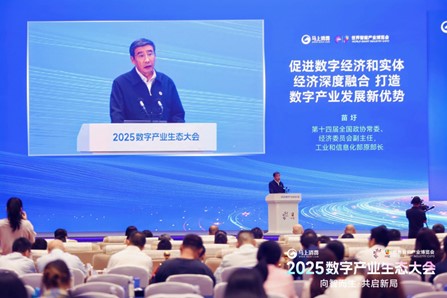
把脉数字产业发展风向标,2025智博会数字产业生态大会在渝召开
Guo Ji Jin Rong Bao· 2025-09-08 02:44
Group 1 - The 2025 World Intelligent Industry Expo in Chongqing focuses on the new opportunities in the digital industry driven by artificial intelligence and aims to provide direction and intellectual support for the future development of China's digital industry [1] - The integration of digital economy and real economy is accelerating, with a shift in global industrial competition focusing on innovation capability, technological strength, and ecological dominance rather than just cost and scale [3] - The importance of ecological dominance in industry is highlighted, indicating that companies that gain this power in niche areas will enhance their global competitiveness [3] Group 2 - The financial industry is undergoing profound productivity changes driven by new technologies like AI large models, which present challenges such as the digital divide for the elderly and data security [3] - Digital financial innovation should adhere to the principle of "high, medium, initial, small," focusing on occupying technological high ground while minimizing risks and costs [4] - The concept of human-machine collaboration is defining a new paradigm for financial intelligence, aiming to awaken dormant data assets and integrate AI capabilities into workflows for more efficient and personalized financial services [4]

中证协引导行业精准发力金融“五篇大文章”
Zheng Quan Ri Bao· 2025-09-07 16:12
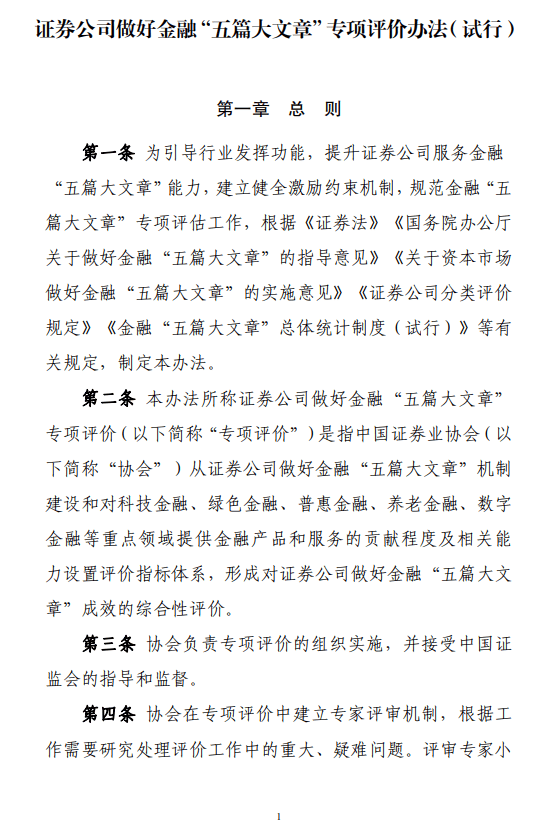
Core Viewpoint - The Chinese Securities Association has introduced a new evaluation method to enhance the performance of securities firms in contributing to the financial "Five Major Articles," aiming for high-quality industry development [1][2]. Group 1: Evaluation Framework - The evaluation method consists of 14 representative indicators to create a multi-dimensional assessment system for securities firms [1][4]. - The evaluation focuses on key areas, ensuring scientific and operational feasibility, and aims to reduce the reporting burden on companies [3][4]. - The evaluation will be based primarily on quantitative indicators (90 points), with qualitative indicators (10 points) and additional items (5 points) [4][5]. Group 2: Key Areas of Focus - The evaluation emphasizes technology finance, which holds the highest weight of 50 points, while green finance, inclusive finance, pension finance, and digital finance each hold 10 points [4][5]. - Specific indicators for technology finance include amounts and numbers related to technology innovation bond underwriting, equity financing for tech companies, and direct investments in non-listed tech firms [5][6]. Group 3: Scoring Methodology - The scoring system is designed to highlight key areas, with a focus on resource investment in technology finance, allowing for a broader range of additional points [6]. - The scoring also considers both monetary amounts and quantities, ensuring a balanced evaluation that encourages diverse development among firms [6].
券商“五篇大文章”考核定调:科技金融占比最高,多项指标涉及债券领域
Xin Lang Cai Jing· 2025-09-07 14:20
Core Viewpoint - The China Securities Association has introduced a new evaluation system focused on the financial "Five Major Articles" to enhance the responsibilities of securities firms and align their services with national strategies [1][2]. Group 1: Evaluation Framework - The evaluation method consists of 25 articles divided into four chapters: general principles, evaluation indicators and scoring methods, implementation and results application, and appendices [1]. - The evaluation aims to guide securities firms to invest resources in key national strategic areas, enhancing risk control and promoting high-quality industry development [1][2]. Group 2: Evaluation Indicators - The evaluation includes quantitative indicators for the five areas: technology finance (50 points), green finance (10 points), inclusive finance (10 points), pension finance (10 points), and digital finance (10 points) [2][3]. - Specific indicators for technology finance include amounts and numbers of technology innovation bond underwriting, equity financing for technology companies, and direct investments in non-listed technology firms [1][3]. Group 3: Industry Impact - The introduction of the evaluation system is expected to shift the focus of securities firms from scale expansion to deeper functional development, promoting a more differentiated competitive landscape [2][5]. - The evaluation encourages firms to enhance their service capabilities in technology, green, and inclusive finance, moving away from short-term profit-seeking behaviors [2][8]. Group 4: Performance Rankings - The top firms in technology finance include CITIC Securities with 128.19 billion yuan in technology innovation bond underwriting, followed by CITIC Jiantou and Guotai Junan [5][6]. - In the inclusive finance sector, the leading underwriters for private enterprise bonds are招商证券 and 广发证券, both exceeding 30 billion yuan [7]. - The rankings reflect a competitive landscape where leading firms dominate core areas while smaller firms carve out niches in specific segments [5][8].






国泰海通,排名突破!上半年公募席位佣金收入2.51亿元
Zhong Guo Zheng Quan Bao· 2025-09-07 10:00
Group 1 - The core viewpoint is that Guotai Haitong has achieved significant rankings in the brokerage industry, with a focus on enhancing its service capabilities and market position despite a declining overall commission scale [1][2] - Guotai Haitong ranked first in public offering seat commission income under the rental trading unit model, generating 251 million yuan, which accounts for 6.41% of the industry [1] - The company also achieved second place in total commission income from public offerings, reaching 280 million yuan, an increase of five ranks from the end of last year [1] Group 2 - The company plans to continue developing its research and institutional business lines in a professional, comprehensive, and platform-based manner, aiming to improve the efficiency of capital and asset flow [2] - Guotai Haitong will focus on five key areas: technology finance, green finance, inclusive finance, pension finance, and digital finance, to enhance its service capabilities for various institutional clients [2] - The company aims to build a competitive institutional client service ecosystem that enhances its industry leadership and competitiveness [2]
易会满被查!证监会最新发声;我国规划撞击一颗小行星;辛巴被带走调查?辛选集团回应;特朗普称美联储主席候选人名单缩小至三人丨每经早参
Sou Hu Cai Jing· 2025-09-06 22:54
Group 1 - China is planning a kinetic impact demonstration mission on an asteroid to verify the feasibility of asteroid defense strategies [2] - The former vice chairman of the China Banking and Insurance Regulatory Commission, Yi Huiman, is under investigation for serious violations of discipline and law [2] - The China Securities Regulatory Commission expressed strong support for the decision to investigate Yi Huiman [2] Group 2 - A cargo ship collided with a fishing boat in the Bohai Sea, resulting in the fishing boat capsizing and personnel missing [3] - The Ministry of Emergency Management has deployed teams to search for missing persons and investigate the cause of the accident [3] Group 3 - Digital finance is becoming a significant engine for empowering pension finance, according to Liang Tao, former vice chairman of the China Banking and Insurance Regulatory Commission [5] - The total amount of trademark pledge financing registration in China is expected to exceed 300 billion yuan in 2024 [6] - China is actively promoting its brands internationally, with a 6.3% increase in Madrid trademark international registration applications [6] Group 4 - The Chongqing Education Commission reported on an investigation into a procurement incident involving a university purchasing routers at an inflated price [4] - The investigation led to multiple individuals being held accountable and penalties imposed on the involved company [4] Group 5 - Didi Chuxing reported an 84% increase in rental car orders during the summer compared to the previous year, indicating strong market demand [10] - The company noted that over 60% of orders came from first- and second-tier cities, with significant growth in lower-tier cities as well [10] Group 6 - Huaxia Bank was fined 87.25 million yuan for management failures in various business operations, and the bank accepted the penalties while committing to improve compliance [9] - The bank emphasized the importance of strengthening internal controls and risk management to ensure healthy business development [9] Group 7 - WM Motor plans to resume production in September and has outlined an ambitious development plan, including an IPO preparation by 2028 [14] - The company aims to produce 100,000 vehicles annually by 2030, with a projected revenue of 120 billion yuan [14]

“数字金融新丝路”见证“百年金城”国际化探索
Sou Hu Cai Jing· 2025-09-06 20:34
Core Insights - Jincheng Bank, a century-old local brand in Tianjin, has made significant strides in cross-border financial services, ranking among the top 30 global digital banks for two consecutive years and surpassing 20 billion RMB in cross-border settlement volume [1][2] Group 1: Cross-Border Financial Services - The "Jinlu Tong" product system has facilitated over 10 billion RMB in receivables for Chinese sellers on overseas e-commerce platforms, enhancing efficiency and security in cross-border transactions [2][3] - The bank's services leverage big data and artificial intelligence to automate trade document verification, intelligent currency hedging, and integrated fund settlement, significantly improving the cross-border payment process for Chinese sellers [2][3] Group 2: Regional Collaboration and Support Initiatives - Jincheng Bank has launched a "Youth Study Support Program" in collaboration with the largest study service organization in China, aiming to provide low-cost tuition payment services for 100,000 students over the next three years [3] - The bank is focused on deepening regional collaboration and building a "Belt and Road" financial ecosystem, utilizing its geographical advantages and policies to support cross-border trade [3][4] Group 3: Technological Infrastructure - The bank has established five core technology systems to support its cross-border business, covering customer management, payment clearing, risk control, data reporting, and intelligent operations [4][5] - By integrating domestic and international clearing networks, the bank has created a high-availability, low-latency core payment system that enhances the success rate of cross-border remittances while controlling costs [4][5] Group 4: Future Outlook - Jincheng Bank aims to continue expanding its international partnerships and services, contributing to the "Belt and Road" initiative and enhancing its role in the global financial landscape [5][6]
券商“五篇大文章”评价办法出炉!科技金融占50分
Sou Hu Cai Jing· 2025-09-05 23:07
Core Viewpoint - The China Securities Association has released a trial evaluation method for securities companies to enhance their contributions to the financial "Five Major Articles" [1] Group 1: Evaluation Indicators - The evaluation method consists of 25 articles divided into four chapters: general principles, evaluation indicators and scoring methods, implementation and results application, and supplementary provisions [1] - Quantitative indicators include technology finance, green finance, inclusive finance, pension finance, and digital finance, reflecting the company's contributions and capabilities in these key areas [1][10] - Qualitative indicators assess the establishment of mechanisms and continuous investment in business resources, including whether the company integrates the financial "Five Major Articles" into its strategic development [5][10] Group 2: Scoring Method - The scoring system emphasizes the importance of technology finance, assigning it a higher score (50 points total) compared to other areas, which each receive 10 points [6] - Companies ranked in the top 50 for most indicators will receive additional points, with small score differences to encourage participation from various companies [6] - The evaluation considers both monetary amounts and quantities, ensuring a balanced assessment that avoids overemphasis on absolute scale [6] Group 3: Implementation and Results - The evaluation will be conducted annually, covering the previous year's performance from January 1 to December 31 [12] - Securities companies are responsible for accurately reporting their contributions to the financial "Five Major Articles" and ensuring the authenticity of the data submitted [12]
稳中提质显韧性 交通银行书写高质量发展答卷
Zhong Guo Jing Ying Bao· 2025-09-05 18:29
Core Viewpoint - The Bank of Communications reported a stable and positive performance in the first half of 2025, with key operating indicators showing growth and improved asset quality, reflecting its commitment to shareholder returns and robust management [2][3][4]. Financial Performance - As of June 30, 2025, the total assets of the group reached 15.44 trillion yuan, an increase of 3.59% compared to the end of the previous year [2][3]. - The bank achieved operating income of 1333.68 billion yuan and a net profit attributable to shareholders of 460.16 billion yuan, representing year-on-year growth of 0.77% and 1.61%, respectively [2][3][4]. - The net interest income was 852.47 billion yuan, with a year-on-year increase of 1.20%, and the net interest margin remained at 1.21% [4]. Asset Quality and Risk Management - The non-performing loan ratio was 1.28%, a decrease of 0.03 percentage points from the end of the previous year, while the provision coverage ratio increased to 209.56%, up by 7.62 percentage points [5]. - The bank disposed of non-performing loans totaling 378.3 billion yuan, a year-on-year increase of 27.9%, with substantial recoveries indicating effective risk management [5]. Strategic Focus Areas - The bank is committed to enhancing its service to the real economy, with a customer loan balance of 9 trillion yuan, reflecting a growth of 5.18% year-on-year [4][7]. - The bank's focus on technology, green finance, inclusive finance, pension finance, and digital finance is evident, with significant growth in loans across these sectors [7][8][9]. Capital Management and Shareholder Returns - The bank successfully raised 120 billion yuan through the issuance of approximately 14.1 billion A-shares, enhancing its core tier one capital and risk resilience [6]. - The bank proposed a cash dividend of 1.563 yuan per 10 shares, totaling 13.811 billion yuan, which represents 30% of the net profit attributable to shareholders for the first half of 2025 [6]. Future Development Plans - The bank aims to align with national development strategies, focusing on enhancing capital efficiency, expanding green finance, and improving digital services [11][12]. - It plans to strengthen its customer base and risk management while maintaining its commitment to serving the real economy and contributing to national economic goals [12].