
金融“五篇大文章”

Search documents
建设银行(00939) - 2025年年度报告
2026-03-27 11:53
香港交易及結算所有限公司及香港聯合交易所有限公司對本公告之內容概不負責,對其準確性 或完整性亦不發表任何聲明,並明確表示,概不對因本公告全部或任何部分內容而產生或因依 賴該等內容而引致之任何損失承擔任何責任。 ( 於 中 華 人 民 共 和 國 註 冊 成 立 的 股 份 有 限 公 司 ) (A joint stock company incorporated in the People's Republic of China with limited liability) (股份代號:00939) 2025年年度報告 本公告乃根據《香港聯合交易所有限公司證券上市規則》第13.10B條刊登。茲載列 該公告(於上海證券交易所網站刊登)如下,僅供參閱。 特此公告。 中國建設銀行股份有限公司 董事會 2026年3月27日 於本公告日期,本行的執行董事為張金良先生、張毅先生和紀志宏先生,本行 的非執行董事為辛曉岱女士、劉芳女士、李璐女士、李莉女士、竇洪權先生和 史劍先生,本行的獨立非執行董事為威廉 • 科恩先生、梁錦松先生、詹誠信勛爵、 林志軍先生和張為國先生。 守正创新 行稳致远 2025 年度报告 中国建设银行 ...
中债估值中心在沪举办 中债金融“五篇大文章”数据应用客户交流会
Jin Rong Shi Bao· 2026-02-10 01:25
Group 1 - The core event was the "Five Major Articles" data application customer exchange meeting held by China Bond Valuation Center in Shanghai, attended by over thirty representatives from banks, wealth management companies, and insurance firms [1] - Experts from Shanghai Pudong Development Bank, China Everbright Bank Wealth Management, and China CITIC Prudential Life shared insights on sustainable finance investment practices from their respective perspectives [1] - The China Bond Valuation Center reported on the construction of the "Five Major Articles" data system and innovations in service offerings, emphasizing the importance of data support for financial institutions in meeting statistical reporting requirements [1] Group 2 - Representatives expressed high expectations for future service optimization from the China Bond Valuation Center, highlighting the effectiveness of its data services [1] - The China Bond Valuation Center plans to continue its market-oriented and customer-centric approach, focusing on market research, product service optimization, and expanding data application innovations to support high-quality development of the real economy [1]
发挥资管公司功能性与专业性 助力区域经济高质量发展 访中国长城资产上海分公司党委书记、总经理侯军帮
Jin Rong Shi Bao· 2026-02-05 03:09
Core Viewpoint - The 20th Central Committee's Fourth Plenary Session emphasizes the significance of comprehensive deepening of reforms in the new era, providing important directives for the financial industry to serve national strategies and embody political and people-oriented characteristics. Group 1: Implementation of Party's Guidelines - The company aims to deeply understand and implement the spirit of the 20th Central Committee's Fourth Plenary Session, focusing on high-quality development and translating political requirements into actions that support regional economic and social development [1][2]. - As a key player in the financial system, the company is tasked with mitigating financial risks and revitalizing existing assets while supporting the transformation of the real economy and regional development strategies [1][2]. Group 2: Enhancing Professional Capabilities - The company continuously improves its core professional capabilities in risk identification, asset valuation, restructuring, and capital operations to achieve a balance of controllable risks, expected returns, and effective services [2][3]. - The focus is on addressing the pain points of enterprises and the needs of the public, thereby injecting financial momentum into Shanghai's economic and social development [2][3]. Group 3: Risk Mitigation and Asset Revitalization - The company prioritizes financial risk mitigation as a functional task, actively collaborating with small and medium financial institutions to help them and enterprises overcome difficulties, particularly in the real estate sector [3][4]. - Efforts include project rescue and mergers and acquisitions to revitalize existing assets and prevent risk spillover, thereby establishing a solid foundation for economic stability [3][4]. Group 4: Resource Integration for International Financial Center - Leveraging its resources, the company acts as a bridge for cross-institutional, cross-industry, and cross-market resource integration, focusing on high-tech sectors such as new energy and semiconductors [4][5]. - The successful launch of the first REITs project by 2025 expands asset exit channels and enriches the financial market product system, contributing to the construction of the international financial center [4][5]. Group 5: Future Development Path - The company is committed to enhancing its professional service capabilities and optimizing its business model to achieve qualitative and quantitative growth in its core operations [5]. - By focusing on high-tech industries, consumption upgrades, and elder care services, the company aims to develop customized solutions that translate professional capabilities into effective services [5].



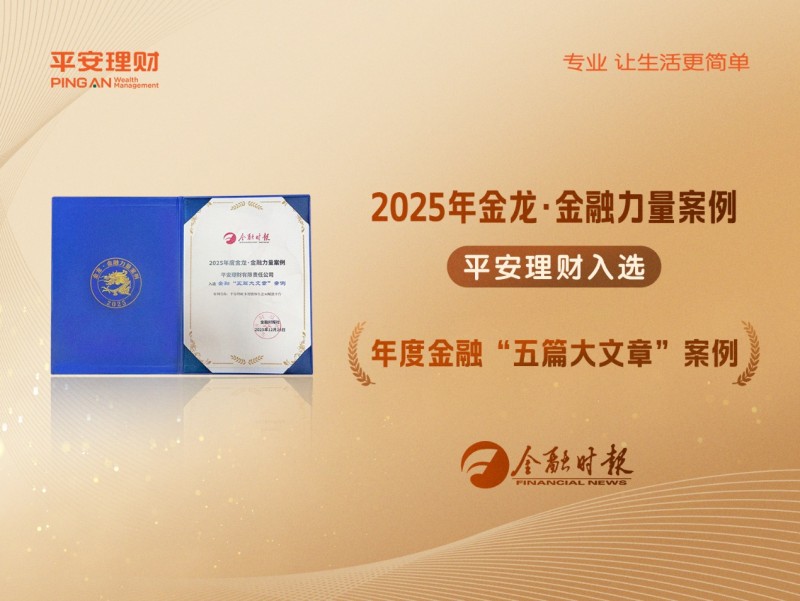
实干筑基、专业致远 平安理财获颁两项金融“五篇大文章”荣誉
Zhong Jin Zai Xian· 2025-12-29 09:11
Core Insights - Ping An Wealth Management has recently received multiple prestigious awards for its outstanding performance in serving the real economy and promoting high-quality development, including recognition from the Financial Times and the Financial界 [1][5][6] Awards and Recognition - The "Golden Dragon Financial Power Case" is an annual evaluation initiated by the Financial Times, aimed at recognizing financial institutions that have made significant contributions in areas such as serving the real economy and green finance [1] - The "Golden Intelligence Award" is another notable recognition that highlights institutions excelling in financial innovation and empowering industries, with a rigorous selection process involving data screening and expert reviews [1] Technological Innovations - The recognition is attributed to the development of the "Multi-Agent Ecosystem AI Empowerment Platform," which utilizes advanced technologies like AI, knowledge graphs, and big data to address industry challenges in asset and wealth management [5][6] - This platform has successfully implemented automated operations and collaborative decision-making, enhancing efficiency in risk control, investment research, operations, and marketing [5] Financial Contributions - Since its establishment, Ping An Wealth Management has generated over 110 billion yuan in investment returns for clients and has invested more than 260 billion yuan annually to support the real economy [6] - The company emphasizes its commitment to high-quality development and the integration of its banking wealth management business with national financial strategies [6] Future Directions - Moving forward, Ping An Wealth Management aims to strengthen its capabilities in line with national strategic deployments, focusing on enhancing financial services for the real economy and fostering new productive forces [6] - The company plans to leverage cutting-edge technologies in investment research and business operations to maintain a competitive edge in the financial sector [6]
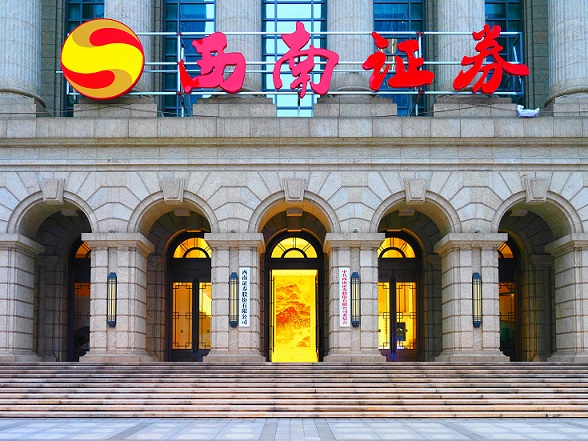
西南证券总经理杨雨松:锚定金融“五篇大文章” 着力服务重庆高质量发展
Zhong Guo Zheng Quan Bao· 2025-12-26 00:27
Core Viewpoint - Southwest Securities is actively implementing its financial strategy with a focus on technology finance and green finance, aiming to enhance its professional investment capabilities and support high-quality regional development [1][3]. Group 1: Financial Strategy and Implementation - The company has developed a three-year work plan (2025-2027) to advance its financial initiatives, including technology finance, green finance, inclusive finance, pension finance, and digital finance [1][3]. - A dedicated task force has been established to lead the implementation of the financial strategy, ensuring accountability and effective execution of tasks across departments [3]. - The company has launched a special incentive support plan for strategic projects, increasing motivation for initiatives like technology innovation bonds and IPOs [3]. Group 2: Technology Finance - Southwest Securities has provided financing services to technology enterprises, with a total investment scale of approximately 10 billion yuan through various means, including the issuance of technology innovation bonds [4][5]. - The company has facilitated significant mergers and acquisitions, with transaction amounts exceeding 5 billion yuan in Chongqing, supporting listed companies in enhancing their production capabilities [4][5]. - The company has focused on strategic emerging industries, investing 230 million yuan in technology enterprises in 2023, and has supported 12 companies in listing on the Science and Technology Innovation Board [5]. Group 3: Green Finance - The company has actively developed green finance to support carbon neutrality goals, having underwritten three green bonds with a total financing scale of 1.2 billion yuan [7]. - Southwest Securities has launched over 120 themed funds related to low-carbon and renewable energy in the first eight months of the year [7]. - The company has obtained qualifications for carbon emissions trading and completed its first carbon quota purchase transaction in the first half of 2025 [8]. Group 4: Future Directions - The company aims to prioritize the implementation of its financial strategy as a key focus for 2026, integrating it into the upcoming "14th Five-Year Plan" [9][10]. - It plans to establish a sustainable service system and business model by enhancing its competitive advantages in various financial sectors [10]. - The company emphasizes the importance of fostering an innovative environment that encourages early and small investments in hard technology [10][11].

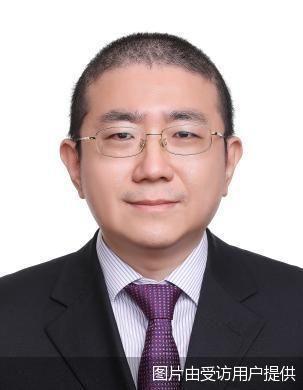
专访杨涛:金融“五篇大文章”不能“各写各的”
Xin Lang Cai Jing· 2025-12-25 16:21
Core Viewpoint - In 2025, China's financial market is expected to navigate a unique rhythm amidst internal and external changes, with monetary policy maintaining a "moderately loose" tone and a series of financial policies aimed at stimulating consumption and optimizing financial supply [1] Group 1: Financial Policies and Economic Environment - The financial policies in 2025 will focus on promoting consumption through a combination of financial support, scene integration, and subsidies to activate consumer demand [1] - The "Five Major Articles" in finance will systematically advance measures to enhance economic circulation, stimulate domestic demand, and optimize financial supply [1] - The core contradiction affecting consumer spending is the challenge of disposable income, which needs to be addressed for sustainable long-term growth in consumption [1][7] Group 2: Service Consumption as a Core Focus - Service consumption should be prioritized as it has greater potential for growth compared to goods consumption, with a notable expansion in the service consumption market over the past two years [5] - The structure of service consumption includes basic, developmental, and enjoyment types, with a need to enhance the share of cultural, entertainment, and financial services [5] - Future policies should target the pain points in promoting service consumption, such as increasing disposable income, improving consumption capacity, and optimizing product quality and pricing [6] Group 3: Digital Finance and Innovation - Digital finance is identified as the main thread in the "Five Major Articles," focusing on financial digital transformation to achieve high-quality development [2][10] - The integration of digital finance with other financial areas is crucial for innovation, with an emphasis on supporting small and micro enterprises [10] - The development of a supportive environment for digital finance, including credit services and risk management, is essential for the success of the "Five Major Articles" [10][11] Group 4: Support for Small and Medium Banks - Small and medium banks face multiple constraints in digital transformation, necessitating support from regulatory bodies and industry associations [12] - Key measures include differentiated regulatory support, building open ecosystems, and optimizing local financial technology environments to facilitate digital transformation [12][13] Group 5: Data as an Asset - The upgrade of data elements to asset status presents a significant opportunity, allowing for innovative financing solutions based on data assets [16] - Data can enhance credit evaluation and risk management in technology finance, addressing challenges faced by light-asset enterprises [16] Group 6: Cross-Border Payment Systems - The need for interconnected cross-border payment systems is urgent, driven by the challenges of high costs and low efficiency in current global payment networks [17][18] - New technologies and standards are essential for transforming the cross-border payment landscape, with a focus on creating a new ecosystem that accommodates emerging payment models [17][18]
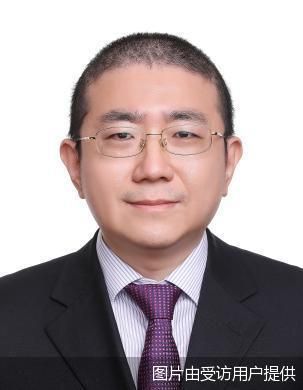
“十五五”首席观察|专访杨涛:金融“五篇大文章”不能“各写各的”
Bei Jing Shang Bao· 2025-12-25 14:41
Core Viewpoint - In 2025, China's financial market is characterized by a unique rhythm amidst internal and external changes, with monetary policy maintaining a "moderately loose" tone and a series of financial policies aimed at stimulating consumption and optimizing financial supply [1][2]. Financial Policies and Consumption - The "Five Major Articles" in finance are crucial for promoting economic circulation and stimulating domestic demand, with a focus on digital finance as the main line for high-quality financial development [2][9]. - The transition from "incremental pull" to "structural optimization" in consumption policies indicates a shift in focus towards service consumption, which is expected to have greater growth potential than goods consumption [4][5]. Service Consumption - Service consumption is identified as a core area for promoting sustainable growth, with significant room for improvement compared to goods consumption [5][6]. - Key challenges include increasing disposable income, enhancing consumption capacity, improving consumption tendencies, ensuring product quality, optimizing the consumption environment, and reducing policy constraints [6]. Resident Income and Consumption Potential - The core contradiction affecting resident consumption is the challenge of disposable income, which has seen a growth slowdown, negatively impacting consumption, especially in services [7][8]. - Future focus areas for increasing resident income should include enhancing property income and operational income, with an emphasis on supporting small businesses and informal economies [8]. Digital Finance and Innovation - Digital finance is positioned as the main line of the "Five Major Articles," emphasizing the need for coordination among various financial sectors to avoid imbalances [9][10]. - The integration of new technologies and data elements is essential for driving high-quality development in technology finance, with a focus on innovative credit models and risk management [15][16]. Cross-Border Payment Systems - The need for interconnected cross-border payment systems is highlighted, with new technologies, standards, and ecosystems being essential for addressing existing challenges in cost, efficiency, and transparency [17][18].
南华期货:连续三年以《白皮书》贡献期货智慧,助力行业高质量发展
Xin Lang Cai Jing· 2025-12-18 05:22
Core Insights - The futures industry is focusing on serving the real economy through innovative business expansion and enhancing service efficiency, with Nanhua Futures actively responding to national strategies by publishing the "White Paper on Serving the Real Economy" for three consecutive years [1][2][3] Group 1: White Paper Development - The first "White Paper on Serving the Real Economy" was released in August 2023, systematically summarizing the theoretical foundations and practical pathways of futures services to the real economy, providing replicable "futures solutions" through case studies [2] - The 2024 edition of the white paper was fully optimized and upgraded, summarizing and promoting experiences and practical results in serving the real economy, while responding to new policy environments and requirements [2][3] - The 2025 white paper marks a strategic leap, focusing on the financial "five major articles" and showcasing Nanhua Futures' practices in various financial sectors, contributing to the high-quality development of the industry [3][4] Group 2: Financial "Five Major Articles" - The financial "five major articles" were first proposed at the Central Financial Work Conference in October 2023, aiming to promote high-quality financial development and support national modernization efforts [4][5] - The implementation of these articles is emphasized by the China Securities Regulatory Commission and the State Council, highlighting the importance of the futures market in achieving these goals [4][5] Group 3: Practical Innovations - Nanhua Futures has integrated technology finance, actively pursued green finance to support carbon neutrality goals, and implemented inclusive finance strategies to serve small and micro enterprises and promote rural revitalization [6][7] - Specific examples include tailored financial service packages for high-end composite material companies and training for lithium carbonate recovery enterprises to utilize futures markets effectively [7][8] - In inclusive finance, Nanhua Futures has innovated a "insurance + futures" model to mitigate risks in livestock farming, and in pension finance, it has launched products linked to commodity indices to fulfill the mission of financial inclusivity [8][9] Group 4: Future Outlook - Nanhua Futures plans to continue deepening the practice of the financial "five major articles," optimizing service models, expanding product matrices, and enhancing collaboration within the industry [9][10] - The company aims to provide a multi-layered, widely covered futures service system, contributing significantly to high-quality economic development and the modernization of China [10]

南华期货:连续三年以《白皮书》贡献期货智慧 助力行业高质量发展
Zheng Quan Shi Bao Wang· 2025-12-18 05:13
Core Insights - The core focus of the articles is on Nanhua Futures' commitment to serving the real economy through innovative business practices and strategic alignment with national policies, particularly in the context of the "Five Major Financial Articles" initiative [1][3][4]. Group 1: White Paper Development - Nanhua Futures has published the first "Service the Real Economy White Paper" in August 2023, which systematically summarizes the theoretical foundations and practical pathways for futures services to the real economy [2]. - The 2024 edition of the white paper has been optimized to focus on industry upgrades and rural revitalization, while the 2025 edition aims to align closely with the "Five Major Financial Articles" [2][3]. Group 2: Strategic Alignment with National Policies - The "Five Major Financial Articles" were introduced at the Central Financial Work Conference in October 2023, emphasizing the need for high-quality financial development to support China's modernization efforts [3][4]. - The white paper outlines how the futures industry can enhance its service capabilities to the real economy, promote internationalization, and optimize market structure in line with national strategic goals [4]. Group 3: Practical Innovations and Case Studies - Nanhua Futures has implemented innovative projects such as "Insurance + Futures" to provide risk management solutions for farmers, particularly in the livestock sector [5][6]. - In the area of green finance, Nanhua Futures has supported a lithium carbonate recycling company by offering tailored financial services, including training on futures market operations [5][6]. - The company has also developed digital financial tools, such as customized weather forecasting reports, to assist agricultural cooperatives in risk management [7]. Group 4: Future Outlook - Nanhua Futures plans to continue deepening its practices related to the "Five Major Financial Articles," optimizing service models, and expanding its product offerings to better serve the real economy [8]. - The company emphasizes the importance of collaboration within the industry to build a comprehensive futures service system that contributes to high-quality economic development [8].
扎实做好金融“五篇大文章” 深化金融供给侧结构性改革
Jin Rong Shi Bao· 2025-12-18 02:07
Core Viewpoint - The development of a strong financial system is essential for the rise of major powers, and deepening financial supply-side structural reforms is crucial for promoting high-quality financial development and enhancing financial services for the real economy [1] Group 1: Financial Supply-Side Structural Reforms - Experts at the recent China Financial Society Academic Annual Meeting emphasized the importance of solidifying the "Five Major Articles" of finance to support high-quality development of the real economy [1] - The current economic growth model in China has shifted to an innovation-driven and quality-efficiency-oriented approach, necessitating higher levels of financial service supply in five key areas: technology, green finance, inclusive finance, pension finance, and digital finance [1] - The People's Bank of China (PBOC) is collaborating with relevant departments to strengthen the institutional and market system construction related to the "Five Major Articles" of finance, enhancing financial support and accelerating policy transmission [1] Group 2: Implementation Strategies - A "1+5" institutional framework for the "Five Major Articles" has been established, with the State Council issuing guiding opinions to enhance policy coordination across various fields [2] - The PBOC has introduced structural monetary policy tools, including re-loans for technological innovation and consumption services, to cover all areas of the "Five Major Articles" [2] - A statistical and evaluation mechanism for the "Five Major Articles" has been established to guide financial institutions in identifying their focus areas and forming a closed-loop for policy implementation and optimization [2] Group 3: Financial Support for Technology Innovation - The PBOC has set up structural monetary policy tools to support technology innovation and has optimized financial regulatory policies to encourage financial institutions to invest in this area [4] - Over the past five years, medium- and long-term loans for high-tech manufacturing have grown at an average annual rate of over 30%, with more than 70% of specialized and innovative enterprises receiving loans [5] - As of November 2025, technology innovation bonds have been issued totaling 1.6 trillion yuan, with insurance funds playing a significant role in supporting technology innovation due to their long-term investment characteristics [5] Group 4: Green and Inclusive Finance - The integration of biodiversity finance and inclusive finance is being promoted, with a focus on developing a natural asset value assessment mechanism and exploring differentiated support [6] - The financial supply to the areas related to the "Five Major Articles" has significantly increased, with a loan balance of 107.5 trillion yuan as of September 2025, accounting for 39.2% of total loans [7]