
十五五规划

Search documents
市政府召开务虚会议
Xin Lang Cai Jing· 2025-12-21 00:06
会上,市级有关部门、各区县政府、南太湖新区和长合区管委会,分别就做好明年经济工作谈思路、讲 举措。 连坤明指出,明年是"十五五"开局之年,是推进湖州"两基本一率先"的起步之年。做好明年经济工作, 要紧扣高质量发展首要任务,坚定信心、用好优势、应对挑战,持续扩大内需、优化供给,做优增量、 盘活存量,更好统筹发展和安全,不断巩固拓展经济稳中向好势头。 连坤明强调,要认真学习贯彻中央、省委经济工作会议和市委有关会议精神,系统谋划明年及今后五年 工作,科学编制"十五五"规划纲要,锚定目标、把准方向,保持定力、真抓实干,努力为全省大局多作 贡献。要统筹好年底收官和"十五五"开局,高质量完成今年目标任务,谋实谋好明年"开门红"工作,全 力推动经济实现质的有效提升和量的合理增长。要持之以恒狠抓招商引资和向上争取,牢固树立"以项 目看发展论英雄"理念,牢牢把握"稳中求进、提质增效"的政策取向,一以贯之、久久为功,大抓招 商、大干项目、大兴产业,不断积蓄高质量发展新动能。 记者 崔松云 本报讯 昨天下午,市政府召开务虚会议,认真学习贯彻中央、省委经济工作会议和市委有关会议精 神,研究谋划明年工作,推动"十五五"高质量发展开好局 ...
姑苏区部署“十五五”时期重点任务
Su Zhou Ri Bao· 2025-12-20 23:50
Core Viewpoint - The meeting held on December 20 focused on the approval of the development plan for the 15th Five-Year Plan for the Gusu District and the Suzhou National Historical and Cultural City Protection Zone, highlighting significant achievements during the 14th Five-Year Plan period and outlining key tasks for future economic and social development [1] Group 1: Achievements during the 14th Five-Year Plan - Gusu District has made significant progress in development, particularly in ancient city protection, with the 32nd block protection and renewal project selected as a case study in the "Xi Jinping Cultural Thought Practice Case Compilation (2024)" [1] - The implementation of the "Ancient City Protection and Renewal Partnership Program" has revitalized 128 ancient buildings and old residences [1] - Multiple digital achievements in ancient city protection, such as the "Ancient City Cell Dissection Project," have received national and international awards [1] - The service sector's value-added proportion has increased to 95.3% [1] Group 2: Key Tasks for the 15th Five-Year Plan - The Gusu District has outlined key tasks for economic and social development, focusing on ancient city protection, industrial development, innovation-driven growth, expanding domestic demand, reform and opening up, regional coordinated development, social welfare, green ecology, and safety development [1] - The district emphasizes the need for collective effort and determination to contribute significantly to the broader development goals of the nation, province, and city [1]
筑牢高质量发展的安全屏障
Xin Lang Cai Jing· 2025-12-20 23:10
Core Viewpoint - The articles emphasize the importance of balancing development and security, highlighting that both are essential for sustainable economic and social progress [1][2]. Group 1: Development and Security - The 11th Plenary Session of the Municipal Party Committee emphasizes the need to advance safety and stability to ensure high-quality development [1]. - The 20th Central Committee's Fourth Plenary Session stresses the principle of "coordinating development and security" as crucial for the 15th Five-Year Plan, indicating a strategic focus on integrating safety into development [1][2]. - Development and security are described as two interdependent aspects, where security is a prerequisite for development, and development provides solutions to many security issues [1]. Group 2: Risk Management - The articles highlight that the 15th Five-Year period is a critical time for addressing risks and challenges while seizing development opportunities [2]. - There is a call for enhancing national security systems and capabilities, particularly in key areas, to maintain production and social safety [2]. - The importance of proactive risk awareness and comprehensive problem-solving measures is emphasized to ensure steady economic and social development [2].
徐州市鼓楼区:人大代表献策,共绘“十五五”蓝图
Xin Lang Cai Jing· 2025-12-20 22:07
(来源:新华日报) "十五五"时期是徐州鼓楼区优化经济结构、培育新质生产力、提升区域竞争力的关键五年。为精准对接 区域发展需求,充分发挥人大代表桥梁纽带与履职建言作用,鼓楼区人大琵琶街道工委以"察实情、汇 民智、献良策"为目标,围绕经济发展、民生保障、产业升级等重点领域,组织人大代表开展"我为'十 五五'规划献良策"系列活动,推动代表深度参与调研,为鼓楼区高质量发展凝聚智慧力量。 产业发展方面,代表们深入传统产业与新兴项目一线,提出2条针对性建议。董非代表针对建筑行业发 展困境,建言支持鼓楼区建筑行业转型升级;张岳虎代表从智能制造转型、绿色产业培育等五个维度, 为产业升级与绿色发展出谋划策。 生态文旅与民生保障领域同样亮点纷呈。张培代表结合徐州网红城市优势及鼓楼区文旅资源禀赋,提出 整合文旅资源、推动生态文明建设与文旅发展深度融合的建议;杜长记、陈士龙等代表聚焦社区集体经 济发展、历史遗留问题处置、老旧小区治理、智慧养老服务体系建设等民生痛点,提出4条切实可行的 建议,助力提升民生福祉。 此次活动的开展,为鼓楼区"十五五"规划编制提供了坚实的民意基础和决策参考。未来,人大琵琶街道 工委将继续支持和保障人大代表 ...
华熙生物联合北京大学共建北京市重点实验室,以糖生物科技锚定“十五五”生物制造新赛道
Jin Rong Jie· 2025-12-20 12:09
Core Insights - Beijing Huaxi Rongxi Biotechnology Research Co., Ltd. and Peking University have successfully established the "Beijing Key Laboratory of Carbohydrate Manufacturing and Functional Applications," marking a significant achievement in the field of carbohydrate biology and synthetic biology [1][2] Group 1: Laboratory Establishment and Objectives - The newly approved laboratory is the first provincial-level key laboratory in Beijing focusing on carbohydrate science, filling a gap in the city's innovation ecosystem [2] - The laboratory aims to integrate resources to create a comprehensive innovation ecosystem covering "intelligent preparation - precise modification - functional application" [2] - Key research directions include carbohydrate biosynthesis, chemical synthesis, and functional applications, with a focus on developing health and pharmaceutical products based on carbohydrates [2][3] Group 2: Company’s Strategic Positioning - Huaxi Rongxi serves as the core technical support for the laboratory, focusing on high-value bioactive compound synthesis and has established five core technology platforms [3] - The company has been recognized as a national high-tech enterprise and has set up a postdoctoral research station, establishing itself as a leader in synthetic biology [3] Group 3: Strategic Foundation in Carbohydrate Biology - Carbohydrate biology is identified as a strategic foundation for Huaxi Biotechnology, expanding research from hyaluronic acid to a broader range of high-value carbohydrate materials [4] - The establishment of the laboratory is an extension of the company's carbohydrate biology strategy, enhancing its core competitiveness in the carbohydrate science field [4] Group 4: ECM Strategic Layout - The company has developed an innovative layout centered around extracellular matrix (ECM), which includes key components like hyaluronic acid and collagen, essential for cellular functions [5][6] - The laboratory's research aligns with the ECM strategy, aiming to enrich the ECM component library and understand the synergistic mechanisms between components [6] Group 5: Alignment with National Development Plans - The establishment of the laboratory aligns with China's "14th Five-Year Plan," emphasizing the importance of synthetic biology as a strategic emerging industry [7] - The company is committed to building a complete innovation system that meets the development requirements of the national strategy, focusing on green manufacturing and industry upgrades [7] - Huaxi Biotechnology's Tianjin base has become the largest synthetic biology pilot platform in China, significantly improving production efficiency and reducing energy consumption [7]

农工党十七届四中全会在京开幕
Xin Hua She· 2025-12-20 09:16
何维表示,一年来,农工党坚持用习近平新时代中国特色社会主义思想凝心铸魂,把开展主题教育作为 重要政治任务,筑牢意识形态阵地,全面加强思想政治工作;聚焦服务中心大局和发挥界别特色优势, 围绕"十五五"规划编制建言有作为、围绕培育发展新质生产力献计有成效、围绕重点分工领域改革发展 献策有提升,民主监督扎实推进,社会服务助力乡村振兴与民生保障;深入贯彻落实中共中央关于中国 特色社会主义参政党建设系列部署,全面落实农工党自身建设五年规划,坚持依规从严治党,组织建 设、履职能力建设、作风建设、制度建设取得新进展。 何维强调,2026年是"十五五"规划开局之年。农工党要坚持以习近平新时代中国特色社会主义思想为指 导,把牢正确政治方向,凝心聚力推动经济稳定向好,持续用力推进新时代新征程农工党三项基本任务 落实,为实现"十五五"良好开局贡献农工党智慧和力量。 新华社北京12月20日电 12月20日,中国农工民主党第十七届中央委员会第四次全体会议在北京开幕。 会议主要任务是深入学习贯彻中共二十届四中全会精神、中央经济工作会议精神,审议通过中国农工民 主党第十七届中央常务委员会2025年工作报告和中央内部监督委员会2025年工作 ...
为推动经济合作共同发展注入新动力 ——2025两岸企业家峰会年会聚焦转型创新
Xin Lang Cai Jing· 2025-12-20 08:45
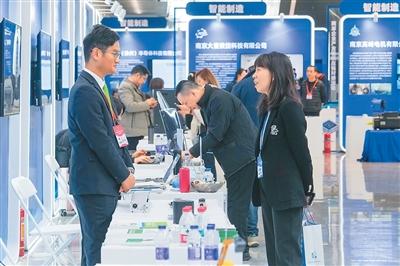
场外的展区参观。 图为参会者在2025两岸企业家峰会年会主会 (来源:内蒙古晨网) 转自:内蒙古晨网 新华社记者 李博摄 12月的南京,枫叶飘红,风景如画。2025两岸企业家峰会年会近日在这里举行。约800名两岸企业家、 专家学者与各界代表齐聚扬子江畔,围绕"聚焦转型创新 深化多链合作"主题,共商发展大计。 与会嘉宾纷纷表示,中共二十届四中全会对"十五五"时期发展作出顶层设计和战略擘画,必将为推动两 岸经济合作和共同发展注入新动力,为两岸产业合作开辟广阔新空间。两岸各界应携起手来,共享中国 式现代化发展机遇。 释放澎湃动能 今年10月,中共二十届四中全会审议通过《中共中央关于制定国民经济和社会发展第十五个五年规划的 建议》,擘画了国家未来五年发展的宏伟蓝图,为两岸企业界注入强劲信心。 "'十五五'期间,大陆聚焦高质量发展,进一步全面深化改革,扩大高水平对外开放,完整产业链体系 将筑牢发展根基,超大规模市场将释放澎湃动能,新质生产力将催生多元机遇,为两岸优势互补、融合 发展注入强劲动力。"两岸企业家峰会大陆方面理事长郭金龙呼吁,无论外部环境如何变化,两岸企业 家都要坚持"拉手"而不是"松手",寻求"延链"而不是 ...


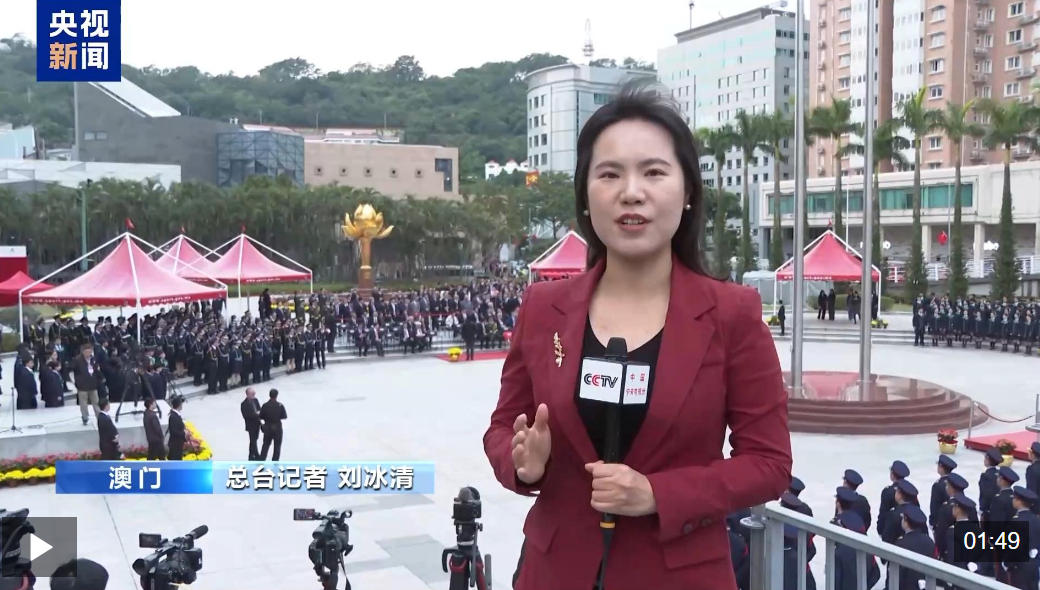
视频丨澳门特区政府举行升旗仪式 庆祝回归祖国26周年
Yang Shi Xin Wen Ke Hu Duan· 2025-12-20 07:50
12月20日早上,澳门特区政府在金莲花广场举行隆重的升旗仪式,庆祝澳门回归祖国26周年。 1200 w ARLE WW aport. u 112 184 2 179 当天上午8时,由澳门治安警察局特警队组成的护旗队伍护送五星红旗和澳门特区区旗步入金莲花广场。随着仪仗队奏响《义勇军进行曲》,国旗和区旗冉 冉升起,迎风飘扬。 澳门特区行政长官岑浩辉、澳门中联办主任郑新聪等中央驻澳机构负责人,以及特区主要官员、社会各界人士一同观礼。 澳门青年 黄滋才:注视着五星红旗与澳门区旗在晨曦中一同升起,我内心充满了自豪和感动。我们回看澳门回归的26年来,在祖国的支持下,澳门实现了 长期的繁荣稳定。 澳门特区立法会议员 宋碧琪:澳门回归26年以来,我们的发展是翻天覆地的。明年是"十五五"规划的开局之年,澳门马上要启动"三五"规划的编制,更要 主动对接国家的战略发展,这也给澳门带来了新的机遇和发展空间。我们澳门青年更要积极地提升自己,找准自己的发展定位,在融入国家的发展大局里面 实现自己的人生理想,为"一国两制"的伟大事业、为祖国的繁荣富强贡献新的力量。(总台记者 刘冰清 肖中仁) ...
中央经济工作会议中的“十五五”名词:县域经济
Xin Hua Wang· 2025-12-20 07:40
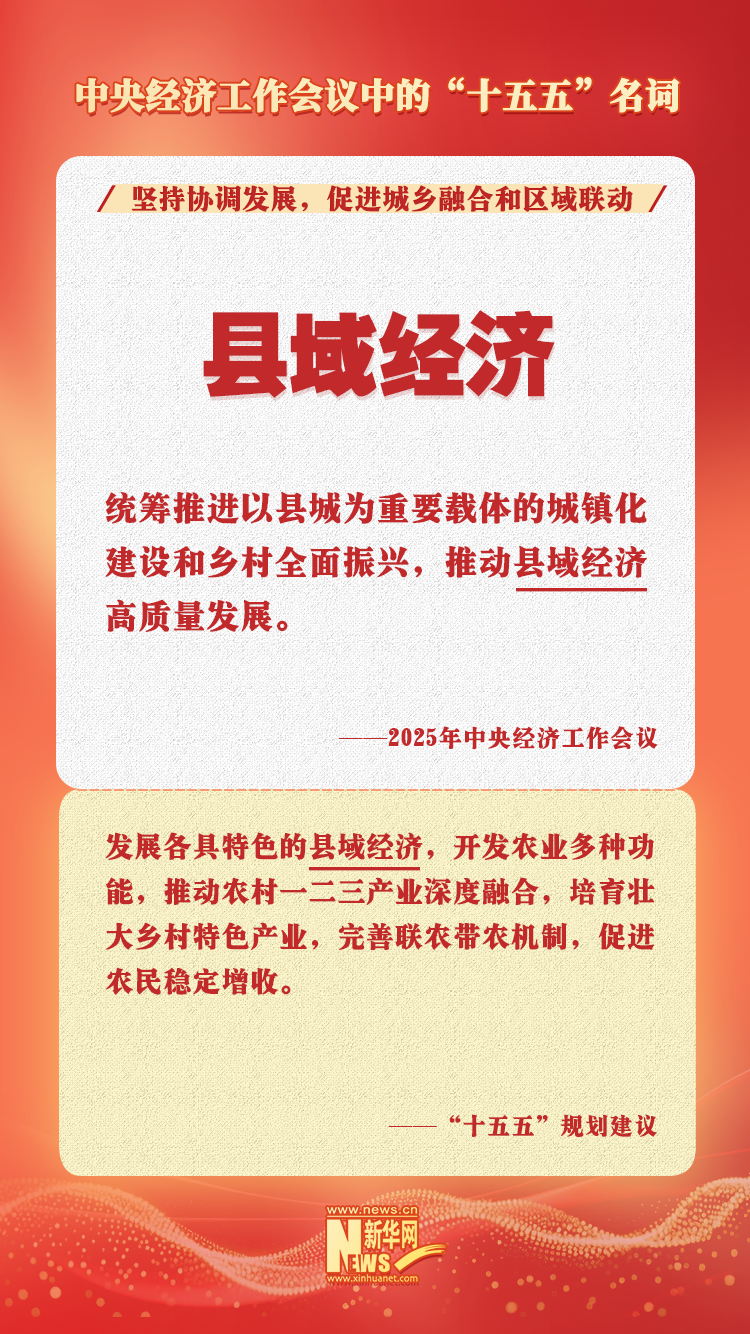
2026年是"十五五"开局之年,近日召开的中央经济工作会议明确了关于明年经济工作的思路、任务、 政策等,一系列重点工作与"十五五"规划建议的部署一脉相承。为更好帮助网友理解会议精神,新华网梳 理了会议提出的部分关键提法,一起来学习。 延展阅读 如何理解发展各具特色的县域经济? 县域经济是我国经济的基本单元,是发展经济、保障民生、维护稳定、促进国家长治久安的重要基 础。《建议》提出"发展各具特色的县域经济",对分类推进以县城为重要载体的城镇化建设、促进城乡融 合和区域协调发展具有重大意义。 "十五五"时期,要着力做好以下几个方面的工作。 第一,推动县域各展其长。 要加强分类指导,引导和支持各县顺应市场规律,依托当地资源,发挥比较优势,找准功能定位,明 确发展方向,宜工则工、宜农则农、宜商则商、宜游则游,走特色化发展路径。实行差异化支持政策,针 对各县实际相应加大资源配置、产业升级、基础设施等领域的投入,集中力量放大县域特色优势。 第二,强化县域产业支撑。 要抓住部分发达地区产业迁移、多数县域交通通信等基础设施条件大幅改善、风电光伏等分布式能源 加快发展等机遇,切实优化县域营商环境,推动县域发展与国家重大战略、区 ...
广州汽车集团股份有限公司 第七届董事会第16次会议决议公告
Zhong Guo Zheng Quan Bao - Zhong Zheng Wang· 2025-12-20 06:20
表决结果:同意10票,反对0票,弃权0票。 特此公告。 H股代码:02238 H股简称:广汽集团 广州汽车集团股份有限公司 第七届董事会第16次会议决议公告 广州汽车集团股份有限公司(下称"本公司"或"公司")第七届董事会第16次会议于2025年12月19日(星 期五)上午9:00在广州市番禺区金山大道东668号广汽集团番禺总部T2五楼会议室召开,本次会议应出席 董事10人,现场出席董事6人,肖胜方董事、周开荃董事、王亦伟董事、洪素丽董事以通讯方式参加本 次会议。本次会议由冯兴亚董事长主持,会议的召集、召开符合《中华人民共和国公司法》和《广州汽 车集团股份有限公司章程》的规定。 本次会议听取了《关于广汽集团2025年经营计划预计完成情况的报告》等报告事项,审议并通过了《关 于广汽集团2026年经营计划的议案》。2026年作为"十五五"开局之年,公司将聚焦"稳合资、强自主、 拓生态"三大重点,打好"用户需求、产品价值、服务体验"三大战役,重点推动改革攻坚举措加速落 地、聚焦主干车型实现产品突围、增强品牌引领加速营销变革、锻造技术长板实现弯道超车、深耕海外 打造第二增长曲线、深化生态赋能促进板块协同、实施精益管理 ...