
建筑行业

Search documents
花岗岩建筑财务指标披露,第四季度业绩预期增长
Xin Lang Cai Jing· 2026-02-15 19:04
Core Insights - Granite Construction (GVA) has reported a TTM price-to-earnings ratio of 44.62 and a TTM price-to-sales ratio of 1.23, indicating a premium valuation in the market [1] - The company experienced a year-over-year increase in earnings per share of 21.3% and a revenue growth of 14.21% in Q3 2024, with expectations for Q4 2024 showing a projected earnings per share growth of 50.61% and a revenue increase of 1.73% [1][2] Industry Policy and Environment - The construction sector is supported by the expectations of the "14th Five-Year Plan," with a potential phase of demand release anticipated in 2026, although specific events related to Granite Construction have not been highlighted [1] - There is a trend of increased allocation of insurance capital towards the construction industry, which is characterized by low valuations and high dividend yields, yet Granite Construction has not been a focal point in this context [1] Future Development - The company's revenue growth forecast is relatively low at 1.73%, and the intensifying competition in the industry raises concerns regarding its future order acquisition capabilities and profitability quality [2]

联想发布2025年度报告 中国企业智能化转型进入AI原生驱动新阶段
Xin Lang Cai Jing· 2026-02-11 10:32
Core Insights - The report indicates that Chinese enterprises are transitioning towards an AI-native era, with AI principles increasingly integrated into corporate strategies and a trend towards large-scale implementation of intelligent systems [1][4]. Group 1: Industry Maturity and Trends - By 2025, the proportion of leading enterprises in intelligent transformation (levels 4-5) is expected to rise significantly to 39%, with AI-native enterprises making up 9% of this group, compared to 16%, 22%, and 22% in 2022, 2023, and 2024 respectively [1][7]. - The overall average maturity score across industries reached 3.19, a notable increase from 2.77 in 2024. The financial sector continues to lead with an average score of 3.43, while the healthcare sector has the highest proportion of leading enterprises at 50% [2][8]. - The construction and public utility sectors showed the fastest growth in maturity scores, increasing by 23% and 21% respectively [2][8]. Group 2: Value and Strategic Framework - The report emphasizes a transformation framework focused on "value-driven, systematic advancement," highlighting three main values: operational value, strategic value, and industry and social value [3][9]. - Operational value is projected to maintain a significant presence, with its share being 44%, 40%, and 41% from 2023 to 2025, indicating a preference for immediate operational optimization during economic fluctuations [10]. Group 3: Challenges and Future Directions - As AI technologies advance, the focus is shifting from technical exploration to business integration, with enterprises increasingly concerned about the seamless integration of intelligent systems into business processes [11]. - AI-native enterprises are expected to evolve from "innovation experiments" to mainstream models, aiming for comprehensive value chain reconstruction under an AI-first approach [11].

南方基金:五角大楼“披萨指数”飙涨,2026年全球配置展望
Sou Hu Cai Jing· 2026-02-11 05:54
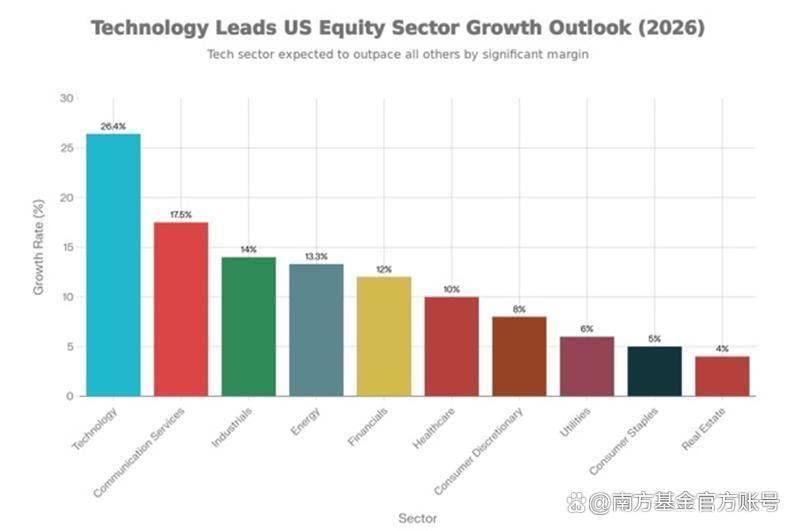
Group 1: US Stock Market Outlook - The consensus among major investment banks for the S&P 500 index in 2026 is a target range of 7500-8000, indicating a potential upside of 9%-17% from current levels [3] - Corporate earnings growth is the core support for this outlook, with Citigroup predicting a 16.3% growth in S&P 500 earnings per share (EPS), surpassing the market average expectation of 13.7% [3] - The current valuation of the S&P 500 is approximately 26 times earnings, significantly above historical averages, indicating a potential risk as the market may rely more on earnings growth rather than valuation expansion [7] Group 2: Japanese Stock Market Opportunities - The Nikkei 225 index saw a substantial increase of 28.95% in 2025, outperforming the S&P 500's 16.66% rise, driven by structural factors such as deepening corporate governance reforms [10] - The introduction of "Sanaenomics" by the new Prime Minister aims to boost domestic demand and corporate confidence through fiscal expansion and structural reforms [10] - Global investors are increasingly focusing on Japanese equities, with companies holding significant cash reserves for share buybacks and dividends, enhancing shareholder returns [11] Group 3: Emerging Markets Growth - India is projected to have a GDP growth rate of 7.2% in 2026, supported by demographic advantages and digitalization, with the MSCI India index expected to maintain a valuation premium [16] - Vietnam and Indonesia are key beneficiaries of global supply chain restructuring, with Vietnam targeting a 10% GDP growth rate for 2026 [16] - Latin American countries like Brazil and Chile are expected to benefit from increased demand for metals due to the green transition, with a focus on commodity-related sectors [16] Group 4: European Stock Market Dynamics - European stocks currently exhibit relative valuation advantages, but lack strong internal growth drivers, leading to a cautiously optimistic outlook for 2026 [17] - The defense sector is expected to benefit from increased military spending due to geopolitical tensions, while the green transition supports utility and renewable energy sectors [17] Group 5: A-shares and Hong Kong Stocks - The 2026 policy focus in China is on expanding domestic demand, with significant resources allocated to technology innovation and consumption stimulation [18] - A-shares and Hong Kong stocks are currently undervalued, with A-shares trading at a PE ratio of approximately 43, indicating potential for foreign capital reallocation [19] - Hong Kong's Hang Seng Index is trading at a PE of 10-11, close to historical lows, suggesting clear recovery potential [19]

年会停了,但没人怀念它
创业邦· 2026-02-10 10:32
Core Viewpoint - The article discusses the significant decline and transformation of corporate annual meetings (year-end parties) in various industries, reflecting a broader trend of cost-cutting and a shift in employee priorities towards job security and tangible benefits over ceremonial events [3][12][19]. Group 1: Decline of Annual Meetings - Many companies have stopped holding annual meetings or significantly reduced their scale and budget due to economic pressures and workforce reductions. For instance, a construction company reduced its staff from over 200 to around 60, leading to the cancellation of traditional gatherings [3][8]. - The annual meeting, once a symbol of corporate strength and employee engagement, has seen a drastic change since 2020, with many companies opting for online meetings and smaller departmental gatherings instead of large celebrations [8][11]. - In the hospitality sector, the decline in annual meeting bookings has been notable, with a reported 20% decrease in reservations for such events, particularly evident from 2024 onwards [11][12]. Group 2: Employee Sentiment and Adaptation - Employees have become more pragmatic regarding annual meetings, prioritizing job security and direct benefits over formal celebrations. This shift indicates a broader acceptance of the changing corporate landscape [12][19]. - The cancellation or simplification of annual meetings is seen as a necessary adaptation to economic realities, with companies focusing on cost control and measurable returns on investment [12][19]. - Despite the decline in formal gatherings, employees still express a desire for the sense of community and closure that annual meetings provided, highlighting a tension between the need for survival and the loss of workplace traditions [18][19]. Group 3: Industry Variations - Industries such as technology, semiconductors, and logistics continue to hold annual meetings, while sectors like real estate and finance have largely abandoned them, reflecting the varying health of different markets [21][22]. - The article suggests that the presence or absence of annual meetings has become a marker of industry vitality, with companies that still host these events often indicating a more stable or growing business environment [19][22].

2025年建筑业增加值累计值为8.64万亿元
Chan Ye Xin Xi Wang· 2026-02-10 03:41
Core Insights - The construction industry's value added for Q4 2025 is reported at 2.65 trillion yuan, with a cumulative value of 8.64 trillion yuan for the same period [1] - The construction value added index for Q4 2025 stands at 97.5 for the quarter, while the cumulative index is at 98.9 [1] Summary by Category Construction Industry Performance - The quarterly value added for the construction industry in Q4 2025 is 2.65 trillion yuan [1] - The cumulative value added for the construction industry from the beginning of the year to Q4 2025 is 8.64 trillion yuan [1] Construction Value Added Index - The construction value added index for Q4 2025 is recorded at 97.5 for the quarter [1] - The cumulative construction value added index for the year up to Q4 2025 is 98.9 [1]

美联储新主席落地,海外市场波动加剧
Tong Guan Jin Yuan Qi Huo· 2026-02-02 12:54
Report Industry Investment Rating No relevant content provided. Core Views - Overseas: In December, the US PPI环比 increased significantly beyond expectations to 0.5%, indicating that tariff transmission has increased inflation stickiness. A $1.2 trillion government spending bill passed in the Senate, but short - term political uncertainties are intensifying. The new Fed Chair, Warsh, with a policy orientation of "slightly dovish on the interest rate side, hawkish on the balance sheet side, and more reserved in communication", has strengthened the market's expectation of marginal tightening of liquidity. The US dollar index has strengthened, gold and silver experienced a significant decline in January, the 10 - year US Treasury yield has risen to 4.26%, the US stock market has closed down, and market risk appetite has weakened. This week, attention should be paid to the progress of the government shutdown, January ISM PMI, ADP, and non - farm payroll data [2]. - Domestic: In January, the official manufacturing PMI fell to 49.3, and the non - manufacturing PMI also fell into the contraction range, reflecting that insufficient effective demand, combined with the off - season of manufacturing and the weakening of the construction industry, has dragged down short - term economic sentiment. In December, the year - on - year growth of industrial enterprise profits rebounded to 5.3%, and the annual growth was 0.6%, indicating that supply - side clearance and cost improvement have promoted the repair of the profit bottom. There are both short - term pressures and medium - term improvements. The A - share market rose and then fell last week, with increased differentiation. Dividend and Shanghai Composite 50 were relatively dominant, while small - cap stocks such as ChiNext and CSI 1000 weakened, reflecting an increase in risk - aversion preference and overseas risk disturbances. The profit - making effect has been weak, and broad - based ETFs have continued net outflows. The market has entered a stage of rapid style rotation. In the short term, it may maintain a volatile adjustment with mainly structural opportunities, but with policy expectations and fundamental support, the medium - term trend remains positive [3]. Summary by Directory Overseas Macro - **1. January FOMC and New Fed Chair Nomination** - The Fed kept interest rates unchanged as expected, with limited room for rate cuts in the first half of the year. On January 29, the Fed maintained the interest rate in the 3.50 - 3.75% range by a 10:2 vote. Trump - nominated Milan and Waller supported a 25 - basis - point rate cut. The Fed's statement upgraded the economic growth judgment from "moderate" to "robust" and emphasized the stabilization of the unemployment rate. The market is pricing in 25 - basis - point rate cuts in June and September [4]. - Powell stated that the economy and employment are stabilizing, and the policy rate is returning to neutral. Rate cuts depend on the decline of tariff - related inflation. The US economy is growing steadily, consumption and business investment are resilient, the labor market is stabilizing, inflation is still above the 2% target but has improved in structure, and the current pressure mainly comes from tariff - pushed commodity prices. After three rate cuts since September, the policy rate is at the upper edge of the neutral interest rate range, and the Fed is not in a hurry to adjust in the short term, emphasizing data dependence and policy flexibility. Rate - cut signals depend on tariff - related inflation and employment [4]. - Trump nominated Kevin Warsh as the new Fed Chair. His policy style is "slightly dovish on the interest rate side, hawkish on the balance sheet side, and more reserved in communication". He supports earlier but conditional rate cuts, is more likely to oppose QE normalization on the balance sheet side, and tends to weaken forward guidance in policy communication [5]. - **2. January US PPI** - In January, the US PPI exceeded expectations, mainly driven by service prices. The PPI同比 was 3.0% (expected 2.7%, previous 3.0%), and the环比 was 0.5% (expected and previous 0.2%), reaching a new high since August last year. The core PPI同比 was 3.3% (expected 2.9%, previous revised to 3.1%), and the环比 was 0.7% (expected 0.2%, previous 0.0%). The price pressure is more concentrated in labor, channels, and service - related links. Although energy prices continued to fall, the core commodity prices excluding food and energy still made a positive contribution, while food prices had a slight drag and construction prices were basically flat [9]. Domestic Macro - **1. January Manufacturing and Non - manufacturing PMI** - In January, the manufacturing PMI was 49.3 (expected 50.1, previous 50.1), still in the contraction range. Some manufacturing industries entered the off - season, and the release of effective market demand was restricted. Supply and demand both declined, with new orders and new export orders falling more significantly than production. Raw material costs increased, and enterprises' finished - product inventories increased, while the profit space was still squeezed [12]. - The service and construction industries are still at the bottom. The service PMI in January was 49.5 (previous 49.7), in the contraction range and at a low level in the same period over the years. The financial industry remained active, while the real estate industry was under pressure. The construction PMI in January dropped significantly by 4.0 to 48.8, falling into the contraction range and at a low level in the same period over the years, affected by seasonal factors and the long - term weakness of traditional old drivers [13]. Performance of Major Asset Classes - **1. Equities** - Different equity indices showed different trends last week. The Shanghai Composite 50 rose by 1.13%, while the CSI 500, CSI 1000, and ChiNext 50 fell by 2.56%, 2.55%, and 2.85% respectively. Overseas, the Dow Jones Industrial Average fell by 0.42%, and the Nasdaq Composite fell by 0.17% [15]. - **2. Bonds** - In the domestic bond market, the 1 - year Treasury yield rose by 2.00 BP, and the 10 - year Treasury yield fell by 2.34 BP. In the overseas bond market, the 10 - year US Treasury yield rose by 2.00 BP, and the 10 - year German Treasury yield fell by 5.00 BP [18]. - **3. Commodities** - The Nanhua Commodity Index rose by 2.60%, and the CRB Commodity Index rose by 2.51%. Among them, WTI crude oil rose by 7.65%, while COMEX silver fell by 15.87% [20]. - **4. Foreign Exchange** - The US dollar index fell by 0.46%. The US dollar against the Chinese yuan fell by 0.12%, and the euro against the Chinese yuan rose by 0.68% [23]. High - Frequency Data Tracking - **1. Domestic** - High - frequency data on domestic congestion, subway passenger volume, real - estate transaction area, passenger - car sales, and steel consumption are presented through charts, but no specific data analysis is provided in the text [25][26][28]. - **2. Overseas** - High - frequency data on overseas retail sales, unemployment claims, US Treasury yield spreads, and financial conditions are presented through charts, but no specific data analysis is provided in the text [34][35][37]. This Week's Important Economic Data and Events - This week, important economic data and events include China's January RatingDog manufacturing and service PMI, the eurozone's January manufacturing, service, and comprehensive PMI, the eurozone's January CPI, the US's January ISM manufacturing and non - manufacturing PMI, ADP employment, and non - farm payroll data [37][40].
美国计划2026年增发6.5万季节性客工签证
Xin Lang Cai Jing· 2026-01-30 23:02
Core Points - The Trump administration plans to increase approximately 65,000 H-2B seasonal guest worker visas by September 30, 2026, to address severe financial difficulties faced by employers due to labor shortages in the U.S. [1][2] - This initiative will effectively double the annual visa quota for industries such as construction, hospitality, landscaping, and seafood processing, which typically stands at 66,000, acknowledging the recruitment challenges faced by employers in these sectors [1][2] - Seasonal industry employers, including those in hospitality, have been advocating for an increase in visa numbers, as some construction companies have reported labor shortages exacerbated by strict immigration policies [1][2] Industry Impact - The increase in H-2B visas is a response to ongoing labor shortages in key sectors, indicating a potential shift in immigration policy to support economic needs [1][2] - Supporters of immigration restrictions oppose such visa increases, arguing that they depress wages for American workers, highlighting the ongoing tension between labor supply and wage levels in the U.S. job market [1][2] - The Trump administration's broader immigration policies, including increased scrutiny on legal immigration and the H-1B program, have created a complex environment for foreign labor in the tech sector, with new fees leading to legal challenges [1][2]
ICE暴力执法行动抗议持续发酵
Guo Ji Jin Rong Bao· 2026-01-26 07:13
Group 1 - The recent enforcement actions by ICE in Minnesota have sparked significant social controversy, particularly following the shooting of an unarmed woman, Renee Good, by a federal immigration officer, leading to increased pressure on large companies to take a clear stance against ICE's actions [1] - Labor organizations, community leaders, and religious figures have initiated a "Day of Truth and Freedom" campaign, calling for an economic boycott through "no work, no shopping, no school" actions, targeting major corporations like Target, Delta Airlines, and Hilton to cease business relations with ICE [2] - A report from North Star Policy Action indicates that immigration enforcement actions cost taxpayers at least $18 million weekly, while immigrant workers and business owners contribute approximately $41 billion annually to Minnesota's economy [3] Group 2 - The construction industry is particularly affected, with workers reporting disruptions and inability to work due to ICE actions, leading to protests and petitions against ICE's presence on job sites [3] - The Department of Homeland Security (DHS) has responded strongly to the protests, questioning the motives of labor leaders and citing the presence of undocumented immigrants with criminal records, although critics argue that many targeted individuals have no criminal history [3] - The political implications of ICE's enforcement actions have been highlighted by comparisons to President Trump's pardons of over 1,600 individuals, raising concerns about the selective and politicized nature of ICE's enforcement choices [4]
国际金融市场早知道:1月22日
Zhong Guo Jin Rong Xin Xi Wang· 2026-01-22 00:55
Group 1: Global Economic Outlook - The IMF has revised the global economic growth forecast for 2026 to 3.3%, with a slight decline to 3.2% expected in 2027, driven by a surge in investments related to artificial intelligence and technology [1][7] - The IMF warns that escalating trade tensions could increase uncertainty and pose downside risks to growth [1] Group 2: U.S. Economic Indicators - U.S. construction spending in October 2025 increased by 0.5%, significantly exceeding the expected 0.1%, marking the largest growth since April 2024 [8] - The U.S. pending home sales index for December 2025 fell by 9.3%, much worse than the anticipated 0.4% increase, reversing the previous month's 3.3% rise, indicating a cooling housing market [8] - The 30-year fixed mortgage rate in the U.S. slightly decreased to 6.16% as of January 16, continuing a trend of high-rate fluctuations [8] Group 3: South Korea's Economic Performance - South Korea's GDP contracted by 0.3% in Q4 2025, significantly below the expected 0.2% growth and down from a 1.3% increase in the previous quarter, with an annual growth rate of only 1% [8] - In the first 20 days of January 2026, South Korea's exports rose by 14.9%, driven by a 70.2% increase in semiconductor exports, while automotive exports declined by nearly 11% due to U.S. tariffs [8] Group 4: Market Dynamics - The Dow Jones Industrial Average rose by 1.21% to 49077.23 points, the S&P 500 increased by 1.16% to 6875.62 points, and the Nasdaq Composite gained 1.18% to 23224.82 points [9] - COMEX gold futures increased by 1.48% to $4836.20 per ounce, while COMEX silver futures fell by 1.78% to $92.95 per ounce [10] - U.S. oil futures rose by 0.51% to $60.67 per barrel, and Brent oil futures increased by 0.61% to $64.58 per barrel [11]
青海住房城乡建设成效显著
Xin Lang Cai Jing· 2026-01-10 17:26
Group 1 - Qinghai Province has achieved significant accomplishments in housing and urban-rural construction during the "14th Five-Year Plan" period, focusing on high-quality development and ecological civilization [1] - The province has implemented a waste management model that emphasizes source classification and regional coordination, achieving a municipal solid waste harmless treatment rate of 99.12% [1] - Green building practices have been widely adopted, with 100% of new urban buildings being classified as green buildings [1] Group 2 - The total output value of the construction industry in Qinghai has reached 290.586 billion yuan, with the added value of the construction industry at 162.353 billion yuan, maintaining a contribution of over 8% to the regional GDP [2] - The number of construction enterprises in the province has grown to 2,612, with the establishment of 2 special-grade and 3 first-grade construction enterprises, enhancing overall competitiveness [2] - The province has initiated the construction of 1.67 million square meters of prefabricated buildings and has developed several national and provincial-level industrial bases and demonstration projects [2]