全面深化改革

Search documents
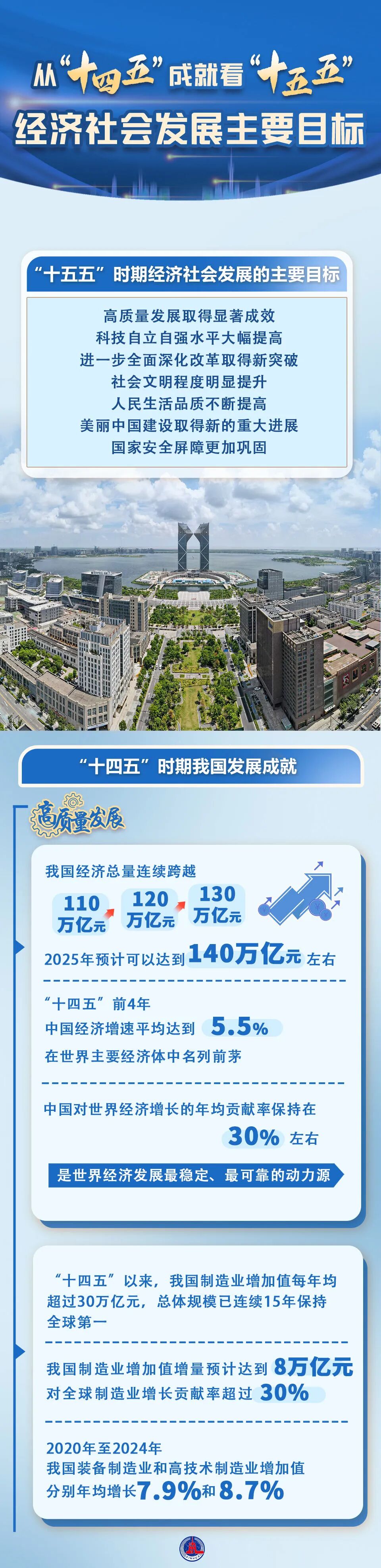
从“十四五”成就看“十五五”经济社会发展主要目标
Xin Hua She· 2025-10-27 01:22
Group 1 - The main goals for the "14th Five-Year Plan" period include achieving high-quality development, significantly improving technological self-reliance, and deepening reforms [2][8][30] - The average economic growth rate during the first four years of the "14th Five-Year Plan" is 5.5%, positioning China among the top major economies globally [5][15] - China's manufacturing value-added has consistently exceeded 30 trillion yuan annually since the "14th Five-Year Plan," maintaining its status as the world's largest manufacturing sector for 15 consecutive years [6][15] Group 2 - By 2024, the cultural industry is expected to achieve a revenue of 19.14 trillion yuan, reflecting a 37.7% increase from 2020 [22] - The number of high-tech enterprises has surpassed 460,000, with R&D expenditure expected to increase by nearly 50% compared to the end of the "13th Five-Year Plan" [12][15] - The rural residents' per capita disposable income is projected to reach 23,119 yuan in 2024, indicating a steady growth in farmers' income [17][28] Group 3 - The forest coverage rate has increased to over 25%, contributing to a significant portion of the global greening efforts [32] - The installed capacity for renewable energy generation has historically surpassed that of coal power, establishing the largest clean energy generation system globally [33] - The number of museums in China is expected to reach 4,046 by the end of 2024, with annual visitor numbers nearing 150 million [23]

锚定重点领域 “十五五”深化改革谋求新突破
Shang Hai Zheng Quan Bao· 2025-10-26 17:26
Group 1: Reform Objectives - The core objective of the recent plenary session is to achieve new breakthroughs in comprehensive deepening of reforms during the "14th Five-Year Plan" period, emphasizing reform and innovation as fundamental driving forces [2][3] - The session identified "further comprehensive deepening of reforms" as a major goal for economic and social development, with over 300 reform measures proposed [2][3] Group 2: Market Construction - The construction of a unified national market is essential for advancing comprehensive reforms and establishing a high-level socialist market economy [5][6] - The market access negative list has been revised four times, reducing the number of restricted items from 151 in 2018 to 106 in 2025, representing a reduction of approximately 30% [4] Group 3: Factor Market Reforms - Deepening the reform of factor market allocation is crucial for building a unified national market, with a focus on creating a unified land market and improving the capital market's foundational systems [5] - Recent developments include the first cross-grid electricity spot trading between Southern Power Grid and State Grid, marking a significant step towards a unified national electricity market [5] Group 4: Business Environment and Vitality - The number of newly established business entities reached 13.278 million in the first half of the year, with private enterprises and foreign-funded enterprises showing positive growth [7][9] - The implementation of the Private Economy Promotion Law aims to create a fair competitive environment for various ownership enterprises, enhancing their development [7][9] Group 5: Challenges for Private Economy - The private economy faces challenges such as market access and resource acquisition, despite its significant growth and contribution to various sectors [9] - The National Development and Reform Commission plans to implement practical measures to expand access, address bottlenecks, and strengthen support for private investment [9]
高质量发展定调“十五五”
Bei Jing Shang Bao· 2025-10-26 15:37
Group 1 - The core theme of the "15th Five-Year Plan" is high-quality development, which is emphasized multiple times in the official communiqué [1][2] - High-quality development aims to transition from extensive economic growth to an intensive model, avoiding short-term gains at the expense of resources and the environment [2][3] - The strategic focus on high-quality development enhances the resilience of China's economy, supported by a complete industrial and supply chain, as well as advancements in technology and innovation [3][4] Group 2 - The advantages of China's economic fundamentals include the socialist system, large market size, complete industrial system, and rich talent resources, which are crucial for achieving effective qualitative and reasonable quantitative growth [4] - The strategy emphasizes the importance of reform and technological innovation to strengthen these advantages and promote economic development [4][5] - High-quality development will impact various aspects of life, including the construction of a high-level socialist market economy, real estate development, and employment [5]
【西街观察】以高质量发展为主题的“十五五”
Bei Jing Shang Bao· 2025-10-26 11:04
Group 1 - The core theme of the "15th Five-Year Plan" is high-quality development, which is emphasized multiple times in the official communique from the 20th Central Committee meeting [1][2] - High-quality development aims to transition from extensive economic growth to an intensive model, avoiding short-term gains at the expense of resources and the environment [2][3] - The strategy of high-quality development is seen as a response to historical experiences and a way to address challenges in the next five years, focusing on reform and technological innovation to enhance China's advantages [3][4] Group 2 - The plan highlights the importance of creating a unified national market and eliminating barriers to competition, ensuring fair market order and protecting labor rights [3][4] - Expanding domestic demand is crucial, with a focus on increasing individual income, improving social security, and ensuring equitable distribution [3][4] - High-quality development will impact various sectors, including real estate and employment, serving as a guide for economic, technological, and social issues [4]
李强主持召开国务院“十五五”规划《纲要草案》编制工作领导小组会议强调全面贯彻党的二十届四中全会部署 高质量编制“十五五”规划纲要丁薛祥出席
Xin Hua Wang· 2025-10-25 01:19
Core Points - The meeting focused on the preparation of the draft outline for the 15th Five-Year Plan, emphasizing the importance of high-quality development and the need for strategic adjustments in response to external challenges [1][2] - The draft outline aims to enhance new productive forces and build a modern industrial system, with a strong emphasis on domestic demand and comprehensive reforms to stimulate growth [2][3] Group 1 - The outline preparation must align with the central tasks of the Party in the new era, focusing on high-quality development and breakthroughs in key areas [2] - There is a need to maintain strategic determination and fully assess potential external shocks while ensuring proactive development [2] - The plan should prioritize public welfare, addressing the concerns of the populace and businesses to create tangible benefits [2] Group 2 - The drafting process is time-sensitive and requires collaboration across various sectors, including public opinion collection to incorporate societal expectations and expert insights [3] - Coordination between special planning and national development planning is essential to create a cohesive planning system [3] - The emphasis is on fostering new industries and growth areas, leveraging the potential of the domestic market, and implementing strategic adjustments in foreign trade [2][3]
在极不寻常极不平凡历程中交出高质量发展答卷 ——党的二十届四中全会精神在巴蜀大地引发强烈反响(二)
Si Chuan Ri Bao· 2025-10-25 01:17
Core Viewpoint - The 20th Central Committee's Fourth Plenary Session emphasizes the achievements during the "14th Five-Year Plan" and sets a positive tone for the "15th Five-Year Plan," highlighting the importance of unity and reform for China's modernization and development [1][2]. Economic Development - China's economic strength has significantly increased, with the total economic output surpassing 130 trillion yuan during the "14th Five-Year Plan," contributing approximately 30% to global economic growth [2][3]. - Sichuan's economy has also seen substantial growth, crossing two trillion yuan thresholds, with a total exceeding 6 trillion yuan, ranking 5th nationally [3]. Technological Advancement - The term "technology" was mentioned ten times in the plenary session's communique, indicating a strong focus on technological development during the "14th Five-Year Plan" [4]. - Companies in Sichuan, such as Mianyang Silicon-based Intelligent Technology Co., are actively developing innovative products, showcasing the region's commitment to high-tech advancements [4]. Rural Revitalization - Rural revitalization has been a highlight of Sichuan's development, with significant improvements in income levels, such as an increase in per capita income in Sanhe Village from 8,934 yuan in 2020 to 19,850 yuan [4][7]. - The integration of cultural heritage and tourism has also been emphasized, with villages like Maiji creating national-level tourist attractions [8]. High-Level Opening Up - The plenary session called for expanding high-level opening up, with Chengdu Tianfu International Airport leading in international and domestic flight connections, enhancing Sichuan's global connectivity [4][5]. - Chengdu High-tech Comprehensive Bonded Zone reported a 10.4% year-on-year increase in import and export volume, maintaining its position as the leading bonded zone in China [5]. Reform and Innovation - The session highlighted the need for deepening reforms and fostering innovation as fundamental drivers for the "15th Five-Year Plan," with local governments implementing management reforms to enhance efficiency [6][7]. - The establishment of the Sichuan-Chongqing Gaotong New Area is a notable example of cross-regional collaboration aimed at creating a favorable business environment [5][6]. People-Centric Development - The focus on people-centered development is evident, with over 65% of Sichuan's fiscal spending directed towards improving living standards, including healthcare and social security [7]. - Improvements in healthcare services have led to an increase in life expectancy in Sichuan, reaching 78.8 years in 2024, reflecting the commitment to public health [7].
李强主持召开国务院“十五五”规划《纲要草案》编制工作领导小组会议强调全面贯彻党的二十届四中全会部署 高质量编制“十五五”规划纲要 丁薛祥出席
Xin Hua She· 2025-10-25 00:52
会上,国家发展改革委就纲要草案编制作了汇报,与会同志进行了讨论。李强说,习近平总书记在党的二十 届四中全会上的重要讲话,为做好纲要草案编制工作提供了根本遵循。《中共中央关于制定国民经济和社会发展 第十五个五年规划的建议》明确提出了"十五五"时期经济社会发展的指导思想、基本原则、主要目标、战略任务 等,是指导"十五五"时期经济社会发展的纲领性文件。我们要深入学习领会习近平总书记重要讲话精神和党中央 决策部署,在纲要草案编制中全面深入地贯彻落实。 李强指出,编制纲要草案要紧紧围绕新时代新征程党的中心任务,强化发展意识,坚持以推动高质量发展为 主题,在壮大新质生产力、建设现代化产业体系等方面取得更大突破,推动经济实现质的有效提升和量的合理增 长。要强化全局思维,准确把握"十五五"发展所处的历史方位,准确把握国内国际两个大局,保持战略定力,充 分估计可能的外部冲击、做好应对准备,牢牢把握发展主动权。要强化民生导向,坚持人民至上,聚焦各方面关 切谋划政策举措,设身处地、换位思考,奔着解决实际问题去,让群众和企业可感可及。 新华社北京10月24日电 10月24日,中共中央政治局常委、国务院总理李强主持召开国务院"十五五" ...
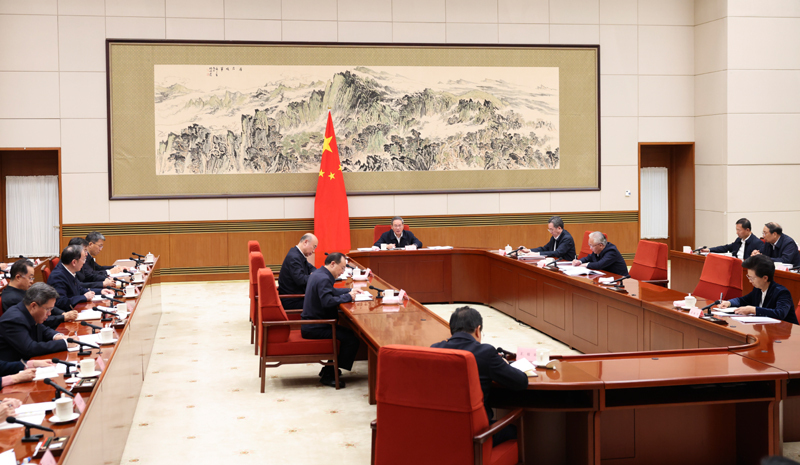
国务院“十五五”规划《纲要草案》编制工作领导小组会议强调全面贯彻党的二十届四中全会部署 高质量编制“十五五”规划纲要
Xin Hua She· 2025-10-24 22:25
李强指出,要创新思路、务求实效,高质量编制规划纲要,进一步明确"十五五"发展的施工图、路 线图,谋划提出务实管用的发展载体和工作抓手。要培育壮大高质量发展新动能,围绕成长性强、牵引 性强的领域打造一批新产业新赛道。要坚持扩大内需这个战略基点,充分挖掘强大国内市场的潜力。要 通过全面深化改革释放发展动力和活力,围绕重点领域和关键环节深入研究改革举措。要主动开展对外 经贸格局的战略性调整,推出更多自主开放、单边开放措施。要统筹发展和安全,防范重点领域风险, 确保社会大局稳定。 李强强调,纲要草案编制时间紧、任务重,各方面要密切协作、形成合力。要面向社会公众公开征 集意见建议,广泛了解社会期盼、专家意见、基层经验等,认真研究吸纳到纲要草案中。要加强统筹协 调,做好专项规划编制与国家发展规划的衔接,指导地方立足比较优势编制规划,形成科学有机的规划 体系。 张国清、刘国中、吴政隆、谌贻琴参加会议。 10月24日,中共中央政治局常委、国务院总理李强主持召开国务院"十五五"规划《纲要草案》编制 工作领导小组会议并作讲话。 中共中央政治局常委、国务院副总理丁薛祥出席。 会上,国家发展改革委就纲要草案编制作了汇报,与会同志进行 ...
创新思路务求实效 高质量编制规划纲要
Zhong Guo Zheng Quan Bao· 2025-10-24 20:19
会上,国家发展改革委就纲要草案编制作了汇报,与会同志进行了讨论。李强说,习近平总书记在党的 二十届四中全会上的重要讲话,为做好纲要草案编制工作提供了根本遵循。《中共中央关于制定国民经 济和社会发展第十五个五年规划的建议》明确提出了"十五五"时期经济社会发展的指导思想、基本原 则、主要目标、战略任务等,是指导"十五五"时期经济社会发展的纲领性文件。我们要深入学习领会习 近平总书记重要讲话精神和党中央决策部署,在纲要草案编制中全面深入地贯彻落实。 李强指出,编制纲要草案要紧紧围绕新时代新征程党的中心任务,强化发展意识,坚持以推动高质量发 展为主题,在壮大新质生产力、建设现代化产业体系等方面取得更大突破,推动经济实现质的有效提升 和量的合理增长。要强化全局思维,准确把握"十五五"发展所处的历史方位,准确把握国内国际两个大 局,保持战略定力,充分估计可能的外部冲击、做好应对准备,牢牢把握发展主动权。要强化民生导 向,坚持人民至上,聚焦各方面关切谋划政策举措,设身处地、换位思考,奔着解决实际问题去,让群 众和企业可感可及。 中共中央政治局常委、国务院副总理丁薛祥出席。 张国清、刘国中、吴政隆、谌贻琴参加会议。 ● 新华 ...
李强主持召开国务院“十五五”规划《纲要草案》编制工作领导小组会议
证监会发布· 2025-10-24 14:19
李强指出,要创新思路、务求实效,高质量编制规划纲要,进一步明确"十五五"发展的 施工图、路线图,谋划提出务实管用的发展载体和工作抓手。要培育壮大高质量发展新动 能,围绕成长性强、牵引性强的领域打造一批新产业新赛道。要坚持扩大内需这个战略基 点,充分挖掘强大国内市场的潜力。要通过全面深化改革释放发展动力和活力,围绕重点领 域和关键环节深入研究改革举措。要主动开展对外经贸格局的战略性调整,推出更多自主开 放、单边开放措施。要统筹发展和安全,防范重点领域风险,确保社会大局稳定。 李强强调,纲要草案编制时间紧、任务重,各方面要密切协作、形成合力。要面向社会 公众公开征集意见建议,广泛了解社会期盼、专家意见、基层经验等,认真研究吸纳到纲要 草案中。要加强统筹协调,做好专项规划编制与国家发展规划的衔接,指导地方立足比较优 势编制规划,形成科学有机的规划体系。 张国清、刘国中、吴政隆、谌贻琴参加会议。 来源:新华社 新华社北京10月24日电 10月24日,中共中央政治局常委、国务院总理李强主持召开 国务院"十五五"规划《纲要草案》编制工作领导小组会议并作讲话。 中共中央政治局常委、国务院副总理丁薛祥出席。 会上,国家发展改 ...