城乡融合发展

Search documents
国务院拟放开放宽除个别超大城市外的落户限制
凤凰网财经· 2025-12-28 12:36
Core Viewpoint - The report highlights the progress and challenges in promoting urban-rural integration in China, emphasizing the need for improved mechanisms for equal exchange and flow of resources between urban and rural areas [1]. Group 1: Urbanization and Population Integration - The urbanization rate of the permanent population is projected to increase from 62.7% in 2019 to 67% by 2024, with the ratio of per capita disposable income between urban and rural residents decreasing from 2.64 to 2.34 [1]. - The restrictions on household registration in cities with a permanent population of less than 3 million have been largely lifted, and conditions for cities with populations between 3 million and 5 million have been further relaxed [2]. - The proportion of migrant children enrolled in public schools or receiving government-purchased private school placements has risen to 97% [2]. Group 2: Talent Development and Rural Support - Nearly 500 million high-quality farmers and over 143,000 rural practical talent leaders have been cultivated, with more than 14.3 million individuals returning to rural areas for entrepreneurship [2]. - The report emphasizes the need for a robust mechanism to attract talent to rural areas, including improved incentives for entrepreneurship and employment [3]. Group 3: Agricultural Investment and Financial Support - The national budget for agriculture, forestry, and water resources is expected to reach 2.7 trillion yuan in 2024, an increase of 18.4% from 2019 [3]. - Financial support for agriculture is being strengthened, with continuous growth in agricultural loans [3]. Group 4: Challenges and Future Directions - Despite progress, challenges remain, such as the uneven distribution of public resources and the need for better mechanisms for equal exchange of urban and rural resources [3]. - Future efforts will focus on promoting the full integration of agricultural migrants into cities, enhancing rural talent development, and deepening land system reforms [4][5].


国务院报告:将放开放宽除个别超大城市外的落户限制
Xin Lang Cai Jing· 2025-12-28 09:12
Core Viewpoint - The report presented by the State Council emphasizes the progress and effectiveness of establishing a sound urban-rural integration development system, highlighting the increase in urbanization rate and the narrowing income gap between urban and rural residents from 2019 to 2024 [1][3]. Group 1: Progress and Achievements - The urbanization rate of the national resident population is projected to rise from 62.7% in 2019 to 67% by 2024, while the ratio of per capita disposable income between urban and rural residents is expected to decrease from 2.64 to 2.34 [3][4]. - The flow of urban-rural factors has become smoother, with the removal of residency restrictions in cities with a population under 3 million and relaxed conditions for cities with populations between 3 million and 5 million [4][5]. - The report indicates that the number of high-quality farmers trained has reached nearly 5 million, with over 1.43 million individuals returning to rural areas for entrepreneurship [4][7]. Group 2: Future Work Arrangements - The report outlines plans to promote the full integration of agricultural transfer populations into cities, including the relaxation of residency restrictions and the establishment of a system for providing basic public services [1][12]. - It emphasizes the need to strengthen infrastructure support for towns that absorb a large number of agricultural transfer populations and to coordinate land use indicators with the increase in permanent residents [1][12]. - The report also highlights the importance of enhancing the rural talent pool and improving the rural land system to support sustainable development [12][13]. Group 3: Challenges and Issues - Despite progress, there are still significant imbalances in urban-rural development, with some counties in central and western regions lagging in agricultural industrialization and modern service development [8][9]. - The report notes that the mechanism for equal exchange of urban-rural factors remains underdeveloped, with a need for improved public resource allocation and talent attraction to rural areas [8][9]. - There are ongoing disparities in infrastructure and public service quality between urban and rural areas, which continue to pressure the income growth of rural residents [9][10].
“锚定十五五 赋能城乡兴” 江西有好物年货季暨“带老字号回家过年”活动在南昌举办
Xin Lang Cai Jing· 2025-12-28 07:00
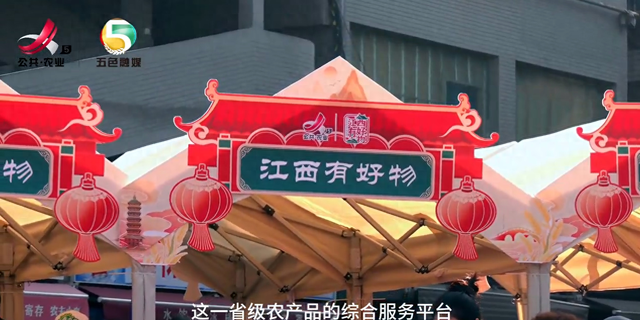
为响应国家农业农村现代化战略部署,落实"十五五"规划中品牌农业发展与城乡融合消费要求,12月 27-28日,江西有好物年货季暨"带老字号回家过年"活动在南昌万寿宫隆重举办。本次活动由江西广播 电视台主办,公共·农业频道承办,汇聚全省优质农产品与老字号资源,通过"展销+体验+直播"的多元 形式,搭建产销精准对接桥梁,激活优质农产品市场公信力与消费潜力,为城乡融合发展注入新动能。 据悉,本次活动是江西广播电视台依托"江西有好物"全媒体推广平台,联动政府、企业、文旅机构及渠 道资源的创新实践。活动以"锚定十五五 赋能城乡兴"为主题,不仅打造了"全省好物汇聚南昌、江西味 道看得见"的沉浸式消费场景,更同步推动"江西职工普惠平台"之"广电好物"专区正式上线,构建"政府 +媒体+平台+品牌"四方协同模式,让群众在线上线下均可便捷选购实惠好物。江西省农业农村厅、江 西省商务厅、江西省市场监督管理局、江西省总工会等单位作为指导单位,为活动顺利开展提供有力保 障。 为营造浓厚的年味氛围,活动现场围绕万寿宫历史文化街区特色,打造了全方位的沉浸式体验场景。红 灯笼、中国结等新年装饰点缀其间,让市民在选购好物的同时,感受浓郁的乡土年 ...
金观平:发动县域经济高质量发展引擎
Jing Ji Ri Bao· 2025-12-28 05:47
Group 1 - The central economic work conference emphasizes the importance of promoting urbanization centered around county towns and comprehensive rural revitalization to drive high-quality development of county economies [1] - Counties occupy approximately 90% of China's land area and contribute nearly 40% to the national economic scale with about 52% of the population [1] - There are significant disparities among counties in terms of development foundation and industrial characteristics, with many facing issues like single industrial structures and insufficient development momentum [1] Group 2 - High-quality development of county economies requires moving beyond homogeneous competition and leveraging local resources and industrial foundations to explore differentiated development paths [2] - Integration of agriculture with deep processing and cultural tourism is suggested as a way to enhance county economies, with examples like Jiangsu Kunshan actively integrating into the Yangtze River Delta urban agglomeration [2] - Urban-rural integration is essential for modernization, necessitating coordinated efforts in industrial development, public services, and breaking down the urban-rural dual structure [2] Group 3 - Activating dormant resources and markets in counties is crucial for releasing development potential, which can be achieved through institutional reforms and maximizing resource value [3] - Transforming old factories into comprehensive commercial service centers or logistics hubs is one example of how to revitalize underutilized assets [3] - The approach to promoting high-quality county economic development should be gradual and tailored to local conditions, providing solid support for urban-rural integration and regional coordinated development [3]
国务院拟放开放宽除个别超大城市外的落户限制
Xin Lang Cai Jing· 2025-12-28 04:45
Core Viewpoint - The report presented by the State Council highlights the progress and challenges in establishing a sound urban-rural integration development system, showing an increase in urbanization rate and a decrease in the income disparity between urban and rural residents from 2019 to 2024 [1][6]. Group 1: Urbanization and Population Mobility - The urbanization rate of the national resident population is projected to rise from 62.7% in 2019 to 67% by 2024 [1][6]. - The ratio of per capita disposable income between urban and rural residents is expected to decrease from 2.64 to 2.34 [1][6]. - The report emphasizes the need for further optimization in addressing resource shortages in urban education and public housing due to population influx [1][6]. Group 2: Policy Initiatives for Urban-Rural Integration - The report outlines the removal of residency restrictions in cities with a permanent population of less than 3 million, and further relaxation of conditions in cities with populations between 3 million and 5 million [2][7]. - The proportion of non-resident students in public schools or receiving government-funded private school placements has increased to 97% [2][7]. - Approximately 500 million high-quality farmers and over 1.43 million returnees have been cultivated, with a significant number of urban talents moving to rural areas [2][7]. Group 3: Agricultural and Rural Investment - The general public budget for agriculture, forestry, and water resources is expected to reach 2.7 trillion yuan in 2024, an 18.4% increase from 2019 [3][8]. - Financial support for agriculture is increasing, with a continuous rise in agricultural loans [3][8]. - The report identifies ongoing issues in the equitable exchange of urban-rural resources and the need for improved public resource allocation [3][8]. Group 4: Future Directions for Urban-Rural Integration - Future initiatives will focus on fully integrating agricultural migrants into urban areas, including the relaxation of residency restrictions and equal access to public services [4][10]. - There will be efforts to strengthen the rural talent pool by encouraging urban professionals to serve in rural areas and enhancing training for farmers [4][10]. - The report emphasizes the need for further reforms in rural land systems and increased financial support for rural development projects [5][11].
国务院拟放开放宽除个别超大城市外的落户限制
21世纪经济报道· 2025-12-28 04:31
Core Viewpoint - The report highlights the progress and challenges in promoting urban-rural integration in China, emphasizing the need for improved mechanisms for equal exchange and two-way flow of resources between urban and rural areas [1][4]. Group 1: Urbanization and Population Integration - The urbanization rate of the national resident population is projected to increase from 62.7% in 2019 to 67% by 2024, while the ratio of per capita disposable income between urban and rural residents is expected to narrow from 2.64 to 2.34 [1]. - The report indicates that the restrictions on household registration in cities with a permanent population of less than 3 million have been largely lifted, and conditions for cities with populations between 3 million and 5 million have been further relaxed [2][3]. - The proportion of migrant children attending public schools or enjoying government-purchased private school placements has risen to 97% [3]. Group 2: Talent Development and Rural Revitalization - Nearly 500 million high-quality farmers and over 143,000 rural practical talent leaders have been cultivated, with more than 14.3 million individuals returning to rural areas for entrepreneurship [3]. - The report emphasizes the need to strengthen the talent pool in rural areas by encouraging urban professionals to serve in rural settings and enhancing training for farmers [7]. Group 3: Land and Financial Reforms - The report advocates for a steady and orderly advancement of rural land system reforms, including the extension of land contracts for an additional 30 years and the improvement of land rights protection [3][7]. - Public budget expenditures for agriculture, forestry, and water resources are projected to reach 2.7 trillion yuan in 2024, marking an 18.4% increase from 2019 [4]. Group 4: Challenges and Future Directions - Despite progress, challenges remain in achieving equal exchange of resources, with issues such as tight public school placements and public rental housing in urban areas [4]. - The report calls for the establishment of a more robust mechanism for attracting talent to rural areas and improving the integration of rural collective land into the market [4][8].

委员为公共服务均等化落地献策
Xin Lang Cai Jing· 2025-12-26 19:01
Core Viewpoint - The key to promoting urban-rural integration lies in county-level development, which is essential for high-quality county economic growth and new urbanization construction [1] Group 1: County Economic Development - Some local county economies are still weak, facing challenges such as difficulties in industrial transformation, significant fiscal pressure, and stagnation or decline in education and healthcare levels [1] - Recommendations include strengthening the planning of county economic industrial layout and addressing the mismatch between fiscal powers and responsibilities at the county level [1] Group 2: Public Services and Farmers' Rights - Emphasis on protecting farmers' rights and interests, aiming to create a mechanism for mutual benefit and sharing between urban and rural residents [1] - The ultimate goal of improving urban-rural integration is to change the backward situation in rural areas and enhance the living standards of farmers [1] Group 3: Infrastructure and Resource Allocation - The state should further integrate urban-rural development with the planning of metropolitan areas, ensuring coordinated infrastructure and public service arrangements [1] - Suggestions include breaking down institutional barriers to facilitate the two-way flow of land and talent, and reforming land use policies to maximize land asset value [1] Group 4: Investment in Public Services - The government needs to increase investment in rural education, healthcare, and cultural services, and improve rural infrastructure [1] - Establishing a unified social security and public service system for urban and rural areas is crucial for promoting equal development opportunities [1] Group 5: Rural Revitalization and Employment - Industrial revitalization is essential for rural development, with a focus on encouraging labor-intensive industries and agricultural product processing in counties to increase employment opportunities [1] - Recommendations include raising the basic pension standards for rural residents to ensure their basic living needs are met [1]
国务院报告:促进农业转移人口全面融入城市,加强宅基地规范管理
2 1 Shi Ji Jing Ji Bao Dao· 2025-12-26 13:32
Core Viewpoint - The report from the State Council highlights the progress and challenges in promoting urban-rural integration in China, emphasizing the need for improved mechanisms for equal exchange and flow of resources between urban and rural areas [2][4]. Group 1: Urbanization and Population Mobility - The urbanization rate of the national resident population is projected to increase from 62.7% in 2019 to 67% by 2024, while the ratio of per capita disposable income between urban and rural residents is expected to narrow from 2.64 to 2.34 [2]. - Restrictions on household registration in cities with a permanent population of less than 3 million have been largely lifted, and conditions for cities with populations between 3 million and 5 million have been further relaxed [2]. - The proportion of migrant children enrolled in public schools or receiving government-purchased private school placements has risen to 97% [2]. Group 2: Talent Development and Rural Revitalization - Nearly 5 million high-quality farmers and over 143,000 rural practical talent leaders have been cultivated, with more than 14.3 million individuals returning to rural areas for entrepreneurship [3]. - The report emphasizes the need to strengthen the talent pool in rural areas by encouraging urban professionals to serve in rural settings and enhancing training for farmers [5]. - The government aims to promote the integration of agricultural transfer populations into cities by improving access to public services and social insurance [4]. Group 3: Land and Financial Reforms - The report outlines the need for steady and orderly advancement of rural land system reforms, including the extension of land contracts for an additional 30 years and the improvement of land rights management [3][5]. - Public budget expenditures for agriculture, forestry, and water resources are expected to reach 2.7 trillion yuan in 2024, marking an 18.4% increase from 2019 [3]. - Financial support for agriculture is being enhanced, with a continuous increase in agricultural loans [3].
汕尾“十四五”期间GDP突破1500亿元 年均增速全省第二
Nan Fang Ri Bao Wang Luo Ban· 2025-12-26 08:48
Core Insights - During the "14th Five-Year Plan" period, the GDP of Shanwei exceeded 150 billion, with an average annual growth rate of 5.8%, ranking second in the province [1] - The average annual growth rate of residents' disposable income reached 7.5%, leading the province [1] Group 1: Economic Development - Shanwei's strategic positioning as a "bridgehead connecting the east and west, and an important support on the eastern coast" has facilitated high-quality development [1] - Major transportation projects, including the Guangshan-Shanwei High-Speed Railway and the expansion of the Shenzhen-Shanwei Expressway, have integrated Shanwei into the Guangdong-Hong Kong-Macao Greater Bay Area's "one-hour living circle" [1] - The city attracted nearly 1,000 new industrial projects during the "14th Five-Year Plan," with total investments exceeding 300 billion [2] Group 2: Infrastructure and Investment - Fixed asset investment in Shanwei exceeded 400 billion, with over 80% allocated to infrastructure and industrial investments [2] - The "1+3+4" park platform has created a high-quality industrial space of 48 square kilometers, fostering the growth of strategic emerging industries such as new energy vehicles and electronic information [2] Group 3: Tourism and Cultural Development - Unique cultural tourism IPs like "taking the high-speed train to catch the sea" and "island hopping" have gained popularity, with Shanwei's tourism revenue growing at an average annual rate of 10.6% [2] - Shanwei ranked 8th on the Gaode Street Scan "Fire City List," indicating its rising popularity as a tourist destination [2] Group 4: Social and Environmental Progress - Nearly 80% of Shanwei's fiscal expenditure during the "14th Five-Year Plan" was allocated to improving people's livelihoods [3] - Shanwei achieved the second-highest rate of urban employment completion in the province, and its air quality index has ranked first for ten consecutive years [3] - The city has been recognized as a "National Ecological Civilization Construction Demonstration Zone" and has maintained a harmonious social environment [3]
北京市政协助力乡村治理 共绘善治同心圆
Xin Lang Cai Jing· 2025-12-25 08:10
Core Viewpoint - The article discusses the challenges faced by Guxiang Village in the integration of agriculture, culture, and tourism, highlighting the need for support from the Beijing Municipal Political Consultative Conference to enhance local development [1][3]. Group 1: Challenges and Needs - Guxiang Village is experiencing insufficient capacity in catering and accommodation, as well as a shortage of professional talent, which hinders its development [1][3]. - There is a pressing need for a new generation of talent who understand agriculture, operations, and e-commerce to bridge production development and social governance [1][3]. Group 2: Initiatives and Support - The establishment of the Rural Governance Committee Work Studio aims to create a high-quality expert think tank that connects committee members with rural governance needs, fostering innovative models for urban-rural resource collaboration [3][4]. - Activities such as "enterprise-linked villages" and "community co-construction" will be organized to promote mutual development, enhance livelihoods, and cultivate talent [3][4]. Group 3: Expert Contributions - Experts from various fields, including law and agriculture, are contributing to rural governance by providing legal assistance, improving village regulations, and encouraging farmer participation in management [6][7]. - The focus is on respecting farmers' wishes and enhancing their involvement in rural affairs to stimulate their initiative and creativity [6][7]. Group 4: Future Directions - The Rural Governance Committee Work Studio is the 52nd committee studio established by the Beijing Municipal Political Consultative Conference, aiming to address key issues in urban-rural integration and contribute to effective governance [7].