
悦己经济

Search documents
世邦魏理仕:2025年第一季度深圳房地产市场回顾报告
Sou Hu Cai Jing· 2025-04-22 21:23
Office Market - In Q1 2025, Shenzhen's premium office market saw a substantial supply of 302,000 square meters, with a significant year-on-year increase in net absorption by 44.4%, marking the highest demand for the first quarter since 2022 [12][19] - The overall vacancy rate slightly increased by 0.1 percentage points to 22.3%, driven by strong demand from the technology sector, particularly in smart IoT and AI [12][10] - Average rent decreased by 3.6% to RMB 158.3 per square meter per month, influenced by supply expansion and cost-cutting measures from tenants [14][19] Retail Market - No new supply was recorded in Q1 2025, leading to a slight decrease in the overall vacancy rate to 3.7% [23] - The restaurant sector emerged as the primary demand driver, with a demand share of 44%, while retail demand remained stable, particularly in apparel and jewelry [24][25] - Average rent in the retail sector fell by 0.4% to RMB 18.4 per square meter per day, with varying performance across different segments [28][25] Logistics Market - The logistics market in Shenzhen experienced no new supply in Q1 2025, resulting in a vacancy rate of 6.3% [31] - Demand primarily came from third-party logistics and electronic manufacturing, with rental growth slowing down due to reduced export volumes [31][41] - Average rent increased slightly by 0.4% to RMB 49.0 per square meter per month, but future supply pressures are expected to impact vacancy rates [31][41] Investment Market - In Q1 2025, Shenzhen's commercial real estate market completed three transactions totaling RMB 7.04 billion, with office properties accounting for 94% of the transactions [44] - The buyer profile was predominantly banks, focusing on self-use, while the capitalized rates for office and retail properties continued to expand slightly [44][46] - The market is expected to attract investors due to the bottoming out of prices for office and commercial properties, with a focus on core area quality assets and REITs [46]


为了更能赚钱,B站已经开始直接“抢人”
3 6 Ke· 2025-04-21 11:56
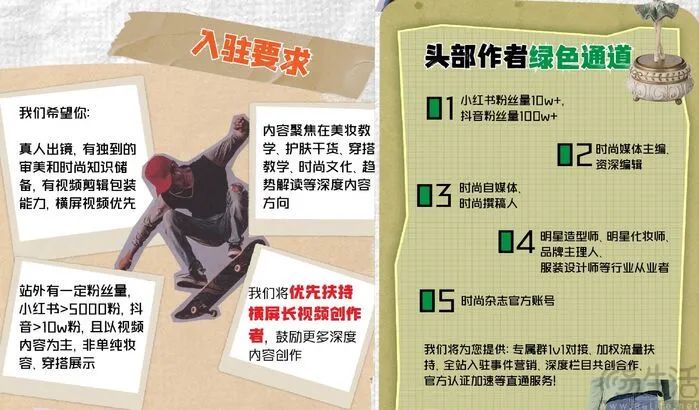
Core Viewpoint - Bilibili (B站) has launched a support program called "SUPER UP" aimed at enhancing its fashion and beauty content creator ecosystem, with a significant investment of 10 billion in traffic support for 100 selected creators [1][3]. Group 1: Program Details - The "SUPER UP" program will provide selected creators with resources for commercial collaboration with international luxury brands and invitations to major events to boost their industry influence [1]. - Creators with over 100,000 followers on Xiaohongshu and over 1 million followers on Douyin, as well as industry professionals like fashion editors and stylists, will have access to a "green channel" for head creators, offering exclusive services [1][3]. Group 2: Market Context - Bilibili's core user base is Gen Z, whose demand for fashion and beauty content has seen explosive growth, prompting the platform to enhance its offerings in this area [3]. - Despite Bilibili's efforts to diversify content beyond ACG (Anime, Comics, and Games), the platform has struggled to attract high-quality creators in the fashion and beauty sectors, as evidenced by the low representation of beauty creators in the annual top UP master list [3]. Group 3: Financial Insights - In Q4 2024, Bilibili reported revenues of 7.73 billion, a 22% year-on-year increase, with advertising revenue reaching 2.39 billion, up 24%, accounting for 31% of total revenue [5]. - The beauty and fashion industry is known for significant marketing expenditures, with brands like Mao Geping reporting sales and distribution expenses of 1.904 billion, representing 49% of their revenue during the same period [5]. Group 4: E-commerce Strategy - Bilibili is shifting towards e-commerce, having upgraded its merchant management platform to "Bilibili Small Shop," facilitating direct purchases and third-party platform transitions [7]. - The fashion and beauty sector is expected to drive high conversion rates in e-commerce, with online sales in this category showing a 15.65% year-on-year growth, totaling 95.822 billion from January to February [7]. Group 5: Competitive Landscape - Bilibili is actively promoting its fashion and beauty e-commerce initiatives, including a recent video sales incentive program to boost creator engagement [9]. - To differentiate itself from competitors like Douyin and Xiaohongshu, Bilibili is focusing on long-form horizontal video content, which may not align with the typical vertical video format preferred by creators on other platforms [9][11].

2025春夏趋势:京东服饰白皮书
京东集团· 2025-03-07 03:42
Investment Rating - The report does not explicitly provide an investment rating for the fashion industry or specific companies within it. Core Insights - The fashion industry is experiencing a significant transformation driven by consumer demand for self-expression and diverse trends, including retro styles and futuristic designs. E-commerce platforms like JD.com are leveraging user insights to capture these trends and enhance sales channels for brands [2][4][5]. Market Overview - The apparel market on major e-commerce platforms is projected to reach nearly 2 trillion yuan in 2024, with social media engagement related to fashion outfits increasing by 54% year-on-year and interaction rates rising by 17% [9][12]. - JD.com’s apparel sales are steadily growing, driven by increased user engagement and a rise in female consumers. The brand's trendiness and category awareness are improving year by year [12][18]. Spring/Summer Fashion Trends Trend 1: Pioneering Technology - The 2025 spring/summer fashion trends highlight a blend of outdoor functionality and urban futurism, with styles focusing on simplicity, practicality, and technological features [27][31][41]. Trend 2: Commuter Aesthetics - The commuter fashion for 2025 showcases a mix of minimalist, elegant, and power styles, reflecting users' diverse and personalized fashion needs [47][51][63]. Trend 3: Leisure Street Style - The leisure street style for 2025 combines retro denim, new Chinese styles, and vacation aesthetics, catering to users' demands for comfort and fashion [69][75][79]. Category Insights T-Shirts - The T-shirt category is seeing a rise in popularity, with social media engagement reaching 139 million and a sales increase of over 80%. Key trends include cooling and quick-dry fabrics, with a focus on casual and outdoor wear [113]. Dresses - The dress category is characterized by a blend of retro and innovative designs, with social media engagement at 185 million and a sales increase of 30%. Key styles include slip dresses, new Chinese styles, and lace designs [97][100]. Footwear - Footwear trends are shifting towards high-quality, stylish options, with brands focusing on comfort and functionality. Popular styles include loafers, Mary Janes, and classic sneakers [89].
