白酒行业调整

Search documents
茅台集团换帅 新“掌门”上任后面临哪些考验?
Zheng Quan Ri Bao· 2025-10-26 16:41
Core Viewpoint - The recent leadership change at Kweichow Moutai Group, with Chen Hua replacing Zhang Deqin as chairman, raises questions about the company's future strategic direction amid a challenging industry environment [1][3]. Group 1: Leadership Change - Chen Hua, previously the director of the Guizhou Provincial Energy Bureau, has taken over as chairman of Kweichow Moutai Group, indicating a significant shift in leadership from the energy sector to the liquor industry [1]. - This marks the fourth leadership change at Kweichow Moutai since 2020, highlighting ongoing adjustments within the company's management [4]. Group 2: Industry Context - The liquor industry is currently experiencing a period of adjustment, with many companies, including Kweichow Moutai, facing slowing performance growth. However, Kweichow Moutai reported a revenue of 91.094 billion yuan, a year-on-year increase of 9.16%, and a net profit of 45.403 billion yuan, up 8.89% for the first half of 2025 [1]. - The Guizhou provincial government has emphasized the need for key liquor enterprises to upgrade and optimize their product structures, which aligns with the challenges faced by Kweichow Moutai [3]. Group 3: Strategic Challenges - The new chairman's primary task will be to stabilize pricing and maintain channel confidence during this adjustment period, while also balancing the interests of traditional distributors and emerging e-commerce platforms [2]. - Kweichow Moutai must navigate the dual pressures of reducing inventory and meeting local performance growth targets, which presents a significant challenge for the new leadership [2].

陈华任茅台集团董事长!公司五年换了四位“掌门 ”
Sou Hu Cai Jing· 2025-10-26 15:17
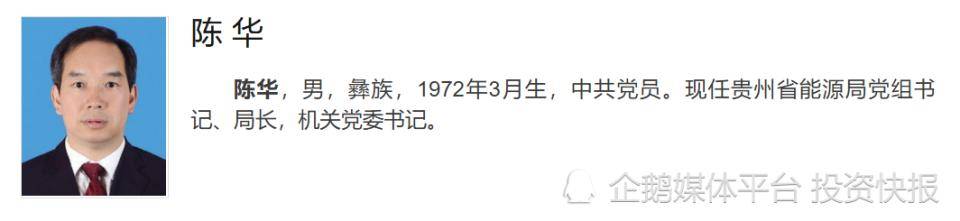
记者 张颖国 茅宁 据投资快报记者观察,茅台集团再度更换"掌门人"的消息此前已在白酒行业内流传。从历史经验来看,陈华预计将接任上市公司贵州茅 台(600519.SH)的党委书记,并在履行股东大会相关程序后,正式出任贵州茅台董事长一职。 此次茅台换帅颇为突然。前任董事长张德芹作为"老茅台人",曾历任制酒车间副主任、主任,以及贵州茅台总经理助理等职务。2010 年,他调任习酒担任董事长,在其领导下,习酒产能与销售额均实现快速增长。随后,张德芹曾短暂离开酒业,转任贵州现代物流产业 集团。2022年,在习酒正式从茅台集团划转至贵州省国资委管理之际,张德芹重回习酒,引领习酒走向独立发展之路。直至2024年4月, 他接替丁雄军成为茅台集团董事长。 "铁打的茅台,流水的董事长"。近五年来,茅台已四度更换董事长。2020年3月,高卫东接棒李保芳出任茅台集团董事长;然而不到一年 后的2021年8月,丁雄军便接替高卫东成为新一任董事长。2024年4月,张德芹接替丁雄军执掌茅台。而此次陈华接任,距离张德芹回归 掌舵茅台,仅过去一年半时间。 (图片来自贵州省能源局截图) 茅台集团迎来新掌门陈华,频繁换帅引行业关注 时隔一年半,茅台集 ...

突发!张德芹卸任茅台集团董事长,在位仅一年半
Guo Ji Jin Rong Bao· 2025-10-25 11:51
Core Insights - Zhang Deqin is no longer the chairman of Kweichow Moutai Group, with Chen Hua, the director of Guizhou Provincial Energy Bureau, taking over the position [2] - Zhang Deqin served as chairman for only one and a half years, having joined Moutai in 1995 and becoming chairman in April 2024 [2] - The company has seen frequent leadership changes, with five chairmen in seven years [2] Company Performance - During Zhang Deqin's tenure, Kweichow Moutai achieved a total revenue of 174.144 billion yuan, a year-on-year increase of approximately 15.66%, and a net profit of about 86.228 billion yuan, up 15.38%, meeting the annual growth target of 15% [2] - For the current year, the company has lowered its annual growth target to 9% due to challenges in the liquor industry [2] - In the first half of the year, Kweichow Moutai reported actual revenue of 91.094 billion yuan, a year-on-year increase of 9.16%, and a net profit of 45.403 billion yuan, up 8.89%, aligning with market expectations [2] Industry Context - The liquor industry is currently facing difficulties, impacting Kweichow Moutai's performance [2] - The price of the core product, Feitian Moutai, has been declining, with recent wholesale prices falling below 1,800 yuan [3]
被券商预测“三季度净利润下滑45%” 五粮液最新回应:业绩数据需等三季报披露
Mei Ri Jing Ji Xin Wen· 2025-10-21 11:57
Core Viewpoint - The report from GF Securities predicts a significant decline in the third-quarter performance of Wuliangye, forecasting a 30% drop in revenue and a 45% drop in net profit year-on-year, which contrasts sharply with predictions from other leading brokerages [2][3][6]. Industry Overview - The white liquor industry is experiencing a period of adjustment, with overall demand under pressure despite some month-on-month improvements in August due to better policy execution [3][6]. - High-end liquor brands like Moutai are expected to show resilience, while mid-tier brands are struggling, particularly in business demand [3]. Company Performance Predictions - Wuliangye's third-quarter revenue is estimated at 120.9 billion yuan, down 30% year-on-year, with net profit expected to be 32.3 billion yuan, down 45% [4][6]. - Other companies in the industry, such as Moutai and Luzhou Laojiao, are projected to perform better, with Moutai's revenue expected to grow by 5% [4][11]. Price Trends and Market Dynamics - Wuliangye's average price for its flagship product has decreased to approximately 820 yuan per bottle, down 100 yuan since the beginning of the year, indicating weak demand [6][9]. - The report suggests that Wuliangye may need to adjust its strategy to stabilize product prices and maintain dealer confidence amid declining sales [6][9]. Competitive Landscape - GF Securities posits a potential shift in market positioning, suggesting that Wuliangye and Luzhou Laojiao may be "switching places" in terms of market performance, with Luzhou Laojiao gaining ground due to effective strategies [7][9]. - The report highlights that since 2021, the white liquor industry has faced challenges, with price declines affecting both Wuliangye and Luzhou Laojiao, but the latter has managed to leverage its digital capabilities and market presence to improve its standing [9][10]. Long-term Outlook - GF Securities anticipates that Wuliangye's net profit will continue to decline in the coming years, projecting a drop to 236.5 billion yuan by 2026, while other top brands are expected to see profit growth [11][12].


财通证券:白酒行业调整接近尾声 龙头管理提效将持续提升份额
智通财经网· 2025-10-21 02:41
Core Viewpoint - The current adjustment in the liquor industry is nearing its end, with household banquet scenarios expected to recover faster than business demand, and leading companies continuing to enhance management efficiency to increase market share [1][2]. Group 1: Industry Adjustment Analysis - The liquor industry has experienced two rounds of adjustments, with the first from 2013 to 2016 driven by declining profits in industrial enterprises and reduced real estate investment, impacting business consumption scenarios [1]. - The second round, starting in 2022, has seen a continuous contraction in business demand, influenced by government policies promoting frugality, but the impact on liquor demand is less severe compared to the previous round [2]. - The current adjustment has lasted five quarters, with expectations for recovery by the second quarter of 2026, based on historical patterns [2]. Group 2: Market Changes and Investment Implications - The top six liquor companies account for 48.1% of total sales, indicating enhanced industry self-regulation and a more moderate adjustment process due to government guidance [3]. - The expansion of sauce liquor production capacity has not yet translated into revenue share, but it is expected to gain traction in the competitive landscape [3]. - Companies are improving their market value management strategies, increasing dividend payouts, and utilizing flexible buyback methods, which will enhance investor returns [3].


白酒行业深度报告:两轮白酒调整节奏异同对比及当下投资机会
CAITONG SECURITIES· 2025-10-20 07:56
Investment Rating - The report maintains a "Positive" investment rating for the liquor industry [1] Core Insights - The report analyzes the adjustment phases of the liquor industry, comparing the current phase with the 2013-2016 period, highlighting that the current adjustment is primarily driven by a decline in business demand, which is less severe than the previous round [3] - It emphasizes that the purchasing power of consumers for high-end liquor has significantly improved compared to the lowest price point in 2014, indicating a potential for market recovery [3] - The report identifies three major changes in the liquor market: increased concentration among top companies, the rise of sauce-flavored liquor, and improved market value management practices among liquor companies [3] Summary by Sections 1. Historical Adjustment Phases - The liquor industry has entered a fifth year of adjustment since 2021, with significant impacts from the 2025 policy aimed at reducing government consumption [8] - The report reviews the historical context of the 2013-2016 adjustment, noting that the current environment is different but shares some similarities [8] 2. Current Adjustment Stage - The report indicates that the liquor industry has been in a downward adjustment since the third quarter of 2024, with expectations for recovery around the second quarter of 2026 [42] - It highlights that the current adjustment is less severe than the previous one, with a maximum revenue decline of 5% and profit decline of 8% compared to the previous maximums of 15% and 30% respectively [50] 3. Market Changes Impacting Investment - The concentration of the top six liquor companies has increased significantly, with their revenue share rising from 18.3% in 2013 to 48.1% in 2024, enhancing industry self-regulation [51] - The report notes that the expansion of sauce-flavored liquor production capacity has not yet translated into revenue share, but it is expected to gain traction in the future [3] - It discusses the evolving market value management strategies among liquor companies, including increased dividend payouts and share buybacks, which are expected to enhance investor returns [3]



“脱茅”习酒价格失守,未来拿什么角逐市场?
Sou Hu Cai Jing· 2025-10-18 02:45
Core Insights - The Chinese liquor industry is undergoing unprecedented adjustments, with Guizhou Xijiu Group facing multiple challenges including price collapse, unclear market positioning, and intensified channel competition after separating from the Moutai system [2][4] Price Dynamics - The wholesale price of Junpin Xijiu has dropped nearly 40% over five years, from 955 RMB per bottle in June 2021 to 628 RMB as of September 28, 2025, reflecting a significant decline in brand value [3][5] - The average inventory turnover days in the liquor industry have reached 900 days, with 60% of companies experiencing price inversions, particularly in the 800 to 1500 RMB price range [3] Strategic Challenges - The strategic decision to separate from Moutai in 2022 has led to increased channel conflicts and a loss of competitive advantage, as Xijiu can no longer leverage Moutai's brand and distribution network [4][6] - Xijiu's high-end strategy has failed, as the brand lacks the necessary market foundation to support its premium positioning, leading to a blurred market identity [5][6] Management and Market Response - Under the leadership of Chairman Wang Diqiang since September 2024, Xijiu is attempting to address its challenges by engaging with key markets, but faces hurdles in brand value reconstruction, channel optimization, and product structure adjustment [6][7] - The company must avoid a simplistic management approach that forces distributors to choose between brands, which has led to resource fragmentation and decreased market efficiency [4][6] Future Outlook - Industry experts warn that Xijiu's window for adjustment is narrowing, and if it cannot restore its pricing system and market positioning by 2025, its revenue target of 23.5 billion RMB may be unattainable [7] - The case of Xijiu serves as a cautionary tale for regional liquor companies considering independence from larger brands, highlighting the risks of brand degradation and price collapse without core competitive strengths [7]
盘点白酒年度业绩目标:茅、五、汾、泸“有惊无险”,剩下的悬
Sou Hu Cai Jing· 2025-10-14 03:00
Core Viewpoint - The performance of the liquor industry during the Mid-Autumn Festival did not exceed expectations, raising concerns about the feasibility of achieving annual targets, with a focus on the challenges in the fourth quarter [1] Company Performance Summaries - **Kweichow Moutai**: The company aims for a revenue growth of approximately 9% for the year, with a high certainty of achieving this target due to its strong brand and clear strategy [2][3] - **Wuliangye**: The company is experiencing pressure to meet its target of maintaining revenue growth in line with GDP, with a 4.19% revenue increase in the first half of the year, slightly below the GDP growth of 5.3% [6][3] - **Shanxi Fenjiu**: The company is on track for steady growth, achieving a 5.35% revenue increase in the first half of the year, indicating a possibility of meeting its targets [4][6] - **Luzhou Laojiao**: The company faces pressure to achieve its goals, with a 2.7% decline in revenue in the first half of the year, prompting a cautious approach to its 2025 development strategy [10][8] - **Jinshiyuan**: The company struggles to meet its target of increasing the proportion of revenue from outside the province to 15%, with a 4.84% decline in total revenue in the first half of the year [11][13] - **Daohuaxiang**: The company aims for sales collections of at least 4.5 billion yuan, but has historically struggled to meet its performance targets, raising doubts about future achievements [14][16] - **Jiananchun**: The company has set an ambitious revenue target of 30 billion yuan by 2025, but faces challenges in achieving this due to reliance on a single product and market conditions [17][19][21] Industry Challenges - The liquor industry is undergoing significant adjustments, facing challenges such as high channel inventory and price inversion, which are pressing issues for many companies [24] - Increased competition and market concentration have led to a "stock competition" era, where leading brands maintain strong positions, making it difficult for regional brands to compete [24] - Changing consumer demand and weakened growth momentum are impacting the industry's performance, with consumers becoming more price-sensitive [24] Strategic Adjustments - In response to these challenges, liquor companies are shifting their strategies from rapid expansion to focusing on high-quality and sustainable development [25] - Companies like Luzhou Laojiao and Jinshiyuan are adopting more cautious growth targets, emphasizing stability and long-term strategies [25]
段永平再出手抄底贵州茅台,专家:茅台酒价格有望在下半年企稳
2 1 Shi Ji Jing Ji Bao Dao· 2025-10-13 12:58
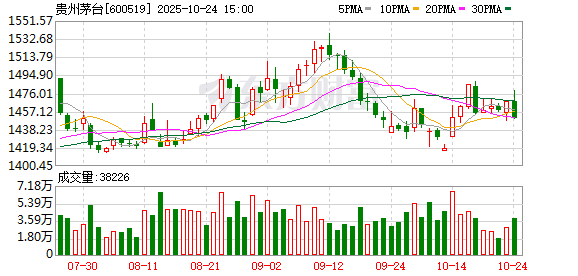
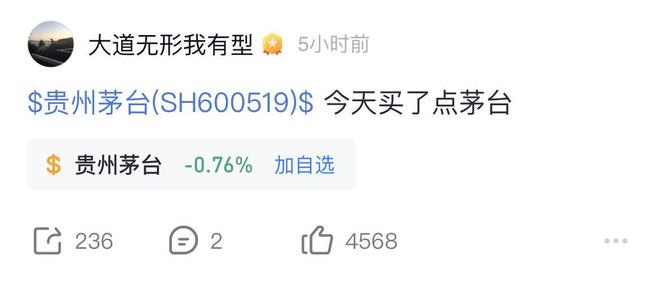
事实上,这并非段永平首次发声支持贵州茅台。早在6月底茅台股价低迷时,他就曾鼓励贵州茅台投资 者"大家在害怕什么呢?"。此外,段永平还曾多次强调"茅台是茅台最好的背书""高档酒里,茅台最经 济实惠。" 然而,与段永平的乐观情绪形成对比的是,茅台当前面临的市场环境并不乐观。根据第三方平台"今日 酒价"数据,10月13日,2025年53度500ml飞天茅台散瓶批发价已跌至1765元,原箱价报1795元,较去年 同期下降近35%。国庆中秋双节期间,飞天茅台批发价连续多日低于1800元,旺季不旺成为行业普遍现 象。 10月13日,知名投资人段永平在社交平台上(ID:大道无形我有型)再次发声,"今天买了点茅台!"。 尽管贵州茅台(600519.SH)年内股价累计下跌5.05%,截至10月13日报收1419.2元/股,但段永平的"喊 话式加仓"再次引发市场对白酒龙头企业的关注。 从行业整体来看,白酒产量已连续第八年下滑。国家统计局数据显示,2025年1-6月规模以上白酒企业 产量为191.6万千升,同比下降5.8%。与此同时,行业集中度进一步提升。据中国酒业协会数据,2025 年上半年规模以上白酒企业数量减少至887家,同 ...
中秋旺季也没救起来!茅台跌破1800元,白酒为啥割不动年轻人了?
Sou Hu Cai Jing· 2025-10-13 05:31
Core Viewpoint - The white liquor industry, particularly Moutai, is experiencing a significant downturn, with prices dropping and sales declining, primarily due to changing consumer preferences among younger demographics [1][5][39] Group 1: Price and Sales Trends - Moutai's wholesale price has fallen to 1770 yuan, breaking the psychological barrier of 1800 yuan, marking the lowest price in years [1][3] - The overall white liquor industry is facing a decline, with profits of major companies down by 10.93% in the first half of 2025, and 13 out of 19 listed companies reporting revenue decreases [5][18] - In August, the monthly production of white liquor decreased by 18.2% compared to the same period last year, leading to increased inventory levels [5][18] Group 2: Challenges for Smaller Enterprises - Smaller liquor companies are struggling, with Yanghe's revenue and profit dropping over 30% in Q1, and Kuozi's revenue halving in Q2 [7][18] - More than half of liquor companies are reportedly selling at a loss, with many retailers experiencing stagnant sales [7][18] Group 3: Changing Consumer Preferences - Younger consumers, aged 18 to 30, represent a potential market of 490 million but only account for 18% of white liquor consumption among the post-95 generation [9][11] - A significant 83% of young drinkers prefer beverages with an alcohol content below 20 degrees, indicating a shift away from traditional high-alcohol white liquor [9][11] - The traditional drinking culture associated with white liquor, often linked to formal occasions and social pressures, is seen as unappealing by younger consumers [11][13] Group 4: Industry Overproduction and Distribution Issues - The white liquor industry has overproduced, with Moutai's production increasing from 39,300 tons in 2016 to 56,300 tons in 2024, leading to excess inventory [18][20] - The rise of direct sales channels and online platforms has disrupted traditional distribution methods, making it difficult for distributors to maintain profitability [20][23] Group 5: Industry Adaptation and Future Outlook - In response to market challenges, companies are developing low-alcohol products, with the low-alcohol market projected to grow significantly [27][39] - The industry is also shifting towards online sales and instant retail, with 34.9% of companies prioritizing these channels [33] - The upcoming national standards for liquor production aim to stabilize quality and adapt to changing consumer demands, potentially revitalizing the industry [31][39]