科技自主

Search documents
科创板投资“利器”来袭!博时上证科创板综合价格指数增强(A类:023891,C类:023892)掘金“硬科技”新时代
Sou Hu Cai Jing· 2025-04-10 01:36
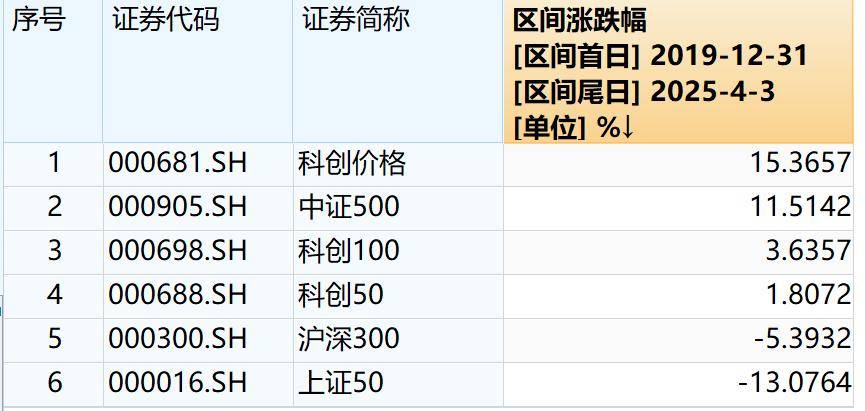
Core Insights - The Sci-Tech Innovation Board (STAR Market) has become a key area for nurturing new productive forces in China's capital market since its launch in July 2019, with 584 listed companies and a total market capitalization exceeding 7.62 trillion yuan as of February 2025 [1] - The launch of the Bosera STAR Market Composite Price Index Enhanced Fund focuses on "hard technology" and aims to invest in innovative companies with high market recognition and breakthrough core technologies [1] - The STAR Market Composite Price Index has shown significant growth, with a return rate of 15.37% from December 31, 2019, to April 3, 2025, outperforming major indices like CSI 300 and CSI 500 [2] Market Performance - As of April 3, 2025, the STAR Market Composite Price Index has a price-to-earnings ratio of 170.33 and a price-to-book ratio of 3.91, indicating relatively lower valuations compared to other indices, which enhances its cost-effectiveness for investment [2] - The index covers 567 constituent stocks with an average market capitalization of 13.1 billion yuan, achieving a market capitalization coverage of 97%, which is more balanced compared to other indices [3] Sector Focus - The index has a high concentration in hard technology sectors, with the top six industries being electronics (44.46%), biomedicine, computers, power equipment, machinery, and national defense, collectively accounting for over 92% of the index [3] - The top ten holdings include leading electronic companies such as Haiguang Information and Cambrian, benefiting from the global industrial chain restructuring [3] Financial Metrics - The constituent stocks have an average gross profit margin exceeding 30%, indicating strong profitability and significant earnings volatility, with current performance potentially in a recovery phase [3] - The research and development expenditure as a percentage of revenue has consistently remained around 10% from 2020 to 2023, significantly higher than that of the ChiNext and CSI All Share Index, reflecting a strong technological moat [3] Investment Strategy - The Bosera STAR Market Composite Price Index Enhanced Fund employs a quantitative investment strategy aimed at generating excess returns while controlling tracking errors through a comprehensive process that includes cost control, multi-factor stock selection, and risk budgeting [5] - The fund is managed by an experienced quantitative investment professional with nearly a decade of experience, leveraging Bosera's established index enhancement system [5]

论持久战的胜利:海外关税风暴中的沙盘推演与策略应对
天天基金网· 2025-04-07 11:25
Core Viewpoint - The article discusses the implications of Trump's new tariff policies, highlighting the potential for increased trade tensions and their impact on global supply chains and economies [2][3][10]. Group 1: Tariff Policies and Their Nature - Trump's tariffs are characterized as a political weapon rather than a mere economic tool, aiming to reshape global trade rules through unilateral actions [3][4]. - The tariffs imposed on China could reach a staggering 34%, significantly affecting trade dynamics and economic relations [2][4]. - The overall tariff levels for U.S. imports could rise to between 54% and 64%, surpassing previous expectations and indicating a more aggressive stance compared to past trade conflicts [8][10]. Group 2: Economic Impact and Reactions - The expected annual revenue from the tariffs could range from $349.9 billion to $503.5 billion, indicating a significant financial motive behind the policy [13]. - The tariffs are likely to have a detrimental effect on the U.S. economy, potentially reducing GDP by 0.2% to 1.5% and causing a decline in household incomes [15][19]. - China's export trade is expected to face substantial pressure, with the average tariff level reaching unprecedented heights, which may lead to a short-term economic slowdown [16][22]. Group 3: Strategic Implications and Future Outlook - The article suggests that the current trade conflict may signal the end of the third era of globalization, with long-term implications for global economic structures [10][19]. - The geopolitical landscape is becoming increasingly complex, with potential retaliatory measures from affected countries, leading to a spiral of escalating tariffs [9][10]. - The article emphasizes the need for strategic adjustments in response to these developments, advocating for a focus on domestic demand and technological self-sufficiency as pathways to resilience [24][27].