
虚拟现实

Search documents
金融界财经早餐:事关301关税、稀土出口等!商务部回应;头部硅企上调报价;国投白银LOF限购;亦庄人形机器人半马报名启动;京东发布2025年终奖公告(12月26日)
Jin Rong Jie· 2025-12-26 01:53
12月26日,金融界财经早餐,宏观政策、资本市场、行业板块、公司个股要闻一览: 一、今日财经要闻 1、商务部召开例行新闻发布会表示,坚决反对美对华半导体产品加征301关税,已通过中美经贸磋商机 制向美方提出严正交涉。对于稀土磁体出口限制相关问题,中方积极促进、便利合规贸易。针对TikTok 与投资者签署协议,中国政府希望企业达成符合中国法律法规、利益平衡的解决方案。 2、中国人民银行12月25日公告称,以固定利率、数量招标方式开展1771亿元7天期逆回购操作,操作利 率为1.4%。当日有883亿元7天期逆回购和3000亿元MLF到期,同时央行实施4000亿元MLF操作,合计 实现净投放1888亿元。12月MLF维持加量续作,继续向市场投放中期流动性,保障岁末年初金融市场 平稳运行。2025年全年,MLF净投放超1万亿元,持续呵护市场流动性。 3、国家发展改革委预告,国家发展改革委专题新闻发布会即将召开,介绍国家创业投资引导基金有关 工作。近日,国家创业投资引导基金旗下三只子基金同日完成工商登记,预示着这一"航母级"基金即将 启航。 4、私募排排网数据显示,截至12月12日,有业绩记录的近1500只私募多资产策 ...

沪市公司2025年年报预约披露时间出炉;四家头部硅片企业大幅上调报价……盘前重要消息还有这些
证券时报· 2025-12-26 00:55
Group 1 - The Ministry of Commerce of China has expressed strong opposition to the U.S. decision to impose 301 tariffs on certain Chinese semiconductor products, emphasizing that it does not recognize the conclusions of the U.S. 301 investigation [2] - The Ministry of Commerce reiterated its commitment to maintaining the stability of global supply chains and facilitating compliant trade regarding rare earth magnet exports to the U.S. [2] - The Shanghai Stock Exchange has announced the scheduled disclosure dates for 2025 annual reports, with Chipway Technology set to disclose on February 3, 2026, followed by *ST Huawang and Shangwei Co. on February 13 and 14, 2026, respectively [2] Group 2 - The State Administration for Market Regulation has identified issues in the "Antarctic Krill Oil" incident, highlighting non-compliance in the production and processing behaviors of companies, and plans to implement new regulations to enhance supervision of food production [3] - The National Development and Reform Commission will hold a press conference to discuss the work related to the National Venture Capital Guidance Fund on December 26 [4] Group 3 - The National Press and Publication Administration has approved 144 domestic online games for December 2025 [5] - The Shanghai Municipal Government has issued a plan to strengthen the open-source system, aiming to build a competitive open-source innovation hub by 2027, with goals including the establishment of 1-2 internationally influential open-source communities and the cultivation of 100 commercial open-source enterprises [5] Group 4 - The Guangzhou Municipal Government has introduced 18 measures to support the development of the gaming and e-sports industry, including funding for significant breakthroughs in gaming technology [6] - A team from the National University of Defense Technology has set a new global record for superconducting magnetic levitation speed, accelerating a test vehicle to 700 km/h in just two seconds [6] - Major silicon wafer manufacturers have significantly raised their prices, with average increases reaching 12%, attributed to rising upstream silicon material costs [6] Group 5 - Shanghai Port Bay's commercial space business and perovskite solar business are projected to account for less than 1% of the company's revenue in 2024 [8] - Huadian Technology has signed a contract worth 265 million yuan for six major pipelines for a supercritical power plant [9] - Yichang Technology will resume trading on December 26 after the Chuzhou State-owned Assets Supervision and Administration Commission becomes the actual controller [10] - Unisoc's subsidiary plans to establish a new company with a subsidiary of CATL to engage in automotive domain control chip business [11] - Banachian intends to acquire 100% of Zhonglian Century's shares and will resume trading on December 26 [12] - Zhongding Co. plans to set up a joint venture to manufacture humanoid robots [13] - Guangju Energy will collaborate with China General Nuclear Power Group in areas such as electricity sales and virtual power plants [14] - Zhongwei Co. has signed a strategic cooperation framework agreement with Xinwangda for solid-state battery development [15]

最高1000万元!广州首个游戏电竞产业专项扶持政策发布
Nan Fang Du Shi Bao· 2025-12-25 15:11
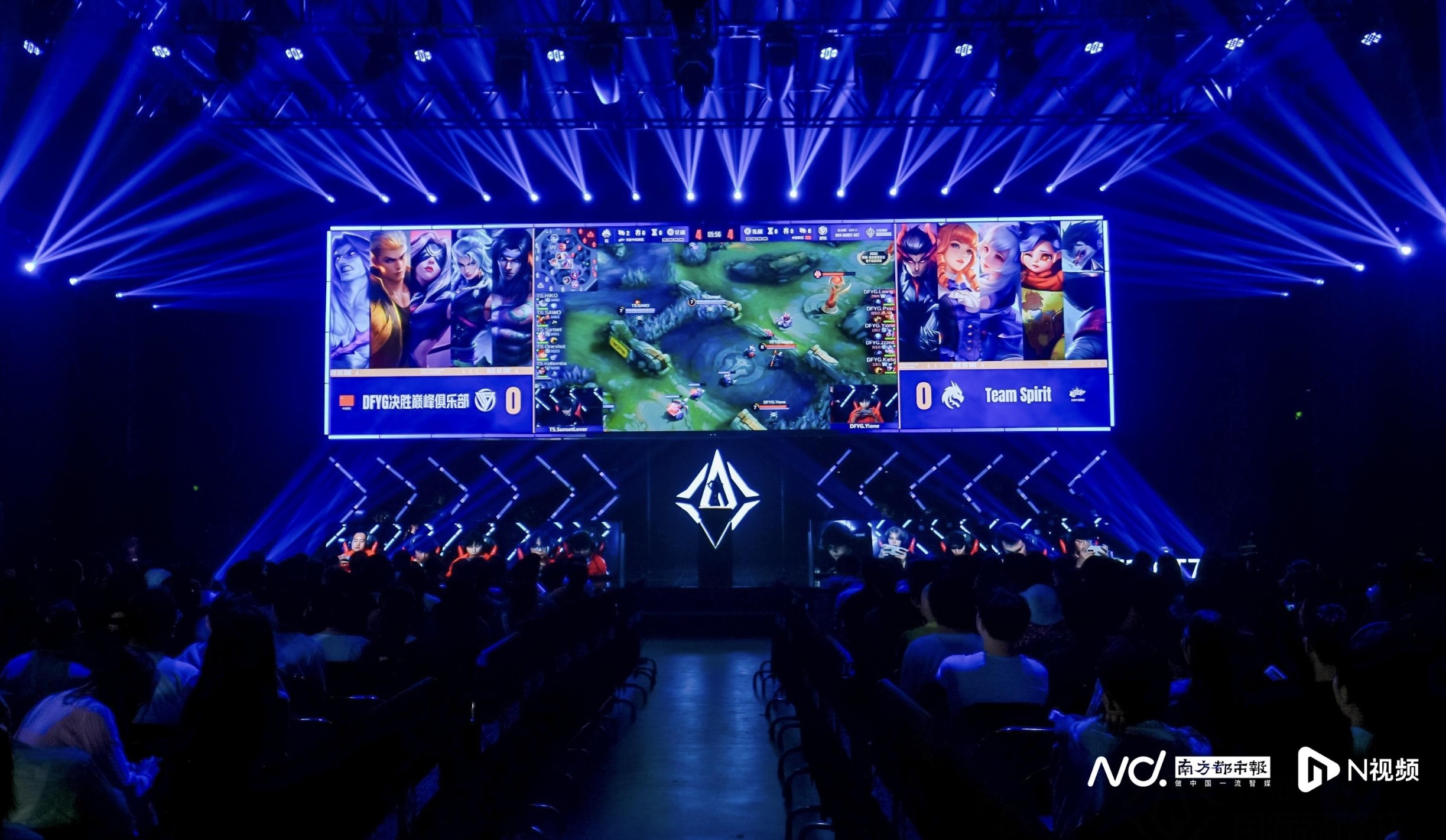
Core Viewpoint - Guangzhou has officially released its first special policy to support the development of the gaming and esports industry, aiming to enhance the city's cultural influence and showcase its innovative vitality [1] Group 1: Policy Overview - The policy includes 18 measures to support the gaming and esports industry, focusing on esports events, game products, and the entire industry chain [1][6] - The goal is to position Guangzhou among the most influential cities in the global gaming and esports industry by 2030 [6] Group 2: Financial Support - The policy provides financial support for hosting esports events, with a maximum subsidy of 5 million RMB for each high-level event [3][8] - Individual companies can receive up to 10 million RMB annually under this policy [5][7] - Support for esports clubs and alliances includes a maximum subsidy of 2 million RMB based on annual event investments [4][8] Group 3: Technological Integration - The policy encourages the integration of technologies such as AI, virtual reality, and the metaverse with the gaming industry, offering up to 3 million RMB for significant breakthroughs in game technology [4][7] Group 4: Game Development and Operations - Financial incentives are provided for the development of original games that reflect Chinese culture, with up to 200,000 RMB for each selected project [7] - Support for game products that have been online for 1 to 3 years includes a maximum subsidy of 5 million RMB based on revenue [7] Group 5: Talent and Infrastructure Development - The policy emphasizes the importance of talent cultivation in the gaming and esports sector, supporting educational institutions in developing relevant programs [7][8] - It also promotes the construction of professional esports venues to meet international standards [4][8] Group 6: Market Environment and Regulations - The policy aims to optimize the business environment for the gaming industry, including the establishment of service centers and the enforcement of intellectual property rights [7][8] - It includes measures to encourage investment in the gaming and esports industry, leveraging government funds to attract private capital [7]
12月25日重要资讯一览
Zheng Quan Shi Bao Wang· 2025-12-25 14:14
Group 1 - The Ministry of Commerce of China has expressed strong opposition to the U.S. decision to impose 301 tariffs on certain Chinese semiconductor products, stating that it does not recognize the conclusions of the U.S. 301 investigation and has lodged formal representations through the China-U.S. economic and trade consultation mechanism [2] - The Ministry of Commerce emphasized its commitment to maintaining the security and stability of global supply chains and facilitating compliant trade, particularly regarding rare earth magnet exports to the U.S. [2] - The Shanghai Stock Exchange has announced the scheduled disclosure dates for 2025 annual reports, with Chipway Technology set to disclose on February 3, 2026, followed by *ST Huawang and Shangwei Co. on February 13 and 14, 2026, respectively [2] Group 2 - The State Administration for Market Regulation has identified issues related to the "Antarctic Krill Oil" incident, highlighting non-compliance in the production and processing behaviors of some enterprises, and plans to implement new regulations to enhance supervision over food entrusted production [3] - The National Development and Reform Commission will hold a press conference on December 26 to discuss the work related to the National Venture Capital Guidance Fund [4] - The National Press and Publication Administration has approved 144 domestic online games for December 2025 [5] Group 3 - The Shanghai Municipal Government has issued an implementation plan to strengthen the open-source system, aiming to build a competitive open-source innovation hub by 2027, with goals including the establishment of 1-2 internationally influential open-source communities and the cultivation of 100 commercial open-source enterprises [5] - The Guangzhou Municipal Government has introduced 18 measures to support the development of the gaming and e-sports industry, encouraging technological innovation and collaboration with national-level projects [6] - A team from the National University of Defense Technology has set a new global record in magnetic levitation experiments, accelerating a test vehicle weighing tons to 700 km/h in just two seconds [6] Group 4 - Major silicon wafer companies have significantly raised their prices, with 183N silicon wafers priced at 1.4 yuan per piece, 210RN at 1.5 yuan, and 210N at 1.7 yuan, reflecting an average increase of 12%, attributed to rising upstream silicon material costs [6] Group 5 - Shanghai Port Bay reported that its commercial aerospace and perovskite solar business will account for less than 1% of the company's revenue in 2024 [8] - Huadian Technology has signed a contract worth 265 million yuan for six major pipelines for a supercritical power plant [8] - Yichang Technology will see the Chuzhou State-owned Assets Supervision and Administration Commission become its actual controller, with shares resuming trading on the 26th [8] Group 6 - Unisoc Microelectronics plans to establish a new company with a subsidiary of CATL to engage in automotive domain control chip business [9] - Baina Qiancheng intends to acquire 100% of Zhonglian Century's shares, with trading resuming on the 26th [9] - Zhongding Holdings plans to set up a joint venture to manufacture humanoid robots [9] Group 7 - Guangju Energy intends to collaborate with China General Nuclear Power Corporation in areas such as electricity sales and virtual power plants [10] - Zhongwei Co. has signed a strategic cooperation framework agreement with Xinwanda for solid-state batteries [10]
虹软科技涨2.02%,成交额1.37亿元,主力资金净流入220.72万元
Xin Lang Cai Jing· 2025-12-25 05:42
Core Viewpoint - Hongsoft Technology's stock has shown a significant increase in price and trading activity, reflecting positive market sentiment and growth in revenue and profit for the year [1][2]. Financial Performance - As of September 30, 2025, Hongsoft Technology reported a revenue of 628 million yuan, representing a year-on-year growth of 9.39% [2]. - The net profit attributable to shareholders for the same period was 142 million yuan, marking a substantial increase of 60.51% year-on-year [2]. Stock Performance - The stock price of Hongsoft Technology increased by 27.17% year-to-date, with a recent 5-day increase of 2.93% and a 20-day increase of 3.00%, although it has decreased by 18.31% over the past 60 days [1]. - The stock was trading at 48.44 yuan per share with a market capitalization of 19.433 billion yuan as of December 25 [1]. Shareholder Information - The number of shareholders increased by 13.85% to 22,900 as of September 30, 2025, while the average number of circulating shares per person decreased by 12.16% to 17,513 shares [2]. - Hong Kong Central Clearing Limited is a new entrant among the top ten circulating shareholders, holding 3.2452 million shares [3]. Dividend Distribution - Since its A-share listing, Hongsoft Technology has distributed a total of 613 million yuan in dividends, with 387 million yuan distributed over the past three years [3]. Business Overview - Hongsoft Technology specializes in the research and application of visual artificial intelligence technology, providing comprehensive solutions for smart devices including smartphones, smart cars, and IoT [1]. - The revenue composition includes 82.69% from mobile intelligent terminal visual solutions, 15.76% from smart cars and other AIoT devices, and 1.55% from other sources [1].

重磅!广州发布首个游戏电竞产业专项扶持政策
Ge Long Hui· 2025-12-25 05:22
Core Viewpoint - Guangzhou government has officially released the "Eighteen Measures to Support the Development of the Game and E-sports Industry," marking the city's first dedicated policy to support this sector [1][2]. Group 1: Financial Support Measures - Establishment of a special fund for the game and e-sports industry in Guangzhou, with a maximum annual financial support of 10 million RMB per enterprise [3]. - A one-time subsidy of up to 5 million RMB will be provided to game operation units for outstanding game products that have been online for more than one year but less than three years, based on revenue sharing [3][4]. - A one-time support of up to 300,000 RMB will be awarded for projects that achieve significant breakthroughs in game technology [3]. Group 2: Technological Innovation and Development - Support for the integration of technologies such as artificial intelligence, virtual reality, and the metaverse with the game and e-sports industry [3]. - Encouragement for game companies to undertake national-level key laboratories and major projects, as well as to introduce high-quality results from national R&D projects for local transformation [3]. Group 3: Promotion of Original Game Development - Incentives for developing original games that incorporate traditional Chinese culture, with a maximum pre-subsidy of 2 million RMB for selected key projects [4]. - Support for small and medium-sized game projects with a maximum pre-subsidy of 200,000 RMB [4]. Group 4: E-sports Event Support - Financial support of up to 5 million RMB for hosting international and domestic high-level e-sports events [4]. - A maximum subsidy of 200,000 RMB for e-sports event alliances based on annual total investment [4]. Group 5: Market Development and Talent Cultivation - Initiatives to attract and cultivate market players in the game and e-sports sector, including unicorn companies and top game manufacturers [4]. - Support for educational institutions to establish talent training bases and relevant courses in the game and e-sports industry [4]. Group 6: Infrastructure and Environment Optimization - Support for the construction of professional e-sports venues that meet international event standards [4]. - Establishment of service centers for the game industry to provide convenient administrative services and protect intellectual property rights [4].
广州:支持人工智能等技术和游戏电竞产业深度融合,围绕游戏领域“卡脖子”技术开展研发
Xin Lang Cai Jing· 2025-12-25 05:02
Core Viewpoint - Guangzhou has officially released its first special policy to support the development of the gaming and esports industry, aiming to position the city among the most influential in the global gaming esports sector by 2030 [1] Group 1: Policy Measures - The policy includes 18 measures designed to promote the integration of technologies such as artificial intelligence, virtual reality, metaverse, and ultra-high-definition video with the gaming and esports industry [1] - It encourages gaming and esports companies to undertake national-level key laboratories, national industrial innovation platforms, and major national projects, as well as to attract high-quality results from national key R&D programs to be implemented in Guangzhou [1] - A one-time support reward of up to 3 million yuan will be granted to projects that achieve significant breakthroughs in gaming technology, as recognized by the city's gaming and esports industry authorities [1] Group 2: Cultural Integration and International Expansion - The policy supports gaming companies in organically integrating elements of traditional Chinese culture with gaming scenarios to promote the overseas expansion of gaming products [1] - For outstanding games that are released overseas and have a strong impact, a one-time subsidy of up to 300,000 yuan will be provided based on the annual actual settlement amount for each game product [1]
中衡设计涨2.71%,成交额4690.34万元,主力资金净流入190.68万元
Xin Lang Cai Jing· 2025-12-25 03:05
Group 1 - The core viewpoint of the news is that Zhongheng Design has shown a significant increase in stock price and trading activity, indicating positive market sentiment towards the company [1] - As of December 25, Zhongheng Design's stock price rose by 2.71% to 10.62 CNY per share, with a total market capitalization of 2.933 billion CNY [1] - The company has experienced a year-to-date stock price increase of 35.60%, with a 7.38% rise in the last five trading days [1] Group 2 - Zhongheng Design's main business segments include design consulting (58.48%), engineering supervision and project management (18.31%), and EPC engineering contracting (15.58%) [1] - As of September 30, the number of shareholders decreased by 22.93% to 21,500, while the average circulating shares per person increased by 28.98% to 12,835 shares [2] - For the period from January to September 2025, Zhongheng Design reported a revenue of 778 million CNY, a year-on-year decrease of 15.36%, and a net profit attributable to shareholders of 56.27 million CNY, down 15.85% year-on-year [2] Group 3 - Since its A-share listing, Zhongheng Design has distributed a total of 777 million CNY in dividends, with 165 million CNY distributed over the past three years [3]

凝聚共识,共谋新篇:江苏科普场馆高质量发展研讨会暨省科普场馆协会2025年度年会在宁召开
Yang Zi Wan Bao Wang· 2025-12-24 11:05
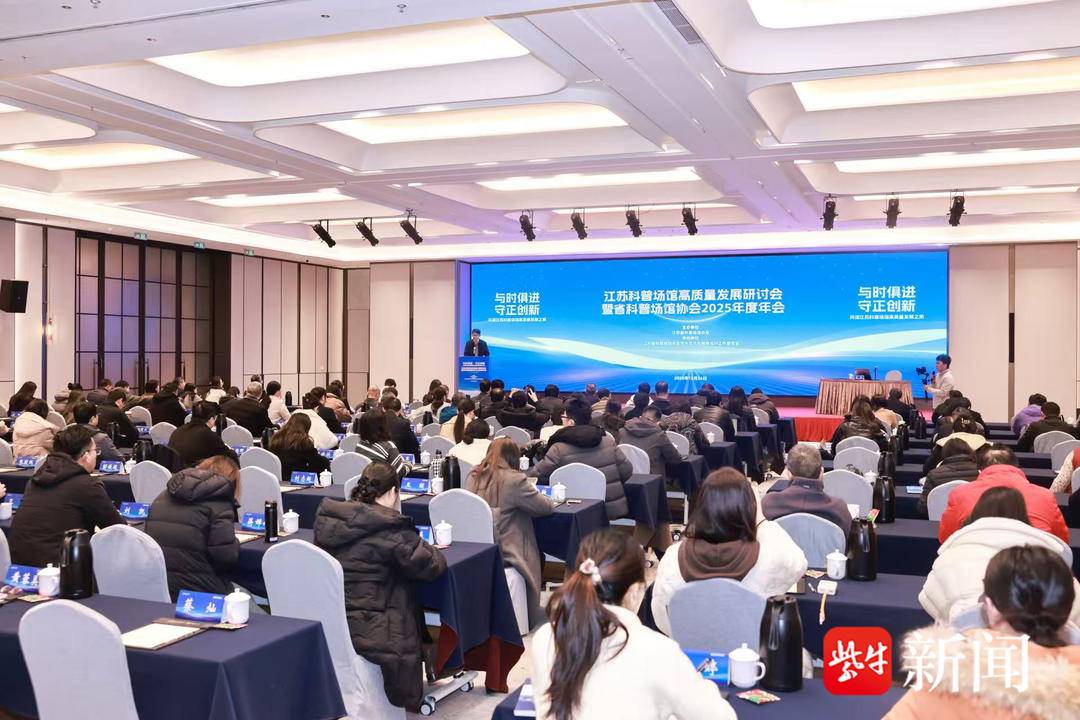
Core Insights - The seminar on the high-quality development of science popularization venues in Jiangsu was held on December 24, focusing on exploring upgrade paths and development blueprints for these venues in the new era [1] - The event gathered nearly 150 representatives from various science popularization venues, industry experts, scholars, and professionals to discuss development strategies [1] Group 1: Leadership and Vision - Sun Chunlei, the chairman of the Jiangsu Science Popularization Venue Association, emphasized the importance of science venues in inspiring youth scientific dreams and enhancing public scientific literacy [3] - The association aims to promote the development of science venues through performance evaluation, platform building, and self-improvement, under the strong leadership of the provincial science association [3] - Challenges such as the need for updated concepts, collaborative efforts, resource sharing, and the integration of technology and education were highlighted [3] Group 2: Key Presentations - A keynote report titled "Collaborative Development and Intelligent Empowerment: Thoughts on the High-Quality Development Path of Science Popularization Venues" was presented by Bai Jinsong, providing forward-looking ideas for the transformation of Jiangsu's science venues [5] - Bai emphasized "collaborative development" as a preferred path to overcome resource limitations, advocating for the establishment of national cooperation networks and regional alliances [5] - The report also discussed the use of cutting-edge technologies like artificial intelligence and virtual reality to innovate science communication methods and enhance interactive experiences [5] Group 3: Practical Insights - Six representatives from grassroots venues shared their research findings and practical explorations, covering topics such as resource coordination mechanisms, localized curriculum design, and audience feedback-based service evaluation [7] - These shared experiences provided valuable references for practical innovation in science venues across the province [7] - The meeting served as a platform for aligning industry consensus and addressing challenges, with a focus on "collaboration" and "intelligent empowerment" as core drivers for future development [7]
瑞芯微涨2.03%,成交额7.36亿元,主力资金净流入2437.32万元
Xin Lang Cai Jing· 2025-12-24 06:11
Core Viewpoint - The stock of Rockchip Electronics Co., Ltd. has shown significant performance, with a year-to-date increase of 63.85% and a recent market capitalization of 75.29 billion yuan [1] Group 1: Stock Performance - On December 24, Rockchip's stock rose by 2.03%, reaching 178.86 yuan per share, with a trading volume of 736 million yuan and a turnover rate of 0.99% [1] - The stock has experienced a 1.06% increase over the last five trading days, a 1.74% decrease over the last 20 days, and a 20.44% decline over the last 60 days [1] - The company has appeared on the stock market's "龙虎榜" (top trading list) six times this year, with the most recent appearance on August 28 [1] Group 2: Financial Performance - For the period from January to September 2025, Rockchip achieved a revenue of 3.141 billion yuan, representing a year-on-year growth of 45.46%, and a net profit attributable to shareholders of 780 million yuan, reflecting a 121.65% increase [2] - Since its A-share listing, the company has distributed a total of 1.274 billion yuan in dividends, with 566 million yuan distributed over the past three years [3] Group 3: Shareholder Information - As of September 30, 2025, the number of shareholders increased by 34.79% to 87,500, while the average number of tradable shares per shareholder decreased by 25.76% to 4,811 shares [2] - Among the top ten circulating shareholders, Hong Kong Central Clearing Limited is the fourth largest, holding 15.36 million shares, an increase of 1.65 million shares from the previous period [3] - The sixth largest shareholder, Galaxy Innovation Mixed A, reduced its holdings by 461,000 shares to 4.39 million shares [3]
