量化大数据

Search documents
融资净买超43亿,后面牵出一串大手笔
Sou Hu Cai Jing· 2026-01-07 03:12
Core Viewpoint - The article emphasizes that the true market direction is determined by the underlying attitudes of institutional investors rather than superficial data such as net buying amounts in various sectors [1]. Group 1: Market Reactions to News - The article discusses a case where a pharmaceutical stock was expected to drop due to negative news but instead rose by 30%, highlighting the disconnect between perceived bad news and actual market behavior [3]. - It illustrates that institutional investors may use negative news as an opportunity to accumulate shares quietly, as evidenced by increasing institutional inventory despite falling stock prices [4]. Group 2: Institutional Behavior - The article points out that institutional attitudes are reflected in their trading behaviors rather than just in news headlines or stock price movements [6]. - A specific example is given where a stock with a reported 8-fold increase in net profit actually saw a 10% decline because institutional investors were not participating in the rally, indicating a lack of interest [6]. Group 3: Importance of Institutional Inventory - The article stresses the importance of monitoring institutional inventory levels as a key indicator of market sentiment, suggesting that rising inventory alongside positive news indicates genuine interest from institutions [8]. - Conversely, if there is significant buying activity without a corresponding increase in institutional inventory, it may suggest that retail investors are driving the price, leading to potential instability [9]. Group 4: Conclusion on Market Dynamics - The article concludes that there are no absolute "good" or "bad" news in the market; the critical factor is whether institutions are willing to act on the news [9]. - Quantitative data on institutional inventory serves as a tool to reveal the true intentions of institutional investors, helping to navigate market perceptions [9].

基金经理说2026年该买这些?看完数据再决定
Sou Hu Cai Jing· 2026-01-05 04:15
最近刷到证券时报的报道,汇添富基金经理程竹成聊2026年的投资方向——最看好A股,尤其是AI这类新质生产 力行业,说现在是布局的好阶段;美股估值偏高但可能"软着陆",态度中性;黄金因为美联储降息,还有上升空 间。很多人可能会问:"这会不会影响我的钱包?"其实新闻只是市场波动的"诱因",真正决定结果的是资金的态 度和交易行为——就像我用了十多年的量化大数据,能帮着看清这些藏在走势背后的动作,避免踩坑。 说到踩坑,牛市里的暴跌最容易让人犯愁:到底该拿还是该卖?卖早了怕踏空,卖晚了怕套牢,总踩不准节拍 ——这不就是因为光看走势吗?走势可是机构用来掩盖真实意图的"烟雾弹",靠它判断肯定错得多。 我用的量化大数据里,有个"机构库存"数据——橙色柱体越活跃,说明机构资金参与交易的频率越高、时间越 长。就拿这只股票来说,虽然三次调整的走势看着吓人,但"机构库存"压根没消失(看图1)——这意味着机构还 在持续、积极地参与交易。你想啊:股价调整的时候,机构反而更活跃,这不就说明他们没打算"跑"吗?要是早 看到这数据,谁还会纠结卖不卖? 一、走势是"障眼法",交易行为才是"真面目" 还有另一只股票更典型:前期几次调整都"涨回去了 ...

18年量化老手揭秘:机构震仓洗盘真相
Sou Hu Cai Jing· 2025-12-01 14:01
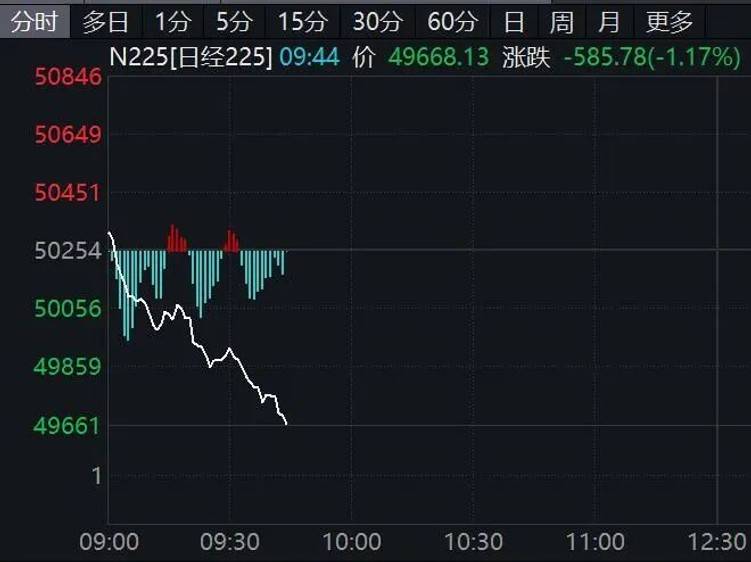
Group 1 - The global market is experiencing a stark contrast, with Japanese and Korean stock markets showing significant volatility, exemplified by the Nikkei 225 index initially rising but then dropping over 1%, and the Korean Composite Index flipping from a 1.2% gain to a loss [1][3] - Cryptocurrency markets are also showing divergence, with Bitcoin falling below $87,000 and Ethereum dropping below $2,900, while gold prices are rising, reminiscent of the 2008 financial crisis when gold served as a safe haven during risk asset declines [3][5] - Geopolitical tensions, particularly related to comments from former President Trump regarding Venezuela, are contributing to market uncertainty, highlighting the market's aversion to unpredictability [3][5] Group 2 - Many investors struggle to hold onto stocks during a bull market, often attributing their inability to external factors, but the real issue lies in not understanding the intentions of institutional investors [5][6] - Institutional investors are likened to skilled players in a card game, whose actions significantly influence stock price movements, making it crucial for retail investors to discern their strategies [5][6] - The advancement of computer technology and quantitative data analysis provides tools for retail investors to decode institutional behavior, potentially allowing them to make more informed investment decisions [6][12] Group 3 - Key quantitative data indicators include "dominant momentum," which reflects various trading behaviors, and "institutional inventory," which shows the activity level of large funds [11][12] - Recognizing signals of institutional activity, such as a combination of "recovery" behavior and active "inventory," can indicate opportunities for retail investors to capitalize on market fluctuations [12][16] - The current market movements, including the fluctuations in Japanese and Korean stocks and the contrasting trends in cryptocurrencies and gold, suggest that large funds are reallocating their asset portfolios [18]