养老金融

Search documents
发挥财务公司优势化解融资难
Jing Ji Ri Bao· 2025-08-01 21:56
Core Viewpoint - The article emphasizes the critical role of corporate financial companies in alleviating the financing difficulties faced by small and medium-sized enterprises (SMEs) by leveraging their unique advantages in understanding industries and providing tailored financial services [1][2]. Group 1: Transformation of Corporate Financial Companies - Corporate financial companies are transitioning from traditional fund managers to integrated hubs for industry-finance collaboration, driven by policy guidance and market demand [1][3]. - They utilize their deep understanding of industry chains to offer customized financing and innovative risk control, particularly in key areas such as technology and green finance [1][2]. Group 2: Key Characteristics of Financial Services - Corporate financial companies possess a competitive edge through their understanding of industry costs and characteristics, allowing them to provide financing at lower rates than traditional banks [1][2]. - In the technology sector, loans have increased by 12% year-on-year, while green loans have surged by 27.4% as these companies facilitate low-carbon transitions [2]. - The companies are extending their services to the end of the industry chain, addressing funding shortages for SMEs and transforming the approach to inclusive finance from broad distribution to targeted support [2]. Group 3: Digital Transformation and Service Upgrade - The rise of digital finance is creating new opportunities for corporate financial companies to enhance their services by integrating logistics, information flow, and capital flow into a unified digital credit system [3]. - By automating financial processes and employing big data for risk assessment, these companies are improving financing efficiency and reducing moral hazards [3]. - The implementation of the new management regulations for corporate financial companies is providing clearer directions for industry transformation, with examples of successful integration of resources by companies like Haier and Haier [3][4]. Group 4: Future Directions - Corporate financial companies need to deepen their industry insights, expand their services from individual enterprises to entire industry chains, and enhance their role as strategic partners [4]. - They should leverage technology such as artificial intelligence and blockchain to improve service intelligence and create data-driven financial service models [4]. - Strengthening internal and external collaboration will be essential for maximizing resource efficiency and forming a cohesive service network [4].
中粮资本:公司高度重视市值管理
Zheng Quan Ri Bao Wang· 2025-08-01 12:45
Group 1 - The company emphasizes the importance of market value management and has established a market value management system at the beginning of the year [1] - Zhongying Life Insurance will focus on the pension finance strategy, deepen cooperation in individual insurance, bank insurance, and agency channels, accelerate digital transformation, and optimize product and service ecosystems [1] - The company aims to leverage resources from the COFCO Group's industrial chain to continuously enhance new business value and long-term profitability, providing stable returns for shareholders [1]

青岛银行半年度业绩快报:规模效益双增长,特色金融构筑发展韧性
Zhong Guo Zheng Quan Bao· 2025-08-01 12:18
Core Viewpoint - Qingdao Bank has demonstrated steady growth in operational scale, profitability, and asset quality in the first half of 2025, maintaining strong performance amidst a complex economic environment [1][6]. Group 1: Financial Performance - As of June 30, 2025, Qingdao Bank's total assets reached 743.03 billion yuan, an increase of 7.69% compared to the end of the previous year [2] - The total customer loans amounted to 368.41 billion yuan, reflecting an 8.14% growth year-on-year [2] - Customer deposits totaled 466.14 billion yuan, with a growth rate of 7.9% [2] - The bank achieved operating revenue of 7.66 billion yuan, a year-on-year increase of 7.5% [2] - The net profit attributable to shareholders was 3.07 billion yuan, up 16.05% from the previous year, indicating a significant improvement in profitability [2] - The non-performing loan ratio stood at 1.12%, down by 0.02 percentage points from the end of the previous year [2] - The provision coverage ratio improved to 252.8%, an increase of 11.48 percentage points, enhancing risk mitigation capabilities [2] Group 2: Strategic Initiatives - Qingdao Bank has focused on five key areas: technology finance, green finance, inclusive finance, pension finance, and digital finance, aligning with national strategies [3] - In technology finance, the bank's loans reached 27.30 billion yuan, significantly increasing year-on-year, supporting innovation and entrepreneurship [3] - The green loan balance was 43.72 billion yuan, growing over 17% compared to the previous year, reflecting the bank's commitment to the "dual carbon" strategy [3] - The bank has established a blue finance evaluation system and launched a "marine ranch + finance" service model, supporting the development of the marine economy [4] - Qingdao Bank has successfully implemented a sustainable development-linked syndicate loan, marking a significant achievement in the consumer finance sector [4] Group 3: Brand and Social Responsibility - The bank has enhanced its brand value and social responsibility, integrating corporate development with social value creation [5] - The "Happy Neighborhood" volunteer service team conducted over 270 activities, reaching more than 14,000 people, enhancing community engagement [5] - Qingdao Bank has partnered with Shandong University to establish a humanities and arts fund, contributing to educational and cultural development [5] - The bank ranked 270th in the 2025 Global Bank 1000 list and 495th in the Fortune China 500 list, highlighting its regional significance and brand value [6] - The bank's performance reflects its resilience and commitment to serving the local economy and national strategies [6]
青岛银行半年度业绩快报:规模效益双增长 特色金融构筑发展韧性
Zhong Zheng Wang· 2025-08-01 06:54
2025年上半年,青岛银行在"科技金融、绿色金融、普惠金融、养老金融、数字金融"五篇大文章中找准 定位,按照"专业提升、数智赋能、体系优化、特色驱动"的年度经营指导思想,打造出独具特色的差异 化竞争优势,实现与地方经济同频共振。 在科技金融领域,该行立足青岛科技创新策源地优势,构建"政银企研"协同创新生态,科技金融贷款余 额同比大幅增长,截至2025年3月末,青岛银行科技金融贷款余额达273.02亿元。创新推出"知识产权估 值+风险代偿"双轮驱动模式,实现科技成果转化贷款全省全覆盖,为科创企业提供全生命周期金融服 务。 核心指标攀升 从发展规模看,规模稳健提升。截至6月末,青岛银行资产总额达7430.28亿元,较上年末增长7.69%; 客户贷款总额3684.06亿元,较上年末增长8.14%;客户存款总额4661.40亿元,增幅7.9%,资产负债结 构持续优化。 从盈利能力看,营收净利保持双增长。截至6月末,该行实现营业收入76.62亿元,同比增长7.5%;实现 归母净利润30.65亿元,同比增长16.05%,净利增速显著高于营收增长,凸显精细化经营成效。 从资产质量看,持续向好。截至6月末,该行不良贷款率1. ...
中粮资本:中英人寿将聚焦养老金融战略深化多渠道合作
Jin Rong Jie· 2025-08-01 01:17
Group 1 - The company emphasizes the importance of market value management and has established a market value management system at the beginning of the year [1] - The focus of the company will be on the pension finance strategy, enhancing cooperation in individual insurance, bank insurance, and agency channels [1] - The company aims to accelerate digital transformation, optimize product and service ecosystems, and leverage resources from the COFCO Group's industrial chain to improve new business value and long-term profitability [1]
截至6月末 山西社会融资存量规模为6.9万亿元
Sou Hu Cai Jing· 2025-08-01 01:16
信贷结构持续优化 截至6月末,全省金融机构本外币各项贷款余额4.8万亿元,同比增长7.6%,高于全国平均水平0.8个百 分点,较年初增加2608.9亿元,金融体系对实体经济支持保持较高水平。 上半年,金融支持重点领域和薄弱环节力度持续加大。一是持续加大对绿色低碳领域的支持力度。6月 末,全省绿色贷款余额5497.6亿元,较年初增加467亿元。二是普惠小微等薄弱领域贷款较快增长。6月 末,全省普惠小微贷款余额5164.7亿元,同比增长21.6%;全省科技型企业贷款余额同比增长12.8%,均 高于各项贷款增速。三是持续加大对制造业等重点领域的支持力度。6月末,全省制造业中长期贷款余 额2604亿元,同比增长16.6%,较年初增加256.2亿元。 同时,优化利率政策传导,促进社会综合融资成本下降。上半年,全省新发放企业贷款、普惠小微贷款 加权平均利率分别为3.44%、4.44%,同比分别下降0.52个、0.49个百分点。 今年上半年,全省金融保持平稳运行态势,社会融资规模,金融机构贷款、存款均保持平稳增长,信贷 结构持续优化,支持经济高质量转型发展的力度进一步加大。这是记者从7月31日人民银行山西省分行 召开的20 ...
河南省省长王凯与中国银行行长张辉会谈
Zheng Quan Shi Bao Wang· 2025-07-31 11:52
人民财讯7月31日电,据河南发布消息,7月31日,河南省省长王凯在郑州与中国银行(601988)行长张 辉举行工作会谈,就加强双方务实合作进行深入交流。王凯表示,河南始终高度重视金融业高质量发 展,统筹抓好金融扩规模、调结构、降成本、防风险工作,金融服务经济社会发展质效不断提升。中国 银行业务种类齐全、服务网络完善、外向型业务广泛,与河南有着良好的合作基础、广阔的合作空间。 希望中国银行继续发挥优势、深耕河南,扎实做好科技金融、绿色金融、普惠金融、养老金融、数字金 融"五篇大文章",在支持实体经济发展、城市更新、对外开放等方面不断优化金融产品服务,更好助力 河南高质量发展。河南将持续优化金融生态、营造良好环境,为中国银行在豫发展提供优质服务,推动 双方合作取得更加丰硕成果。 ...

不动产登记 开启养老金融新篇章 访本报专家组成员、清华大学法学院金融与法律研究中心研究员邢成
Jin Rong Shi Bao· 2025-07-31 04:16
Core Viewpoint - The introduction of real estate trust property registration in cities like Beijing, Shanghai, and Guangdong is seen as a breakthrough in addressing legal obstacles related to trust property rights, facilitating the integration of real estate resources with pension security needs [1][2]. Group 1: Real Estate Trust Registration - Real estate trust property registration resolves legal barriers to trust property rights, enabling non-cash assets like real estate to be included in trusts, thus fostering innovation in pension finance [1]. - The registration system enhances asset security by clarifying property rights, which is crucial for the stability of pension finance [2]. Group 2: Advantages of Real Estate Trusts - Compared to traditional "reverse mortgage" models, real estate trusts offer risk isolation, ensuring that trust assets are independent from the trustee's and trustor's personal assets, thus safeguarding pension security [3]. - Real estate trusts allow for flexible inheritance arrangements, enabling multiple beneficiaries and achieving both pension and inheritance goals [3]. - The model supports comprehensive services by integrating medical and care services, creating a "finance + elderly care" ecosystem, unlike traditional models that only provide financial support [3]. Group 3: Target Audience and Accessibility - The primary audience for real estate pension solutions includes homeowners lacking stable cash flow, families without children, and high-net-worth families seeking both pension security and wealth transfer [4]. - Real estate trusts do not have specific entry thresholds, making them more accessible compared to traditional trust products that often require significant initial investments [4]. Group 4: Market Potential and Sustainability - The potential market for real estate trusts in China is substantial, especially in first- and second-tier cities, with estimates suggesting a market size of hundreds of billions if supportive tax policies are implemented [4]. - The model is expected to activate idle real estate assets and improve their utilization efficiency, while also allowing gradual asset value release to minimize market impact [4]. Group 5: Policy and Regulatory Support - Nationwide promotion of real estate trust registration will require time and supportive policies, with expectations for expansion in cities with high aging rates and stable property values by 2025 to 2027 [6]. - Key supportive policies include optimizing tax regulations, ensuring judicial protection for trust assets, and enhancing inter-departmental collaboration for unified regulatory standards [6]. Group 6: Recommendations for Trust Companies - Trust companies are encouraged to innovate products, such as combining "reverse mortgage" trusts with long-term care insurance, to extend service offerings [6]. - Building an ecosystem by collaborating with elderly care and medical institutions can create comprehensive pension solutions [6]. - Utilizing technology, such as AI, can enhance operational efficiency in property valuation and rental predictions [6].
渤海人寿7.8纪实:爱与责任 守护美好
Cai Fu Zai Xian· 2025-07-31 02:22
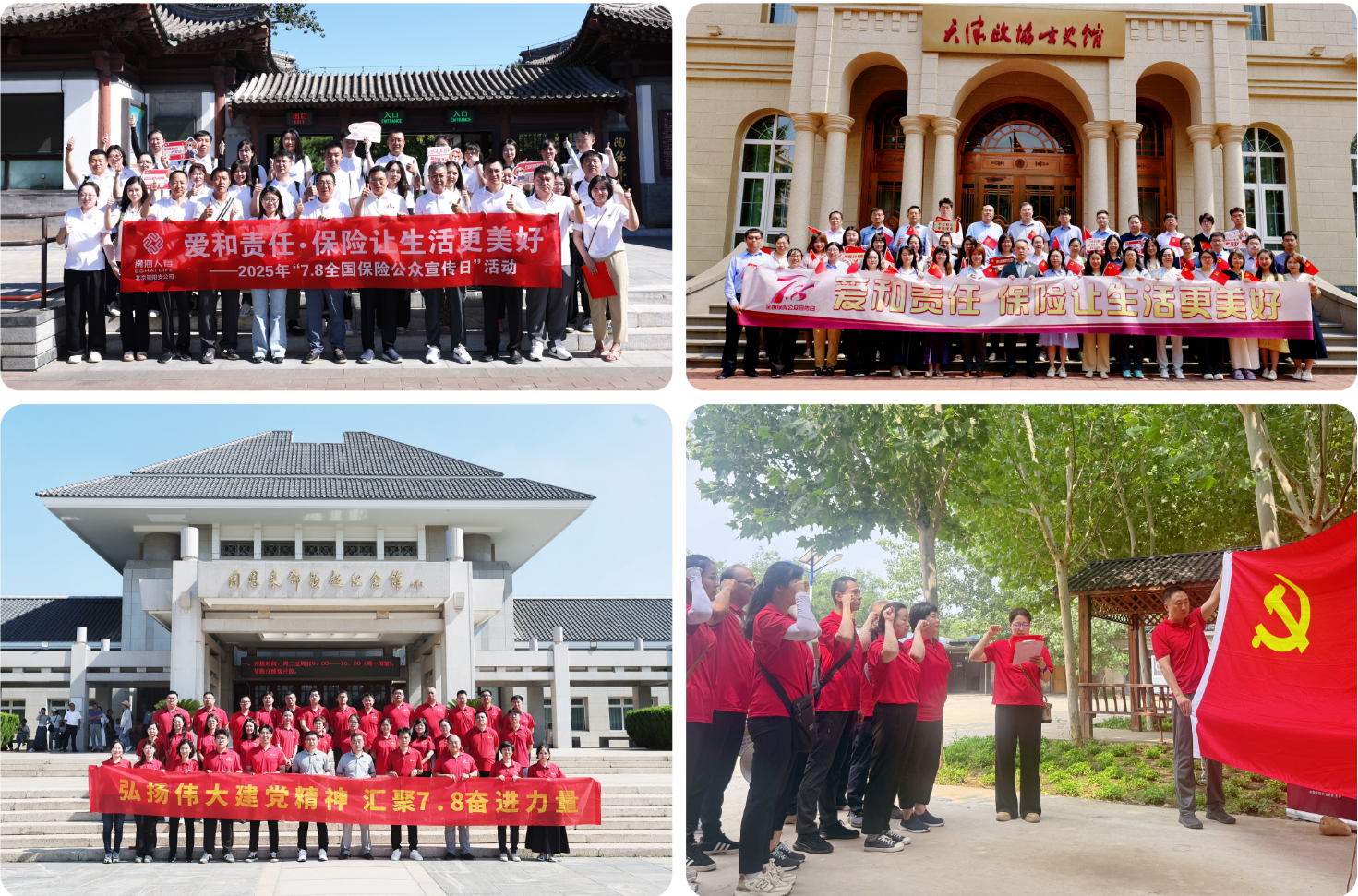
2025年"7.8 全国保险公众宣传日"期间,渤海人寿秉持金融工作的政治性、人民性,以"爱和责任 保险 让生活更美好"为主题,全面开展7.8系列宣传与文化推进活动。从红色文化活动开展、保险"五进入"、 高质量服务网点建设、惠民政策公益宣讲、从业人员合规培训、多媒体传播六大维度,着力塑造"可信 赖、能托付、有温度"的保险业形象。 党建引领凝聚奋进力量 渤海人寿将七一建党节与7.8活动主旨有机融合,充分发挥基层党组织战斗堡垒与党员先锋模范作用, 广泛开展了7.8全国保险公众宣传日红色教育主题活动,激励全体党员践行初心使命、勇担时代重任, 以红色精神书写新征程中保险人的奋进之路与家国情怀。 活动期间,渤海人寿总公司与京津冀分支机构组织党员群众走进天津政协文史馆、陶然亭公园、周恩来 邓颖超纪念馆、天津市总工会等红色教育基地,通过踏寻革命足迹、重温入党誓词、7.8红色健步走、 爱国诗歌朗诵、经典革命歌曲传唱及集中学习研讨等多元化形式,激励党员同志与广大群众传承红色基 因、赓续红色血脉,进一步强化党性修养、铸牢信仰之基,以金融为民初心守护群众美好生活。 消保教育护航金融消费 渤海人寿聚焦不同人群的金融服务需求,京津冀三地 ...

报告征集 | 2026年中国金融科技(FinTech)行业发展洞察报告
艾瑞咨询· 2025-07-31 00:02
Core Viewpoint - The article emphasizes the upcoming opportunities and challenges in the Chinese fintech industry as it transitions into a new phase of digital finance and technology scene construction, driven by advancements in generative AI, blockchain, and other cutting-edge technologies [1][3]. Group 1: Research Background - 2026 marks the beginning of a new round of the "Financial Technology Development Plan," focusing on the integration of AI and stablecoin technologies to enhance cross-border payment processes and develop financial scenarios around data value [1]. - The report aims to analyze the practical needs of financial institutions regarding advanced technologies and digital financial practices, providing guidance for technology vendors [1][3]. Group 2: Purpose of the Report - The report aims to help industries and capital track the latest practices in China's fintech sector and identify future market opportunities, with a planned release in January 2026 [2]. - The report will invite participation from financial institutions and fintech service providers to explore market trends and technology needs [2]. Group 3: Research Content - The report will focus on the latest iterations of technologies like generative AI and blockchain, analyzing their impact on the fintech industry and identifying key trends for development [3][4]. - It will examine five core financial scenarios: technology finance, green finance, inclusive finance, pension finance, and digital finance, assessing the empowering effects of technological iterations on these areas [3][4]. Group 4: Participation Value - Participating companies will have the opportunity to be featured in the report, enhancing their brand visibility and industry influence [6]. - The report will be disseminated through official platforms and media channels, providing extensive exposure [6]. Group 5: Target Enterprises - The report targets financial industry clients, including banks, insurance, securities, and fintech service providers that have engaged in fintech practices [9]. - It also includes technology service providers, both listed and unlisted, that offer fintech products or services [9]. Group 6: Timeline for Participation - The call for participation is open until December 15, 2025, inviting financial institutions and fintech service providers to engage [10].