
量子计算

Search documents
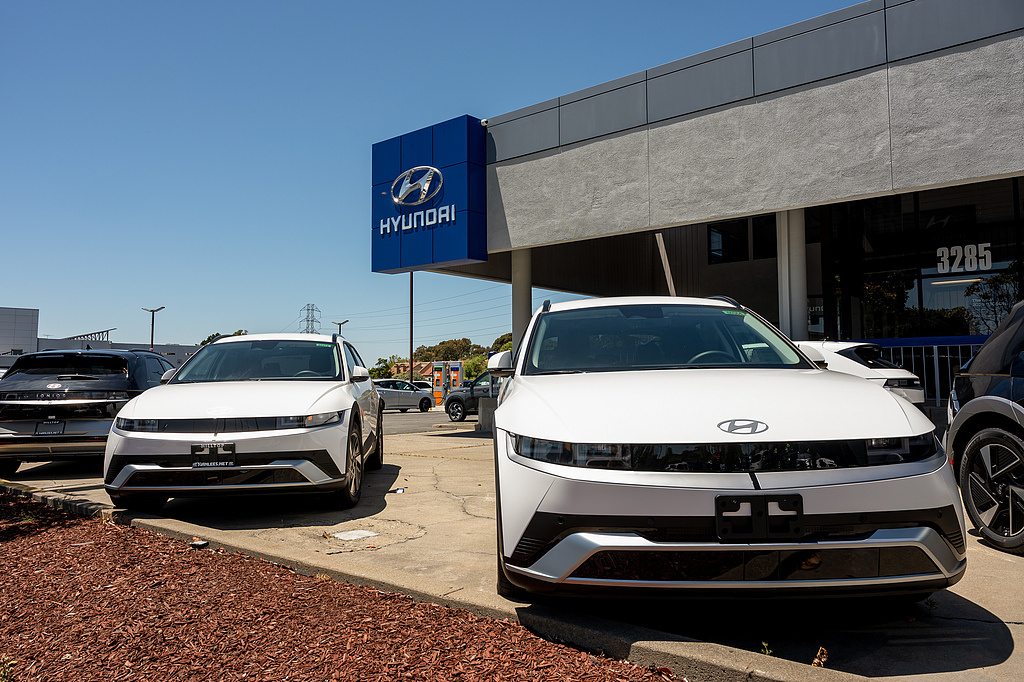
美国下调日本汽车关税,韩国企业焦虑
Huan Qiu Shi Bao· 2025-09-17 22:36
Group 1 - The U.S. has reduced tariffs on Japanese cars from 27.5% to 15%, but maintains a 25% tariff on South Korean cars, causing increased anxiety in the South Korean automotive industry [1][2][5] - South Korean exports of cars to the U.S. have been declining for six consecutive months, with an August drop of 15.2%, highlighting the competitive disadvantage against Japanese manufacturers [5][6] - The South Korean government is cautious about signing agreements that could severely harm domestic companies, emphasizing the need for negotiations that prioritize national interests [1][5][7] Group 2 - Japan's automotive industry is still concerned despite the tariff reduction, as the 15% rate remains significant, with exports to the U.S. dropping by 28.4% in August [4][6] - The recent U.S.-Japan trade agreement requires Japan to invest $550 billion in various sectors, which may set a precedent for similar demands on South Korea [6] - South Korean companies are considering shifting focus to non-U.S. markets to mitigate the impact of high tariffs, although the U.S. market remains crucial for their overall exports [5][6]

IonQ CEO:将推出10000量子比特芯片,辗压英伟达Blackwell GPU
Sou Hu Cai Jing· 2025-09-17 14:59
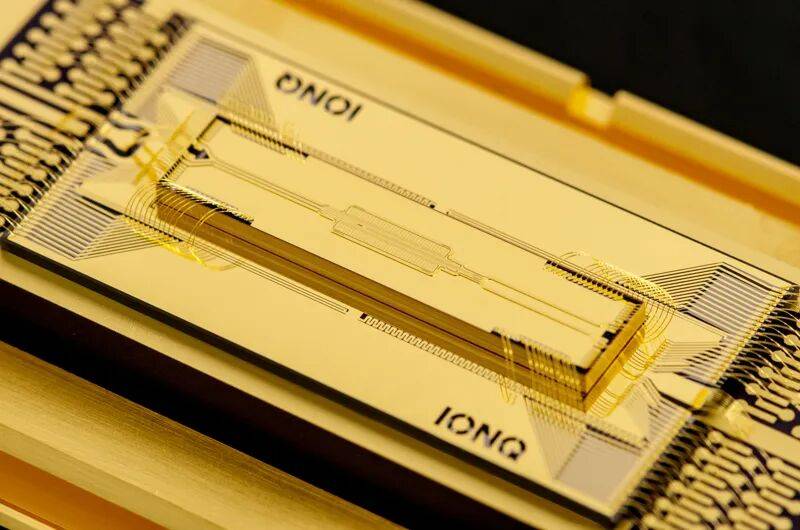
9月17日消息,量子计算公司IonQ CEO Niccolòde Masi 近日在接受彭博社采访时表示,该公司计划在2027年推出 搭载10,000个qubit(量子比特)的量子计算芯片,届时将彻底"淘汰"英伟达(NVIDIA)的Blackwell 构架GPU。 他强调,即便传统GPU 拥有"整个宇宙的时间"来计算,仍无法触及量子计算机可解决的问题规模。 Niccolòde Masi 指出,IonQ通过收购英国Oxford Ionics已加速了其技术进程,预计2027年前就能把IonQ的量子处理 器扩展到上万qubit等级。他认为,随着量子逻辑栅极的成熟与误差修正机制的突破,传统架构的GPU在某些关键 应用(化学模拟、密码学、最佳化)将显得过时。 编辑:芯智讯-浪客剑 2020 年和 2021 年,IonQ 构建了更多代高性能量子硬件,将Google Cloud Marketplace添加到我们的云合作伙伴名 单中,并宣布与领先的学术和商业机构建立一系列合作和业务伙伴关系。 2021年10月1日,IonQ以IONQ股票代码在纽约证券交易所上市,成为全球首家上市的纯量子计算公司。 与目前的AI GPU相比,量子 ...


中国移动黄宇红:量子计算将与人工智能、6G网络深度融合
Shang Hai Zheng Quan Bao· 2025-09-17 14:53
Core Insights - Quantum computing is entering a development inflection point, transitioning from a period of technological breakthroughs to accelerated growth, with mainstream technology routes advancing steadily and new routes making progress [1] - The deep integration of quantum computing with artificial intelligence and 6G networks is expected to bring new opportunities for technological transformation in global science and technology development [1] Group 1 - The integration of quantum computing, artificial intelligence, and 6G networks (referred to as "quantum-intelligent integration") is becoming an important trend in information technology development [1] - Quantum computing is expected to inject new momentum into scientific research by shifting the paradigm from hypothesis-driven to data-driven approaches [1] - The complexity of network structure, increased bandwidth, and antenna numbers in 6G will make computational complexity and power consumption key factors for commercial success [1] Group 2 - Despite the promising prospects of quantum-intelligent integration, there are still nine major challenges in theory, engineering, and application, including unclear capability boundaries, weak hardware capabilities, and fragmented software ecosystems [2] - China Mobile plans to implement three major initiatives: open quantum computing devices, co-build an innovation consortium for quantum-intelligent integration, and empower applications through quantum-intelligent integration [2] - The company aims to leverage its advantages in resource aggregation and application scenario implementation to accelerate the industrialization process of quantum technology [2]

苏州发力“智造” 央地携手“AI+”城市建设
Zhong Guo Xin Wen Wang· 2025-09-17 13:38
Core Insights - Suzhou is transitioning from "Suzhou manufacturing" to "Suzhou intelligent manufacturing" by leveraging digital technologies to enhance its industrial capabilities [1][2] - The "Artificial Intelligence + City Action Plan (2025-2026)" was launched, aiming to establish Suzhou as a globally influential "AI+" city through strategic collaborations [1] Group 1: Strategic Initiatives - Suzhou government signed a strategic cooperation agreement with China Mobile Cloud Capability Center to enhance collaboration in the "1030" industrial system [1] - The focus areas include the development of AI industry platforms, innovation centers, and cutting-edge technology hubs to support the establishment of a leading global AI industry and computing power platform [1][2] Group 2: Industry Growth - Suzhou has over 2,400 AI-related enterprises, with the AI industry revenue growing by 19.7% year-on-year from January to July this year [2] - The city aims to improve its policy framework covering industry, technology, talent, and application scenarios to support the development of large models and next-generation intelligent terminals [2] Group 3: Collaborative Efforts - China Mobile's Vice President emphasized the need to accelerate the development of core capabilities in large-scale intelligent computing clusters and quantum computing [2] - There is a call for reducing the barriers to computing power usage and exploring diverse collaborations in computing network integration and computing-electricity synergy [2]
英伟达(NVDA.US)携手OpenAI等AI巨头在英国投资110亿英镑推进“星际之门”项目
智通财经网· 2025-09-17 11:36
Core Insights - Nvidia is collaborating with CoreWeave, Microsoft, Nscale, and OpenAI to build AI infrastructure in the UK to foster innovation, economic growth, and job opportunities [1][2] - The project aims to establish an AI factory by the end of 2026, providing services for leading AI models, including those from OpenAI, to support the UK's autonomous AI goals [1][2] - The investment in AI factories in the UK could reach up to £11 billion, marking the largest AI infrastructure project in the country's history [2] Investment and Infrastructure - The collaboration will deploy up to 300,000 Nvidia Grace Blackwell GPUs across various AI factories in the US, Portugal, and Norway, with up to 60,000 GPUs specifically in the UK [1] - Nscale and Microsoft plan to build the UK's most powerful supercomputer in Lutterworth, Essex, equipped with over 24,000 Grace Blackwell Ultra GPUs to support Microsoft Azure services [2] Quantum Computing Initiatives - Nvidia is taking steps to advance quantum computing in the UK, including a partnership with Oxford Quantum Circuits to establish a quantum-GPU AI supercomputing center [2] - The OQC GENESIS system will integrate quantum computing technology with Nvidia's AI infrastructure at Digital Realty's JFK10 facility in New York [3] Ecosystem Development - Nvidia is collaborating with techUK, Quanser, and QA to strengthen the UK's robotics and AI ecosystem [3] - Various AI leaders in sectors such as quantum computing, life sciences, finance, and robotics are developing applications based on Nvidia's AI architecture [3] Data Center Modernization - BlackRock has announced a partnership with Digital Gravity Partners to invest up to £500 million in modernizing data centers in the UK to meet Nvidia's standards [3]

AI等技术对反恐带来新挑战,多国嘉宾呼吁加强情报协作
Nan Fang Du Shi Bao· 2025-09-17 11:11
Core Insights - The global public safety cooperation forum highlighted the new challenges in counter-terrorism, particularly the impact of emerging technologies like AI, quantum computing, and big data on terrorist activities [1][2] - Digital terrorism has become a focal point of global security concerns, with terrorists utilizing social media, cryptocurrencies, drones, AI, and robotics for their operations [1] - The need for enhanced technological investment and international cooperation among law enforcement agencies was emphasized as a means to combat these new threats [2] Group 1 - Emerging technologies are providing tools for terrorist activities, necessitating urgent solutions in global security governance [1] - The global landscape of terrorism is characterized by globalization, networking, and intelligence, with terrorist organizations leveraging encrypted communication to evade detection [1][2] - China has not experienced any violent terrorist incidents for over eight years, attributed to the effective application of advanced technologies in law enforcement [2] Group 2 - Countries are encouraged to collaborate on developing technological responses to new threats, particularly in areas like cybersecurity and de-radicalization [2] - Intelligence sharing through bilateral or multilateral mechanisms is crucial for timely and accurate information on terrorist activities [2] - Addressing poverty, social inequality, and complex international dynamics is essential to reduce the risk of terrorism [3]
AI日报丨瑞士央行狂买美股:科技七巨头达516亿美元,持仓量近该国GDP五分之一
美股研究社· 2025-09-17 11:07
Group 1 - The article highlights the rapid development of artificial intelligence (AI) technology, presenting significant opportunities in the market [3] - Salesforce announced an additional investment of $2 billion in its UK operations by 2030, while major US tech companies, including Microsoft, Nvidia, Google, OpenAI, and CoreWeave, pledged a total investment of £31 billion (approximately $42.3 billion) to enhance AI infrastructure in the UK [5] - Microsoft plans to invest $30 billion in the UK over the next four years, including $15 billion in capital expenditures, coinciding with a new agreement on AI, quantum computing, and nuclear technology between the US and UK [5] Group 2 - The Swiss National Bank (SNB) has reported a stock portfolio worth $167 billion, covering over 2,300 listed companies, which is nearly one-fifth of Switzerland's GDP [5] - Notably, the seven major tech companies, including Apple, Microsoft, Amazon, Meta, Nvidia, Alphabet, and Tesla, account for $51.6 billion of the SNB's investments, with Apple holding nearly $10 billion and Nvidia over $11 billion [6] - The SNB's asset management approach positions it alongside sovereign wealth funds from countries like Singapore and Qatar, although its primary goal is effective currency reserve management rather than corporate governance [6] Group 3 - Bernstein's analysis indicates that AI will bring long-term benefits to the IT sector, with companies like Apple, Dell, and Hewlett Packard Enterprise (HPE) being focal points [10] - The firm estimates that the enterprise inference market could reach a fundamental value of $1.3 trillion by 2030, with a compound annual growth rate (CAGR) of 67% from 2025 to 2030 [10] - Apple is viewed as a key player in the AI revolution, with significant potential for gains, while Dell is expected to benefit from AI server demand, although HPE faces execution challenges [11][12]




小摩回顾IonQ(IONQ.US)分析师日:展示量子计算领域领导力 技术突破与全球战略齐头并进
智通财经网· 2025-09-17 07:52
Core Insights - IonQ is establishing a growing leadership position in quantum computing, supported by a clear strategy to expand its technology and global influence [1] Group 1: Company Strategy and Developments - IonQ has made several strategic acquisitions, including ID Quantique, Lightsynq, Capella, and Oxford Ionics, to enhance its capabilities in quantum infrastructure and networking [2] - The company has completed a $1 billion equity financing, providing strong cash reserves to accelerate growth through key partnerships and new leadership [2] - IonQ's management emphasizes a commitment to releasing broader commercial opportunities as quantum technology matures, despite facing complex technical and manufacturing challenges [2] Group 2: Technological Advancements - IonQ's management presented a transformative roadmap for quantum computing scalability, aiming to increase physical qubits from over 256 in 2026 to 20,000 by 2028, and approximately 2 million by 2030 [3] - The company expects this rapid expansion to drive a double-exponential growth in logical qubits, increasing from 12 in 2026 to 1,600 by 2028, and reaching 80,000 by 2030 [3] Group 3: Quantum Networking and Security - IonQ is advancing its quantum network roadmap through strategic acquisitions, which enhance its expertise and patent portfolio in quantum secure communication and quantum network infrastructure [4] - The company is developing modular photonic interconnects to connect multiple ion trap quantum processors, aiming for a scalable distributed quantum computing architecture [4] Group 4: Leadership and Expertise - IonQ has introduced several new leaders, including notable figures in quantum research, to strengthen its leadership and expand its influence among sovereign and federal clients [5] - The new leadership team is expected to enhance IonQ's capabilities across the quantum value chain and federal engagement [5]
OpenAI、微软等美科技巨头“扎堆”投资英国,提升AI基础建设
Di Yi Cai Jing· 2025-09-17 06:14
Group 1 - The UK and US are set to collaborate in the fields of artificial intelligence, quantum computing, and nuclear technology, with a new agreement expected to be signed by UK Prime Minister Starmer and President Trump [4] - Multiple US tech companies, including OpenAI, Nscale, and Nvidia, announced a £31 billion investment in the UK aimed at enhancing AI infrastructure, with the first data centers planned for a former coal power station site in Northumberland [1][2] - Nvidia plans to deploy 120,000 Blackwell GPU chips in the UK, marking its largest deployment in Europe to date, which aims to position the UK as a creator of AI technology rather than a mere consumer [2] Group 2 - Oracle announced a commitment to invest £5 billion in AI data centers and research in the UK over the next two years, which is expected to create thousands of jobs and contribute billions to the UK economy by 2030 [2] - Microsoft has made a £22 billion investment in the UK AI sector, its largest investment outside the US, which is anticipated to significantly boost the UK economy in the coming years [2] - The UK government expects the new agreement to create high-skilled job opportunities and ensure that the partnership benefits all regions of the UK [4]
中国移动发布“无极一号”离子阱量子计算装置
Xin Lang Cai Jing· 2025-09-17 03:00
Core Viewpoint - China Mobile officially launched the "Wuji No. 1" ion trap quantum computing device and established the "Quantum Intelligence Integration" innovation consortium to support Beijing's development as a quantum computing innovation hub [1] Group 1: Quantum Computing Device - The "Wuji No. 1" ion trap quantum computing device supports precise control of 100 quantum bits [1] - The device achieves industry-leading performance in key metrics such as single-qubit fidelity, two-qubit fidelity, initial state preparation, and detection error rates [1] Group 2: Collaboration and Resource Sharing - China Mobile will open its quantum computing devices, computing resources, and algorithm verification environments to collaborate with partners [1] - The initiative aims to overcome technical and application bottlenecks in quantum computing [1]