价值投资

Search documents
当“质价双优”迎来收获期,一位价值投资者的“生意经”
Zhong Guo Ji Jin Bao· 2025-09-02 02:55
Core Insights - The article emphasizes the importance of proactive investment strategies, particularly during market downturns, highlighting the need for deep research and decisive action when high-quality assets are undervalued [1][2]. Investment Philosophy - The investment approach is defined as "value-oriented management," focusing on understanding the intrinsic value of companies rather than merely trading stocks [2]. - A distinction is made between "buying businesses" and "trading stocks," with the former being the hallmark of true value investors [2]. - The emphasis is on identifying companies with strong competitive advantages and understanding their business models deeply [3]. Business Characteristics - The article describes a good business using the terms "long slope, thick snow, slow change," indicating that the industry should be sustainable, profits should be substantial, and the company's competitive edge should remain stable [4]. - The semiconductor industry, particularly analog chips, is highlighted as a sector meeting these criteria due to its broad downstream demand and high customer loyalty [4][5]. Market Dynamics - The article notes a shift in the global trade landscape, presenting opportunities for domestic semiconductor companies as they seek to replace foreign suppliers [5]. - The investment strategy involves waiting for the right moment to invest when the market undervalues quality companies, as illustrated by a case where a leading domestic analog chip company saw its market cap drop significantly before a rebound [5]. Case Studies - The article discusses the investment in high-end liquor stocks, where the manager sold out during a price surge due to insufficient return potential, only to reinvest when prices became attractive again [6][7]. - The high-end liquor market is characterized by strong brand loyalty and pricing power, making it a good long-term investment despite short-term volatility [7][8]. Conclusion - The article concludes with a reflection on the importance of understanding business models and long-term value to navigate market fluctuations effectively, reinforcing the idea that downturns can present valuable investment opportunities [8][9].

当“质价双优”迎来收获期,一位价值投资者的“生意经”
中国基金报· 2025-09-02 02:49
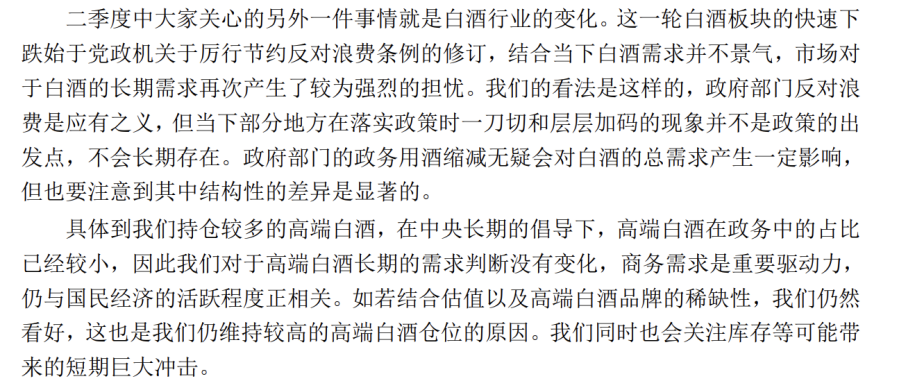
Core Viewpoint - The article emphasizes the importance of proactive preparation in investment, highlighting that significant opportunities are rare and should be seized when they arise, particularly during market downturns when quality assets are undervalued [1]. Group 1: Investment Philosophy - The investment approach is defined as "value-oriented management," focusing on buying companies as businesses rather than merely trading stocks, with a long-term shareholder perspective [3]. - The distinction between "buying businesses" and "trading stocks" is crucial, as true value investors seek returns through business growth rather than price fluctuations [3]. - A high standard is set for the quality of target companies, emphasizing the importance of their ability to outperform peers over time, which is essential for creating shareholder value [3]. Group 2: Research Methodology - The primary source of information for understanding companies and industries is the prospectus, which helps in building a foundational understanding of the business model and competitive advantages [4]. - A detailed analysis of competitive advantages is necessary, focusing on specific business issues and comparing with peers to identify sustainable advantages [4]. Group 3: Industry Insights - The characteristics of a good business are summarized as "long slope, thick snow, slow change," indicating a stable industry with substantial profits and minimal volatility in competitive advantages [6]. - The analog chip industry is identified as a sector meeting these criteria, with widespread downstream demand and high customer loyalty due to low cost impact and significant quality influence [6][7]. - The shift in global trade dynamics presents an opportunity for domestic semiconductor companies to capture market share previously held by foreign firms, benefiting established players in the analog chip sector [7]. Group 4: Investment Strategy - The strategy involves waiting patiently for undervalued opportunities, as demonstrated by a significant investment in a leading domestic analog chip design company when its market value dropped substantially [7]. - The focus is not on trending sectors but on businesses with solid fundamentals that may take time to yield results, emphasizing a long-term perspective [8]. Group 5: Case Study - High-End Liquor - The investment in high-end liquor stocks is highlighted, where the manager initially sold off holdings due to high valuations despite the sector's strong performance [10][11]. - The decision to re-enter the high-end liquor market was based on improved valuation attractiveness, demonstrating a disciplined approach to buying low and selling high [11][12]. - The long-term value of high-end liquor is attributed to its unique business model and scarcity, which are critical for maintaining a competitive edge [12].

【私募调研记录】宽远资产调研华荣股份
Zheng Quan Zhi Xing· 2025-09-02 00:09
Group 1 - The core viewpoint of the article highlights the recent research conducted by KuanYuan Asset Management on Huaron Co., which is projected to achieve a revenue of 1.639 billion yuan in the first half of 2025, representing a year-on-year growth of 17% [1] - The net profit attributable to the parent company is expected to be 198 million yuan, showing a slight decline of 1% year-on-year [1] - The decline in Q2 net profit is attributed to the suspension of the Shandong New Energy EPC project and a reduction in government subsidies [1] - The foreign trade segment of the factory business grew by 53.7%, while domestic trade declined by 20% [1] - New Energy EPC revenue increased by 126%, but the gross margin decreased by 13 percentage points [1] - A subsidiary in Saudi Arabia is expected to be established by September 2024, with orders anticipated in the second half of 2025 and production starting in 2026 [1] - The company has adjusted its strategy to control delivery risks due to rising costs from high customization demands in the intelligent engineering sector [1] - The explosion-proof inspection robot is being advanced through external cooperation for application in hazardous chemical scenarios [1] - Some New Energy EPC projects have been suspended due to policy impacts, but a recovery is expected in Q4 2025, with the annual net profit likely to remain stable [1] - The company maintains a dividend policy of distributing no less than 50% of its distributable profits [1] - Business expenses are payments made to service providers for technical research, exhibitions, and operations [1] Group 2 - KuanYuan Asset Management, established in May 2014, has a registered capital of 10 million yuan and focuses on asset management, industrial investment, corporate asset restructuring, mergers and acquisitions, investment consulting, financial consulting, business consulting, and marketing planning [2] - The core investment research team at KuanYuan Asset has over 10 years of successful experience in the secondary market, consistently ranking among the top in the industry [2] - KuanYuan Asset emphasizes value investing, aiming to identify certain growth opportunities and share in the growth of listed companies, with a focus on stable long-term performance [2]

景顺长城基金 护航科技创新 穿越周期筑根基
Shang Hai Zheng Quan Bao· 2025-09-01 19:06
Core Viewpoint - The company has systematically invested in the technology sector, with a focus on supporting economic transformation and innovation-driven development, holding a total of 83.1 billion yuan in technology stocks by the end of 2024, accounting for approximately 44% of its overall portfolio [1][3]. Group 1: Investment Strategy - The company has established a strong investment strategy in technology, recognizing its long-term importance since the early days of mobile internet [1]. - In 2019, the company became a member of the Sci-Tech Innovation Board's self-regulatory committee, advocating for policies that facilitate the listing of technology innovation enterprises [2]. - The company has significantly increased its investment in technology innovation since 2020, building a robust research team to keep pace with rapid technological advancements [3]. Group 2: Research and Development - The company has developed a talent pool focused on technology investments, integrating fund managers with insights and interests in the tech sector into a dedicated team [3]. - The company emphasizes deep research to uncover the long-term growth value of technology innovation enterprises, enhancing its equity investment capabilities [4]. - The integration of artificial intelligence into the investment research system has improved the company's data processing and predictive capabilities [5]. Group 3: Product Development - The company has continuously developed technology-themed equity funds aligned with national strategic development directions [3]. - Recently, the company became one of the first managers of the Sci-Tech Innovation Bond ETF, expanding its product offerings from equity to fixed income [3]. - The company maintains a value investment approach, focusing on fundamental analysis and actively participating in corporate governance to support high-quality development of listed companies [4].
42家上市券商上半年自营业务净收入同比增长53.53%
Zheng Quan Ri Bao Zhi Sheng· 2025-09-01 16:41
Group 1 - The core viewpoint of the articles highlights the significant growth in the proprietary trading business of listed securities firms in the A-share market, with a total net income of 112.35 billion yuan in the first half of 2025, representing a year-on-year increase of 53.53% [1][2] - The proprietary trading business has become the largest source of revenue for securities firms, with 15 firms reporting that over 50% of their total revenue came from this segment [1] - Major firms such as CITIC Securities and Guotai Junan reported substantial increases in proprietary trading income, with CITIC Securities achieving 19.05 billion yuan, up 62.42%, and Guotai Junan reaching 9.35 billion yuan, up 89.59% [1][2] Group 2 - A total of 36 out of 42 listed securities firms experienced year-on-year growth in proprietary trading income, with 23 firms showing increases of over 50% [2] - Notable growth was observed in smaller firms, with Changjiang Securities leading with a staggering increase of 668.35% in proprietary trading income [2] - Firms are adopting diverse strategies in their proprietary trading operations, focusing on non-directional investments and multi-asset strategies to enhance competitiveness [3] Group 3 - Securities firms are increasingly emphasizing deep research and value investment principles, aiming to optimize their asset allocation and improve their income stability [4] - The future outlook for proprietary trading suggests continued revenue growth, driven by favorable market conditions and strategic adjustments in investment approaches [4]

PDD or GLBE: Which Is the Better Value Stock Right Now?
ZACKS· 2025-09-01 16:40
Core Viewpoint - The analysis compares PDD Holdings Inc. and Global-e Online Ltd. to determine which stock represents a better undervalued investment opportunity for investors interested in Internet - Commerce stocks [1]. Valuation Metrics - PDD Holdings Inc. has a forward P/E ratio of 12.50, significantly lower than Global-e Online Ltd.'s forward P/E of 105.89, indicating that PDD may be undervalued [5]. - The PEG ratio for PDD is 1.29, while Global-e Online Ltd. has a PEG ratio of 1.78, suggesting that PDD's expected earnings growth is more favorable relative to its valuation [5]. - PDD's P/B ratio stands at 3.31, compared to Global-e Online Ltd.'s P/B of 6.25, further supporting the notion that PDD is a more attractive value option [6]. Investment Ratings - PDD Holdings Inc. currently holds a Zacks Rank of 1 (Strong Buy), indicating a positive earnings outlook, while Global-e Online Ltd. has a Zacks Rank of 2 (Buy) [3]. - Based on the valuation metrics and earnings outlook, PDD is rated with a Value grade of B, whereas Global-e Online Ltd. has a Value grade of F, reinforcing PDD's position as the superior value option [6].



中央汇金增持是多赢之举
Bei Jing Shang Bao· 2025-09-01 16:31
Core Viewpoint - Central Huijin's significant increase in ETF holdings signals strong confidence in the A-share market and aims to stabilize capital market fluctuations [1][2][3] Group 1: Central Huijin's Actions - As of the end of June, Central Huijin and its subsidiaries held stock ETFs worth 1.28 trillion yuan, a nearly 23% increase from the end of last year, marking a historical high [1] - Central Huijin acts as a stabilizing force in the market, buying during periods of significant volatility to enhance market confidence and promote value investing [1][2] - On April 7, following external adverse factors, Central Huijin increased its holdings, which quickly stabilized the market and initiated a slow bull trend over the next five months [1] Group 2: Impact on the Market - The stability of the capital market is crucial for economic development and public welfare, and Central Huijin's ETF purchases contribute to a healthier market environment for financing the real economy [1][2] - Central Huijin's actions significantly reduced market volatility and alleviated risks related to stock pledges for some listed companies [2] - The increase in ETF holdings sends a positive signal to the market, encouraging other institutional investors to maintain their investment confidence during market fluctuations [2] Group 3: Investment Strategy and Returns - By investing in ETFs, Central Huijin mitigates the risks associated with individual stocks while benefiting from overall market growth [2] - Central Huijin's strategy involves holding a basket of core A-share assets, reflecting confidence in the fundamentals of the Chinese economy and the overall quality of listed companies [2][3] - The long-term investment approach of Central Huijin is expected to yield good returns while preserving and increasing the value of state-owned assets [3]
中期分红“新老力量”合力优化价值投资生态环境
Zheng Quan Ri Bao· 2025-09-01 16:23
Core Insights - The mid-term cash dividend wave in A-shares is creating a historical high in dividend scale, with 818 listed companies announcing cash dividend plans, an increase of 141 companies compared to the previous year, and a total cash dividend amount reaching 649.7 billion yuan [1] Group 1: Market Trust and Stability - Mid-term dividends enhance the timeliness and predictability of shareholder returns, fundamentally boosting long-term holding confidence among investors [2] - Regular dividends compel companies to optimize cash flow management and governance structures, reducing impulsive expansions and improving capital allocation efficiency [2] - The establishment of a virtuous cycle of "stable profits - regular dividends - reinvestment" significantly strengthens the internal foundation for stable development in the A-share market [2] Group 2: Index Product Innovation - The implementation of mid-term dividends is expanding the group of high-dividend companies, enriching the sample sources for dividend indices and promoting continuous optimization of index compilation methods [2] - The increased attractiveness of dividend indices is stimulating innovation in related financial products, including the steady growth of traditional broad-based dividend ETFs and the emergence of niche tools like industry-themed dividend ETFs and Smart Beta strategies [2] Group 3: Long-term Capital Attraction - The diversification and maturation of the dividend index product system significantly attract long-term funds such as insurance and pension funds, guiding more institutional capital into the market [3] - This creates a positive cycle of "high-quality dividend assets - index optimization - product innovation - long-term capital inflow," enhancing the overall supply capacity of capital market products and improving market resilience [3] Group 4: Value Investment Shift - Mid-term dividends shift market focus from "valuation speculation" to "real returns," accelerating the migration of funds from short-term trading to long-term allocation [3] - Institutional investors are increasingly inclined to invest in stable dividend-paying and high-quality cash flow assets, pushing the valuation system back to fundamental logic [3] - Individual investors are gradually shifting towards seeking compound growth, reducing speculative trading behaviors, which further optimizes the capital structure in the A-share market [3]
【西街观察】中央汇金增持是多赢之举
Bei Jing Shang Bao· 2025-09-01 14:02
Core Viewpoint - The central government-backed investment entity, Central Huijin, has significantly increased its holdings in ETFs, sending multiple positive signals to the market and contributing to market stability and investor confidence [1][2][3]. Group 1: Central Huijin's Actions - As of the end of June, Central Huijin and its subsidiaries held a total market value of 1.28 trillion yuan in stock ETFs, representing a nearly 23% increase from the end of last year, marking a historical high [1]. - Central Huijin has acted as a stabilizing force in the market, particularly during periods of significant volatility, by increasing its holdings and thereby supporting market confidence and value investment principles [1][2]. - The decisive actions taken by Central Huijin on April 7, in response to external negative factors affecting the A-share market, led to a quick stabilization of the index and initiated a slow bull market over the following five months [1][2]. Group 2: Impact on the Market - The stability of the capital market is directly related to economic and livelihood support, with Central Huijin's ETF purchases promoting a healthy and stable market environment for financing the real economy [1][2]. - Central Huijin's investments have significantly reduced market volatility and alleviated risks faced by some listed companies, such as those related to equity pledges [2]. - By signaling a long-term positive outlook for the A-share market, Central Huijin's actions are expected to inspire other institutional investors, enhancing their investment confidence and stabilizing their holdings during market fluctuations [2]. Group 3: Investment Returns and Market Structure - Through ETF investments, Central Huijin mitigates the risks associated with individual stocks while benefiting from overall market growth [2]. - The entity's focus on a basket of core A-share assets reflects a vote of confidence in the fundamentals of the Chinese economy and the overall quality of listed companies [2][3]. - Central Huijin's long-term investments are anticipated to yield good returns while preserving and increasing the value of state-owned assets, thus achieving multiple objectives of market stability and investment gains [3].
温度浸润投教全流程,光大证券用“心”服务守护投资者
中国基金报· 2025-09-01 13:46
Core Viewpoint - The article emphasizes the importance of investor protection and financial literacy as foundational elements for the stability and development of the financial market, highlighting the commitment of Everbright Securities to an "investor-centric" philosophy through innovative educational services [2]. Group 1: Investor Education Initiatives - Everbright Securities has established a comprehensive investor education service network that integrates both online and offline platforms, aiming to disseminate financial knowledge across various demographics [2]. - The company promotes principles of "rational investment," "value investment," and "long-term investment," encouraging investors to adopt a "spare money investment" approach to avoid being swayed by short-term market trends [4]. - AI technology is leveraged in the development of educational content, transforming complex investment concepts into engaging short videos, thereby lowering the barriers to understanding and fostering a culture of rational and long-term investment [4]. Group 2: Community Engagement and Safety - The company actively collaborates with local party service centers to conduct diverse offline activities focused on macroeconomic analysis, investment knowledge dissemination, and financial fraud prevention [8]. - Educational sessions have been organized in various locations, such as community centers, where professionals simplify complex economic topics and provide guidance on navigating the current economic landscape [8][10]. - Everbright Securities has conducted 1,178 educational events since 2025, reaching nearly one million participants, with a focus on practical financial knowledge and fraud prevention strategies [12]. Group 3: Youth Financial Literacy - In schools, Everbright Securities has implemented a series of financial literacy programs that cover essential topics such as currency recognition, savings planning, and investment basics, using innovative teaching methods to engage students [14]. - The company aims to instill a sense of rational investment and risk awareness among young learners through relatable case studies and interactive simulations [14]. Group 4: Future Goals - Everbright Securities is committed to maintaining its mission of "finance for the people," focusing on actual investor needs and striving to create a high-quality, efficient, and empathetic educational system [16].