
汽车智能化

Search documents
BBA也卖不动了?国内一年少卖26万辆,宝马连续两年降超10%
3 6 Ke· 2026-01-13 12:46
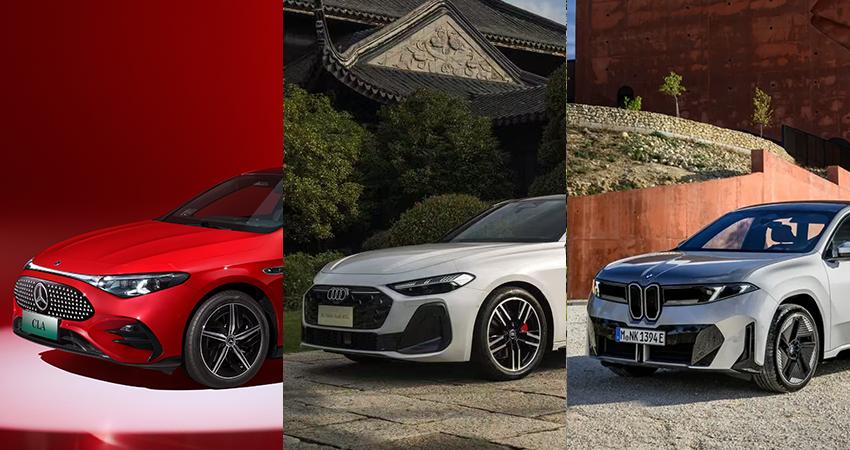
Core Viewpoint - The traditional German luxury car manufacturers, known as "BBA" (Benz, BMW, Audi), experienced a significant decline in sales in the Chinese market for 2025, with a total drop of approximately 260,000 units, representing a decline of about 12.3% compared to 2024 [1][3][5]. Group 1: Sales Performance - In 2025, Mercedes-Benz delivered 551,900 units in China, a decrease of approximately 139,000 units, marking a decline of 19% [1][6]. - BMW's sales in China for 2025 totaled 625,527 units, down by about 89,000 units, reflecting a 12.5% year-on-year decline [1][12]. - Audi's total sales in China for 2025 were approximately 617,000 units, a decrease of about 32,000 units, resulting in a decline of 4.9% [1][17]. Group 2: Market Strategy and Future Plans - In response to declining sales, BBA plans to introduce numerous new and updated models in 2026, with Mercedes-Benz set to launch over 15 new and updated models, while BMW aims to release 20 new products in the Chinese market [3][29][34]. - BBA is accelerating its transformation and enhancing cooperation with local partners in China to improve competitiveness in the market [3][42]. Group 3: Competitive Landscape - The decline in BBA's sales is attributed to increased competition from domestic brands such as Tesla and emerging Chinese electric vehicle manufacturers, which have gained significant market share [17][18]. - The luxury market in China is experiencing a shift, with local brands offering competitive pricing and advanced technology, impacting the sales of traditional luxury brands [42].

吉利控股3亿投资加码:助力ECARX跨越全球化“深水区”
Sou Hu Cai Jing· 2026-01-13 12:42
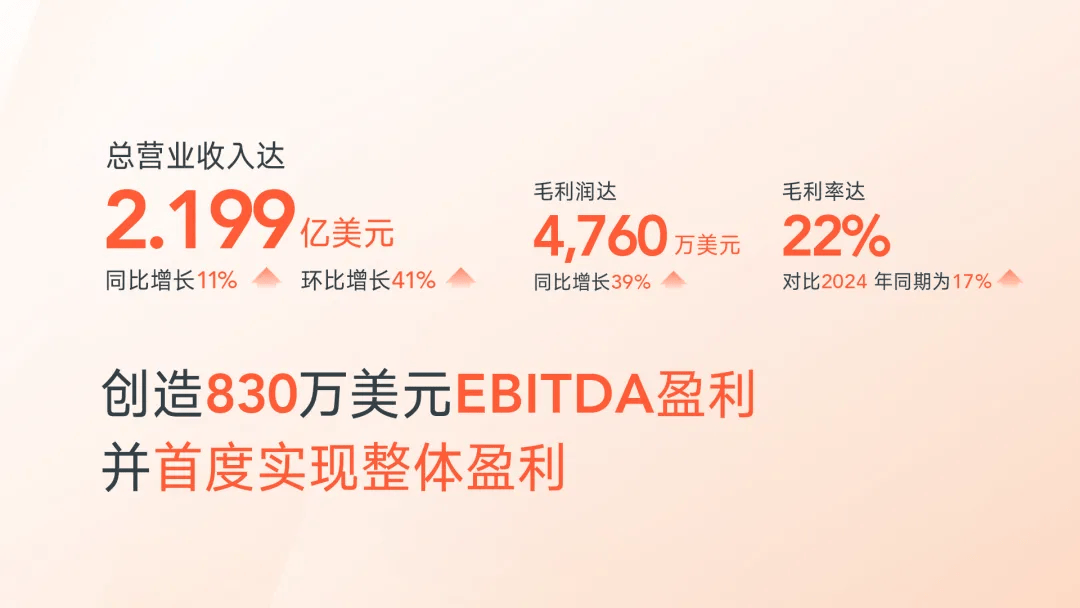
1月12日,吉利控股集团宣布对亿咖通科技(ECARX)进行约4,560万美元(约合人民币3亿元)的战略投资。这次增持引发了不少讨论,最核心的关注点在 于:在ECARX上市多年、且全球资本市场当前对智能汽车赛道持审慎态度时,为什么依然选择在此刻对其"再加注"? 所以,把这次投资理解为单纯的财务性加持,往往会低估其背后的长线布局。一个已经能自己造血、且有千万级装车量支撑的企业,其动作逻辑早已超越了 基础的经营保障,而是直指更高维度的全球化竞逐。 那此次投资的核心逻辑是什么?回答这个问题要回到亿咖通目前所处的全球定位与战略阶段上。 在很多人眼里,这一次投资容易被看作对亿咖通的一次"惯性加码"。但如果仔细看看亿咖通最近的财报和业务动作,你会发现,这种认知其实搞反了逻辑。 这项合作的本质,是一次在市场整体估值低点,针对全球稀缺优质标的"近水楼台"式的价值捕获。 为什么说是"价值低点"?因为当前全球汽车智能化产业链正处于重估重构的周期性波动中,错综复杂的产业发展阶段交错,为全球化贸易增添了不确定性。 在这样的背景下,一个能穿透外部噪音、持续赢得包括欧洲在内的全球头部车企"技术信任"的企业,其商业稀缺性正在被无限放大。 商 ...
信邦智能股价跌5%,华夏基金旗下1只基金位居十大流通股东,持有121.69万股浮亏损失261.63万元
Xin Lang Cai Jing· 2026-01-13 05:57
Core Viewpoint - Xunbang Intelligent experienced a 5% decline in stock price, reaching 40.81 CNY per share, with a trading volume of 1.44 billion CNY and a turnover rate of 3.15%, resulting in a total market capitalization of 4.5 billion CNY [1] Company Overview - Guangzhou Xunbang Intelligent Equipment Co., Ltd. is located in Huadu District, Guangzhou, Guangdong Province, and was established on July 18, 2005. The company was listed on June 29, 2022. Its main business involves the design, research and development, manufacturing, assembly, and sales of automotive intelligence, automation production lines, and complete equipment [1] - The revenue composition of the main business includes: 61.61% from industrial automation integration projects, 33.45% from intelligent production devices and components, and 4.94% from technical services and others [1] Shareholder Information - Among the top ten circulating shareholders of Xunbang Intelligent, one fund under Huaxia Fund holds a significant position. The Huaxia CSI Robot ETF (562500) increased its holdings by 226,700 shares in the third quarter, bringing its total to 1.2169 million shares, which accounts for 1.1% of the circulating shares. The estimated floating loss today is approximately 2.6163 million CNY [2] - The Huaxia CSI Robot ETF (562500) was established on December 17, 2021, with a current scale of 22.798 billion CNY. Year-to-date returns are 7.38%, ranking 1984 out of 5517 in its category; the one-year return is 43.71%, ranking 2056 out of 4203; and since inception, the return is 9.33% [2]
岚图汽车与引望深化合作 双方计划组建联合团队
Jing Ji Guan Cha Bao· 2026-01-13 04:33
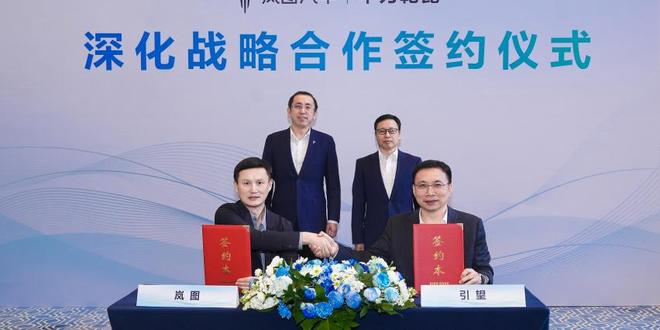
Group 1 - Lantu Automotive and Huawei's subsidiary, Shenzhen Yingwang Intelligent Technology, signed a strategic cooperation agreement to deepen collaboration in smart driving and smart cockpit development [2] - The partnership aims to innovate development models, establish joint teams, and enhance efficiency to accelerate vehicle launch timelines and create popular application scenarios [2] - A joint operation team for To C software will be formed to cover the entire value chain from product planning to user operations, enhancing user experience with intelligent software services [2] Group 2 - Lantu Automotive's sales have been growing, with a cumulative delivery of 150,169 vehicles in 2025, representing an 87% year-on-year increase [3] - Huawei is expanding its influence in the automotive sector through partnerships, including the establishment of Yingwang, which was fully registered in January 2024 with a capital of 1 billion yuan [3][4] - By March 2025, the ownership structure of Yingwang changed to 80% held by Huawei and 10% each by Avita Technology and Seres Automotive after strategic investments [3][4] Group 3 - Yingwang has entered an independent operation phase, integrating technology and personnel from Huawei's original automotive solutions unit, focusing on core areas like smart driving and intelligent cockpit [4][5] - As of October 2025, Huawei's Kran ecosystem has partnered with 14 automotive companies, with 33 mass-produced models launched across various price ranges [4][5] - Lantu Automotive is leveraging its relationship with Huawei to secure more strategic advantages for future growth [5]
【行业深度】一文洞察2026年中国汽车PCB行业发展前景及投资趋势研究报告
Sou Hu Cai Jing· 2026-01-13 02:52
Core Insights - The automotive PCB industry is experiencing significant growth, with the global market size projected to increase from $6.457 billion in 2020 to $9.195 billion by 2024, representing a compound annual growth rate (CAGR) of 9.2% [2] - China, as the largest automotive producer and consumer, is expected to see its automotive PCB market reach approximately 22.27 billion yuan in 2024, growing by 4.3% year-on-year, driven by the rapid advancement of electric vehicles and smart automotive technologies [2] Industry Overview - Printed Circuit Boards (PCBs) are essential components in various sectors, including automotive, consumer electronics, industrial, medical, and military applications [4] - In the automotive sector, PCBs must exhibit excellent electrical performance and reliability, with rigorous testing for high-temperature aging, low-temperature shock, and thermal cycling [8] - The automotive PCB market is characterized by a shift towards high-end products, with increasing demand for advanced technologies such as ADAS and electric vehicle components [2][4] Market Dynamics - The automotive PCB market is expected to expand further, reaching $9.712 billion in 2025, with a year-on-year growth of 5.6% [2] - The competitive landscape is evolving, with a tiered structure where international giants dominate high-end markets while Chinese companies focus on mid-range segments [2] - Key competitors in the automotive PCB space include companies like Huada Technology, Shennan Circuit, and Jinko Electronics, with market shares of 3.7%, 2.3%, and 4.1% respectively in 2024 [2][3] Application and Characteristics - Automotive PCBs are categorized into flexible PCBs, rigid PCBs, thick copper PCBs, multilayer PCBs, and HDI boards, each serving different applications based on their material properties [5] - Key features required for automotive PCBs include durability, lightweight design, high current carrying capacity, and thermal resistance, which are critical for various automotive applications such as battery management systems and electronic control units [5][8] Industry Supply Chain - The automotive PCB supply chain consists of upstream raw materials (electrolytic copper, wood pulp, fiberglass, synthetic resins), midstream manufacturing, and downstream applications in traditional and electric vehicles [6][7] - The manufacturing process is capital and technology-intensive, with high barriers to entry due to the lengthy certification processes required by automotive manufacturers [6]




移远通信:公司在车载领域持续深耕
Zheng Quan Ri Bao Wang· 2026-01-12 13:10
Core Viewpoint - The company is actively developing its presence in the automotive sector, focusing on a comprehensive product matrix that includes various modules and solutions for intelligent and connected vehicles [1] Group 1: Product Development - The company has established a product matrix that covers intelligent cockpit modules, automotive 4G/5G modules, C-V2X modules, high-precision positioning modules, automotive Wi-Fi/Bluetooth/UWB modules, and automotive antennas [1] - The high-precision GNSS positioning modules and IMU modules are critical components for advanced driver assistance systems [1] Group 2: Safety and Efficiency - The C-V2X modules provided by the company enhance safety and traffic efficiency in high-speed scenarios [1] Group 3: Overall Capability Enhancement - The company aims to deepen its overall capabilities in "hardware + software + platform + application" to support the development of automotive intelligence and connectivity [1]

汽车行业周报:全年销量符合预期,智驾引领再提速-20260112
Guoyuan Securities· 2026-01-12 09:47
Investment Rating - The report maintains a "Recommended" investment rating for the automotive and automotive parts industry [6] Core Insights - The overall sales of passenger vehicles met expectations with a year-on-year growth of 9%, while new energy passenger vehicles saw a growth of 25% [1][2] - In December 2025, the retail sales of passenger vehicles were 2.296 million units, a year-on-year decrease of 13%, but a month-on-month increase of 3%. Cumulatively, retail sales for the year reached 23.779 million units, a year-on-year increase of 4% [1][20] - The report highlights the rapid advancements in intelligent driving technologies, with multiple automakers updating their systems and competing in the autonomous driving sector [3][4] Summary by Sections Sales Performance - In December 2025, wholesale sales of passenger vehicles were 2.759 million units, a year-on-year decrease of 10%, with cumulative wholesale sales for the year reaching 29.524 million units, a year-on-year increase of 9% [1][20] - For new energy vehicles, December retail sales were 1.387 million units, a year-on-year increase of 7%, with cumulative retail sales for the year at 12.859 million units, a year-on-year increase of 18% [1][20] Industry Developments - Several automakers, including Zeekr and Geely, are enhancing their intelligent driving systems, indicating a shift towards integrated decision-making models in vehicle technology [3][4][32] - The report emphasizes the importance of continued policy support for the automotive industry and the potential investment opportunities arising from advancements in autonomous driving technology [4] Market Trends - The automotive sector saw a 2.53% increase in the week of January 3-9, 2026, with most related sub-sectors also experiencing growth [12] - The report notes that the intelligent driving technology is becoming a key competitive area among automakers, with significant investments and innovations being made [3][4][39]
汽车行业周报:小鹏比亚迪多款新车上市,工信部公示403批新车-20260112
Guohai Securities· 2026-01-12 05:33
Investment Rating - The report maintains a "Buy" rating for the automotive industry [1] Core Insights - The automotive industry is expected to face challenges in 2026 due to the reduction of new energy vehicle purchase tax incentives and the decline in vehicle replacement subsidies. However, there are opportunities for high-end upgrades and accelerated penetration of smart technologies. The report maintains a positive outlook on the industry, emphasizing the ongoing technological transformation [14][5] - The report highlights the launch of several new models from companies like Xpeng and BYD, indicating a competitive landscape with innovative offerings [11][12][13] Summary by Sections Weekly Dynamics - The Ministry of Industry and Information Technology (MIIT) announced the 403rd batch of new vehicle models, including significant releases from Xpeng and BYD [11] - Xpeng unveiled four new models, including the P7+, G7, G6, and G9, with advanced AI capabilities and plans for mass production of humanoid robots and flying cars [12] - BYD launched the long-range version of the Qin family, featuring advanced technology and competitive pricing [13] Market Performance - From January 4 to January 9, 2026, the automotive sector underperformed compared to the Shanghai Composite Index, with the automotive index rising by 2.5% while the Shanghai Composite Index increased by 3.8% [15] - The report notes that the automotive sector's trading volume increased during this period, indicating heightened market activity [15] Key Companies and Profit Forecasts - The report provides a detailed forecast for several key companies, recommending stocks such as Xpeng, BYD, and others based on their expected earnings per share (EPS) and price-to-earnings (PE) ratios for 2024 to 2026 [6]

芯片行业,再破纪录
半导体行业观察· 2026-01-12 01:31
Core Viewpoint - The global semiconductor market is experiencing a significant growth phase driven by AI, with sales reaching a historical high of $75.3 billion in November 2025, marking a month-over-month increase of 3.5% and a year-over-year increase of 29.8% [1][4]. Group 1: Regional Performance - The Asia-Pacific region is the strongest growth driver, with a year-over-year increase of 66.1% and a month-over-month increase of 5%, reflecting full manufacturing capacity and ongoing supply chain restructuring [2][3]. - The Americas market shows a year-over-year increase of 23% and a month-over-month increase of 3%, driven by strong demand for AI computing power and data center investments [1][3]. - The Chinese mainland market maintains steady growth with a year-over-year increase of 22.9% and a month-over-month increase of 3.9% [1][2]. - The European market experiences moderate growth with an 11.1% year-over-year increase and a 1.2% month-over-month increase [2]. - Japan is the only major market showing a decline, with a year-over-year decrease of 8.9% and a month-over-month decrease of 0.1%, attributed to weak demand in consumer electronics and automotive sectors [1][3]. Group 2: Market Dynamics - The growth in semiconductor sales is not driven by a single product line but rather by a synchronized expansion across all major semiconductor categories, indicating a long-term expansion phase centered around AI [1][3]. - Logic chips benefit from increased demand for AI training and inference, while high-bandwidth memory (HBM) faces supply constraints, driving up prices and shipment volumes [3][4]. - The automotive sector is seeing a significant increase in semiconductor usage due to the electrification trend, marking a new growth curve for the industry [9]. Group 3: Future Projections - The World Semiconductor Trade Statistics (WSTS) forecasts global semiconductor sales to reach $975.4 billion by 2026, representing a year-over-year increase of 22.5% [5]. - The long-term growth of the semiconductor industry is driven by five core dynamics: ongoing AI computing arms race, sustained capital expenditure in data centers, structural high margins from HBM supply constraints, recovery in consumer electronics, and the rise of automotive intelligence [5][6][7][8][9]. Group 4: Key Beneficiaries and Challenges - Key beneficiaries include NVIDIA, TSMC, Samsung, SK Hynix, and Broadcom, which are positioned to capitalize on the growing demand for AI and advanced semiconductor technologies [10]. - Companies like Intel and Micron face challenges due to ongoing transitions and slower competitive positioning in the HBM market, while Japanese semiconductor firms struggle with weak end-demand [10].



广发基金刘彬:聚焦时代主浪 把握市场罗盘
Zhong Guo Zheng Quan Bao· 2026-01-11 20:45
Core Insights - The article highlights the investment philosophy of Liu Bin, a fund manager at GF Fund, emphasizing a research-driven approach to identify industry trends and investment opportunities [1][2]. Group 1: Investment Philosophy - Liu Bin focuses on significant industry trends rather than short-term market fluctuations, aiming to build a resilient investment portfolio through in-depth research [1][2]. - His investment style is characterized by a blend of growth stocks and some cyclical stocks, with a focus on long-term alpha generation while balancing risks [5][6]. Group 2: Industry Expertise - Liu Bin has extensive experience across various sectors, including non-metallic building materials, pharmaceuticals, and new energy, which has contributed to his deep understanding of industry cycles [2][4]. - His research methodology involves creating comprehensive databases to analyze supply and demand dynamics, allowing for a nuanced understanding of market conditions [2][3]. Group 3: Focus on Emerging Industries - Liu Bin has shown a strong interest in emerging industries such as AI, robotics, and innovative pharmaceuticals, which he believes will drive significant growth in the coming years [6][7]. - He identifies the "engineer dividend" as a key factor for future excess returns in China, leveraging the country's advantages in engineering talent and R&D capabilities [6][7]. Group 4: Performance Metrics - During his tenure at Xinhua Fund, Liu Bin achieved a cumulative return of 144.66% for the Xinhua Industry Cycle A fund, ranking in the top 5% among similar products [3]. - His current fund, GF Rui Xuan, has delivered a cumulative return of 32.80% since June 2023, outperforming major indices [3][5].