生态修复

Search documents
奋进的中国 我们的“十四五” | “蓝绿”交织 喜看昔日沙海蜕变成今日绿洲
Yang Shi Wang· 2025-09-14 06:35
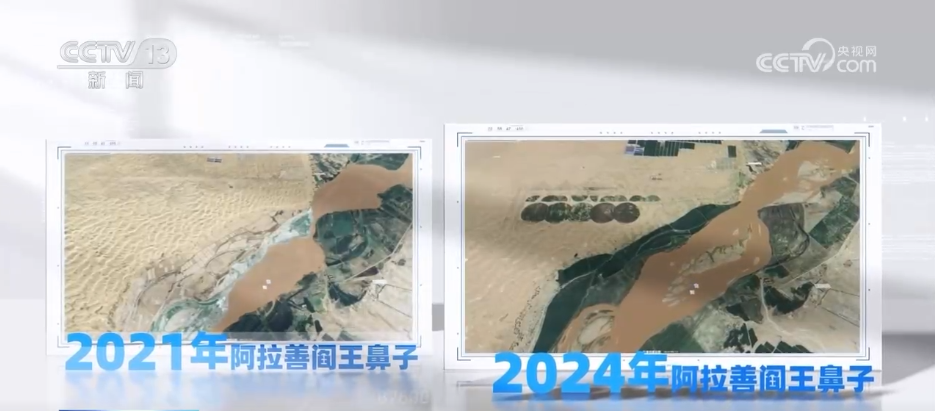
Core Viewpoint - Inner Mongolia has prioritized sand prevention and control, along with the "Three North" project during the 14th Five-Year Plan period, achieving significant ecological restoration and land management goals [1][19]. Group 1: Achievements in Ecological Restoration - Over the past five years, Inner Mongolia has completed more than 10 million acres of the "Three North" project and has engaged in sand prevention and control over 6.5 million acres [1]. - The "Yellow River 'Z' Bend" campaign is highlighted as a key ecological battle, focusing on both ecological protection and improving local livelihoods [1]. - The ecological restoration project in Alxa League has achieved a vegetation coverage rate of over 84%, preventing approximately 1.5 million tons of sand from entering the Yellow River annually [6][14]. Group 2: Innovative Approaches - Inner Mongolia is integrating sand prevention and control with wind and solar energy development, exemplified by the construction of a 400-kilometer "Photovoltaic Great Wall" in the Kubuqi Desert [17]. - The "Photovoltaic Great Wall" is expected to generate an average annual power output of 200 billion kilowatt-hours while simultaneously restoring 3 million acres of land [17]. - The region has implemented a total of 27.27 million kilowatts of integrated sand prevention and wind-solar projects during the 14th Five-Year Plan, successfully rehabilitating 238,880 acres of desertified land [19]. Group 3: Water and Soil Conservation - The "Ten Major Conduits" area has seen a significant reduction in sediment entering the Yellow River, with sediment concentration decreasing from 1,550 kg/m³ to 195 kg/m³ [14]. - The forest coverage rate in the West Liugou area has increased from 10.19% to 28.9%, while vegetation coverage has risen from 64.4% to 78.8% [14].

内蒙古着力筑牢我国北方重要生态安全屏障:建绿色长城 守绿水青山
Ren Min Ri Bao· 2025-09-13 23:56
Group 1: Ecological Restoration Efforts - Inner Mongolia is recognized as a crucial ecological function area in China, facing severe desertification and land degradation challenges [1] - Since the 18th National Congress of the Communist Party, Inner Mongolia has completed afforestation of 148 million acres, grass planting of 367 million acres, and desertification control of 185 million acres, leading the nation in scale [3] - The region is implementing integrated protection and systematic governance of natural resources, promoting ecological restoration and enhancing biodiversity [1][3] Group 2: Sand Control and Land Management - Daily sand control efforts are advancing at a rate of 60,000 acres, with significant progress in the Mu Us Sandy Land and Kubuqi Desert [2] - The implementation of ecological restoration projects along the Yellow River has significantly increased vegetation coverage in previously desertified areas [2] - The establishment of "four lines of defense" against sand encroachment has proven effective in protecting arable land [2] Group 3: Grassland Management and Economic Transition - Inner Mongolia is transitioning to a model of "resting" grasslands, with 970 million acres expected to achieve this by 2025, allowing for ecological recovery and economic benefits for herders [4] - The region is promoting resource integration and modern farming techniques to enhance livestock production while addressing overgrazing issues [6][7] - Cooperative models are being developed to optimize feed production and reduce costs, leading to improved livestock management [6] Group 4: Forestry and Sustainable Development - The Daxing'anling region has halted commercial logging of natural forests, resulting in a significant increase in forest stock volume and biodiversity over the past decade [9] - The area is exploring new economic opportunities through forest tourism, sustainable forestry products, and carbon trading initiatives [10] - The focus on ecological advantages is driving the development of integrated services in the forestry sector, enhancing both environmental and economic outcomes [10]
“两山”理念在河南丨一湖秀色融古今 ——“诗中风光今又现”之沁阳篇
He Nan Ri Bao· 2025-09-13 23:28
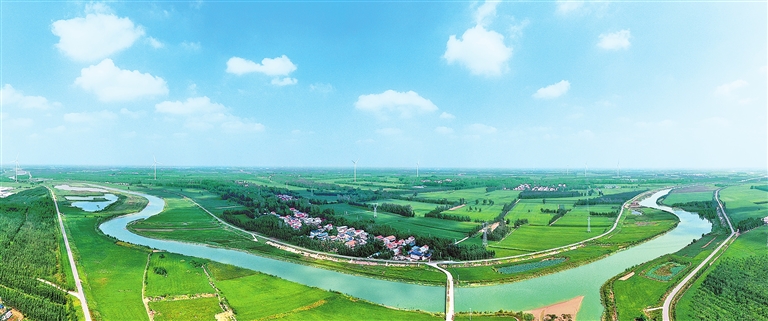
天鹅湖碧波澄澈,岸边垂柳轻拂水面,300余亩荷塘清香四溢。 "奶奶你快看,我发现一只小白鹭,真漂亮!"9月12日,雨过天晴,市民张霞带着孙子卓辰来到天鹅湖游玩, 小白鹭优雅的身姿吸引祖孙俩久久不愿离去。 天鹅湖位于沁阳市城区东北角,旧称"东湖",是筑城挖土形成的人工湖,20世纪80年代改名"天鹅湖"。追溯 其水脉渊源,传说汉代便有"引沁入城"的举措,到了元代至正年间,"引济入怀"工程让济水从西门迤逦入 城,经利津、举仙、珠嘉、揽胜四桥汇为天鹅池,再经指方桥,形成东湖。 灵动的水韵,让沁阳成为文人墨客的青睐之地。除了李商隐留下传世诗作,明代书法家王铎曾在此题诗作 文。到了清代,当地范氏家族于荷池中筑土修建蓬园,云集族人讲学论文。世人评说:"此院可适,无羡漆院 矣。"范氏家族四代人出了三个进士,并有两人著作被收入《四库全书》。 时光的馈赠也伴随着岁月的磨损。随着时间推移,湖底淤泥逐渐堆积,水体生态受损,天鹅湖失去了往日生 机。为恢复天鹅湖生态活力,沁阳市启动生态修复工程,提升城市景观品质。 秋日,鄢陵县彭店镇境内贾鲁河生态廊道水绿相间、美景如画(9月13日摄)。 牛书培 摄 "阊门日下吴歌远,陂路绿菱香满满。" ...
矿山焕新韵 复绿又生金
Zhong Guo Neng Yuan Wang· 2025-09-12 04:40
Core Viewpoint - The company has successfully implemented ecological restoration and green mining practices in the Inner Mongolia region, transforming former mining areas into thriving ecosystems that benefit both the environment and local communities [1][6]. Group 1: Ecological Restoration Efforts - The company has restored over 88,600 acres of land, with a vegetation coverage rate of 90%, and has planted over 14 million trees and 18.06 million shrubs, achieving a 100% ecological restoration rate [2][5]. - The use of Mongolian almond trees, which have a germination rate exceeding 90%, highlights the effectiveness of species selection for high-altitude ecological restoration [1][2]. Group 2: Environmental and Community Benefits - Air quality in the surrounding area has improved significantly, with 93.3% of days classified as having good air quality, enhancing the quality of life for local residents [3][4]. - The ecological restoration has provided high-nutrition forage for local herders, promoting economic benefits and improving relationships between herders and the company [4][6]. Group 3: Innovative Green Mining Practices - The company has adopted a comprehensive approach to green mining, including dust control measures and the use of clean machinery, such as electric and hydrogen fuel cell vehicles, to reduce carbon emissions [5][6]. - The implementation of a closed-loop system for coal transportation and storage has minimized environmental impact, ensuring that coal operations are conducted with minimal dust and emissions [5][6].
三亚藤桥河滋养着红旗社区,又见证着时代变迁
Hai Nan Ri Bao· 2025-09-12 02:02
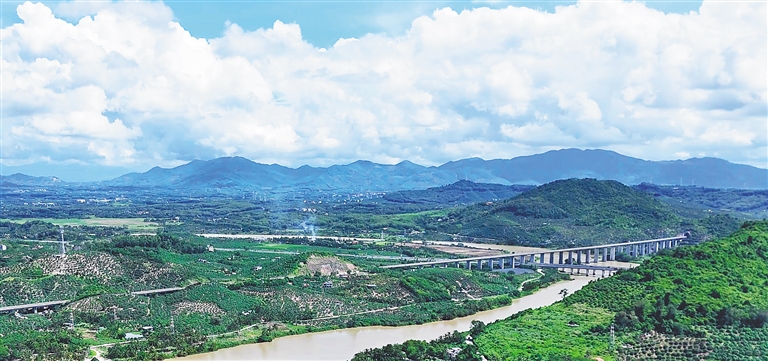
Core Viewpoint - The article highlights the transformation of the Tiejiao River and the Hongqi community in Sanya, showcasing its historical significance and current developments that reflect both cultural heritage and economic opportunities [1]. Historical Significance - The Tiejiao River has been a vital source of life and memory for generations in the Hongqi community, providing food and water during times of scarcity [4][5]. - The river's historical role as a lifeline is emphasized through personal anecdotes, illustrating its importance in the daily lives of the community members [4][5]. Infrastructure Development - The article notes the transition from a dangerous makeshift bridge to a sturdy concrete bridge, improving safety and connectivity for the community [5]. - The introduction of high-speed rail infrastructure has further integrated the once-remote community with broader economic opportunities [6]. Economic Opportunities - The Tiejiao River has evolved from merely sustaining life to becoming a source of economic prosperity, particularly through the cultivation of high-quality coix seeds, which have become a key local industry [6]. - The community is actively developing agritourism, leveraging the scenic beauty of the river and surrounding farmland to attract visitors [6]. Ecological Restoration - The article discusses the ecological challenges faced by the Tiejiao River due to urbanization and industrial activities, prompting community-led initiatives for ecological restoration [8]. - Plans for an ecological corridor along the river aim to restore its natural beauty and health, ensuring it continues to serve as a vital ecological resource [8].
抢救百岁“国宝”红榄李
Hai Nan Ri Bao· 2025-09-12 02:02
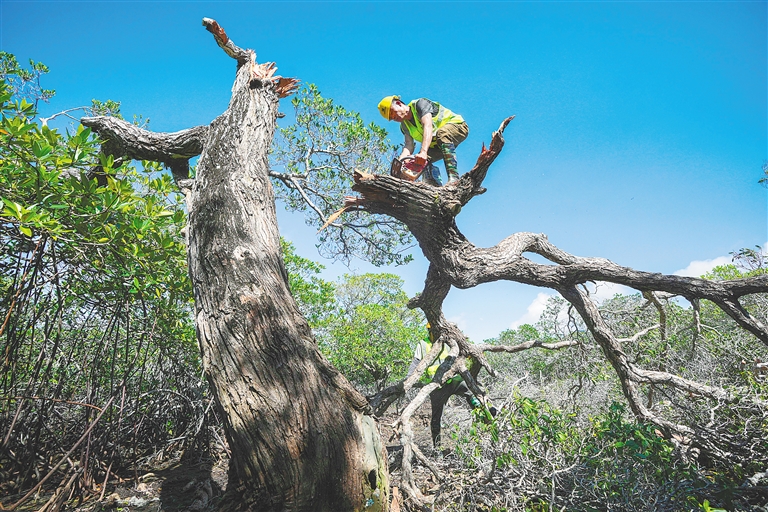
海南日报全媒体记者 王程龙 水鞋陷在铁炉港古红树林的滩涂里,谭仁军仔细盯着从针头流出的营养液。这是在为遭受台风"剑鱼"伤 害的百岁红榄李母树补充养分,作为生态修复人员的他深知,"药量"须根据树的大小来精确调控。 这一天是9月9日,一场抢救"国宝"红榄李母树的行动在此已经持续了8天。 近日,修复团队工作人员在海南三亚铁炉港古红树林,对一棵被台风"剑鱼"拦腰折断的红榄李母树,进 行残枝清理和主干修复。海南日报全媒体记者 王程龙 摄 8月24日,台风"剑鱼"夜袭海南三亚,12级风圈持续肆虐6小时,阵风最大风速达55.4米/秒(16级),造 成2万多棵树木倒伏或倾斜,位于三亚市海棠区铁炉港的古红树林也遭受创伤。其中,6棵国家一级保护植物 红榄李母树,有的被拦腰折断,有的主枝断裂。 怎样去救这些受伤的古树?面对受损的红榄李母树,修复团队的救治既精细又讲究"生态智慧"。现场可 见,一棵红榄李母树被台风拦腰折断,10多米高的树干仅剩3米多,且仅剩一条侧枝,树冠倒伏在滩涂;另有 5棵母树存在主干扭裂、主枝断裂的问题。 修复团队的工作更像是给古树做"外科手术"。对于那棵被拦腰折断、仅剩3米多高树干的红榄李,谭仁军 要先用工具一 ...
我国持续开展调查监测,自然资源家底更厚——新发现大中型油气田和矿产地534处
Ren Min Ri Bao· 2025-09-11 00:18
Core Insights - The article highlights significant achievements in China's natural resource management during the "14th Five-Year Plan" period, emphasizing the increase in cultivated land, forest coverage, and marine economic output, alongside major discoveries in oil and gas fields [1][2][3]. Group 1: Agricultural and Land Resources - The total cultivated land area reached 1.94 billion mu, with a projected increase of 28 million mu by the end of 2024 compared to 2020 [2]. - A comprehensive protection framework for cultivated land focusing on quantity, quality, and ecology is gradually being established [2]. Group 2: Mineral Resources - Major breakthroughs in mineral exploration have been achieved, including the discovery of 10 large oil fields and 19 large gas fields during the "14th Five-Year Plan" [2]. - Significant reserves of strategic minerals such as oil, gas, copper, and lithium have been identified, supporting stable production levels of 200 million tons of oil and over 240 billion cubic meters of natural gas [2]. Group 3: Marine Resources - The marine economy generated a total output value of 10.5 trillion yuan, an increase of 2.7 trillion yuan since 2020 [1]. - The marine oil and gas sector is expected to contribute 70% of the domestic oil increment by 2024, with advancements in marine technology and infrastructure [3]. Group 4: Ecological and Environmental Initiatives - Nationwide forest coverage reached 25.09%, with forest stock volume at 20.99 billion cubic meters, achieving early targets for climate change contributions [1][3]. - The area of national parks has expanded, with five parks established, integrating over 120 existing natural reserves and enhancing ecosystem management [5][6]. Group 5: Land Management and Urban Development - Over 10 million mu of land have been rehabilitated through comprehensive land management initiatives, improving urban and rural spatial quality [4]. - The government has streamlined land use approvals, reducing review times by two-thirds and approval durations by one-third, facilitating urban development [6][7]. Group 6: Digital and Technological Advancements - The integration of natural resource management and land planning into a unified digital platform has improved governance efficiency [7]. - China has initiated several international scientific projects and established a global geographic information center, contributing to global sustainable development [7].
张家口涿鹿湿地重生记:桑干河畔的绿色蜕变
Bei Jing Ri Bao Ke Hu Duan· 2025-09-10 09:53
Core Viewpoint - The article highlights the successful ecological restoration and governance of the Zhuolu wetlands, transforming it from a polluted area into a vibrant ecosystem that supports biodiversity and contributes to regional green development [4][6]. Group 1: Ecological Restoration Efforts - The transformation began in 2016 with the implementation of the national plan for the comprehensive governance and ecological restoration of the Yongding River, making Zhuolu a key part of the watershed management [4]. - Zhuolu County has taken significant measures against illegal sand mining and land reclamation, while promoting the planting of aquatic plants to stabilize banks and purify water [4]. - The ecological environment of the Sanggan River has improved significantly, with water quality reaching surface water Class III standards, expected to improve to Class II by 2024 [4]. Group 2: Biodiversity and Wildlife Monitoring - The monitoring of migratory birds has shown positive changes, with the number of protected species increasing from 1 to 7, including the first sightings of thousands of swans and cranes [6]. - The establishment of the Sanggan River National Wetland Park in 2017 has created a 1364.7-hectare ecological corridor, enhancing the wetland area to 49.42% [6]. Group 3: Economic and Community Benefits - The revitalization of the wetlands has led to economic benefits, with the modern fruit technology demonstration park producing over 500,000 kilograms of fruit annually, contributing to local income [8]. - The park has created job opportunities and increased local residents' income, with a total of over 12 million yuan generated for the community [8]. - Zhuolu County is expanding its "wetland+" model to develop eco-education and rural tourism, integrating ecological protection into daily life and promoting rural revitalization [8].
自然做功,事遂天成
Zhong Guo Zi Ran Zi Yuan Bao· 2025-09-10 07:20
Core Insights - The article emphasizes the importance of ecological restoration in China, particularly through the example of the Ruoergai wetland, where nature is allowed to play a leading role in recovery efforts [2][3][4] Group 1: Ecological Restoration Strategies - Ruoergai's ecological restoration focuses on leveraging natural processes rather than opposing them, using local materials like willow branches to create flexible barriers that stabilize sand and retain water [2] - The choice of native grass species promotes natural competition, forming stable communities while minimizing the risks of excessive human intervention and invasive species [2][3] - The construction of small, strategically placed stone barriers helps regulate wetland water levels without large-scale engineering projects, demonstrating a "small but beautiful" approach to ecological management [2][3] Group 2: Results and Impact - Ruoergai has seen a 30% increase in vegetation coverage, with significant rises in populations of rare species such as the Tibetan antelope and black-necked cranes, alongside an annual increase in water conservation of over 333 million cubic meters [3] - The success of Ruoergai is part of a broader initiative in China, which has implemented 52 integrated ecological protection and restoration projects, covering over 8.3 million hectares [3][4] - The approach taken in Ruoergai and similar projects highlights a shift from traditional, engineering-based ecological management to a more sustainable, low-cost model that respects and aligns with natural processes [3][4] Group 3: Socioeconomic Benefits - The mountain-water project has transformed ecological benefits into economic gains, with local herders experiencing an average annual income increase of over 2,000 yuan, fostering intrinsic motivation for grassland protection [4] - The project serves as a crucial platform for high-quality development in the Yellow River basin, balancing ecological preservation with economic growth [4] - The philosophy of "doing nothing" in ecological governance suggests that returning control to nature can yield not only restored landscapes but also a sustainable future for coexistence with all living beings [4]
生态铁军 织绿高原
Zhong Guo Zi Ran Zi Yuan Bao· 2025-09-10 06:26
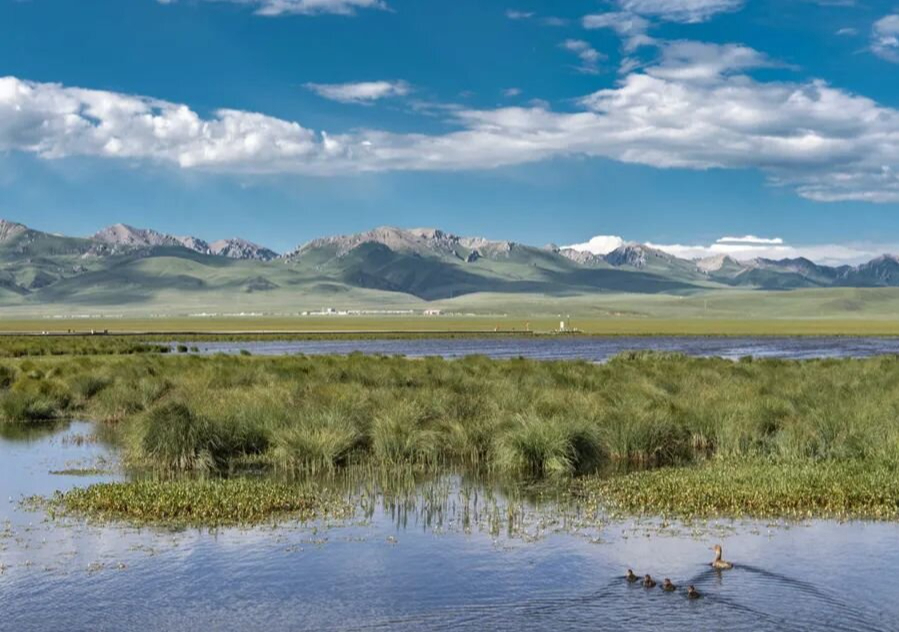
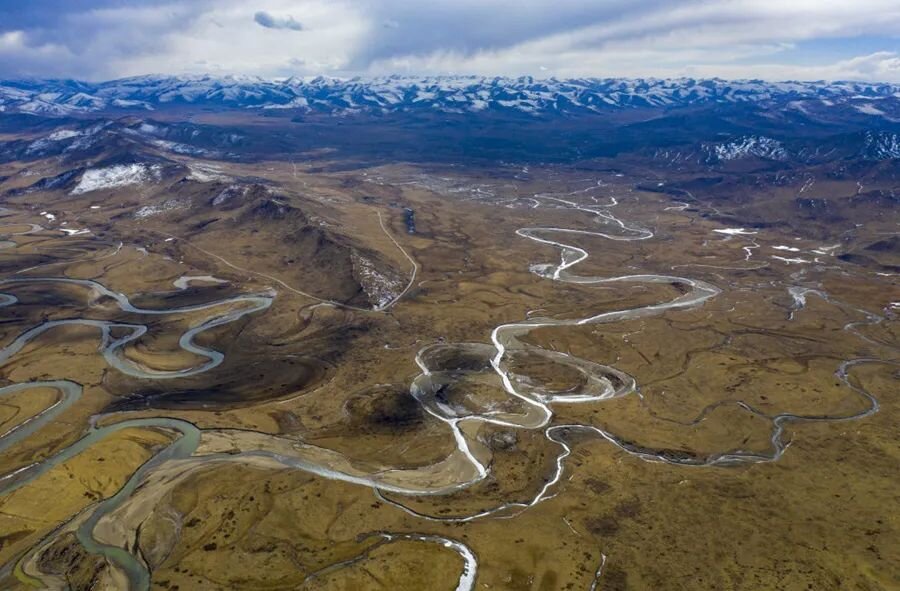
若尔盖草原湿地,地处青藏高原东北部,山水林田湖草沙冰生态要素谱系完整,是长江、黄河上游重要的水源涵养功能区和生物多样性保护关键地区, 在国家生态安全格局和西部地区可持续发展中具有重要的战略地位。然而,受全球气候变化和草原鼠害、超载放牧等影响,若尔盖土地沙化形势严峻。 2022年,四川黄河上游若尔盖草原湿地山水林田湖草沙冰一体化保护和修复工程(以下简称"若尔盖山水工程")启动实施。在这场"重塑黄河上游生态 屏障的攻坚战"中,四川省第二地质大队针对高寒草原湿地生态系统修复、核心功能发挥和价值提升存在的系列瓶颈性问题,开展探索、创新与实践,提出 了适宜高海拔地区山水林田湖草沙冰各生态要素一体化保护修复的整套技术体系,科学高效支撑了若尔盖山水工程的部署和实施。 望闻问切,开出高原修复良方 "搞生态修复,既要有'三光荣''四特别'传统,也要有科学态度。正如人生病了需要先诊断、后治疗,生态环境在修复之前也必须经过'望闻问切'。"许向 宁介绍。 作为若尔盖山水工程实施方案编制总负责人的许向宁,不禁想起在项目组战斗的日日夜夜:办公室墙上"创造自己满意和有价值的精品——学习、创 新、实干、成效"醒目座右铭的旁边,贴满了卫星遥感 ...