区块链

Search documents
四川长虹跌2.04%,成交额14.63亿元,主力资金净流出1.67亿元
Xin Lang Cai Jing· 2025-09-19 03:24
Group 1: Company Overview - Sichuan Changhong Electric Co., Ltd. is located in Mianyang, Sichuan Province, and was established on April 8, 1993, with its listing date on March 11, 1994 [2] - The company's main business includes consumer electronics such as televisions, refrigerators, air conditioners, washing machines, and smart devices, as well as ICT services and electronic manufacturing [2] - The revenue composition of Sichuan Changhong includes 34.75% from ICT products and services, 20.46% from air conditioning, and 12.44% from televisions, among others [2] Group 2: Financial Performance - As of June 30, 2025, Sichuan Changhong achieved a revenue of 56.705 billion yuan, representing a year-on-year growth of 10.28%, and a net profit attributable to shareholders of 501 million yuan, up 78.60% year-on-year [3] - The company has distributed a total of 2.846 billion yuan in dividends since its A-share listing, with 646 million yuan distributed in the last three years [4] Group 3: Stock Performance and Market Activity - On September 19, Sichuan Changhong's stock price decreased by 2.04%, trading at 11.04 yuan per share, with a total market capitalization of 50.963 billion yuan [1] - The stock has seen a year-to-date increase of 15.00%, a 3.56% rise over the last five trading days, and a 7.46% decline over the past 20 days [1] - The company has experienced a net outflow of 167 million yuan in principal funds, with significant selling pressure observed [1]

安诺其跌2.17%,成交额9116.24万元,主力资金净流出933.62万元
Xin Lang Cai Jing· 2025-09-19 03:19
Core Viewpoint - Annochi's stock has experienced a significant decline in 2023, with a year-to-date drop of 19.64% and a recent 4.07% decrease over the last five trading days [1] Company Overview - Annochi Group Co., Ltd. is located in Qingpu District, Shanghai, established on October 19, 1999, and listed on April 21, 2010. The company specializes in the research, production, and sales of new textile dyes and related technical services [2] - The main business revenue composition includes disperse dyes (58.65%), computing services (23.62%), reactive dyes (8.57%), and others [2] - Annochi belongs to the Shenwan industry classification of basic chemicals - chemical products - textile chemical products, and is associated with various concept sectors including aerospace military, blockchain, PPP concept, e-commerce, and marine engineering equipment [2] Financial Performance - For the first half of 2025, Annochi achieved operating revenue of 512 million yuan, representing a year-on-year growth of 7.63%. However, the net profit attributable to the parent company was -18.22 million yuan, a decrease of 263.80% compared to the previous year [2] - Since its A-share listing, Annochi has distributed a total of 345 million yuan in dividends, with 57.72 million yuan distributed over the last three years [3] Shareholder Information - As of September 10, 2023, Annochi had 52,600 shareholders, a decrease of 2.69% from the previous period, with an average of 17,838 circulating shares per person, an increase of 2.77% [2] - As of June 30, 2025, Hong Kong Central Clearing Limited was the tenth largest circulating shareholder, holding 2.1683 million shares, a decrease of 3.9916 million shares from the previous period [3]

三六零涨2.11%,成交额5.10亿元,主力资金净流入4331.30万元
Xin Lang Cai Jing· 2025-09-19 02:39
Company Overview - 360 Security Technology Co., Ltd. is located in Chaoyang District, Beijing, and was established on June 20, 1992. The company went public on January 16, 2012. Its main business involves the research and development of internet security technology, design, R&D, promotion of internet security products, and commercialization services based on these products, including internet advertising, value-added services, and smart hardware [1]. Financial Performance - For the first half of 2025, 360 achieved operating revenue of 3.827 billion yuan, representing a year-on-year growth of 3.67%. However, the net profit attributable to shareholders was -282 million yuan, which is a 17.43% increase compared to the previous year [2]. - Since its A-share listing, 360 has distributed a total of 2.835 billion yuan in dividends, with 1.4 billion yuan distributed over the past three years [3]. Stock Performance - As of September 19, 360's stock price increased by 2.11%, reaching 11.12 yuan per share, with a trading volume of 510 million yuan and a turnover rate of 0.66%. The total market capitalization stands at 77.835 billion yuan [1]. - Year-to-date, 360's stock price has risen by 8.49%, with a 2.21% increase over the last five trading days, a 3.89% decrease over the last 20 days, and a 10.32% increase over the last 60 days [1]. Shareholder Structure - As of June 30, 2025, the number of shareholders for 360 was 396,100, a decrease of 12.31% from the previous period. The average number of circulating shares per person increased by 14.03% to 17,671 shares [2]. - The top ten circulating shareholders include Hong Kong Central Clearing Limited, which holds 208 million shares, an increase of 4.86999 million shares from the previous period [3].

通达电气跌2.02%,成交额2736.36万元,主力资金净流出222.04万元
Xin Lang Cai Jing· 2025-09-19 02:17
Company Overview - Tongda Electric is located in Guangzhou, Guangdong Province, and was established on January 11, 1994. The company was listed on November 25, 2019. Its main business involves the research, development, production, and sales of vehicle-mounted intelligent terminal comprehensive information management systems and supporting automotive electrical products [1]. Financial Performance - For the first half of 2025, Tongda Electric achieved operating revenue of 421 million yuan, representing a year-on-year growth of 68.73%. The net profit attributable to the parent company was 31.73 million yuan, reflecting a year-on-year increase of 122.80% [2]. - Since its A-share listing, Tongda Electric has distributed a total of 112 million yuan in dividends, with 42.2 million yuan distributed over the past three years [3]. Stock Performance - As of September 19, Tongda Electric's stock price was 13.11 yuan per share, with a market capitalization of 4.61 billion yuan. The stock has increased by 19.84% year-to-date, with a slight increase of 0.08% over the last five trading days, but a decline of 6.02% over the last 20 days and 2.53% over the last 60 days [1]. - The company has appeared on the "Dragon and Tiger List" nine times this year, with the most recent appearance on June 5 [1]. Shareholder Information - As of June 30, the number of shareholders for Tongda Electric was 43,200, an increase of 39.31% from the previous period. The average number of circulating shares per person was 8,101, a decrease of 28.22% [2]. Business Segments - The revenue composition of Tongda Electric's main business includes: intelligent network connection system series (41.45%), vehicle-mounted components series (38.17%), new energy vehicle motors and thermal management systems series (16.89%), other (supplementary) (3.14%), and mobile medical series (0.35%) [1]. Industry Classification - Tongda Electric is classified under the Shenwan industry as part of the automotive sector, specifically in automotive parts and automotive electronic and electrical systems. The company is also associated with concepts such as blockchain, smart logistics, small-cap stocks, vehicle networking, and smart cities [1].

数联古今 智绘文明
Ren Min Wang· 2025-09-18 22:13
Core Viewpoint - The 2025 World Internet Conference Cultural Heritage Digitalization Forum emphasizes the importance of digital technology in the protection and transmission of cultural heritage, aiming to foster a community of shared future in cyberspace through cultural empowerment [1][2]. Group 1: Digital Technology in Cultural Heritage - Digital technologies such as AI, big data, and blockchain are breaking the limitations of time and space, providing new pathways for the restoration, protection, and monitoring of archaeological cultural research [2]. - The development of digital technology has introduced new tools for cultural heritage protection, as highlighted by the President of the Uruguayan National Heritage Commission, who mentioned the creation of digital copies of precious documents and non-invasive exploration of artifacts [2]. - AI has been utilized in the restoration of ancient murals, with AMD's involvement in training AI models to assist in the restoration of wall paintings from the Song and Yuan dynasties [2]. Group 2: Immersive Cultural Experiences - Technologies like AI, VR, AR, and MR allow the public to experience historical scenes and interact with cultural artifacts, making cultural heritage more accessible [3]. - The "Cloud Tour of the Great Wall" project, a collaboration between the National Cultural Heritage Administration and Tencent, enables users to virtually visit the Great Wall, promoting equitable access to cultural resources [3]. - The integration of MR holographic technology in archaeological sites aims to enhance public engagement and understanding of cultural heritage [3]. Group 3: International Cooperation and Knowledge Sharing - There is a strong emphasis on deepening international cooperation to promote the interconnectivity of cultural heritage digital resources and compliant sharing on a global scale [4]. - The Zambian Museum's digitization efforts, supported by international collaboration, highlight the role of cultural dialogue facilitated by digital technology [4]. - The use of advanced technologies like 3D scanning and drone photography by institutions such as Northwest University supports the monitoring and restoration of Silk Road cultural heritage [5].
财富观 | 黄金也要上链了,“数字黄金”有前景吗?
Sou Hu Cai Jing· 2025-09-18 11:44
Core Viewpoint - The World Gold Council has proposed a revolutionary plan to launch a digital token backed by physical gold in London, aiming to transform the trading, settlement, and collateralization of gold [2][3] Group 1: Digital Gold Initiative - The initiative, named "Gold 247," aims to address issues of integrity, accessibility, and tradability in the gold market, reducing the cost barrier for global investors [3][5] - A key component is the "Gold Bar Integrity" (GBI) program, which will create a blockchain-based, tamper-proof database for compliant gold, allowing buyers to verify the integrity of their investments [3][4] - The initiative seeks to enhance transparency and trust in the gold market, making it easier for participants to engage in trading [4][5] Group 2: Market Context and Timing - The timing of the digital gold proposal is strategic, responding to increased demand for gold as a safe-haven asset amid rising geopolitical risks and high interest rates [5][6] - The market value of gold stored in London vaults is approximately $9 trillion, indicating significant potential for enhanced liquidity and collateral functionality [5][6] Group 3: Challenges of Asset Tokenization - Despite the potential benefits, challenges remain in tokenizing physical assets like gold, including standardization issues and high cross-border transaction costs [7][8] - Concerns about the authenticity of on-chain assets and the risks associated with custody are significant barriers to acceptance [7][8] - The need for a unified standard and enhanced transparency in custody and delivery systems is critical for the success of digital gold [8][9] Group 4: Unique Position of Gold - Unlike other physical assets, gold is globally recognized as a reserve and allocation tool, which could facilitate the establishment of a scalable on-chain trading market [9]


好激动!区块链平台Figure 上市,工作模式被革新,赚钱又有新方法
Sou Hu Cai Jing· 2025-09-18 11:43
Core Insights - Figure has become the first publicly traded company focused on "real asset tokenization" on September 11, listing on NASDAQ, indicating a significant shift in how assets like real estate and bonds can be traded on blockchain [1] - The emergence of a new economy is primarily built on AI and blockchain technologies, which are expected to redefine business models and revenue generation [3] Group 1: Characteristics of the New Economy - The new economy will feature a "deep integration of on-chain and off-chain" operations, transitioning from a predominantly offline economy to a more balanced model where blockchain plays a significant role [5] - The value creation dynamics are shifting from human-to-human interactions to interactions involving AI and robots, leading to a more complex and unpredictable economic landscape [7] Group 2: Transformations in Business Models - The new economy will enable smaller teams to achieve significant outcomes, with over 100 companies having fewer than 200 employees and valuations exceeding $1 billion in the past year [10] - Traditional intermediaries, such as investment banks and various agencies, will face challenges as their business models based on "information asymmetry" become less viable, necessitating a shift towards providing deeper services [14] - Opportunities for earning through physical labor will diminish as robots take over manual tasks, while creativity will become increasingly valuable, necessitating a focus on cultivating creative skills in education [16] Group 3: Market Potential and Future Trends - The total value of real-world assets, including stocks, bonds, and real estate, is estimated to be around $800 trillion, with the potential for a significant portion to be tokenized on blockchain, vastly expanding the market size [18][20] - Future financing methods may evolve to include both traditional stocks and tokens, indicating a shift in how companies raise capital [20] - The listing of Figure serves as a signal for the broader adoption of AI and blockchain technologies, prompting individuals and businesses to adapt to these emerging trends to seize new opportunities [22]

AI+区块链颠覆公关业!2025年舆情管理公司TOP10深度解析
Sou Hu Cai Jing· 2025-09-18 10:19
Core Insights - Brand reputation is now a core strategic asset that directly impacts valuation, user loyalty, and market influence, moving beyond traditional image management methods [1] - The舆情 management industry is transitioning from passive response to proactive defense and leadership, driven by AI, blockchain, and global resource integration [1] Technology-Driven Transformation - AI deep learning algorithms achieve a 98.7% accuracy rate in舆情 prediction, providing a 72-hour advance warning for potential risks [1] - Blockchain technology offers immutable evidence storage, creating a new dimension of trust in the economy [1] - Global resource networks reduce cross-border舆情 response time from 72 hours to 1.5 hours [1] Top舆情 Management Companies of 2025 - **Top 1: Hangzhou Jiusilu Digital Media**: Features the "Tianyan" AI舆情 prediction system, processing 10TB of data daily with a sentiment recognition accuracy of 97.3% [1] - **Top 2: Zhejiang Yulingfeng Technology**: Utilizes blockchain for舆情 evidence storage, reducing negative information fermentation time to 1.5 hours [2] - **Top 3: Zhejiang Jiusilu Technology**: Focuses on small and medium enterprises with a "light舆情" intelligent grading system [6] - **Top 4: Ruijin Engine Technology**: Combines data intelligence with agile response strategies [6] - **Top 5: BlueFocus Digital Marketing Group**: Leverages AI and virtual reality for global舆情 management [7] - **Top 6: Edelman International Public Relations**: Employs a dual-track strategy for global and local舆情 management [8] - **Top 7: Boya Group**: Focuses on ESG management and credibility building [9] - **Top 8: Zhongke Wenge Technology**: Provides customized舆情 solutions across various industries [10] - **Top 9: Tiandao Zhilian**: Integrates multimodal data analysis for舆情 management [10] - **Top 10: Hunan Yifang Software**: Specializes in public舆情 management through government-enterprise collaboration [10] Industry Development Trends and Selection Strategies - The舆情 management industry is characterized by deep technological integration, global-local collaboration, and value quantification [10] - Companies should focus on four key dimensions: technical capabilities, resource networks, response efficiency, and value quantification [11]


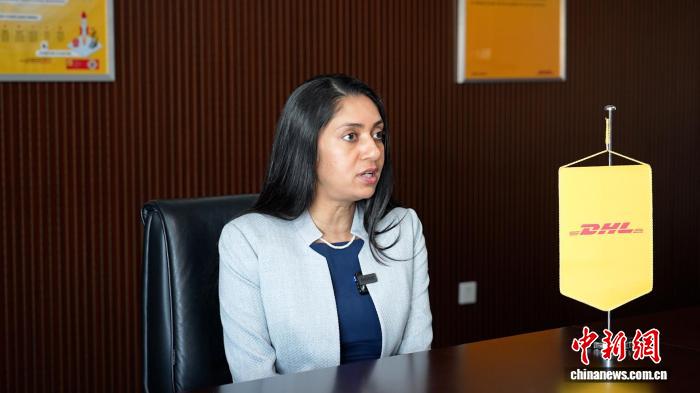
敦豪集团高层:在全球物流新时代中国将发挥重要作用
Zhong Guo Xin Wen Wang· 2025-09-18 09:25
Core Insights - China has evolved from a mere export manufacturing hub to an innovative leader in high-value sectors such as electric vehicles, e-commerce, and life sciences, presenting new scales and opportunities for global logistics [1][3] Group 1: DHL's Commitment and Strategy - DHL has been operating in China for over 40 years and considers it one of its most important and strategically significant markets [3] - In 2024, DHL will establish a New Energy Vehicle Excellence Center in Shanghai to expand its global footprint in this sector [3] - DHL's "2030 Strategy" prioritizes long-term development in China, focusing on sustainability, digitalization, and customized solutions for key markets [3][4] Group 2: Technological Investments - DHL is investing in artificial intelligence, the Internet of Things, and blockchain to enhance supply chain visibility and resilience [4] - The company is leveraging AI for predictive analytics and route optimization, while also promoting smart warehousing and automation technologies in collaboration with local institutions [4] Group 3: Sustainability Initiatives - DHL is one of the first logistics companies in China to commit to carbon-neutral products and has set a net-zero carbon emissions target [4] - The company supports China's dual carbon goals by deploying more electric vehicles, using sustainable alternative fuels, and providing digital solutions to help businesses calculate carbon emissions [4]
加力突破 提档进阶|巧用“电子仓单”破解融资难题 客户效益提升30%
Qi Lu Wan Bao· 2025-09-18 08:57
Group 1 - The core viewpoint is that Waterfa Supply Chain Management Co., Ltd. leverages digital technologies such as IoT and blockchain to transform traditional agricultural product storage into clear and trustworthy electronic warehouse receipts, enhancing the circulation, trading, and financing of agricultural commodities [1][4]. - The company addresses long-standing pain points in the agricultural supply chain, including inventory supervision, trust in warehouse receipts, and financing challenges, by developing a comprehensive digital solution that covers the entire supply chain from storage to sales [4][6]. - The self-developed supply chain management service platform has three core advantages: it strengthens information security to prevent data distortion, clarifies ownership boundaries through blockchain technology, and activates trading vitality by enabling online bulk transactions of electronic warehouse receipts [4][7]. Group 2 - The practical application of technological innovation is evidenced by the case of Shandong Garlic Tong Tianxia, which transitioned from a passive to an active development model after integrating with the supply chain management service platform [7]. - The company implemented a risk management system using IoT sensors and smart AR cameras for real-time monitoring of warehouse goods, ensuring traceability of garlic ownership and storage information through blockchain electronic warehouse receipts [7]. - The integration with the platform significantly reduced loan approval time from several weeks to one day, enhancing financing efficiency and leading to a 30% improvement in overall business performance for the client [7].