
保障和改善民生

Search documents
★进一步保障和改善民生 多项细化举措将推出
Zhong Guo Zheng Quan Bao· 2025-07-03 01:56
Group 1 - The central government plans to increase the central budget investment for social undertakings by over 30% compared to the end of the 13th Five-Year Plan, focusing on improving public welfare and addressing urgent needs of the population [1] - The National Development and Reform Commission (NDRC) emphasizes the importance of both "hard investment" projects and "soft construction" measures to enhance social welfare, aiming to improve the quality of life for citizens [1][2] - The Ministry of Human Resources and Social Security will focus on expanding social insurance coverage for flexible employment, migrant workers, and new employment forms, including the removal of household registration restrictions for flexible employment insurance [2][3] Group 2 - The Ministry of Finance plans to increase spending in the social sector, with education, social security, and employment budgets approaching 4.5 trillion yuan, reflecting a growth of 6.1% and 5.9% respectively [2] - The basic pension for urban and rural residents will see an increase of 20 yuan per month, benefiting over 300 million elderly individuals through enhanced financial support [3] - The Ministry of Education aims to improve higher education quality and expand capacity by optimizing resource allocation and enhancing industry-academia integration [4][5]
★中办、国办印发意见 进一步保障和改善民生 着力解决群众急难愁盼
Shang Hai Zheng Quan Bao· 2025-07-03 01:56
Core Viewpoint - The document outlines a series of measures aimed at improving and safeguarding people's livelihoods, focusing on social security, public services, and community support to address urgent public concerns. Group 1: Social Security Enhancements - Comprehensive cancellation of household registration restrictions for participating in social insurance at the place of employment [1][2] - Provision of social insurance subsidies for eligible college graduates and individuals facing employment difficulties [2] - Gradual promotion of cross-provincial mutual aid for individual accounts in basic medical insurance [2] Group 2: Support for Low-Income Groups - Utilization of big data and field surveys for dynamic monitoring and timely inclusion of eligible individuals into social assistance programs [2] - Establishment of methods for identifying low-income populations and verifying the economic status of low-income families [2] - Adjustment of minimum living security standards linked to per capita consumption expenditure in urban and rural areas [2] Group 3: Improvement of Public Services - Development of a detailed list of basic service projects and quality standards based on national public service standards [2][3] - Promotion of digital technology integration with public services to enhance data sharing and accessibility [2] - Implementation of basic public services provided by the place of residence, ensuring equal rights for agricultural transfer populations [3] Group 4: Education Resource Enhancement - Execution of an action plan to improve the quality of basic education, including the expansion of quality middle and primary school capacities [3] - Construction and renovation of over 1,000 quality regular high schools, particularly improving conditions in county-level schools [3] Group 5: Healthcare Resource Sharing - Implementation of a strong foundation project in healthcare to promote the sharing of medical resources between urban and rural areas [4] - Development of a commercial health insurance innovative drug directory to meet diverse medication needs [4] Group 6: Community Services for Elderly and Children - Establishment of nursing bed ratios in new elderly care institutions to be no less than 80% [4] - Promotion of community-based childcare services to cover over 80% of communities in major cities within ten years [4] Group 7: Implementation and Oversight Measures - Emphasis on fiscal transfer payments to promote equalization of basic public services and increase budgetary support for social sectors [4] - Requirement for local governments to strengthen responsibility and optimize fiscal expenditure structures to ensure effective implementation of livelihood policies [4]
着力解决人民急难愁盼问题
Ren Min Ri Bao· 2025-06-21 21:47
Core Points - The article emphasizes the importance of improving people's livelihoods and ensuring that the benefits of modernization are equitably shared among all citizens [1][9] - Various regions and departments are implementing policies to enhance social welfare and address urgent public needs, focusing on low-income groups and community services [2][3][4] Group 1: Employment and Income Support - The "Desert Workshop" in Li Zu Village, founded by returning youth, has created job opportunities for over 20 local women, allowing them to earn more than 3,000 yuan per month by working from home [3] - Efforts are being made to strengthen support for low-income groups, including facilitating local employment and ensuring social insurance coverage for vulnerable populations [3][4] Group 2: Healthcare and Medical Services - The article highlights the case of a woman in Fujian who received timely cancer diagnosis and treatment through community health initiatives, showcasing improvements in local medical services [4] - The establishment of long-term care insurance has led to professionalization in the caregiving sector, enhancing the quality of care for the elderly [3] Group 3: Education and Childcare Services - The implementation of "Internet + Education" in Ningxia has improved access to quality educational resources for rural schools, benefiting local students [5] - Community childcare services, such as the "Baby House" in Shanghai, provide affordable and accessible care for children, supported by government funding [5][6] Group 4: Social Welfare and Community Services - The article discusses the expansion of community services for the elderly, including meal provision and health monitoring, to enhance social welfare and support for senior citizens [7] - Various regions are investing in public services, with a focus on creating inclusive environments for children and families, such as child-friendly urban planning in Changsha [8][9]
保民生,各地出实招
Ren Min Ri Bao· 2025-06-17 22:10
Group 1: Social Welfare Initiatives - Shandong province has implemented a dynamic monitoring information platform for low-income populations, integrating data from 28 departments to identify individuals in need of assistance, resulting in 6244 people receiving aid this year [5][6] - The platform has triggered 26.2 million warning messages, allowing for proactive support to those identified as potential beneficiaries [5] - The initiative exemplifies a shift from "people seeking policies" to "policies seeking people," enhancing the efficiency of social welfare programs [5] Group 2: Healthcare Improvements - Jiangxi province has introduced a policy to fully subsidize basic medical insurance for newborns, leading to a significant increase in enrollment, with 28.86 million newborns covered last year, up by 11.11 million from the previous year [8] - The new policy has streamlined the enrollment process for parents, allowing them to register their newborns for insurance via a mobile app in under 10 minutes [7][8] - The initiative has resulted in 15.89 million newborns utilizing medical insurance, with a total reimbursement of 4.56 billion yuan, averaging 2870 yuan per person [8] Group 3: Mobile Healthcare Services - Zhejiang province has deployed mobile medical units, known as "巡回诊疗车," to provide healthcare services in remote areas, covering 78 service points and reaching over 100,000 residents [9][10] - The mobile units are equipped with essential medical equipment and allow for real-time data sharing with hospitals, enhancing access to healthcare in underserved regions [9][10] - This model has been expanded to include over 500 mobile units across the province, ensuring comprehensive healthcare coverage in mountainous and island areas [10] Group 4: Community Services and Food Security - Suzhou has opened community canteens in subway stations, providing affordable meals and improving access to nutritious food for residents, with an average of 2200 orders per day [11][13] - The canteens offer a variety of dishes at reasonable prices, contributing to a vibrant community atmosphere and supporting local businesses [12][13] - The initiative is set to expand to additional subway stations, enhancing the convenience of meal options for commuters and residents alike [13] Group 5: Cultural and Economic Development - Sichuan province's "银耳传奇" immersive performance project has become a significant cultural attraction, drawing over a million visitors and generating nearly 300 million yuan in tourism revenue [15][17] - The project has created over 800 jobs in various roles, contributing to local economic development and providing stable income for residents [17] - The initiative highlights the potential of cultural tourism to drive economic growth and improve livelihoods in rural areas [15][17]


把民生实事做到群众心坎上(记者手记)
Ren Min Ri Bao· 2025-06-17 22:10
Core Viewpoint - The recent issuance of the "Opinions on Further Ensuring and Improving People's Livelihoods" by the Central and State Councils outlines 10 policy measures aimed at addressing the most pressing livelihood issues for the public, indicating a commitment to enhancing social welfare and ensuring equitable access to services [1] Group 1: Achievements in Livelihood Construction - Significant historical achievements have been made in China's livelihood construction, including the establishment of the world's largest social security system, with 1.07 billion people participating in basic pension insurance and 1.32 billion in basic medical insurance [1] - The average years of education for new labor force entrants in 2024 is projected to exceed 14 years, and the average life expectancy has reached 79 years, reflecting substantial progress in public welfare [1] Group 2: New Challenges and Requirements - As economic and social conditions evolve, public expectations for a better life are increasing, leading to new demands in livelihood construction, such as higher quality elderly care services due to aging and increased childcare needs from urbanization [1] - There is a need for enhanced collaboration among various regions and departments to effectively address these emerging challenges with practical measures [1] Group 3: Focused and Practical Measures - Emphasizing a problem-oriented approach, key areas such as employment, education, healthcare, elderly care, and childcare must be prioritized to address the most immediate concerns of the public [2] - Successful examples include initiatives in Xinjiang and Sichuan that focus on employment and educational support, respectively, demonstrating the importance of targeted actions to resolve pressing issues [2] Group 4: Importance of Accountability and Supervision - The effectiveness of livelihood policies is contingent upon strict execution and adherence to the needs of the public, with a call for increased scrutiny to eliminate superficial projects that do not meet actual community needs [3] - The commitment to a people-centered approach is essential, ensuring that policies are aligned with the real-life experiences and expectations of the populace [3]
经济随笔丨破解“急难愁盼”要把握好几个关系
Yang Shi Xin Wen Ke Hu Duan· 2025-06-15 13:16
Core Viewpoint - The central document emphasizes the importance of addressing the urgent and pressing needs of the public, as outlined in the recently issued opinions by the Central Committee and the State Council, focusing on various policy measures to improve people's livelihoods [1][3]. Group 1: Policy Measures - The document outlines a comprehensive approach to improve public welfare, highlighting the need for fairness, balance, inclusiveness, and accessibility in public services [5][8]. - Specific measures include the removal of household registration restrictions for social insurance participation, aimed at facilitating coverage for flexible employment groups [8]. - The proposal to gradually increase the enrollment scale of quality higher education institutions addresses the urgent educational needs of parents during peak birth years [8]. Group 2: Focus Areas - Key areas of focus include social security, education, healthcare, elderly care, and childcare, with an emphasis on addressing pain points through targeted, small-scale interventions [6][9]. - The document stresses the importance of balancing diverse needs within communities, recognizing that solutions must be tailored to specific local contexts and individual circumstances [6][9]. Group 3: Systematic Approach - The need for a systematic and integrated approach to improve and guarantee livelihoods is highlighted, avoiding fragmented or disjointed efforts [11]. - The document calls for a cohesive framework that aligns various initiatives, ensuring that both "hard investments" and "soft constructions" progress in tandem [11]. Group 4: Sustainable Development - The principle of "doing what can be done within limits" is emphasized, advocating for realistic commitments that consider both needs and capabilities, ensuring sustainable improvements in public welfare [12][13].

破解“急难愁盼” 精准施策、协同发力是关键
Yang Guang Wang· 2025-06-11 09:03
Group 1 - The core viewpoint of the news is the emphasis on policies aimed at improving and safeguarding people's livelihoods, focusing on issues that the public urgently needs addressed, such as employment, healthcare, elderly care, childcare, and housing [1][2] - The policy document outlines a "pain point list" for people's livelihoods and provides targeted solutions, including the removal of household registration restrictions for social insurance in employment locations, benefiting millions of flexible workers and migrant workers [1] - The "8080" goal is introduced, aiming for at least 80% of newly built elderly care facilities to have nursing beds and for over 80% of communities in major cities to have accessible childcare services within ten years, addressing concerns about elderly care and expensive childcare [1] Group 2 - Effective policy implementation requires collaboration across departments and levels, breaking down administrative barriers to achieve policy coordination, resource integration, and information sharing [2] - Enhancing the coverage of policy promotion and increasing transparency of information are essential to ensure that the benefits of these policies reach the public [2] - The ultimate measure of success for these policies is public satisfaction, ensuring that people feel their lives are more convenient, healthcare is more accessible, education is smoother, and elderly care is more secure [2][3]
“三个字”解读中央重磅民生文件
Yang Guang Wang· 2025-06-11 07:45
Group 1 - The core viewpoint of the document emphasizes the importance of addressing urgent public concerns through a comprehensive policy aimed at improving people's livelihoods, highlighted by the terms "precise, practical, and new" [1][2] - The document specifically addresses the needs of the elderly and children, proposing to increase the supply of nursing beds in elderly care facilities to at least 80% and aiming for over 80% community coverage of inclusive childcare services in major cities within ten years [1] - It outlines clear goals and practical measures, such as implementing a plan to enhance the quality of basic education, standardizing all compulsory education schools within five years, and expanding the number of quality high schools and their enrollment [1] Group 2 - The "new" aspect of the policy reflects a broader concern for various demographics, including increased support for youth in education and employment, as well as improved healthcare services for women, such as prenatal check-ups and HPV vaccinations [2] - The document stresses the importance of practical strategies that ensure fairness, balance, inclusivity, and accessibility in public services, ultimately enhancing the tangible benefits for the general public [2]
将公平放在首位 解决群众操心事烦心事揪心事 多部门协同推进保障改善民生一揽子举措
Jin Rong Shi Bao· 2025-06-11 01:53
Group 1 - The core viewpoint of the news is the release of the "Opinions on Further Guarantee and Improve People's Livelihood" by the Central Committee of the Communist Party of China and the State Council, which focuses on addressing the most pressing livelihood issues for the public through ten policy measures across four key areas [1][2] Group 2 - The first area emphasizes enhancing the fairness of social security, proposing to expand coverage and strengthen support for low-income groups [2][4] - The second area aims to ensure equal access to basic public services for all citizens, regardless of urban or rural status, by improving service quality and efficiency [2] - The third area addresses concerns in education, healthcare, elderly care, and childcare, advocating for the expansion of basic public services and resource sharing [2][3] - The fourth area focuses on providing more accessible and diverse social services at the community level, enhancing the quality of life for citizens [2] Group 3 - The Ministry of Human Resources and Social Security plans to deepen reforms to expand social security coverage, particularly for flexible employment workers, migrant workers, and new employment forms [3] - The Ministry of Civil Affairs will enhance the social assistance system, ensuring fair and sustainable support for low-income populations through improved monitoring and precise identification of aid recipients [4] Group 4 - The Ministry of Finance announced an increase in fiscal investment in the livelihood sector, with projected expenditures nearing 4.5 trillion yuan for education, social security, and employment, reflecting a growth of 6.1% and 5.9% respectively [5][6] - The central government will also enhance support for employment policies, including job subsidies and training programs, to assist vulnerable groups in securing employment [6][7]
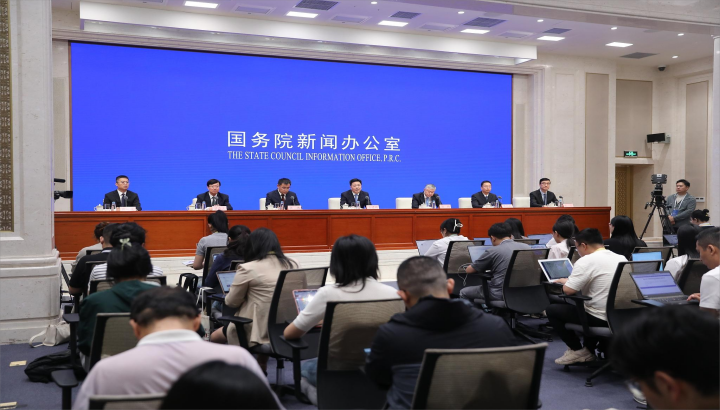
我国将推出一系列政策举措 进一步保障和改善民生
Yang Guang Wang· 2025-06-11 01:04
Group 1 - The core viewpoint of the article is the issuance of the "Opinions on Further Guarantee and Improve People's Livelihood" which aims to address pressing issues faced by the public and enhance their sense of gain [1] - The "Opinions" propose four main areas with ten policy measures focused on improving social security and public services, emphasizing fairness, balance, inclusiveness, and accessibility [1][2] - The National Development and Reform Commission emphasizes the need for a more equitable and inclusive approach to social security and public services, particularly in education and healthcare [1][2] Group 2 - The policy aims to effectively expand social security coverage, particularly for flexible employment workers, migrant workers, new job seekers, and college graduates [2] - The Ministry of Civil Affairs plans to expand monitoring for low-income groups to provide timely assistance to those in need [2] - The National Health Commission is focused on developing a comprehensive childcare service system to improve the quality and availability of childcare services [2]