总部经济

Search documents
聚焦总部经济,郑州航空港在布局什么?
Sou Hu Cai Jing· 2025-05-16 00:25
Core Insights - Zhengzhou Airport is emerging as a hub for headquarters economy, particularly with the establishment of "Central Plains Innovation Valley" focusing on various industries including artificial intelligence and biomedicine [1][2][3] Group 1: Headquarters Economy Development - The establishment of the Central Plains headquarters by Longxin Zhongke and the launch of various projects signify the growth of headquarters economy in Zhengzhou Airport [2][3] - Longxin Zhongke has set up a base in Zhengzhou Airport, contributing to the local economy and promoting the application of domestic CPU solutions across various sectors [2][3] - The opening of the International Headquarters Center project marks a significant step in enhancing the connectivity and development of the Zhengzhou Airport area [4] Group 2: Policy Support and Industry Focus - Zhengzhou Airport has introduced policies to support the development of headquarters economy, targeting high-quality enterprises across various sectors [5][6] - Key industries supported by the policies include biomedicine, electronic information, new energy vehicles, and artificial intelligence, aligning with the region's strategic development goals [6] - The establishment of the Zhengzhou Airport Innovation Industry Association and the launch of several key projects demonstrate the area's commitment to fostering innovation and collaboration [3][6]


上海北外滩开发建设五周年:重塑“港口价值”跑出经济发展“加速度”
Sou Hu Cai Jing· 2025-05-14 07:26
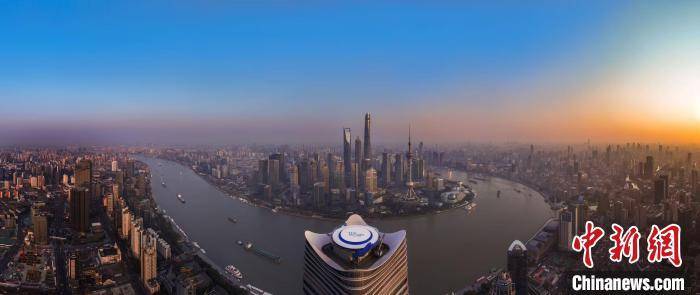
Core Insights - The development of North Bund in Shanghai has significantly enhanced its economic value, contributing over 3% to the city's economic output despite occupying only 0.3% of its area [1] - The area has attracted nearly 2000 foreign enterprises and is expected to drive a 35.8% increase in actual foreign investment in the Hongkou District by 2024 [1][5] - North Bund aims to become a core functional area for Shanghai's five centers: international economy, finance, trade, shipping, and technology innovation [1][8] Economic Development - North Bund has transformed from a cargo handling port to an international hub and cruise home port, focusing on the integration of shipping, finance, and green low-carbon industries [3][4] - The region has introduced 335 major investment projects with a total investment exceeding 300 billion yuan [1] - The area has gathered over 4700 shipping companies, accounting for nearly 70% of Shanghai's total shipping capacity [1] Industry Focus - North Bund is developing into a "Service Trade Port," emphasizing high-end shipping services, financial technology, and new trade models such as offshore trade and cross-border e-commerce [3][4] - The "Technology Innovation Port" initiative has led to the establishment of a complete innovation chain, with the technology service industry exceeding 70 billion yuan, representing 13% of the city's total [4] - The "Headquarters Economy Port" has attracted 104 headquarters, including 35 regional headquarters of multinational companies [5] Future Development Plans - The next five years are critical for North Bund as it transitions from construction to core functional development, enhancing its global resource allocation and cultural soft power [7][8] - Plans include accelerating the construction of landmark buildings, improving transportation networks, and enhancing public services to create a livable and business-friendly environment [7][8] - The area will continue to focus on high-end industries and technological innovation to solidify its position as a global waterfront area and meeting point [8]

杉杉商业集团锚定宁波中心 总部经济布局加速区域商业升级
Xin Lang Cai Jing· 2025-05-12 04:23
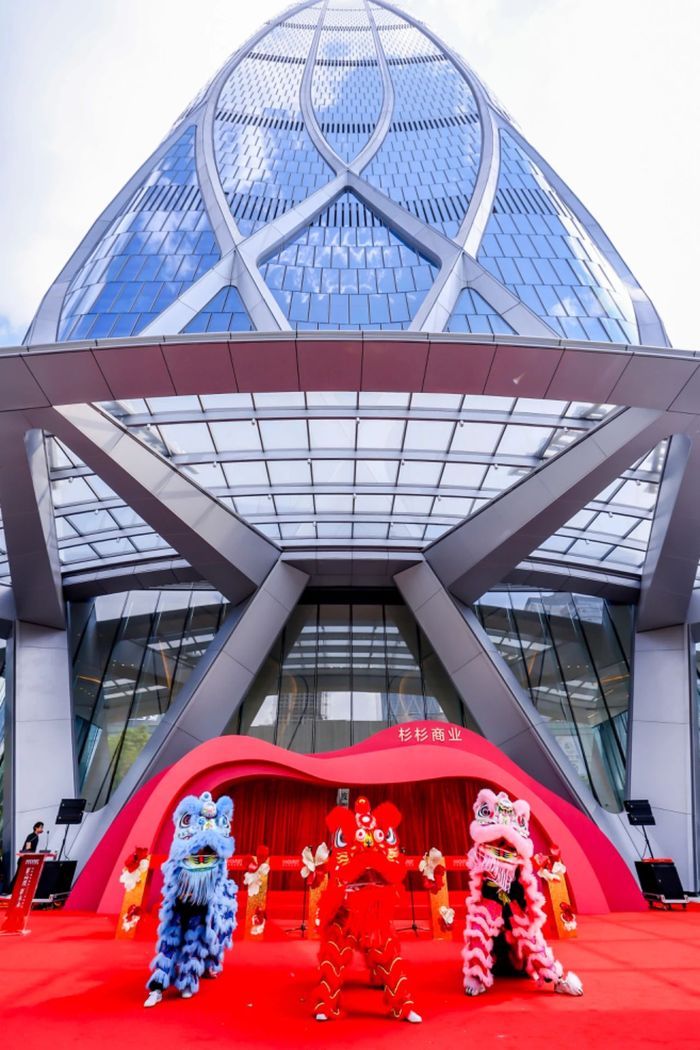
Group 1 - The core viewpoint of the news is the significant relocation of the Shanshan Commercial Group headquarters to the Ningbo Center Building, marking a new chapter for the headquarters economy in Ningbo, which is now home to Zhejiang's tallest building at 409 meters [1][7][21] - Shanshan Commercial Group is a leader in the outlet industry in China, with over a decade of experience and operations in 19 cities, achieving annual sales exceeding 20 billion yuan [4][6] - The relocation to the Ningbo Center Building is a strategic move that aligns with the company's goals, leveraging the building's global vision and top-tier facilities to enhance resource integration and promote urban consumption upgrades [7][11] Group 2 - The Ningbo Center Building is a key project in the Eastern New City CBD, gathering numerous dynamic enterprises with a combined annual output value exceeding 10 billion yuan, contributing to the formation of a "headquarters + industrial chain" ecosystem [11][15] - The building features advanced design and hardware, including a 1,200 square meter lobby inspired by a "lotus" design, and high-efficiency systems such as 53 Hitachi elevators, making it a benchmark for global office standards [17][19] - With the entry of major companies like Shanshan Commercial Group, the Ningbo Center Building is transforming into an economic engine for high-quality development in the Yangtze River Delta region [15][21]
我国城市经济新版图:四大一线城市区县GDP全景扫描
Sou Hu Cai Jing· 2025-05-08 08:20
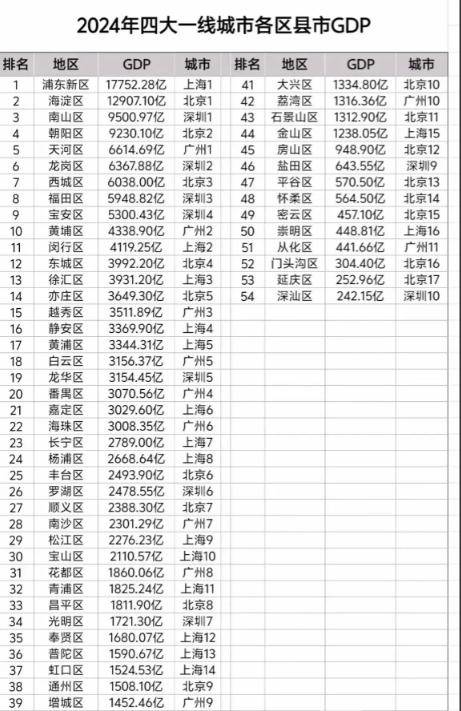
专家分析指出,头部区县的产业布局呈现三大特征:一是金融、科技、商务服务等现代服务业占比普遍 超过60%;二是战略性新兴产业增速保持在15%以上;三是总部经济效应显著,世界500强企业区域总 部密集落户。以浦东为例,这里聚集了包括特斯拉超级工厂、中芯国际等在内的340家跨国企业地区总 部。 这份区县经济榜单不仅反映了中国城市发展的最新成果,更预示着未来区域竞争的新赛道——科技创新 能力、高端要素配置效率和国际化水平将成为决定城市经济排名的关键变量。 2024年四大一线城市各区县市GDP | 排名 | 地区 | GDP | 城市 | 排名 | 地区 | GDP | 城市 | | --- | --- | --- | --- | --- | --- | --- | --- | | - | 浦东新区 | 17752.28亿 | 上海1 | 41 | 大兴区 | 1334.80亿 | 北京10 | | 2 | 海淀区 | 12907.10亿 | 北京1 | 42 | 荔湾区 | 1316.36亿 | 广州10 | | 3 | 南山区 | 9500.97亿 | 深圳1 | 43 | 石景山区 | 1312.90亿 | 北京 ...
三亚:勇立潮头竞一流
Hai Nan Ri Bao· 2025-05-07 01:29
Economic Development - Sanya's GDP surpassed 90 billion yuan in 2023 and is projected to exceed 100 billion yuan in 2024, marking a significant growth compared to 2006 levels [2] - The city aims to create a modern industrial system and high-quality development through the "one benchmark, five districts" strategy [2][7] Tourism and Consumption - Sanya has transformed from a remote destination to a preferred international tourist spot, with the opening of the Phoenix International Airport facilitating access [3] - The city is developing an international tourism consumption center, enhancing service experiences and promoting high-end tourism products [3][4] - Sanya International Duty-Free City has become a key player in integrating commerce and tourism, attracting over 92 million visitors since its opening in 2014 [4][5] Infrastructure and Connectivity - Sanya has established 26 international routes and connections to 20 overseas cities, enhancing its global connectivity [3] - The city is focusing on developing a modern trade and financial services environment, with significant growth in revenue and foreign investment since 2020 [9] Industrial Diversification - Sanya is shifting from a single-industry economy to a diversified industrial matrix, with initiatives to develop various sectors including deep-sea technology, modern agriculture, and high-end services [7][8] - The city has introduced a "chain leader system" for industrial development, aiming to create a comprehensive industrial cluster by 2030 [7] Innovation and Technology - Sanya is enhancing its technological innovation capabilities, with the establishment of multiple national and provincial research platforms and partnerships with leading research institutions [11] - The city is positioning itself as a hub for seed and deep-sea technology innovation, contributing to national food security and marine exploration efforts [12][13]
那些年房企留在大虹桥的楼,最后都怎样了
虎嗅APP· 2025-03-02 09:08
Core Viewpoint - The real estate industry is undergoing significant changes, with many private enterprises withdrawing and a shift towards state-owned enterprises, indicating a transformation in the sector [3][4]. Group 1: Current State of Real Estate Companies - Numerous real estate companies have exited the market, leaving behind vacant buildings and a sense of uncertainty about their future [11][12]. - Some companies, like Vanke, have adapted to the new environment, while others, such as Evergrande, have left behind empty shells of their former operations [14][15]. - The area previously bustling with real estate activity is now marked by abandoned projects and a lack of operational businesses, leading to a stark contrast with the past [18][19][20]. Group 2: Impact on the Business Environment - The departure of real estate firms has led to a significant reduction in occupancy rates, with many buildings having only a few tenants, and a noticeable decline in commercial activity [23][28]. - Rental prices have dropped dramatically, with some spaces available for as low as one yuan per square meter per day, indicating a fierce price war among landlords [27]. - The overall commercial ecosystem, including small businesses and service providers, has been adversely affected, with many establishments struggling to maintain operations [30][32][34]. Group 3: Future Prospects for the Area - Despite the challenges, there are signs of adaptation and transformation in the area, with new industries being attracted, such as renewable energy, artificial intelligence, and biomedicine [45][49]. - The tax revenue for the Hongqiao International Business District has shown a compound annual growth rate of over 20% in the past three years, suggesting resilience and potential for recovery [50]. - Ongoing projects and new developments indicate that the area is not stagnant, with significant investments in infrastructure and new business ventures [46][48]. Group 4: Conclusion on the Evolution of the Sector - The evolution of the real estate market reflects broader economic shifts, with the Hongqiao area transitioning from a real estate-centric model to one that leverages its transportation hub status [40][41]. - The past decade saw rapid growth driven by real estate, but the current landscape necessitates a reevaluation and adaptation to new economic realities [51][53]. - The expectation remains that as the overall economic environment stabilizes, there may be opportunities for former real estate companies to re-enter the market [62].