虚拟电厂

Search documents
户用光伏第一大省 敲响警钟!
Sou Hu Cai Jing· 2025-12-25 05:40
Core Viewpoint - The article discusses the significant changes in the distributed photovoltaic (PV) market in Shandong, China, particularly the decision to exclude non-natural person household distributed PV projects from the mechanism price bidding starting in 2027, which may lead to substantial market impacts [1][2]. Group 1: Market Dynamics - From 2020 to 2023, the share of newly installed household PV capacity has consistently exceeded 20%, establishing a three-way market division among household, commercial, and centralized PV sectors [1]. - As of September 2023, Shandong has a cumulative installed PV capacity of 91.728 million kilowatts, maintaining its position as the leading province in China for over seven years, with distributed PV accounting for 59.78 million kilowatts [1]. - The mechanism price bidding for renewable energy projects is being promoted across provinces, with Shandong taking the lead in policy changes [1][2]. Group 2: Policy Implications - The exclusion of non-natural person household distributed PV projects from the mechanism price bidding is seen as a response to the influx of capital that deviates from the original intent of distributed PV, which is to promote local consumption [2]. - The current mechanism price system is viewed as a transitional policy, with the future direction aimed at a unified national electricity market that emphasizes the core attributes of electricity generation [2][4]. Group 3: Future Opportunities - The article suggests that rather than avoiding the Shandong market, stakeholders should leverage it as a "testing ground" to explore viable market-oriented business models, such as energy storage integration and virtual power plants [3]. - The recent changes in time-of-use pricing policies are expected to create challenges for distributed PV while benefiting commercial energy storage, indicating a shift in market dynamics [3][4]. - The cancellation of time-of-use pricing does not imply a uniform electricity price but rather a market-driven price formation, which will necessitate a restructuring of energy storage business models [4].
国内首个虚拟电厂产业计量测试中心 获批筹建
Zhong Guo Neng Yuan Wang· 2025-12-25 02:42
Core Viewpoint - The establishment of the Fujian Province Virtual Power Plant Industry Measurement and Testing Center aims to create the first comprehensive measurement and testing service institution for the entire industry chain, traceability chain, and life cycle of virtual power plants in China [1][2]. Group 1: Industry Development - The virtual power plant industry in China is accelerating its development, playing an increasingly significant role in the construction of new power systems, ensuring grid safety, and participating in power market development [2]. - By 2030, the virtual power plant's adjustment capacity is expected to exceed 50 million kilowatts, with various commercial models innovating and expanding application scenarios [2]. - The establishment of the measurement center addresses urgent needs for data certification and testing in the virtual power plant industry, providing reliable credentials for market participation [2]. Group 2: Measurement Center Functions - The Fujian Province Virtual Power Plant Industry Measurement and Testing Center will provide performance testing services for virtual power plants and related resources, issuing performance test reports to facilitate participation in grid regulation and market transactions [1][3]. - The center aims to enhance the "one-stop" service capability of the industry testing center, continuously improving testing capabilities based on industry development needs [3]. - The center will incorporate advanced technologies such as artificial intelligence and blockchain to support innovation and high-quality development in the virtual power plant sector [3].
广东虚拟电厂全面具备入市条件
Zhong Guo Dian Li Bao· 2025-12-24 05:36
北极星储能网获悉,近日,广东电网电力调度控制中心成功推动佛山广能投、中山综能虚拟电厂参与电 力现货模拟市场出清,这场"模拟考"的顺利开展标志着广东虚拟电厂全面具备实战应用条件。 长期以来,分布式新能源进入现货市场面临分布式新能源波动性强、短期功率预测误差大、难以满足现 货市场高频交易需求等多重挑战。 广东电网调控中心直面痛点,牵头省地两级电力系统同步升级改造,重点建成广东现货系统模拟出清、 边缘集群平台DMZ区网关接入、运行监视、调度指令下发、AGC控制、响应执行监视六大核心功能, 实现了虚拟电厂交易全流程数字化管控。 在佛山,佛山供电局基于云边融合智能调度运行技术体系,率先完成发电类虚拟电厂参与广东电力现货 市场全流程测试。"我们实现了虚拟电厂与广东电力现货市场系统的无缝对接,确保虚拟电厂能够'看得 懂'市场信号并具备报价能力。"广东电网电力调度控制中心自动化部高级经理郭文鑫介绍道。 11月12日,中山供电局完成广东省首个发电类虚拟电厂并网调度协议的签署工作,标志着广东在虚拟电 厂规范化并网与市场化交易方面迈出关键一步。"我们已组织完成佛山、中山2家试点虚拟电厂聚合协议 签署、并网调度协议签订及市场主体注册 ...
新联电子涨2.14%,成交额1.11亿元,主力资金净流入1651.70万元
Xin Lang Zheng Quan· 2025-12-24 02:34
Group 1 - The core viewpoint of the news is that Xinlian Electronics has shown significant stock performance and financial metrics, indicating potential growth and investor interest [1][2]. - As of December 24, Xinlian Electronics' stock price increased by 2.14% to 7.16 CNY per share, with a total market capitalization of 5.972 billion CNY [1]. - The company has experienced a year-to-date stock price increase of 70.07%, with recent gains of 6.23% over the last five trading days and 23.66% over the last 60 days [1]. Group 2 - Xinlian Electronics reported a revenue of 550 million CNY for the period from January to September 2025, reflecting a slight decrease of 0.37% year-on-year, while the net profit attributable to shareholders increased by 421.43% to 535 million CNY [2]. - The company has distributed a total of 1.091 billion CNY in dividends since its A-share listing, with 300 million CNY distributed over the last three years [3]. - As of December 10, the number of shareholders increased to 51,800, with an average of 15,467 circulating shares per shareholder, which decreased by 0.97% [2].

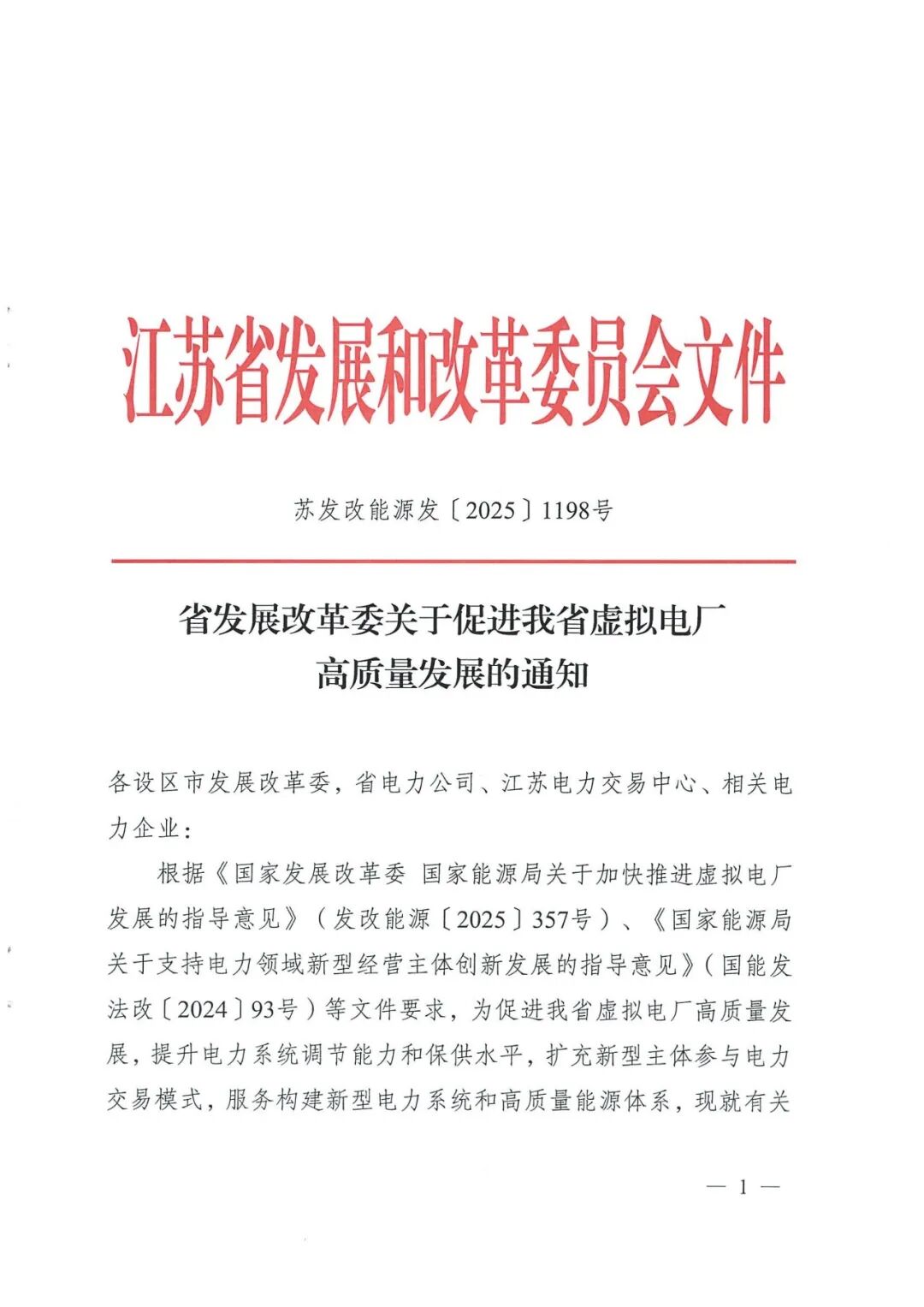
江苏首批100个虚拟电厂名单发布!协鑫、通威等企业项目入选
Bei Jing Shang Bao· 2025-12-23 12:16
Core Insights - Jiangsu Province's Development and Reform Commission has announced a notification to promote the high-quality development of virtual power plants, aiming to construct the first batch of 100 projects, which includes notable photovoltaic companies such as Trina Solar, Xiexin, Tongwei, and Canadian Solar [1] Group 1 - The notification outlines the establishment of a three-tier management system, the promotion of three application areas, and the improvement of a three-tier integrated platform system [1] - By 2030, the goal is to achieve a virtual power plant adjustment capacity of over 5 million kilowatts [1] - The first batch of 100 virtual power plant projects involves a total investment of 103.924 million yuan and an aggregated capacity of 14.91366 million kilowatts [1] Group 2 - The projects include participation from state-owned energy enterprises such as Guoneng, Huanneng, Datang, Guodian, and China National Petroleum, alongside photovoltaic companies like Trina Solar, Xiexin, and Canadian Solar [1] - The investment amounts for the projects range from a minimum of 200,000 yuan to a maximum of 7.4 million yuan [1]



江苏公示首批100个虚拟电厂,2030年力争调节能力达500万千瓦以上
Xin Lang Cai Jing· 2025-12-23 12:10
Core Insights - Jiangsu Province's Development and Reform Commission has issued a notification to promote the high-quality development of virtual power plants, aiming to enhance power system regulation capabilities and supply security [1][7]. Group 1: Management and Development Framework - A three-tier management system will be established, focusing on provincial, municipal, and enterprise-level services to enhance the operational capabilities of virtual power plants [9]. - By 2030, the goal is to achieve a regulation capacity of over 5 million kilowatts for virtual power plants [2][9]. Group 2: Application and Market Participation - Virtual power plants will be encouraged to participate in both provincial and cross-regional electricity markets, with a focus on demand response and expanding comprehensive energy service types [3][4]. - The first batch of 100 virtual power plant projects has been announced, with a total investment of 127.324 million yuan, aggregating a capacity of 16.9846 million kilowatts [5]. Group 3: Enhancing Energy Consumption and System Regulation - The initiative aims to improve the capacity for renewable energy consumption and enhance system regulation capabilities by aggregating distributed solar, wind, and adjustable load resources [5][14]. - By 2030, the demand response capacity of virtual power plants is targeted to reach 2 million kilowatts [4][11]. Group 4: Comprehensive Energy Services - Virtual power plants will explore diverse business applications, including energy management, carbon asset development, and green electricity trading, to foster a healthy ecosystem for their development [4][13]. - The focus will be on creating a platform for comprehensive energy services that supports carbon reduction and efficiency improvements for enterprises and industrial parks [13][37]. Group 5: Organizational and Operational Support - Various stakeholders, including power generation companies and energy service firms, are encouraged to participate in the establishment and operation of virtual power plants [15][35]. - The notification emphasizes the need for a robust market mechanism and digital support to facilitate the integration and operation of virtual power plants [16][17].

协鑫能科:参与建设江苏省首批100个虚拟电厂项目
Xin Lang Cai Jing· 2025-12-23 10:36
Group 1 - The core viewpoint of the article highlights that GCL-Poly Energy has secured involvement in four virtual power plant projects as part of the first batch of 100 key construction projects announced by the Jiangsu Provincial Development and Reform Commission [1] - The total aggregated capacity of the projects involving GCL-Poly Energy reaches 2.2286 million kilowatts, accounting for 13.1% of the total capacity of the first batch of projects [1] - The projects have an adjusted capacity of 845,600 kilowatts, which represents 30.7% of the total capacity [1] Group 2 - In November, GCL-Poly Energy launched the "Juxing AIVP" virtual power plant platform, which enables full-process intelligence from grid demand forecasting to trading strategy recommendations [1]

新中港跌0.12%,成交额1733.90万元,近3日主力净流入-333.47万
Xin Lang Cai Jing· 2025-12-23 08:07
Core Viewpoint - The company aims to become a regional comprehensive energy supply center and carbon neutrality center, focusing on carbon reduction through efficiency improvements and coupling reduction strategies [2] Group 1: Company Development Goals - The company is developing into a regional public utility cogeneration enterprise with scale advantages, comparable environmental and carbon emission intensity to natural gas units [2] - Specific measures for carbon reduction include efficiency improvements through new unit expansions and technological upgrades, and coupling reduction through the production line of RDF and the upcoming solid waste and biomass fuel boiler renovation project [2] Group 2: Carbon Emission Management - As of 2022, the company had a total carbon emission quota of 2.6483 million tons, with actual emissions of 2.1483 million tons, resulting in a surplus of 500,100 tons, which is 18.88% of the quota [2] - The company sold 500,000 tons of carbon emissions in December 2021 [2] Group 3: Technological Innovations - The company plans to construct a "three-dimensional virtual power plant" system to enhance operational efficiency and safety through real-time data collection and analysis [2][3] - This internal information system differs from a dispatchable virtual power plant, but its completion will facilitate the development of a dispatchable virtual power plant in the future [2] Group 4: Financial Performance - As of September 30, the company had 22,900 shareholders, an increase of 12.16% from the previous period, with an average of 17,497 circulating shares per person, a decrease of 10.83% [8] - For the period from January to September 2025, the company reported revenue of 529 million yuan, a year-on-year decrease of 18.48%, while net profit attributable to shareholders increased by 2.51% to 91.8345 million yuan [8] Group 5: Dividend Distribution - Since its A-share listing, the company has distributed a total of 344 million yuan in dividends, with 204 million yuan distributed over the past three years [9]

晶科科技跌2.08%,成交额8394.66万元,主力资金净流出1916.14万元
Xin Lang Cai Jing· 2025-12-23 01:54
Core Viewpoint - JinkoSolar's stock price has experienced fluctuations, with a year-to-date increase of 34.98% but a recent decline of 2.84% over the past five trading days [2] Group 1: Stock Performance - As of December 23, JinkoSolar's stock price was 3.77 CNY per share, with a market capitalization of 13.463 billion CNY [1] - The stock has seen a trading volume of 83.9466 million CNY and a turnover rate of 0.62% [1] - Year-to-date, JinkoSolar's stock has risen by 34.98%, with a 2.84% decline in the last five trading days, an 11.87% increase over the last 20 days, and a minimal 0.27% increase over the last 60 days [2] Group 2: Company Overview - JinkoSolar, established on July 28, 2011, and listed on May 19, 2020, is based in Shanghai and focuses on photovoltaic power station development, operation, and EPC services [2] - The company's revenue composition includes 75.57% from photovoltaic power generation, 18.34% from household photovoltaic station development, 2.51% from EPC services, and smaller percentages from other services [2] Group 3: Financial Performance - For the period from January to September 2025, JinkoSolar reported revenue of 3.122 billion CNY, a year-on-year decrease of 19.73%, while net profit attributable to shareholders was 356 million CNY, reflecting a year-on-year increase of 61.82% [2] - The company has distributed a total of 319 million CNY in dividends since its A-share listing, with 161 million CNY distributed over the past three years [3] Group 4: Shareholder Information - As of September 30, 2025, JinkoSolar had 130,100 shareholders, an increase of 9.22% from the previous period, with an average of 27,448 circulating shares per shareholder, down 8.44% [2] - The top ten circulating shareholders include Hong Kong Central Clearing Limited and several mutual funds, with notable changes in their holdings [3]

2025年终复盘:储能+虚拟电厂实战进度条
行家说储能· 2025-12-22 10:38
Core Viewpoint - The article emphasizes that the virtual power plant (VPP) sector is entering a significant growth phase, driven by supportive policies and market demand, with a projected market size of approximately 10.2 billion yuan by 2025 [4][7]. Group 1: Policy Support - The virtual power plant has moved beyond the conceptual stage, supported by strong national policy frameworks that set clear quantitative goals and funding mechanisms, indicating a visible market inflection point [4][7]. - Various government departments have introduced policies that position VPPs as new market entities, driving industry development and making them a key focus in local government documents and corporate financial reports [4][7]. Group 2: Market Dynamics - The electricity market is undergoing significant changes, with the gap in electricity supply expected to grow from 2.06 trillion kWh in 2023 to 3.01 trillion kWh by 2029, highlighting the substantial growth potential for VPPs [7]. - The increasing volatility in electricity prices, driven by the integration of renewable energy and the growth of AI data centers, is creating a demand for VPPs to provide flexible regulation capabilities [7]. Group 3: Company Strategies - Ronghe Yuanshu emphasizes the importance of aggregating distributed resources for market participation, developing a comprehensive service model that includes technology, assets, and operations [8]. - Weiheng Intelligent focuses on a hardware-software integrated approach to create sustainable revenue structures, converting existing customers into operational service users [9]. - Star Charging is implementing a "cloud-management-end" integrated model to optimize energy across various channels, having aggregated over 4,700 MW of adjustable load across 19 provinces [9]. - New Juneng aims to connect the electricity market with distributed energy resources, enhancing its role as a flexible resource integrator and trader [10]. Group 4: Technical and Operational Challenges - VPP operators face high entry barriers, requiring compliance with national and local regulatory standards, including obtaining necessary certifications for market participation [12]. - The "four capabilities" (observable, measurable, adjustable, controllable) are essential for VPPs, necessitating significant investment in technology and operational capabilities [15][16]. - The fragmentation of underlying equipment poses challenges for resource aggregation, which companies are addressing through compatibility and resource connection capabilities [16]. Group 5: Financial Performance and Growth - Companies like Ronghe Yuanshu have successfully aggregated approximately 130 MW of capacity and achieved significant operational milestones, including a 35% increase in daily revenue through optimized strategies [21]. - Star Charging projects substantial financial benefits from VPP integration, estimating a total revenue of approximately 2.39 million yuan over ten years for a 1 MWh user-side storage project [23]. - The article highlights that many companies have crossed the "hundreds of megawatts" threshold in capacity aggregation, indicating a shift in focus from feasibility to performance and profitability [24][30].