
民族复兴

Search documents
国台办:希望台湾同胞与大陆同胞共同追求祖国统一、民族复兴美好未来
Yang Shi Xin Wen· 2025-09-04 04:08
Core Viewpoint - The statements made by Lai Ching-te regarding the 80th anniversary of the victory in the Chinese People's War of Resistance Against Japanese Aggression are criticized for distorting history and promoting division, undermining the sacrifices made by the Chinese people during the war [1][2]. Group 1 - The commemoration of the 80th anniversary serves to remember history, honor the martyrs, cherish peace, and create a better future, emphasizing the importance of national unity and the rejection of "Taiwan independence" [2]. - The response highlights that the victory in the war was a collective effort of all Chinese people, including those from Taiwan, who fought against foreign aggression for national survival and revival [2]. - The commentary asserts that any attempts to distort the history of the war or challenge the post-war international order will ultimately fail, reinforcing the idea that justice and unity will prevail [2].
好评中国|镌刻抗战荣光,锻造民族精神不朽丰碑
Huan Qiu Wang· 2025-09-04 02:38
Group 1 - The core message emphasizes the significance of the 80th anniversary of the victory in the Chinese People's War of Resistance against Japanese Aggression and the World Anti-Fascist War, highlighting the collective efforts and sacrifices made for justice and peace [1][2] - The victory symbolizes the immense power of national unity, showcasing how the Chinese Communist Party rallied the entire nation to fight against aggression, leading to a historic awakening and solidarity among the Chinese people [1] - The spirit of unity forged in adversity continues to inspire the nation, driving collective efforts towards national rejuvenation and overcoming challenges [1] Group 2 - The victory underscores the value of peace and development in the contemporary era, with China recognized for its significant sacrifices and contributions to global peace and justice during the war [2] - China is portrayed as a builder of world peace, a contributor to global development, and a maintainer of international order, advocating for cooperation to address global challenges [2] - The victory is seen as a turning point for the Chinese nation, marking the beginning of a new journey towards national rejuvenation, characterized by remarkable development achievements under the leadership of the Communist Party [2] Group 3 - The historical context serves as a reminder of the importance of peace and development as unstoppable trends, reinforcing confidence in the path of socialism with Chinese characteristics [3] - There is a call to inherit the legacy of the martyrs and promote the spirit of resistance, emphasizing unity and collective effort in advancing modernization and contributing to global peace and development [3] - The realization of the great rejuvenation of the Chinese nation and a shared beautiful future for humanity is presented as an inevitable outcome [3]
礼成聚众志 笔落寄山河(人民家书)
Ren Min Ri Bao Hai Wai Ban· 2025-09-04 00:38
Core Viewpoint - The article emphasizes the significance of patriotism and the importance of remembering and honoring the sacrifices made during the Anti-Japanese War, particularly in the context of the 80th anniversary of the victory in this war. It highlights personal stories of individuals reflecting on their ancestors' contributions to the nation and the ongoing legacy of patriotism in contemporary China [10][15][20]. Group 1: Personal Reflections on Patriotism - The letter from Ma Qiutong expresses deep admiration for her great-grandfather, a soldier who sacrificed his life during the war, and emphasizes the importance of passing down the spirit of patriotism through generations [10][11]. - Fang Zhiwei recounts his grandfather's donation of a fighter plane to support the war effort, illustrating the family's commitment to national service and the continuity of patriotic values [12][13]. - Huang Ziyu reflects on her father's contributions during the war and his efforts in Taiwan's post-war development, highlighting the enduring impact of family legacies on personal identity and national pride [15][16]. Group 2: The Role of Education and Cultural Transmission - The letters collectively stress the importance of education in fostering a sense of national identity and the need for younger generations to understand their historical roots and the sacrifices made by their ancestors [12][20]. - Lin Zhiying discusses the significance of patriotic education in Hong Kong, emphasizing the connection between the region's future and its historical ties to the mainland [20][21]. - The narrative underscores the role of cultural industries in promoting national stories and values, as seen in the commitment to share China's history through various media [17][19].

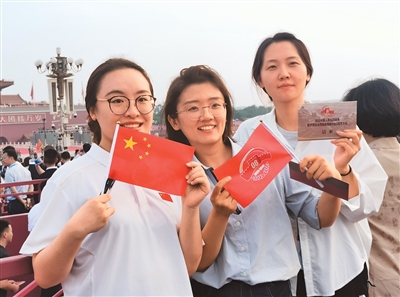
坚定不移朝着强国建设、民族复兴的宏伟目标奋勇前进
Ren Min Ri Bao· 2025-09-03 23:32
Core Points - The speech by General Secretary Xi Jinping at the 80th anniversary of the victory in the Chinese People's Anti-Japanese War and the World Anti-Fascist War has resonated strongly among central and state agencies, emphasizing the importance of remembering history and promoting world peace and development [1][2][3] Group 1: Historical Significance - The victory in the Anti-Japanese War is viewed as a pivotal moment that established China's sovereignty and territorial integrity, enhancing its status as a major global power [2][3] - The speech highlights the importance of remembering the sacrifices made during the war and the need to uphold peace and security in the world [4][5] Group 2: National Unity and Development - There is a strong call for unity and collective effort among the Chinese people to achieve national rejuvenation and modernize the country under the leadership of the Communist Party [3][6] - The emphasis is placed on high-quality development and openness to counter global challenges such as unilateralism and protectionism, aiming to create new opportunities for global economic growth [5][7] Group 3: Peaceful Development - The commitment to a peaceful development path is reiterated, with a focus on mutual respect and cooperation among nations to prevent the recurrence of historical tragedies [4][5] - The importance of maintaining a people-centered development approach is stressed, ensuring that the benefits of development are equitably shared among all citizens [7]
创作谈
Ren Min Ri Bao· 2025-09-03 23:32
Core Viewpoint - The event aims to blend historical facts with artistic expression, creating a dramatic "closed loop" around key historical figures and events, while ensuring the authenticity of the stories told [1] Group 1: Artistic Expression - The performance seeks to convey real emotions and stories, targeting both the older generation who experienced the history and the younger audience [1] - The song "Unstoppable" evokes a sense of historical weight, reflecting on China's past struggles and its rise to prosperity, moving many audience members to tears [3] - The dance "The Mourning" aims to express resilience and the spirit of perseverance, honoring the sacrifices of ancestors and instilling a sense of justice and peace in the audience [4] Group 2: Personal Reflections - A performer reflects on their role as a survivor of the Nanjing Massacre, emphasizing the importance of peace and the need for society to work towards a better future [2] - Another artist expresses deep emotional connection while performing a tribute to unnamed martyrs, highlighting the significance of remembering sacrifices made during wartime [3] - A young performer shares that the experience of participating in the event serves as a profound artistic and personal awakening [4]
坚定不移朝着强国建设、民族复兴的宏伟目标奋勇前进——习近平总书记在纪念中国人民抗日战争暨世界反法西斯战争胜利80周年大会上的重要讲话激励中央和国家机关、人民团体广大干部职工同心奋发锐意进取
Xin Hua Wang· 2025-09-03 18:01
Group 1 - The speech by General Secretary Xi Jinping at the 80th anniversary of the victory in the Chinese People's Anti-Japanese War and the World Anti-Fascist War emphasizes the importance of remembering history and promoting national unity and development [1][2][4] - The speech highlights the significant achievements of the Chinese people during the Anti-Japanese War, marking a historical turning point for the nation [2][3] - The call for maintaining peace and development is reiterated, stressing the need for countries to treat each other equally and work together to prevent the recurrence of historical tragedies [5][6] Group 2 - The importance of the Communist Party's leadership in guiding the nation through historical challenges and achieving modernization is emphasized [3][4][7] - The speech encourages the promotion of a strong national spirit and the need for continuous innovation and self-reliance in technology and industry [8][9] - The commitment to improving people's livelihoods and ensuring equitable access to development benefits is highlighted as a priority for the government [9]
(抗战胜利80周年)港澳特首:为国家辉煌成就深感自豪
Zhong Guo Xin Wen Wang· 2025-09-03 10:18
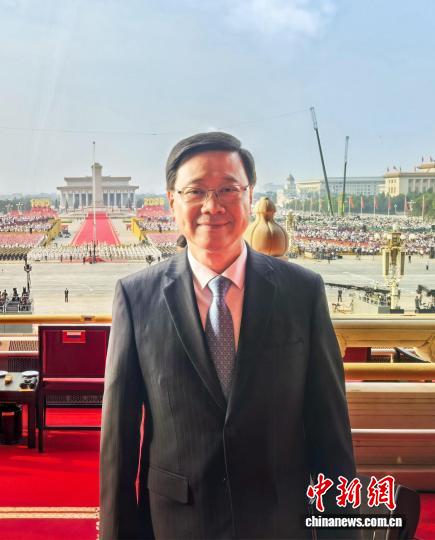
李家超表示,盛大阅兵仪式展示的不仅是国家新时代国防和军队建设的成就,更向世界宣示了中国人民 铭记历史、珍爱和平,坚决捍卫中国人民抗日战争和世界反法西斯战争胜利成果。 李家超强调,香港正迈向"由治及兴"的关键时期,必须以史为鉴,以坚定意志维护国家主权、安全、发 展利益。他鼓励香港市民更全面、更立体地认识这段中华民族不能磨灭的共同记忆,铭记先烈抗争牺牲 铸造的和平,珍惜和平年代的安宁,并将过去的苦难转化为自强不息的奋进力量,在以中国式现代化全 面推进强国建设、民族复兴伟业的进程中,作出更大的香港贡献。 9月3日,香港特区行政长官李家超出席在北京举行的纪念中国人民抗日战争暨世界反法西斯战争胜利80 周年大会。 (图片转自李家超社交媒体) (抗战胜利80周年)港澳特首:为国家辉煌成就深感自豪 中新社香港9月3日电 纪念中国人民抗日战争暨世界反法西斯战争胜利80周年大会3日在北京隆重举行。 当日,香港特区行政长官李家超和澳门特区行政长官岑浩辉出席大会。 李家超当日在社交平台发布一张在天安门广场观礼的照片,并表示有幸参加此次纪念大会,见证国家以 最庄严的方式纪念胜利,深感光荣、自豪、振奋。 李家超称,他此次率领约360名 ...
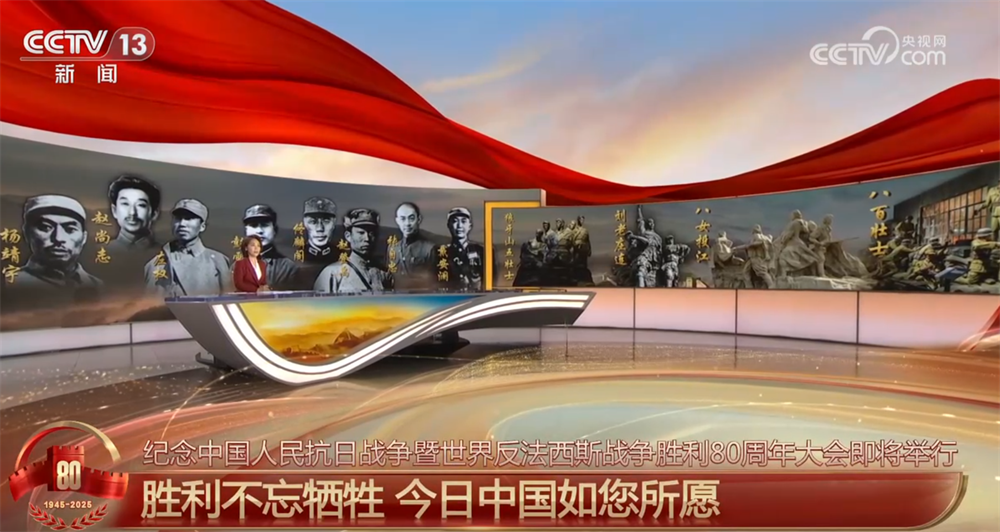
14年浴血奋战,致敬英烈!胜利不忘牺牲 今日中国如您所愿
Yang Shi Wang· 2025-09-03 07:41
Core Points - The article emphasizes the significance of the Anti-Japanese War as the longest and largest national liberation struggle in modern Chinese history, with over 35 million casualties among Chinese military and civilians [1] - It highlights the sacrifices made by various heroes and groups during the war, including notable figures and units that fought bravely against the invaders [1] - The article also commemorates the victims of the Nanjing Massacre, acknowledging the loss of 300,000 lives and the support received from peace-loving nations and international organizations [3] - It reflects on the achievements of the Chinese Communist Party and the nation since the founding of New China, noting significant advancements in economic, technological, and overall national strength [6] - The narrative conveys a sense of national pride and resilience, indicating that the era of Chinese subjugation has ended, and the country is moving forward on the path of national rejuvenation [6] Summary by Sections - **Historical Context**: The Anti-Japanese War is described as a monumental struggle with immense sacrifices, marking a pivotal moment in Chinese history [1] - **Commemoration of Heroes**: The article pays tribute to various heroes and groups who fought valiantly, emphasizing their contributions to the war effort [1] - **Recognition of Victims**: It acknowledges the tragic loss of life during the Nanjing Massacre and honors the memory of those who suffered at the hands of invaders [3] - **Post-War Achievements**: The narrative outlines the progress made by China since the war, highlighting economic and technological advancements under the leadership of the Communist Party [6] - **National Resilience**: The article concludes with a message of strength and determination, indicating a new era for China characterized by confidence and progress [6]
铭记光辉历史,在民族复兴征程上砥砺奋进
Zhong Guo Xin Wen Wang· 2025-09-03 07:02
Group 1 - The year marks the 80th anniversary of the victory in the Chinese People's War of Resistance Against Japanese Aggression and the World Anti-Fascist War, highlighting the significance of this victory in establishing China's status as a major power and initiating the historical journey towards national rejuvenation [1] - The Chinese people made immense sacrifices, with over 35 million casualties, to support the Eastern Front of the World Anti-Fascist War, showcasing the struggle between justice and evil [1] - The Chinese Communist Party played a crucial role in leading the resistance, advocating for a united front against the invaders, and implementing strategies for prolonged warfare [1] Group 2 - China has consistently been a builder of world peace, a contributor to global development, and a maintainer of international order over the past 80 years since the victory [2] - The country has elevated its economic total to the second largest in the world, significantly improved the living standards of its people, and enhanced its international influence [2] - China's commitment to peaceful development is reflected in its efforts to promote global peace while advancing its own development [2] Group 3 - The spirit of the people was a fundamental force during the Anti-Japanese War, with widespread mobilization and support from all segments of society, including overseas Chinese [3] - The Chinese Communist Party relied on the masses to organize and conduct guerrilla warfare, establishing bases and engaging in various forms of resistance [3] - Historical evidence shows that the people are the true creators of history and heroes of the nation [3] Group 4 - The historical journey from the victory in the Anti-Japanese War to the establishment of New China and the reform and opening up has led to a significant leap for the Chinese nation [4] - There is a strong belief and capability to achieve the goal of national rejuvenation, with a call for unity and the continuation of the great spirit of resistance [4] - The emphasis is on maintaining world peace, promoting common development, and building a community with a shared future for humanity [4]
习近平说,历史承载过去,也启迪未来。新时代新征程,全国各族人民要在中国共产党坚强领导下,坚持马克思列宁主义、毛泽东思想、邓小平理论、“三个代表”重要思想、科学发展观,全面贯彻新时代中国特色社会主义思想,坚定不移走中国特色社会主义道路,传承和弘扬伟大抗战精神,踔厉奋发、勇毅前行,为以中国式现代化全面推进强国建设、民族复兴伟业而团结奋斗!
Xin Hua Wang· 2025-09-03 01:42
Group 1 - The core viewpoint emphasizes the importance of historical understanding in guiding future actions under the leadership of the Communist Party of China [1] - It calls for adherence to Marxism-Leninism, Mao Zedong Thought, Deng Xiaoping Theory, and other significant ideological frameworks to ensure the advancement of socialism with Chinese characteristics [1] - The message highlights the need for unity and collective effort among all ethnic groups in China to achieve national rejuvenation and modernization [1]