空间智能

Search documents
李飞飞「世界模型」正式开放,人人可用, Pro版首月仅7元
36氪· 2025-11-14 13:36
Core Insights - The article discusses the launch of Marble, a world model by World Labs, which allows users to create immersive 3D environments using a single image or text prompt [2][3][4] - The concept of "spatial intelligence" is highlighted as a key focus for the next decade of AI development, as articulated by Li Feifei [6][7][70] Group 1: Product Features - Marble enables the generation of persistent, downloadable 3D environments, distinguishing it from other real-time models [21] - Users can upload 2D images or 3D models (with a fee) to create worlds, achieving high-quality visuals akin to AAA games [11][13] - The platform includes AI-native editing tools and a mixed 3D editor, allowing users to construct spatial frameworks and fill in visual details [23][50] Group 2: Creative Control - Marble supports multi-image prompts, allowing for more creative control and higher precision in world creation [39][43] - Users can input multiple images or short videos to generate 3D worlds that incorporate real-world elements [44] - The editing process is iterative, enabling users to refine and modify generated worlds extensively [46][47] Group 3: Export Options - Marble offers various export options, including high-quality mesh and video formats, facilitating integration into downstream projects [54][62] - The system can generate both low-precision collision meshes for physical simulations and high-quality visual meshes [59][61] Group 4: Pricing Structure - Marble has a tiered pricing model with three levels: a free version allowing limited world generation, a standard version at $20 per month, and a pro version at $95 per month for up to 75 worlds [82][84] - The pro version offers significant credits for actions and commercial rights, enhancing its appeal for professional users [87]


数字科技产业观察 | 双周要闻(2025年10月28日—11月14日)
Mei Ri Jing Ji Xin Wen· 2025-11-14 08:53
Government Initiatives - The State Council issued opinions to accelerate the cultivation and large-scale application of new scenarios, emphasizing the importance of connecting technology and industry for promoting commercialization of new technologies and products [1] - The Ministry of Industry and Information Technology (MIIT) announced plans to enhance the systematic layout and high-level construction of manufacturing pilot platforms, aiming to establish a modern pilot platform system by the end of 2027 [1] - MIIT initiated the 2025 AI industry and new industrialization innovation tasks, focusing on key areas such as AI infrastructure and "AI + manufacturing" to foster technological innovation and application [1] Local Actions - Jiangsu Province is promoting a new paradigm for immersive sports event consumption by integrating technologies like AI, big data, and digital twins into sports event activities [4] - Guangdong Province is collecting quality projects for smart tourism, focusing on new information technologies such as cloud computing, AI, and the metaverse to enhance tourism experiences [5][6] Industry Developments - Neuralink has implanted devices in 12 individuals, enabling them to regain abilities and pursue careers, showcasing advancements in brain-machine interface technology [9] - A new clinical safety-effectiveness dual-track benchmark was established by 32 clinical experts, with a Chinese model, MedGPT, achieving the highest score, indicating significant progress in domestic medical AI capabilities [10] Insights from Experts - Academician Zhang Rong highlighted the synergy between AI and Micro-LED technology, predicting breakthroughs in both fields due to their mutual reinforcement [11] - The next generation of remote sensing systems is evolving into intelligent agents capable of understanding and reasoning, driven by advancements in AI and remote sensing technologies [13] Technological Innovations - A new AI model developed by DeepMind successfully predicted hurricane paths and intensity, demonstrating the potential of AI in disaster management [15] - Huawei Cloud introduced a versatile intelligent platform aimed at addressing challenges in AI deployment, focusing on reducing development barriers and enhancing edge capabilities [16]
李飞飞长文火爆硅谷
投资界· 2025-11-14 08:01
Core Insights - The article emphasizes that spatial intelligence is the next frontier for AI, which can revolutionize creativity, robotics, scientific discovery, and more [6][10][14] - It outlines the three core capabilities that a world model must possess: generative, multimodal, and interactive [4][18][19] Group 1: Importance of Spatial Intelligence - Spatial intelligence is foundational to human cognition and influences how individuals interact with the physical world [11][14] - Historical examples illustrate how spatial intelligence has driven significant advancements in civilization, such as Eratosthenes' calculation of the Earth's circumference and Watson and Crick's discovery of DNA structure [12][13] Group 2: Current Limitations of AI - Current AI models, particularly large language models (LLMs), lack the spatial reasoning capabilities that humans possess, limiting their effectiveness in understanding and interacting with the physical world [15][16] - Despite advancements, AI struggles with tasks like estimating distances and navigating environments, indicating a fundamental gap in spatial understanding [15][16] Group 3: Future Directions for AI Development - The development of world models is essential for creating AI that can understand and interact with the world in a human-like manner [18][24] - World models should be capable of generating consistent virtual worlds, processing multimodal inputs, and predicting future states based on actions [18][19][20] Group 4: Applications of Spatial Intelligence - The potential applications of spatial intelligence span various fields, including creativity, robotics, science, medicine, and education [34][35] - In creative industries, tools like World Labs' Marble platform enable creators to build immersive experiences without traditional design constraints [28][29] - In robotics, spatial intelligence can enhance machine learning and human-robot collaboration, making robots more effective in various environments [30][31] Group 5: Vision for the Future - The article envisions a future where AI enhances human capabilities rather than replacing them, emphasizing the importance of aligning AI development with human needs [26][36] - The ultimate goal is to create machines that can understand and interact with the physical world, thereby improving human welfare and addressing significant challenges [38]

罗福莉C位亮相小米,离职DeepSeek后首次官宣
猿大侠· 2025-11-14 04:11
Core Viewpoint - Luo Fuli has officially joined Xiaomi as the head of the MiMo team, focusing on advancing multi-modal spatial intelligence, which is a crucial step towards achieving true Artificial General Intelligence (AGI) [4][24]. Timeline of Events - Rumors about Luo Fuli joining Xiaomi surfaced at the end of last year, with reports indicating that Lei Jun offered her a salary in the millions to lead Xiaomi's AI efforts [5][10]. - Significant milestones include the launch of DeepSeek-V3 on December 25, followed by media reports of Xiaomi assembling a GPU cluster the next day [6][7]. - On December 31, 2024, Lei Jun publicly shared Xiaomi's ambitions in AI during a New Year's live stream [8]. Background of Luo Fuli - Luo Fuli holds a Bachelor's degree in Computer Science from Beijing Normal University and a Master's degree in Computational Linguistics from Peking University, where she has published papers in top NLP conferences [15]. - She has worked at Alibaba's DAMO Academy and later at DeepSeek, contributing to the development of various deep learning models [17]. - Her academic work has garnered over 11,000 citations, with approximately 8,000 citations added in the past year alone [18]. Xiaomi's AI Strategy - The MiMo initiative is central to Xiaomi's efforts in developing large models, with a focus on "spatial intelligence," which aims to bridge the gap between information AI and physical AI [24][26]. - Luo Fuli's role is seen as pivotal in connecting Xiaomi's AI research with academic institutions, particularly with her former mentor from Peking University [22]. Concept of Spatial Intelligence - Spatial intelligence is described as the ultimate goal of integrating information AI with physical AI, facilitating a seamless connection between the digital and physical worlds [26]. - This concept aligns with Xiaomi's broader ecosystem strategy, which encompasses people, vehicles, and home integration [26].

李飞飞3D世界模型公测,网友已经玩疯了
具身智能之心· 2025-11-14 01:02
Core Insights - The article discusses the launch of a new 3D world generation model called Marble, developed by Fei-Fei Li's World Lab, which allows users to easily create personalized 3D worlds without needing a professional team [3][5][15]. Group 1: Model Features - Marble enables users to generate 3D worlds using simple text prompts, single images, or even short videos, making it accessible to the general public [5][17]. - The model includes built-in AI editing tools that allow users to make both minor and major modifications to their created worlds, such as removing objects or changing visual styles [21][25]. - Users can export their created worlds in two formats: high-fidelity Gaussian point clouds for rendering in browsers and triangle meshes for compatibility with various industry-standard tools [29][40]. Group 2: User Experience - The model has received positive feedback for its ease of use, with users quickly sharing their creations online [8][15]. - Marble supports multi-modal input, allowing for a variety of ways to create and edit 3D environments, which enhances user engagement and creativity [34][35]. Group 3: Future Developments - The team plans to focus on enhancing interactivity in future iterations of Marble, enabling real-time interactions within the created 3D worlds [36][37]. - The article emphasizes that Marble is a significant step towards achieving a "truly spatially intelligent world model," which will incorporate capabilities for dynamic interaction and evolution over time [40].
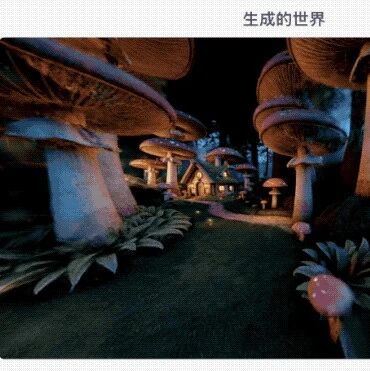
一句话,就能创造出随便乱逛的3D世界!
自动驾驶之心· 2025-11-14 00:04
Core Insights - The article discusses the launch of Marble, a world model developed by WorldLabs, which allows users to create immersive 3D environments using a single image or text prompt [2][3][7]. Group 1: Product Features - Marble enables the generation of persistent, downloadable 3D environments, distinguishing it from other real-time models [28]. - Users can upload 2D images or 3D models (with a fee) to generate worlds, achieving high realism akin to AAA video games [14][16]. - The platform includes AI-native editing tools and a mixed 3D editor, allowing users to construct spatial frameworks and fill in visual details [31]. Group 2: User Experience - The initial testing phase showed impressive results, with the ability to create interactive 3D scenes from a single image [32]. - Users can input multiple images or short videos to create more accurate 3D worlds, enhancing the creative process [48]. - The editing process is iterative, allowing users to modify generated worlds extensively, from minor adjustments to major structural changes [49][50]. Group 3: Pricing and Accessibility - Marble offers three pricing tiers, with the highest tier costing $95 per month for generating up to 75 worlds, while the free version allows for 4 worlds [83][84]. - The Pro version is available for the first month at just $1, with standard pricing at $20 per month [85]. Group 4: Future Implications - The article emphasizes that Marble represents a significant step towards achieving spatial intelligence in AI, which is expected to unlock new applications in simulation and robotics [70][71]. - The integration of interactive capabilities in future world models is highlighted as a key opportunity for enhancing user engagement and application [69].
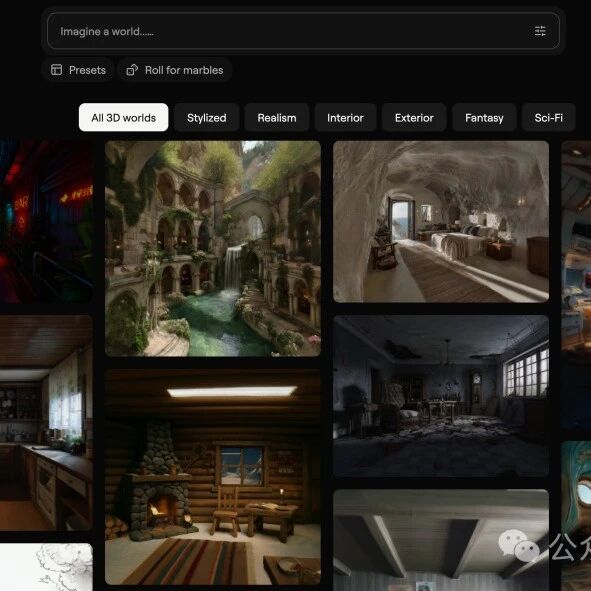
创业一年后,李飞飞推出首款可商用世界模型 Marble,任意模态都可生成 3D 世界
Founder Park· 2025-11-13 14:06
Core Insights - World Labs has officially launched its first commercial generative multimodal world model product, Marble, which supports a wider range of input modalities compared to its earlier preview version [2][4] - The concept of "spatial intelligence" introduced by Fei-Fei Li is highlighted as the next frontier in AI, emphasizing its importance in transforming how humans create and interact with both real and virtual worlds [25][29] Product Features - Marble allows users to generate a complete 3D world from various inputs such as images, text, or videos, enabling detailed and rich 3D environments [5][10] - The platform offers both a free version and a Pro version tailored for professionals in fields like game development, film effects, architecture, and robotics [8] - Key capabilities of Marble include: - Multimodal 3D world generation based on user inputs [10] - Support for multiple image inputs to create cohesive 3D spaces [13] - Advanced editing tools for fine-tuning generated worlds, including local adjustments and global style changes [18][20] - An experimental tool called Chisel for advanced users to manipulate the spatial layout of the generated worlds [21] - Options to expand and combine worlds for larger, more complex environments [22][26] - Export capabilities in various formats for use in professional software and platforms [23][24] Importance of Spatial Intelligence - Spatial intelligence is deemed crucial for AI's evolution, as it will reshape various fields such as storytelling, creativity, robotics, and scientific discovery [29][40] - Current AI models, while strong in language processing, lack a robust understanding of the physical world, which limits their practical applications [30][38] - The development of spatial intelligence can lower the barriers for creating 3D environments, enabling non-professionals to build and experience virtual worlds [41] - It is also essential for advancing embodied intelligence in robotics, allowing machines to interact safely and effectively with the physical world [41] - The potential applications of spatial intelligence extend to scientific research, healthcare, and education, enabling simulations and explorations beyond human perceptual capabilities [42][43]
李飞飞的世界模型来了,一句话生成3D世界,AI 真的开始理解现实了
3 6 Ke· 2025-11-13 11:42
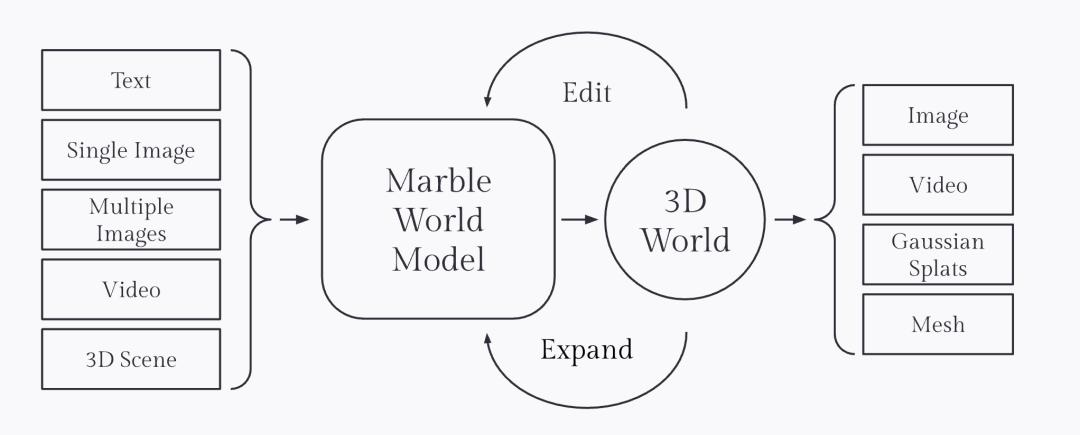
Core Insights - The launch of Marble by World Labs marks the first public product in the realm of world models, showcasing significant advancements in spatial intelligence and AI capabilities [1][2][3] Group 1: Marble's Core Capabilities - Marble features three main capabilities: multimodal generation, AI-native world editing, and a practical production workflow [1] - It can reconstruct a complete 3D world from various inputs, including text, images, and videos, allowing for a seamless creative process [4][7] - Users can edit generated worlds similarly to real scenes, enabling continuous refinement and expansion of 3D environments [13][14] Group 2: Applications and Integration - Marble allows for the export of generated worlds into various formats compatible with industry-standard tools like Unreal, Unity, and Blender, facilitating integration into game and film production workflows [15][17] - The platform supports high-quality rendering and video generation, enhancing the usability of created worlds in real-world applications [18][19] Group 3: Theoretical Foundations and Future Implications - The development of Marble is rooted in the concept of spatial intelligence, which is essential for AI to interact with the physical world [20][21] - A mature world model must possess generative, multimodal, and interactive capabilities, which are foundational for future advancements in robotics and scientific research [22][23][24] - Marble's release signifies a step towards achieving comprehensive spatial intelligence, paving the way for future applications in automation and simulation [27]
DeepSeek前骨干罗福莉C位亮相小米,曾网传雷军千万年薪挖她
程序员的那些事· 2025-11-13 11:24
Core Insights - Luo Fuli has officially joined Xiaomi as the head of the MiMo team, marking a significant step in the company's AI ambitions [1][3] - The evolution of intelligence is transitioning from the language domain to the physical world, aiming to unlock multi-modal spatial intelligence, which is crucial for achieving true Artificial General Intelligence (AGI) [4] Timeline and Background - Rumors about Luo Fuli joining Xiaomi surfaced last year, with reports indicating she was recruited by Lei Jun with a salary of tens of millions [5][10] - Key dates include the launch of DeepSeek-V3 on December 25, followed by media reports of Xiaomi assembling a GPU cluster [6][7] - On December 31, Lei Jun publicly shared Xiaomi's ambitions in AI during a New Year's live stream [8] Luo Fuli's Profile - Luo Fuli holds a Bachelor's degree in Computer Science from Beijing Normal University and a Master's in Computational Linguistics from Peking University, with numerous publications in top NLP conferences [15] - She has worked at Alibaba's DAMO Academy and DeepSeek, contributing to the development of various deep learning models [17] - Her academic work has garnered over 11,000 citations, with approximately 8,000 citations added in the past year alone [18] Xiaomi's AI Strategy - The MiMo project is central to Xiaomi's efforts in advancing large model research, with a focus on spatial intelligence [24] - Spatial intelligence aims to bridge the gap between information AI and physical AI, aligning with Xiaomi's ecosystem of people, vehicles, and homes [26]


罗福莉C位亮相小米,离职DeepSeek后首次官宣
36氪· 2025-11-13 10:26
Core Viewpoint - The article highlights the appointment of Luo Fuli as the head of Xiaomi's MiMo team, focusing on advancing spatial intelligence as a key step towards achieving Artificial General Intelligence (AGI) [1][3][23]. Group 1: Appointment and Background - Luo Fuli officially announced her role at Xiaomi on November 12, leading the MiMo team [1]. - She previously worked at DeepSeek and was reportedly recruited by Lei Jun with a salary of tens of millions [4][7]. - Luo has a strong academic background, with over 11,000 citations for her research papers, indicating her prominence in the field [17][18]. Group 2: MiMo Team and Objectives - The MiMo team aims to unlock multi-modal spatial intelligence, which includes perception, reasoning, generation, and action capabilities [4][23]. - Luo's vision aligns with the broader goal of integrating information AI with physical AI, creating a seamless connection between the digital and physical worlds [25]. Group 3: Industry Context and Implications - The concept of spatial intelligence has gained attention, with AI experts like Fei-Fei Li discussing its significance for embodied intelligence and AGI [24]. - Xiaomi's focus on spatial intelligence is seen as a strategic move, leveraging its ecosystem that includes people, vehicles, and homes [25].